Adjustment & purge
Mild flaking, possibly a temporary uptick in surface breakouts as turnover speeds up. Buffer with moisturizer; go every other night until your skin tolerates it.

Tretinoin is the prescription form of vitamin A — and the most studied skin-changing molecule in dermatology. It is not retinol. It is the active ingredient retinol is trying to become.
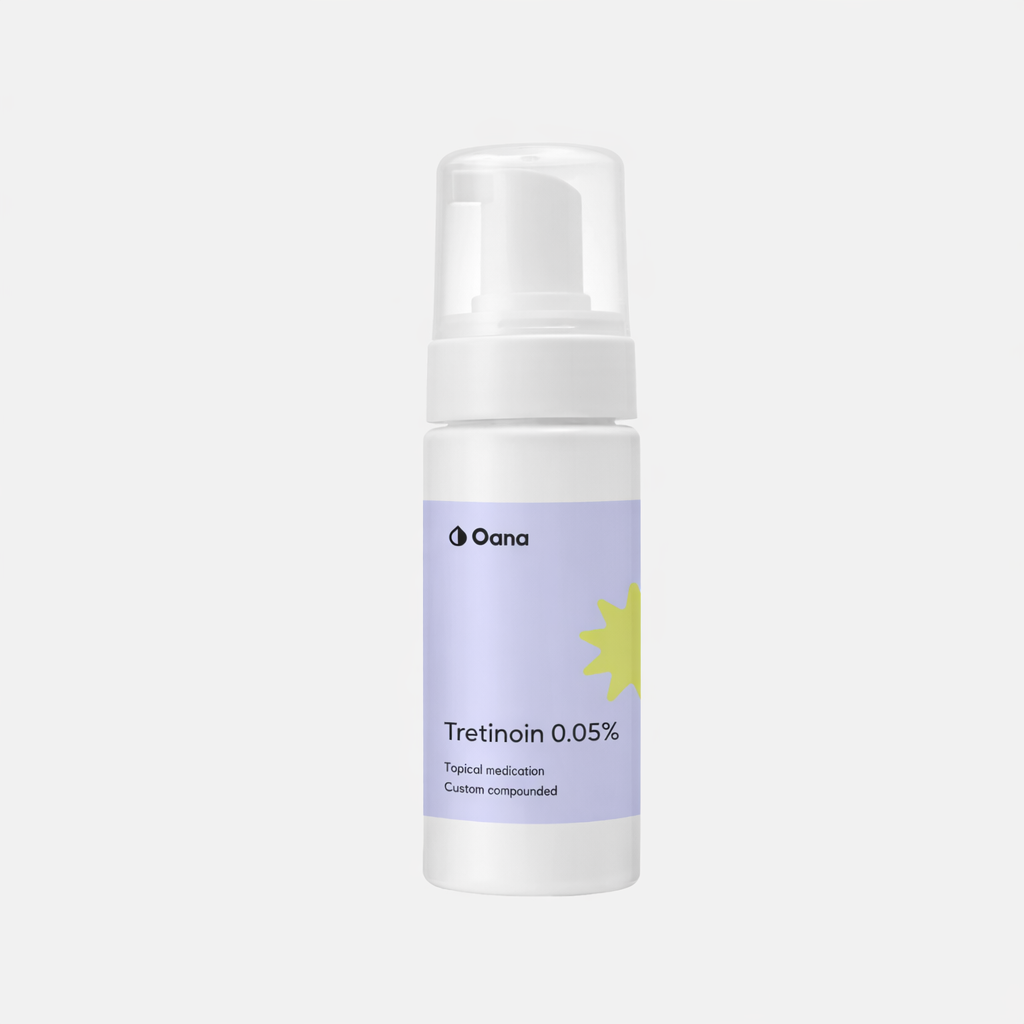



Tretinoin has been studied for acne, photoaging, and texture since the 1960s. Drugstore retinols are an attempt to approximate it. The actual molecule is what your provider can prescribe.
The molecule is fast, but the skin cycle is not. Here is the order most patients describe — texture first, tone next, fine lines last.
Mild flaking, possibly a temporary uptick in surface breakouts as turnover speeds up. Buffer with moisturizer; go every other night until your skin tolerates it.
Pores look smaller. The grainy bumpy feel you used to layer foundation over starts to soften. Acne calms.
Post-acne dark spots fade. Tone evens out. Photoaging signs — fine lines, sun damage — gradually improve with consistent nightly use.
OTC retinol is a precursor. Your skin enzymes convert a fraction of it into retinoic acid before anything can happen. Tretinoin is retinoic acid — applied directly, no conversion required.
Reviews from women using prescription tretinoin for acne, texture, and tone.
"I had retinol from three different brands sitting on my counter. Switched to prescription tretinoin and within three months my texture started actually changing. Threw the others out."
"The post-acne dark spots that lingered for years are finally fading. I'm wearing less foundation than I have since college."
Tell us what your skin is doing. A licensed provider chooses the right strength of tretinoin and a starting cadence that fits your tolerance.
Share what your skin looks and feels like, what you have tried, and what you are after. Takes about 5 minutes.
A licensed provider matches you to the right strength (0.025%, 0.05%, or 0.1%) and prescribes only if appropriate.
Your prescription ships free in plain packaging. Cancel anytime, refills are automatic.
Retinoic acid in standardized strengths (0.025%, 0.05%, 0.1%). Apply at night to clean, dry skin — start every other night and build to nightly as tolerated. Dispensed by a U.S. licensed pharmacy.
Tretinoin binds retinoic acid receptors and tells skin cells to turn over faster — clearing the duct that produces acne and unsticking pigmented surface cells.
Beyond the surface, tretinoin signals fibroblasts to produce more collagen — which is the mechanism behind its fine-line and texture results.
Acne, texture, post-acne hyperpigmentation, photoaging. One tube replaces a counter full of one-trick actives.
Tretinoin has been FDA-approved for decades, with one of the longest safety records in topical dermatology.
Start a short online visit today. A licensed provider matches you to the right strength of tretinoin if it is appropriate for your skin.
Start your online visit*Prescription treatment if appropriate. Tretinoin is not recommended during pregnancy or breastfeeding. Tretinoin makes skin more sun-sensitive — use a broad-spectrum SPF 30+ daily. Common effects include dryness, peeling, redness, and a temporary purge phase. Talk to your provider before combining with other actives. Not all patients are candidates. Individual results vary.