
Research: Anti-Inflammatory Diets and Androgen Levels
Eating an anti-inflammatory diet can help lower androgen levels and improve symptoms of PCOS. Foods like vegetables, fruits, fatty fish, nuts, and olive oil reduce inflammation, which is a key driver of hormonal imbalances in PCOS. Studies show that chronic inflammation worsens androgen production and insulin resistance, leading to symptoms like irregular periods, acne, and hair issues.
Key findings:
- A 12-week Mediterranean-style diet reduced inflammation markers like CRP by 35%.
- 63% of participants regained regular menstrual cycles.
- Omega-3 fatty acids (1,000 mg EPA+DHA) improved inflammation within 8–12 weeks.
- High-fiber, low-glycemic foods help regulate blood sugar and lower androgen levels.
For women with PCOS, focusing on nutrient-rich, anti-inflammatory foods can break the cycle of inflammation and hormone imbalance. Limiting refined carbs, added sugars, and processed foods is equally important. This approach supports hormonal health, menstrual regularity, and metabolic improvements.
Polycystic Ovary Syndrome (PCOS) & Diet | Mediterranean vs. Ketogenic vs. Low-AGE vs. Vegetarian
Recent Research on Anti-Inflammatory Diets and Hormone Regulation
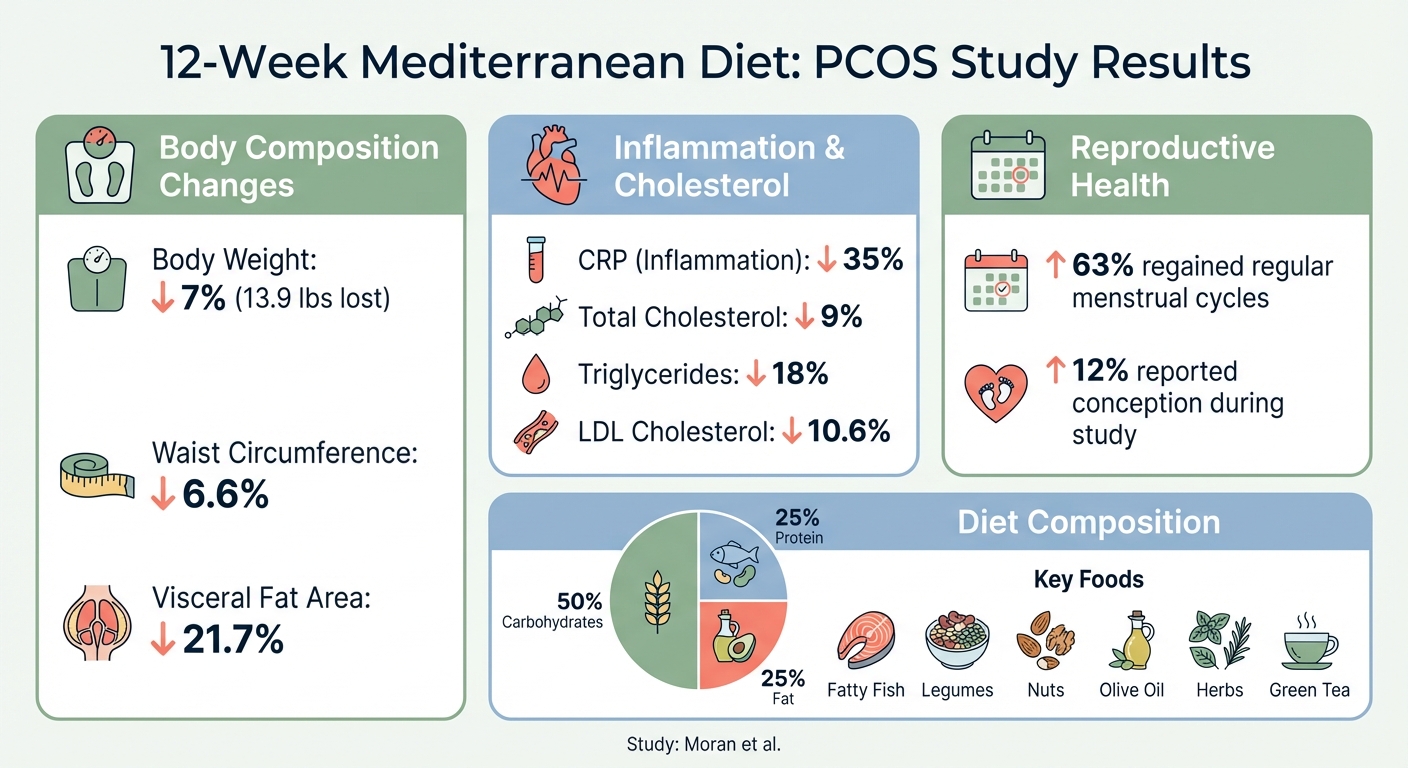
Mediterranean Diet Effects on PCOS: 12-Week Study Results
Moran et al. conducted a study examining the effects of a 12-week Mediterranean-style anti-inflammatory diet on overweight and obese women with PCOS. This diet was designed to be low-calorie, low-fat, and low-glycemic, with a macronutrient distribution of 50% carbohydrates, 25% protein, and 25% fat. It emphasized nutrient-rich foods like fatty fish, legumes, nuts, olive oil, herbs, spices, and green tea, while reducing processed meats, poultry, and added sugars. These dietary adjustments were aimed at promoting metabolic and hormonal improvements.
The results were noteworthy. Participants experienced an average weight loss of 7% (approximately 13.9 lbs), while markers of inflammation and lipid profiles improved significantly: CRP levels dropped by 35%, total cholesterol by 9%, triglycerides by 18%, and LDL cholesterol by 10.6%. Additionally, 63% of participants regained regular menstrual cycles, and 12% reported conception during the study. Although the study did not directly measure androgen levels, the reduction in inflammation and the restoration of menstrual regularity suggest potential benefits for managing hyperandrogenism, a common symptom of PCOS.
Key Findings at a Glance
| Metric | Pre-Intervention | Post-Intervention | Change |
|---|---|---|---|
| Body Weight | Baseline | –13.9 lbs (7% loss) | –7% |
| Waist Circumference | Baseline | Reduced | –6.6% |
| Visceral Fat Area | Baseline | Reduced | –21.7% |
| CRP (Inflammation) | Baseline | Reduced | –35% |
| Total Cholesterol | Baseline | Reduced | –9% |
| Triglycerides | Baseline | Reduced | –18% |
| LDL Cholesterol | Baseline | Reduced | –10.6% |
| Menstrual Regularity | Irregular | 63% regular | +63% |
| Conception Rate | - | 12% reported | +12% |
Oana Health (https://oanahealth.com) has incorporated these findings into its personalized, evidence-based PCOS treatment plans, offering nutritional strategies to support hormonal health and overall wellness.
How Anti-Inflammatory Diets Affect Androgen Levels
For women with PCOS, chronic inflammation and elevated androgen levels often create a self-perpetuating cycle: inflammation fuels androgen production, and excess androgens, in turn, worsen inflammation. However, making thoughtful dietary changes can help break this cycle by targeting the hormonal pathways involved.
Reducing Inflammation and Oxidative Stress
Anti-inflammatory diets can lower levels of pro-inflammatory cytokines like IL-6 and TNF-α, which are known to activate pathways such as NF-κB. These pathways stimulate ovarian theca cells, leading to increased production of testosterone and other androgens. Foods rich in omega-3 fatty acids - such as salmon and sardines - along with olive oil, nuts, and green tea, provide nutrients that help suppress these inflammatory signals.
PCOS is also associated with higher levels of oxidative stress markers, like malondialdehyde (MDA), due to increased reactive oxygen species. This oxidative stress, driven by both androgen excess and insulin resistance, further amplifies androgen production. Antioxidant-rich foods like vegetables, berries, herbs, and spices play a key role in neutralizing this oxidative damage, helping to restore hormonal balance. By reducing inflammation and oxidative stress, these dietary choices create a foundation for better hormone regulation.
Boosting Antioxidant Defenses and Balancing Hormones
Once inflammation is under control, enhancing the body's antioxidant capacity can further stabilize hormone levels. High-fiber foods, for example, help regulate blood sugar and combat hyperinsulinemia - a major contributor to ovarian androgen production. Repeated insulin spikes signal the ovaries to produce more androgens like DHEAS and androstenedione. Fiber also aids in clearing excess hormones, reducing the stress on your body caused by oxidative damage.
Studies suggest that a diet composed of 50% complex carbohydrates, 25% protein, and 25% fat, including foods like beans, lentils, whole grains, and vegetables, can strengthen antioxidant defenses. This dietary approach helps interrupt the inflammation-androgen cycle by addressing multiple points of the cascade. The result? Lower androgen levels and improved menstrual regularity, offering a natural way to manage PCOS symptoms through balanced nutrition.
sbb-itb-6dba428
Benefits of Mediterranean Low-Glycemic Anti-Inflammatory Diets
Effects on Weight and Insulin Sensitivity
Following a Mediterranean low-glycemic diet has shown measurable benefits for women with PCOS, particularly in weight management and insulin sensitivity. In a 3-month study, overweight and obese women with PCOS experienced noticeable reductions in body weight (7%), waist circumference (6.6%), body fat (9.2%), and visceral fat (21.7%) - the last being the type of fat around internal organs that worsens insulin resistance.
This diet prioritizes foods like fatty fish (twice a week), legumes, nuts, olive oil, vegetables, and whole grains while cutting back on refined carbs, red meat, and processed foods. Packed with omega-3 fatty acids and antioxidants, these foods not only improve cholesterol levels but also provide steady energy, helping to prevent blood sugar spikes. These changes in metabolism pave the way for better hormonal balance.
Androgen Reduction and Menstrual Cycle Improvements
Beyond its metabolic benefits, this diet also helps regulate androgens. The combination of weight loss, reduced visceral fat, and lower levels of inflammation supports hormone balance. This, in turn, promotes more regular menstrual cycles and enhanced reproductive health.
Interestingly, the diet’s practicality is reflected in the study's relatively low dropout rate of about 23%.
For women navigating PCOS, adopting a targeted dietary approach alongside comprehensive care can make a meaningful difference. At Oana Health, we offer personalized, science-based telehealth services to help women achieve hormonal and metabolic health.
Key Findings from Recent Studies
Research shows that anti-inflammatory diets can significantly improve hormonal and metabolic health for women with PCOS. One study highlighted notable improvements in inflammatory markers, lipid profiles, and menstrual regularity among participants who adopted such diets. These results reinforce the strong link between dietary choices and PCOS risk, a connection further explored in subsequent studies.
A case-control study involving 200 women found that higher Dietary Inflammatory Index (DII) scores - indicating more pro-inflammatory eating habits - were directly linked to an increased likelihood of developing PCOS. This relationship is likely due to chronic low-grade inflammation and oxidative stress, both of which contribute to elevated androgen levels and insulin resistance.
Adolescents with PCOS have also benefited from similar dietary interventions. In one 12-week study, adolescent girls following an anti-inflammatory diet experienced improved hormone levels without needing to restrict calories. Significant reductions were observed in inflammatory markers such as IL-1, IL-6, and TNF-α (all p<0.001), alongside lower androstenedione levels (p=0.001). Overweight and obese participants saw additional benefits, including enhanced antioxidant capacity, which underscores the combined metabolic and anti-inflammatory effects of this dietary approach.
The takeaway? Focus on anti-inflammatory foods like those rich in omega-3 fatty acids, antioxidants, and fiber. At the same time, limit processed foods, refined carbohydrates, and saturated fats. This strategy targets the root causes of hormonal imbalances by reducing oxidative stress and calming inflammatory pathways that fuel hyperandrogenism and metabolic issues.
For women looking to effectively manage PCOS, combining these dietary changes with tailored medical care offers a promising solution. Oana Health, for instance, provides telehealth services that pair personalized nutritional advice with prescription treatments, addressing both hormonal and metabolic needs using a science-based approach.
FAQs
How can an anti-inflammatory diet impact androgen levels in women with PCOS?
An anti-inflammatory diet can play a crucial role in reducing androgen levels for women dealing with PCOS. By targeting inflammation - a common contributor to hormonal imbalances - this approach can help restore balance in the body. Additionally, it may enhance insulin sensitivity, a key factor in managing androgen production.
By addressing these core issues, an anti-inflammatory diet can ease common PCOS symptoms like acne, excess hair growth, and irregular periods. It’s a straightforward and impactful way to promote better hormonal health and improve overall quality of life.
What foods are included in a Mediterranean-style anti-inflammatory diet that can help manage PCOS symptoms?
A Mediterranean-style diet, rich in anti-inflammatory foods, can be a helpful way to manage PCOS symptoms. It emphasizes eating nutrient-packed, whole foods that support overall health. Here are some of the key elements:
- Fruits and vegetables: Choose antioxidant-rich options like berries, spinach, and kale.
- Whole grains: Incorporate options such as oats, quinoa, and brown rice into your meals.
- Healthy fats: Add olive oil, avocados, nuts, and seeds for beneficial fats.
- Lean proteins: Opt for fish, poultry, or plant-based choices like beans and lentils.
At the same time, cutting back on processed foods, refined carbs, and added sugars is crucial. These can increase inflammation and may make symptoms more challenging to manage.
Can changing your diet alone effectively manage PCOS symptoms, or is medical treatment also required?
Managing PCOS symptoms often involves making thoughtful dietary changes. Adjusting your diet can help reduce inflammation, enhance insulin sensitivity, and support hormone regulation. However, for many people, pairing these changes with medical treatments tends to be the most effective way to tackle more complex challenges, such as severe symptoms or significant hormonal imbalances.
A tailored approach that combines nutrition strategies with medical care can lead to better symptom control and improve overall health over the long term.