
Can Anti-Inflammatory Diets Reduce Facial Hair Growth?
Anti-inflammatory diets may help reduce facial hair growth by addressing hormonal imbalances and inflammation, particularly in women with conditions like PCOS. These diets focus on whole, unprocessed foods like fatty fish, vegetables, and legumes while avoiding processed snacks, sugary drinks, and trans fats. By improving insulin sensitivity and lowering free testosterone levels, they can slow new hair growth. However, they won’t reverse existing coarse hair. Combining dietary changes with medical treatments like oral contraceptives or Spironolactone offers the best results. Patience is key, as noticeable improvements may take 6–12 months.
Key points:
- What helps: Anti-inflammatory foods like omega-3s, fiber, and polyphenols.
- What to avoid: Sugary snacks, refined carbs, and trans fats.
- Medical options: Spironolactone, Eflornithine cream, and oral contraceptives.
- Timeframe: Results often take 6–12 months with consistent treatment.
For the best outcome, pair an anti-inflammatory diet with medical treatments and cosmetic options like laser hair removal.
What Is Hirsutism and How Does It Connect to Inflammation?
What Causes Hirsutism and What Are the Symptoms?
Hirsutism refers to excessive growth of coarse, dark hair in areas where women typically have minimal hair, such as the face, chest, back, and lower abdomen. It affects about 5% to 10% of women and is primarily linked to androgens, especially testosterone.
In the body, the enzyme 5α-reductase plays a key role by converting circulating androgens into dihydrotestosterone (DHT). This conversion triggers hair follicles to shift from producing fine, light vellus hair to thicker, darker terminal hair. Polycystic Ovary Syndrome (PCOS) is the most common cause, accounting for 70% to 80% of cases. In PCOS, insulin resistance leads to elevated insulin levels, which stimulate the ovaries to produce more androgens. At the same time, insulin suppresses Sex Hormone Binding Globulin (SHBG) - a protein that helps regulate active testosterone levels. This hormonal imbalance sets the stage for inflammation to further worsen hirsutism.
How Inflammation Affects Hormone Balance
Chronic inflammation can make these hormonal imbalances even worse. For instance, the pro-inflammatory molecule tumor necrosis factor-α (TNFα) disrupts insulin signaling, which increases insulin resistance and raises insulin levels.
Inflammation also directly impacts androgen production. TNFα can upregulate CYP17, an enzyme in the ovaries that plays a role in producing androgens. It may also stimulate the growth of theca cells, the ovarian cells responsible for androgen production. Additionally, excess abdominal fat - commonly seen in women with PCOS - releases TNFα and other inflammatory molecules, further driving insulin resistance. This creates a vicious cycle: inflammation worsens insulin resistance, which increases androgen levels, leading to more inflammation. The result? A hormonal environment that promotes the growth of darker, thicker facial hair. These connections underscore why addressing inflammation is an important step in managing hirsutism.
Do Anti-Inflammatory Diets Affect Androgen Levels and Hair Growth?
What Are Anti-Inflammatory Diets?
Anti-inflammatory diets focus on whole, unprocessed foods that help combat chronic inflammation. These diets emphasize eating plenty of fruits, vegetables, fatty fish, nuts, and legumes while cutting back on processed foods, refined sugars, and unhealthy fats. Popular examples include the Mediterranean diet and the DASH (Dietary Approaches to Stop Hypertension) diet.
Key nutrients in these diets play a role in reducing inflammation. For instance, omega-3 fatty acids from fish and flax seeds can block NF-κB signaling, a pathway that activates inflammatory cytokines like IL-6 and TNF-α. Polyphenols - found in tea, berries, and dark leafy greens - help combat oxidative stress. High-fiber foods are also beneficial, as they may boost levels of sex hormone-binding globulin (SHBG), a protein that binds excess testosterone.
To measure the inflammatory potential of a diet, researchers often use the Dietary Inflammatory Index (DII). A high DII score suggests a diet rich in saturated fats, trans fats, and refined carbs - foods that promote inflammation. On the other hand, a low DII score reflects an anti-inflammatory eating pattern. These dietary differences may influence hormone levels, which are closely tied to hair growth.
What Studies Show About Diet and Androgen Levels
Research has delved into how dietary habits impact androgen activity, especially in conditions like hirsutism. Dietary patterns can shape the hormonal environment in significant ways.
One study conducted between January 2022 and September 2023 at Kerman University of Medical Sciences examined 200 women with PCOS. It found that women with more pro-inflammatory diets had notably higher fasting blood glucose levels (β = +13.34, P < 0.001) and elevated luteinizing hormone (LH) levels (β = +3.97, P < 0.001). These hormonal shifts are linked to increased androgen production.
Another study, a 2014 clinical trial at Shiraz University of Medical Sciences, monitored 47 overweight women with hirsutism over 12 weeks. Participants who followed a high-fiber, low-calorie diet saw reductions in free testosterone and LH levels. They also experienced an average BMI drop of 1.89 units.
| Dietary Factor | Pro-inflammatory Impact | Anti-inflammatory Impact |
|---|---|---|
| Primary Foods | Saturated/trans fats, refined carbs | Omega-3s, polyphenols, fiber, legumes, fatty fish |
| Hormonal Effect | Elevated LH, FSH, and prolactin; lower SHBG | Reduced free testosterone, lower LH levels |
| Metabolic Markers | Higher fasting blood glucose, hs-CRP, and ESR | Lower cholesterol, improved HDL, reduced fasting insulin |
While anti-inflammatory diets show promise in improving insulin sensitivity and lowering inflammation, their impact on total testosterone levels may be less pronounced when factors like physical activity and total calorie intake are considered. However, these diets are effective at reducing free testosterone - the active form of the hormone that contributes to hirsutism. This reduction in free testosterone can directly affect facial hair growth, a common concern in hirsutism.
Which Anti-Inflammatory Foods May Help With Facial Hair Growth?
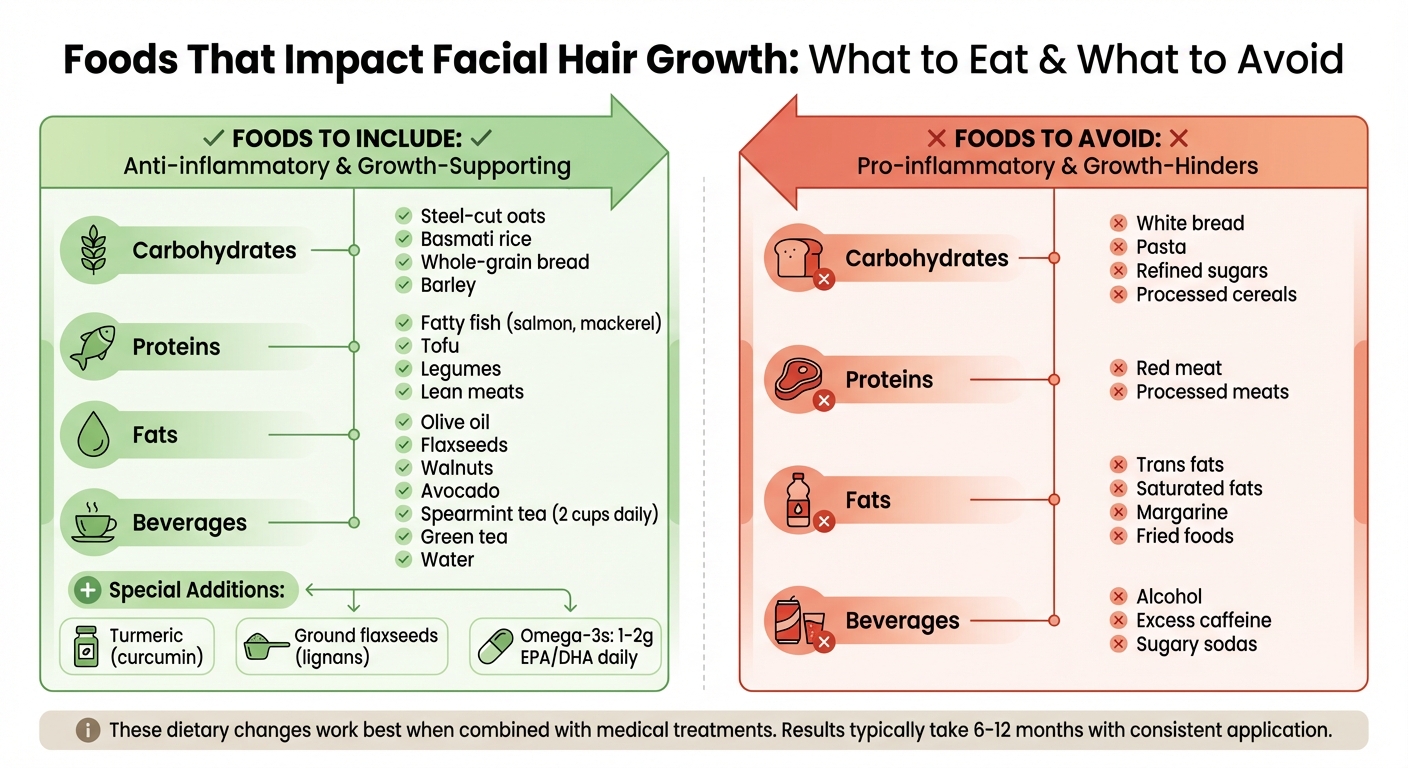
Anti-Inflammatory vs Pro-Inflammatory Foods for Hirsutism Management
Foods That Support Hormone Balance
Certain foods can play a role in balancing hormones and reducing facial hair growth, particularly for women dealing with conditions like PCOS. For example, spearmint tea has been studied for its ability to lower testosterone levels. In one study, women with PCOS who drank two cups daily for 30 days saw reductions in both free and total testosterone levels [17, 20].
Fatty fish like salmon and mackerel are another excellent choice. Packed with omega-3 fatty acids, they not only help lower testosterone but also combat inflammation. Research suggests aiming for 1–2 grams of EPA and DHA daily, either through supplements or by eating fatty fish. Meanwhile, low-glycemic carbohydrates can help manage insulin resistance, a condition impacting about 70% of women with PCOS. Swapping white bread for whole-grain options or choosing Basmati or Doongara rice can improve glucose control. Other great options include steel-cut oats, quinoa, beans, and barley [20, 22].
Turmeric, thanks to its active compound curcumin, offers anti-inflammatory benefits while potentially reducing facial hair growth. Similarly, green tea is rich in catechins, which may lower dihydrotestosterone (DHT) - a testosterone derivative linked to hair follicle stimulation. Finally, flaxseeds, when ground and added to meals, provide lignans that may help decrease testosterone levels.
| Food Category | Recommended Choices | Foods to Avoid |
|---|---|---|
| Carbohydrates | Steel-cut oats, Basmati rice, whole-grain bread, barley | White bread, pasta, refined sugars, processed cereals |
| Proteins | Fatty fish, tofu, legumes, lean meats | Red meat, processed meats |
| Fats | Olive oil, flaxseeds, walnuts, avocado | Trans fats, saturated fats, margarine |
| Beverages | Spearmint tea, green tea, water | Alcohol, excess caffeine, sugary sodas |
While these foods support hormone balance, it’s equally important to avoid those that could worsen inflammation or disrupt insulin levels.
Foods to Avoid for Better Hormone Health
Certain foods can exacerbate hormone imbalances and inflammation, making them worth avoiding. Refined sugars and high-glycemic foods, like sugary snacks, white bread, and processed cereals, can lead to insulin spikes. These spikes may, in turn, increase ovarian androgen production [20, 22].
Trans fats and saturated fats, commonly found in processed cakes, fried foods, and margarine, are also problematic. These fats can trigger inflammatory pathways and elevate markers like C-reactive protein and interleukin-6, both linked to hormone imbalances [21, 22].
Red and processed meats are another category to limit. These foods are associated with higher androgen activity and inflammation. Instead, consider plant-based protein options like tofu, soy milk, and legumes, which can help balance estrogen levels and potentially reduce unwanted hair growth. Lastly, cutting back on alcohol and excess caffeine can further promote healthier hormone regulation [21, 22].
sbb-itb-6dba428
How to Combine Diet with Medical Treatments
Prescription Options for Hirsutism
When it comes to reducing facial hair growth, medical treatments play a key role. The Endocrine Society highlights the importance of pairing lifestyle changes with medications, especially for women dealing with hirsutism and conditions like polycystic ovary syndrome (PCOS). According to their guidance, "for hirsute women with obesity, including those with polycystic ovary syndrome, we also recommend lifestyle changes".
Oral contraceptives are often the first treatment option. They work by suppressing ovarian androgen production, which helps reduce hair growth. If oral contraceptives don't show results after six months, Spironolactone is typically added to the treatment plan. This anti-androgen blocks testosterone receptors, preventing the hormone from stimulating hair follicles. For those interested, Spironolactone starts at $14 per month through Oana Health, and a topical version is available for $43 per month for more localized application.
For targeting facial hair specifically, Eflornithine cream is a popular option. This topical treatment slows new hair growth by inhibiting an enzyme in the hair follicle. Most users need about two months of consistent application to notice visible results. At Oana Health, Eflornithine costs $69 per month, and their combination product, Hairless Hype, is also priced at $69 monthly.
It’s worth noting that most treatments require at least six months of consistent use before you can fully assess their effectiveness. During this time, maintaining dietary changes alongside medication is crucial. By addressing hormonal imbalances and reducing inflammation through your diet, you can enhance the effectiveness of these medical treatments and work toward a more comprehensive management plan.
Building a Sustainable Treatment Routine
To get the most out of your treatment plan, it’s important to combine medical options with dietary adjustments. Focus on managing insulin levels, as elevated insulin can worsen hirsutism by increasing androgen production. Pair your treatment with meals that emphasize anti-inflammatory foods for better results.
Patience is key. While Eflornithine may take about two months to show effects, Spironolactone often requires several months before significant changes are noticeable. In the meantime, consider using methods like shaving or threading to manage existing hair until the treatments start to work.
If you’re unsure about where to start, an online consultation through Oana Health could be a helpful first step. Their licensed medical professionals can review your health history and recommend treatments tailored to your specific hormone profile. Plus, they offer free shipping, delivering prescriptions right to your door. Regular follow-ups with your healthcare provider are also essential to track progress and fine-tune your treatment plan as needed.
The most effective approach often involves combining multiple strategies. UCLA Health underscores the value of a team effort, stating that "the best management of unwanted hair growth often requires a multidisciplinary approach provided by qualified physicians, aestheticians, laser therapists, and electrologists". With consistent therapy, patients can see up to a 70% reduction in hair density in treated areas within 3 to 6 months. However, achieving these results requires sticking to your routine, even if progress feels slow at first.
Why Diet Alone Has Limits and What to Expect
Why Diet May Not Fully Resolve Facial Hair Growth
While dietary changes can help reduce inflammation and lower androgen activity, they’re most effective when paired with other treatments. An anti-inflammatory diet can help moderate hormonal triggers, but it won’t reverse terminal hair that’s already formed. Once androgens transform fine, light vellus hairs into thicker, darker terminal hairs, these changes are typically permanent - even if androgen levels are reduced through diet.
"Once the follicle forms, it's likely that the hair will continue to grow. So, you may opt for a longer-term solution like laser hair removal or electrolysis. Addressing the underlying cause by supporting hormone balance may help slow or stop new hairs from appearing." - Dr. Jolene Brighten, NMD, FABNE
Hirsutism, or excessive facial hair growth, can arise from various factors, including genetics, adrenal issues, or heightened follicle sensitivity to hormones. While an anti-inflammatory diet may help with insulin-driven androgen excess, some women experience facial hair growth due to adrenal hyperplasia, Cushing's disease, or even tumors. In other cases, hormone levels may appear normal, but the hair follicles themselves are overly sensitive to androgens - something dietary changes alone may not fully address.
Hormonal changes take time to show results, and hair growth cycles add another layer of complexity. Clinical guidelines suggest waiting at least six months before evaluating the effectiveness of any treatment - whether dietary or medical. While diet can help prevent new hair growth by addressing hormonal imbalances, it doesn’t remove existing terminal hairs. For that, cosmetic treatments like laser hair removal or electrolysis are often necessary. This highlights the importance of a comprehensive approach that tackles both the root causes and the visible effects of facial hair growth.
How to Set Realistic Treatment Goals
Given the limitations of diet alone, it’s important to set realistic expectations and consider combining dietary strategies with medical and cosmetic treatments. Use diet to manage inflammation and insulin resistance while relying on medical therapies and hair removal techniques for more immediate results.
Patience is key. Nutritionist Kirsten Oddy reminds us:
"It's important to note, that no matter your approach, there are no quick fixes and it can take a long time to notice an improvement in facial hair"
Most treatment plans take anywhere from 6 to 12 months to show full results. It’s crucial to stay consistent - don’t abandon your routine, switch medications, or overhaul your diet plan prematurely. Your body needs time to respond.
Before committing to lifestyle changes alone, confirm with your doctor that there aren’t other underlying causes for your symptoms. For tailored advice, platforms like Oana Health offer online consultations with licensed medical professionals who can help design a personalized treatment plan that blends dietary adjustments with medical interventions.
Conclusion
Managing unwanted facial hair can be more effective when anti-inflammatory diets are paired with medical treatments. Increasing antioxidants and cutting back on pro-inflammatory fats may help reduce androgen activity, but diet alone is rarely enough to address severe hirsutism. The key lies in combining dietary changes with proven medical therapies, such as oral contraceptives or antiandrogens like spironolactone, as discussed earlier.
Lifestyle changes and weight loss can lead to minor improvements in facial hair but are generally not sufficient as standalone solutions. Partnering with licensed medical professionals ensures you’re addressing the root cause of your unwanted facial hair - whether it’s related to PCOS, adrenal conditions, or heightened follicle sensitivity. Online platforms like Oana Health offer consultations and personalized treatment plans, including options like spironolactone and eflornithine, which integrate dietary and pharmacological approaches.
As noted earlier, achieving noticeable results often takes at least six months of consistent treatment. A well-rounded plan - combining anti-inflammatory eating, medical therapies, and cosmetic hair removal techniques - offers the most effective way to manage both new and existing unwanted facial hair.
FAQs
Can an anti-inflammatory diet help reduce unwanted facial hair caused by hormonal imbalances?
An anti-inflammatory diet might play a role in reducing unwanted facial hair by helping to address hormonal imbalances, such as elevated androgen levels often associated with conditions like hirsutism and PCOS. These diets emphasize whole, nutrient-rich foods, healthy fats, and low-glycemic carbohydrates, which can help decrease inflammation and promote healthier hormonal regulation.
By minimizing inflammation, this approach may improve insulin sensitivity and contribute to balancing hormones like testosterone - one of the hormones involved in facial hair growth. While this diet alone likely won't eliminate unwanted hair, it can be a valuable part of a comprehensive treatment plan, especially when combined with medical therapies tailored to individual needs.
Can an anti-inflammatory diet help reduce unwanted facial hair, or is medical treatment necessary?
An anti-inflammatory diet can play a role in promoting hormonal balance and may help with reducing unwanted facial hair linked to conditions like hirsutism. By cutting back on refined carbs, boosting fiber intake, and incorporating anti-inflammatory foods, you can improve insulin sensitivity and lower inflammation - two factors often tied to hirsutism. That said, dietary changes alone usually aren't enough to fully manage facial hair growth.
For more comprehensive results, medical treatments like hormonal therapies or anti-androgens are often necessary. These treatments, prescribed by healthcare professionals, target the underlying causes, such as elevated androgen levels. When combined with a healthy lifestyle, including dietary adjustments, this approach can be highly effective. For most people, blending personalized medical care with thoughtful lifestyle changes delivers the best outcomes.
Can an anti-inflammatory diet help reduce unwanted facial hair?
An anti-inflammatory diet might help in reducing unwanted facial hair by targeting issues like inflammation and hormonal imbalances, which are often tied to conditions such as hirsutism and PCOS. Incorporating foods high in omega-3 fatty acids, such as salmon, mackerel, and sardines, can aid in maintaining hormonal balance. Including berries, leafy greens, nuts, seeds, and spices like turmeric and ginger in your meals can further help in managing inflammation.
Adopting a diet similar to the Mediterranean diet - focused on whole foods, healthy fats, and low-glycemic carbohydrates - may support better hormonal regulation and contribute to reducing facial hair growth over time.