
Antiandrogens for Women: Side Effects Explained
Antiandrogens help women manage conditions like acne, unwanted hair, and hormonal imbalances by reducing the effects of male hormones. While effective, they come with side effects that vary based on the medication. Here's a quick breakdown:
- Common Medications: Spironolactone, Cyproterone Acetate, Bicalutamide
- Short-Term Side Effects: Breast tenderness, menstrual changes, reduced libido, fatigue, dizziness
- Systemic Concerns: Liver toxicity, electrolyte imbalances, pregnancy risks
Each drug has unique risks, like spironolactone potentially causing high potassium or Cyproterone Acetate affecting bone health. Regular medical monitoring and lifestyle adjustments can help manage these effects. Always consult your doctor to tailor treatment to your needs.
What Are the Side Effects of Anti-Androgens? | Oncology Support Network News
Common Side Effects of Antiandrogens
When starting antiandrogens, your body often goes through an adjustment period, which can bring about some side effects. For most women, these effects are mild to moderate and tend to occur during the first few months of treatment. Knowing what to expect can help you determine which symptoms are normal and which might require medical attention.
The side effects you experience can vary based on factors like the specific medication, your dosage, and how your body responds. For instance, pure androgen-receptor blockers are generally easier for women to tolerate than medications that also affect hormone production or other hormone receptors. Below, we explore both short-term and systemic side effects commonly associated with antiandrogens.
Short-Term Side Effects
Breast tenderness is a common issue, affecting 20-40% of women on antiandrogens such as spironolactone. This happens because blocking androgens creates an estrogen-dominant environment, which stimulates breast tissue. The tenderness - often described as aching, swelling, or sensitivity similar to early pregnancy - typically begins within 2-4 weeks of starting treatment. Symptoms usually peak around 1-2 months and tend to resolve on their own over time. If the discomfort persists, adjusting the dosage might help.
Menstrual irregularities are another side effect, impacting 15-30% of premenopausal women during the first 1-3 months. These changes can include breakthrough bleeding, spotting, prolonged cycles, or missed periods. Antiandrogens like cyproterone acetate can disrupt the hormonal communication between the brain and ovaries, leading to these irregularities. In most cases, menstrual cycles stabilize within six months, although they may not return to their pre-treatment patterns.
Changes in libido affect 10-25% of women within the first 4-8 weeks of treatment. Reduced sexual interest or arousal occurs due to lower androgen levels, which play a role in female sexual function. This side effect is more common with higher doses of antiandrogens and is particularly notable with cyproterone acetate. One study reported that 44% of women on this medication experienced decreased sexual enjoyment, with the number rising to 61% among women in long-term relationships. Fortunately, these changes are usually temporary and can improve with lifestyle adjustments like regular exercise.
While these short-term effects can be bothersome, some systemic side effects may also influence your daily routine.
Systemic Side Effects
Fatigue is reported by about 13-20% of women taking antiandrogens. This persistent tiredness often begins 2-6 weeks into treatment and may stem from hormonal changes or electrolyte imbalances, especially with spironolactone. If fatigue becomes an issue, your doctor can perform blood tests to check potassium and electrolyte levels. Correcting any imbalances often alleviates this symptom within a few months.
Dizziness is another potential side effect, occurring in 5-15% of women early in treatment. This lightheaded sensation, sometimes accompanied by vertigo when standing, is often linked to medications like spironolactone, which can lower blood pressure. Similarly, fluid retention - causing mild swelling in the legs or ankles - affects 10-20% of women during the first few weeks. Reducing sodium intake and monitoring your weight can help manage this. If dizziness or swelling persists, your doctor may recommend adjusting the dosage.
Ongoing medical monitoring, discussed later in this article, plays an important role in managing these systemic effects effectively. Regular check-ins with your healthcare provider can help address any persistent issues and ensure your treatment remains on track.
Side Effects by Medication Type
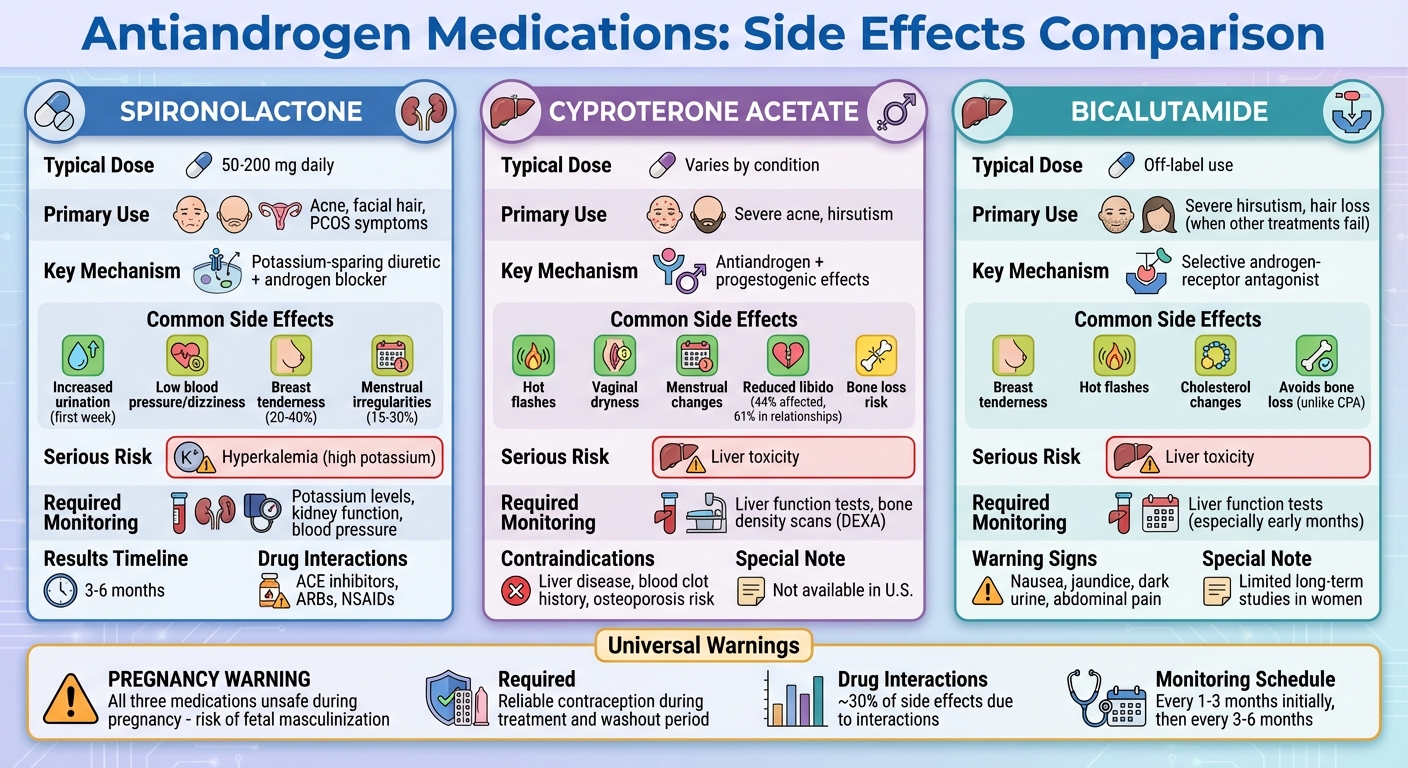
Antiandrogen Medications Side Effects Comparison Chart for Women
Spironolactone, cyproterone acetate, and bicalutamide each come with their own set of pros and cons, which play a key role in deciding the best treatment option. Here’s a closer look at the side effects tied to each medication.
Spironolactone: Benefits and Risks
Spironolactone is one of the most commonly prescribed antiandrogens for women in the U.S., especially for conditions like acne, unwanted facial hair, and PCOS-related symptoms. Typical doses range from 50–200 mg daily. While generally well-tolerated, its role as a potassium-sparing diuretic can lead to some unique side effects.
One common effect is increased urination, which usually starts within the first week as the medication helps the kidneys eliminate excess fluid. You might also experience low blood pressure, which can cause dizziness, especially when standing up quickly. Staying hydrated and standing up slowly can help manage this. Taking the medication with food may also ease any stomach upset.
The most serious potential issue is hyperkalemia, or high potassium levels in the blood. While rare in healthy young women, the risk increases if you have kidney disease, diabetes, or are taking medications like ACE inhibitors, ARBs, or NSAIDs. Regular tests for potassium and kidney function are essential, especially for those at higher risk. Symptoms of hyperkalemia, such as muscle weakness, heart palpitations, or extreme fatigue, should be reported immediately.
If side effects become difficult to manage, your doctor might adjust your dose or recommend combining spironolactone with a hormonal contraceptive to help regulate menstrual cycles and reduce breast tenderness.
Most women notice improvements in their skin and hair within 3–6 months of consistent use. Telehealth services like Oana Health often review your medical history, medications, and pregnancy plans to ensure spironolactone is a safe option for you.
Cyproterone Acetate: What to Know
Cyproterone acetate (CPA) is widely used outside the U.S. to address severe acne, hirsutism, and other conditions linked to excess androgens. Unlike spironolactone, CPA has both antiandrogen and progestogenic effects, meaning it not only blocks androgens but also suppresses ovarian signals from the brain. This suppression can lower estrogen levels, potentially causing hot flashes, vaginal dryness, menstrual changes, and even long-term bone loss.
If you’re younger, have a lower BMI, or a family history of osteoporosis, your doctor might recommend bone-density scans (DEXA scans) and ensure you’re getting enough calcium, vitamin D, and engaging in weight-bearing exercises.
Sexual side effects can also occur with CPA. In one study of 61 women with hirsutism, 44% reported reduced sexual enjoyment, with the percentage rising to 61% among women in stable relationships. These changes can affect quality of life, so it’s important to talk to your doctor about any shifts in mood or libido.
Liver toxicity is another concern. CPA can elevate liver enzymes and, in rare cases, lead to severe liver damage. Regular liver-function tests are mandatory, and symptoms like jaundice, dark urine, fatigue, or abdominal pain should prompt immediate medical attention.
CPA is often chosen when its dual antiandrogen and hormone-suppressing effects are needed, such as in women with severe hirsutism and irregular periods. However, it’s typically avoided in those with liver disease, a history of blood clots, high osteoporosis risk, or migraines with aura. Doctors carefully weigh these factors to tailor treatment to each individual.
For cases where CPA’s dual effects aren’t ideal, bicalutamide offers an alternative with a different set of risks.
Bicalutamide Side Effect Profile
Bicalutamide is a selective androgen-receptor antagonist used off-label in women for severe hirsutism or androgenic hair loss when other treatments haven’t been effective. Unlike CPA, it blocks androgen receptors without significantly lowering estrogen levels, which means it generally avoids symptoms like hot flashes or bone loss. Still, it comes with its own risks.
Because of its strong androgen-blocking properties, bicalutamide can cause breast tenderness, hot flashes, and changes in cholesterol levels. Like CPA, it carries a risk of liver toxicity, so regular liver-function tests are crucial. Your doctor will monitor liver enzymes closely, especially during the early months of treatment. If enzyme levels rise significantly, the dose may be adjusted or the medication discontinued. Symptoms like persistent nausea, abdominal pain, jaundice, dark urine, or severe fatigue should be addressed immediately.
Since long-term studies on bicalutamide in women are limited, it’s usually reserved for cases where other treatments, like spironolactone or topical therapies, haven’t worked. Telehealth platforms like Oana Health can help manage treatment by tracking lab results, adjusting doses remotely, and educating patients on potential warning signs - all while adhering to U.S. care standards.
Important Precaution: Pregnancy and Contraception
All three medications are unsafe during pregnancy due to the risk of fetal masculinization. Reliable contraception is essential during treatment and for a set period after stopping, depending on the medication’s half-life. Discuss your pregnancy plans with your doctor, including washout times and coordination with your OB-GYN or endocrinologist.
sbb-itb-6dba428
Managing and Monitoring Side Effects
Effectively managing antiandrogen therapy requires a mix of lifestyle adjustments, regular medical checkups, and careful attention to potential drug interactions. These steps can help reduce side effects while ensuring your treatment stays safe and works as intended.
Lifestyle Changes to Reduce Side Effects
Small changes to your daily routine can make a big difference in managing side effects. For example, if you're dealing with fatigue, aim for 7–9 hours of sleep each night and include about 30 minutes of low-impact exercise like walking or yoga in your day. Research suggests that moderate physical activity can cut fatigue by 20–30%.
When it comes to fluid retention, what you eat matters. Keep your sodium intake below 2,300 mg daily and read food labels to avoid hidden salt. Staying hydrated with 8–10 glasses of water a day can also help your body flush out extra fluids. If you're taking spironolactone, you don't have to avoid potassium-rich foods like bananas, sweet potatoes, or yogurt - these can actually help maintain your electrolyte balance. However, skip potassium supplements unless your doctor specifically recommends them.
Eating balanced meals can help stabilize your energy levels and mood. It's also important to limit alcohol consumption, especially if you're on cyproterone acetate or bicalutamide, as alcohol can add stress to your liver. Combined with these lifestyle changes, regular medical monitoring ensures your treatment stays on track.
Regular Medical Monitoring
Regular lab tests are a key part of managing antiandrogen therapy. For those taking spironolactone, it's important to monitor potassium levels, kidney function, and blood pressure. These tests are typically done at the start of treatment, then again in the first few weeks after adjusting the dose, and periodically after that.
If you're taking cyproterone acetate or bicalutamide, liver function tests are critical. Other tests may also be needed depending on your specific treatment plan. Women using cyproterone acetate should monitor weight, menstrual cycles, and, if symptoms of low estrogen appear, consider bone density scans (DEXA), particularly for long-term use. In most cases, tests are done every 1–3 months initially, then every 3–6 months once your levels stabilize.
Telehealth services like Oana Health can simplify this process by offering remote lab orders, tracking results over time, and adjusting doses without the need for in-person visits. Staying informed and maintaining open communication with your healthcare provider is essential for effective treatment.
Drug Interactions and Precautions
Managing drug interactions is another critical part of antiandrogen therapy. For example, combining spironolactone with ACE inhibitors, ARBs, or NSAIDs without close monitoring can raise potassium levels and put extra strain on your kidneys.
If you're on cyproterone acetate or bicalutamide, be cautious with medications that can stress the liver, like high doses of acetaminophen, certain antifungals, or some antiepileptics. Even over-the-counter supplements can interfere with your treatment. St. John's Wort, for instance, can reduce the effectiveness of antiandrogens by speeding up liver metabolism, while high-dose vitamin K may affect how other medications work. It's estimated that around 30% of antiandrogen side effects are due to drug interactions, so it's vital to review your entire list of medications and supplements with your doctor.
Pregnancy prevention is also a must during antiandrogen therapy. These medications carry teratogenic risks, meaning they can cause serious developmental issues in male fetuses. Reliable contraception - like birth control pills, IUDs, or implants - is essential during treatment and often for a period afterward. Additionally, never stop taking antiandrogens abruptly without consulting your doctor, as this could lead to a sudden flare-up of conditions like severe acne or hirsutism.
Be alert to signs of liver problems, such as dark urine, yellowing of the skin or eyes, extreme fatigue, or pain on the right side of your abdomen. If you notice any of these symptoms, contact your doctor immediately for further evaluation and potential adjustments to your medication.
Conclusion
Understanding both the advantages and risks of antiandrogens plays a crucial role in ensuring effective treatment. These medications can significantly improve conditions like acne, hirsutism, hair loss, and related symptoms, offering relief for many patients. For those carefully selected and monitored by experienced clinicians, the benefits often outweigh the potential risks. However, side effects such as menstrual changes, mood shifts, sexual side effects, and elevated liver enzymes require close attention.
The type of medication, dosage, and treatment duration can influence the likelihood and severity of side effects. Regular lab testing is key to keeping these manageable. With proper dosing, consistent monitoring, and follow-up care, most side effects can be minimized or avoided.
Preventing pregnancy is critical, as antiandrogens can harm fetal development. If pregnancy is suspected, stop taking the medication and contact your healthcare provider immediately. Additionally, seek urgent medical attention for serious symptoms like severe abdominal pain, jaundice, chest pain, shortness of breath, or extreme mood changes. For other symptoms, such as persistent fatigue, unusual bleeding, or breast tenderness, notify your provider even if the situation doesn’t seem urgent.
Staying connected with your healthcare provider through regular lab work and follow-ups every few months is essential for catching potential issues early - often before symptoms even arise. Services like Oana Health can simplify this process by offering personalized prescriptions, lab test coordination, side-effect monitoring, and medication delivery to your doorstep. Preparing for appointments with symptom updates and questions helps ensure effective and safe treatment.
Adjustments to treatment plans are common. This might include changing dosages, adding contraceptive measures, switching to different medications, or incorporating lifestyle changes such as improved nutrition, regular exercise, and stress management. Collaborating closely with your clinician allows for a tailored approach to therapy that evolves with your needs.
FAQs
What can I do to reduce the side effects of antiandrogens?
Managing the side effects of antiandrogens can often be made easier with a few lifestyle tweaks. Start by focusing on a nutritious diet that includes plenty of fruits, vegetables, and lean proteins to keep your body strong and supported. Adding regular physical activity to your routine can boost your energy levels and help maintain a healthy weight. For emotional well-being, techniques like meditation or yoga can be helpful in managing stress.
Other simple steps, like staying hydrated, steering clear of alcohol and smoking, and following your doctor's advice on skincare and hair care, can also have a positive impact. Before making any big changes, though, it's always best to check in with your healthcare provider to make sure everything fits with your treatment plan.
What are the differences in side effects between spironolactone and cyproterone acetate?
Spironolactone and cyproterone acetate are both antiandrogens, but their side effects differ depending on how they interact with the body. Spironolactone tends to cause fewer hormonal side effects, though it can lead to issues like elevated potassium levels, dizziness, or breast tenderness. Meanwhile, cyproterone acetate is associated with side effects such as fatigue, weight gain, and, in some cases, liver-related concerns.
When deciding between these medications, it's essential to consult with a healthcare provider. They can review your medical history and help you choose the treatment that aligns with your health needs and goals. For convenient and expert-guided hormonal health solutions, Oana Health provides treatments delivered right to your doorstep.
Why is it important to have regular check-ups while taking antiandrogens?
Regular check-ups play a key role when you're on antiandrogens. These visits give your healthcare provider the chance to track how well the treatment is working, watch for any side effects, tweak dosages if necessary, and answer any questions or concerns you might have along the way.
Keeping up with these appointments helps lower the chance of complications and ensures your treatment stays in line with your overall health goals.