
Can BHRT Regrow Thinning Hair?
If your hair is thinning due to hormonal changes like menopause or postpartum, Bioidentical Hormone Replacement Therapy (BHRT) might help. BHRT restores estrogen and progesterone levels, which can slow hair loss and, in some cases, support regrowth. Here's the key takeaway:
- How BHRT Works: It rebalances hormones, extending the hair growth phase and reducing the effects of DHT, a hormone that shrinks hair follicles.
- What to Expect: BHRT is more likely to prevent further hair loss than reverse severe thinning. Results may take 3–6 months, with full improvement often requiring 12 months or more.
- Ideal Candidates: Women in perimenopause, menopause, or those with hormonal imbalances like PCOS are most likely to benefit.
- Complementary Treatments: Combining BHRT with options like minoxidil or spironolactone can improve outcomes.
While BHRT shows promise, it’s not a one-size-fits-all solution. Early treatment and personalized plans, guided by hormone testing, are crucial for the best results.
How to Stop Hair Loss Using Bio-identical Sex Hormones
What is BHRT and How Does It Work?
Bioidentical hormone replacement therapy (BHRT) uses hormones that are structurally identical to those naturally produced by the body. This approach differs from traditional hormone replacement therapies, which often use synthetic hormones or estrogen formulas derived from animal sources that don't match the body's natural hormone structure. BHRT hormones are typically derived from plant-based precursors and processed to mimic natural hormones. These therapies are available in two main forms: standardized, FDA-approved products and customized compounded formulations prepared by pharmacists.
How BHRT Restores Hormone Balance
BHRT replenishes essential hormones like estrogen and progesterone that decline during perimenopause, menopause, or as a result of conditions like PCOS or aging. These hormonal shifts can disrupt the hair growth cycle. By restoring estrogen levels, BHRT helps balance androgen activity - such as dihydrotestosterone (DHT) - which might otherwise cause hair follicles to shrink, producing thinner and shorter strands. Additionally, micronized bioidentical progesterone can promote hair health, unlike some synthetic progestins that may act more like androgens. Let’s explore how these hormones influence each phase of hair growth.
The Connection Between Hormones and Hair Growth
Hair grows in three distinct phases: anagen (the active growth phase lasting 2–7 years), catagen (a short transitional phase of about 2 weeks), and telogen (the resting and shedding phase, which lasts around 3 months). Estrogen plays a key role in extending the anagen phase, which helps hair grow thicker and fuller. When estrogen levels drop, hair spends less time growing and more time shedding, while DHT activity increases. Dr. Kate Placzek of ZRT Laboratory explains:
"Estrogen increases the amount of time that hair spends in the growing phase, so when estrogen declines, hair loses these protective effects."
Progesterone also contributes to hair health by reducing androgen production. When progesterone levels fall, shedding can increase, and androgens may more easily shrink hair follicles. Testosterone, for example, converts into DHT, which binds to hair follicles, causing them to shrink and produce thinner, weaker strands. Thyroid hormones also play a role by regulating follicle metabolism. Low thyroid hormone levels, such as in hypothyroidism, can lead to hair that is dry, brittle, and diffusely thinned.
Can BHRT Regrow Thinning Hair?
BHRT can help slow hair loss and, in some cases, promote regrowth, though results vary from person to person. The treatment primarily works by balancing estrogen and progesterone levels. This helps extend the anagen (growth) phase of hair and reduces the effects of androgens like DHT, which can shrink hair follicles. However, BHRT tends to be more effective at halting further hair loss rather than reversing advanced thinning. Because of this, starting treatment early - at the first signs of thinning - offers the best chance to maintain hair density.
Research on BHRT and Hair Regrowth
Hormonal therapies can deliver noticeable improvements when used consistently. For instance, a study involving 80 women with biopsy-confirmed female pattern hair loss showed that 88% saw either improvement or no further progression when treated with anti-androgen medications like spironolactone or cyproterone acetate. Another study revealed that 75% of women reported stabilization or improvement after spironolactone treatment. Additionally, among premenopausal women taking 2.5 mg of finasteride daily alongside an oral contraceptive, 62% experienced improvements in hair loss.
Patience is key when it comes to seeing results. Most women need 3 to 6 months to notice any changes in hair density, while a full therapeutic response can take 12 to 24 months of consistent treatment. Kevin R. Brough from the Mayo Clinic’s Department of Dermatology highlights this:
"Progress is slow, and months or years can be required to see a significant improvement."
He also stresses that even maintaining current hair density should be considered a win, as age-related thinning is common. BHRT achieves this by increasing sex-hormone-binding globulin (SHBG), which binds and neutralizes free androgens, protecting hair follicles from shrinking. Still, individual factors play a big role in determining outcomes, as discussed below.
Factors That Affect BHRT Results
Several factors influence how well BHRT works for hair loss. The stage of hair thinning is crucial - women in the early stages tend to respond better than those with advanced balding, where many hair follicles have already become dormant. Hormone levels and receptor sensitivity also matter. Women with biochemical hyperandrogenism (elevated androgen levels) often benefit more from treatments like cyproterone acetate, which blocks DHT and reduces testosterone. In a year-long trial, cyproterone acetate was more effective for women with high androgen levels, while 2% topical minoxidil worked better for those without hyperandrogenism.
Nutritional health and lifestyle also play a big role in BHRT’s success. Deficiencies in ferritin (iron storage), Vitamin D, B12, zinc, or biotin can worsen or mimic hormonal hair loss, even if hormone levels are balanced. High cortisol from chronic stress can lead to telogen effluvium, a condition where excessive shedding exacerbates thinning. On the flip side, regular aerobic exercise can improve blood flow to the scalp, ensuring hair follicles get the nutrients they need.
Who Should Consider BHRT for Hair Loss?
Bioidentical hormone replacement therapy (BHRT) can be a valuable option for addressing hair loss caused by hormonal imbalances. However, its effectiveness depends on the individual's specific condition, and not everyone will benefit equally. Women who experience disruptions in estrogen, progesterone, or androgen levels are often the most likely to notice improvement.
Conditions Linked to Hormonal Hair Loss
Women going through menopause or perimenopause are often ideal candidates for BHRT. During these stages, declining estrogen and progesterone levels reduce the protective effects these hormones have against androgens, which can lead to thinning hair or bald spots. In fact, about one-third of women experience some degree of hair loss as they approach menopause. The prevalence of female pattern hair loss (FPHL) increases with age, affecting roughly 12% of women in their 20s but more than 50% of women over 80. Kevin R. Brough from the Mayo Clinic's Department of Dermatology explains:
"Estrogen has been hypothesized to have a protective role against hair loss on the basis of the observation that patients with lower estrogen levels during menopause, postpartum, or treatment with aromatase inhibitors... are more likely to develop FPHL."
Women with Polycystic Ovary Syndrome (PCOS) also frequently face hair loss challenges. PCOS, the most common endocrine disorder linked to FPHL, is associated with elevated androgen levels. These hormonal imbalances can lead to hair thinning, acne, unwanted facial hair, and irregular menstrual cycles. Interestingly, about 25% of women with diffuse alopecia show signs of biochemical hyperandrogenism, even if they don’t exhibit visible symptoms of androgen excess. For PCOS-related hair loss, personalized treatments such as oral minoxidil or topical spironolactone are available through Oana Health, offering convenient, at-home solutions.
Postpartum women may also benefit from BHRT if hair loss continues beyond the normal postpartum recovery period. After pregnancy, a drop in estrogen and progesterone can trigger telogen effluvium, a temporary but noticeable shedding phase. While this condition typically resolves within months, some women experience prolonged thinning that might require hormonal treatment.
Thyroid disorders are another common cause of diffuse hair shedding. These conditions disrupt the hair growth cycle, and addressing thyroid imbalances is often a crucial first step before considering BHRT. Comprehensive hormone testing is essential to pinpoint the exact cause of hair loss and guide treatment.
The Importance of Hormone Testing
Accurate hormone testing is critical for tailoring BHRT to each individual. Tests using blood, saliva, or urine can measure levels of androgens, prolactin, FSH, LH, 17-hydroxyprogesterone, and estrogen. These results help determine whether a woman needs estrogen supplementation, androgen blockers, or another targeted treatment.
Testing also helps differentiate hormonal hair loss from other conditions with similar symptoms. For example, thyroid dysfunction and iron deficiency anemia can mimic the thinning patterns seen in FPHL. Treating the wrong condition can delay effective care. Studies show that women with FPHL respond better to antiandrogen therapy when their ferritin levels are above 40 μg/L. Additionally, screening for 17-hydroxyprogesterone can identify nonclassic congenital adrenal hyperplasia (NCCAH), a rare but treatable cause of androgen excess.
Timing plays a key role in obtaining reliable test results. For instance, measuring total and free testosterone levels in the early morning provides the most accurate readings. Women with a family history of adrenal issues or from high-risk ethnic groups should also be screened for 21-hydroxylase deficiency. Elise A. Olsen from Duke University Medical Center highlights the importance of this approach:
"Establishing the presence or absence of hyperandrogenism or hyperandrogenemia may identify subpopulations of patients with varied etiologic factors and response to treatment."
Once testing confirms specific hormonal imbalances, healthcare providers can design a personalized BHRT plan. This approach ensures that treatment is targeted, improving outcomes while reducing unnecessary side effects.
sbb-itb-6dba428
BHRT Treatment Methods and Expected Timelines
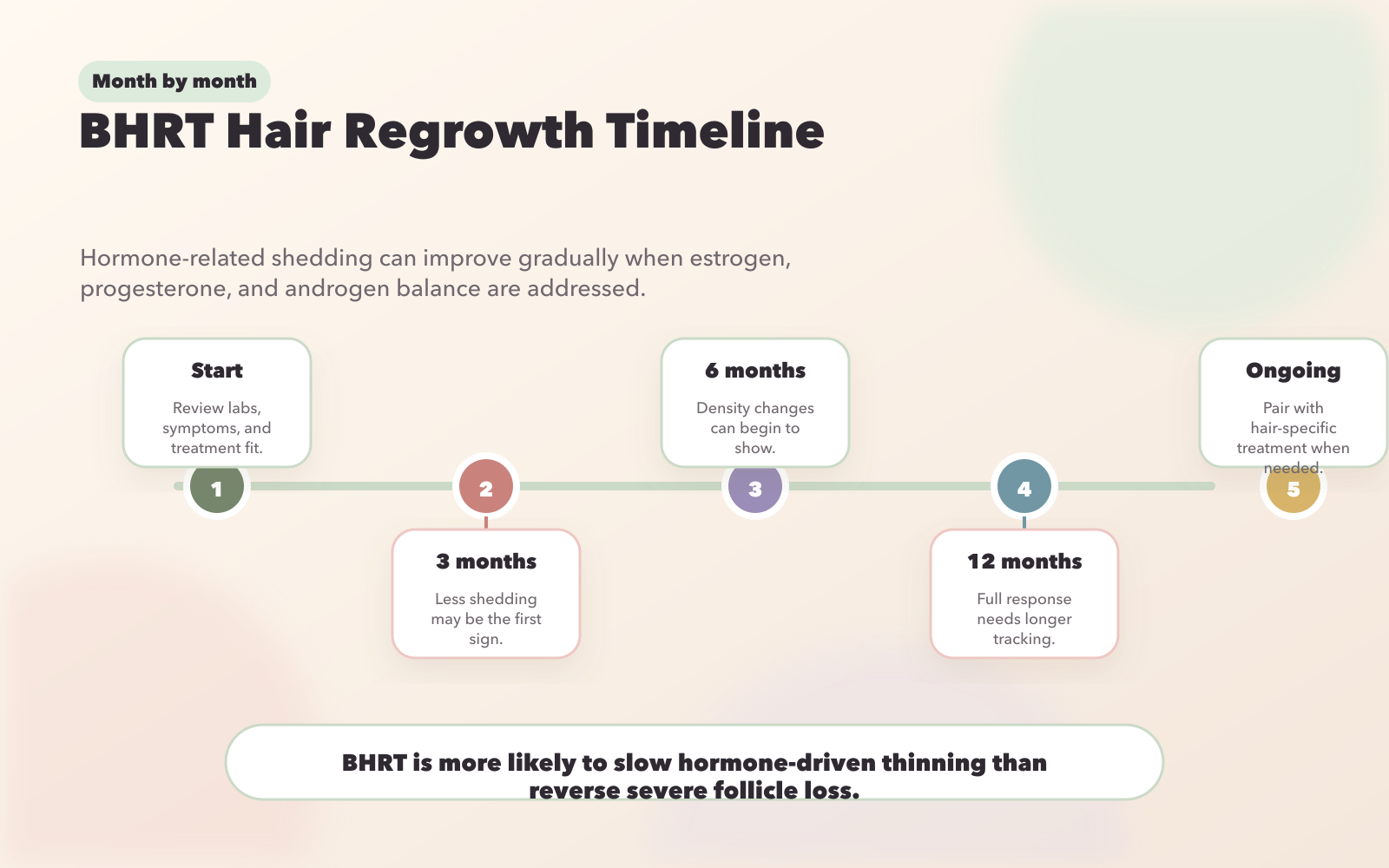
BHRT Hair Regrowth Timeline: What to Expect Month by Month
How BHRT is Administered
Bioidentical Hormone Replacement Therapy (BHRT) can be delivered in various forms, each tailored to specific needs and circumstances:
- Pills or tablets: These contain bioidentical estradiol or micronized progesterone and work systemically to restore hormone levels. However, they’re not ideal for smokers or women with high blood pressure.
- Transdermal patches: Applied to the skin twice a week, these patches provide a steady release of hormones. They're often recommended for women with cardiovascular risks, migraines, or higher body weight.
- Gels and creams: These are applied daily to the skin, allowing hormones to enter the bloodstream gradually. They are particularly effective for addressing systemic symptoms like hair thinning.
- Pellets: Small hormone pellets are inserted under the skin in the upper buttocks through a minor procedure. These dissolve slowly over several months, offering long-term release. However, they are not FDA-approved for this purpose and may cause side effects such as unpredictable hair growth patterns or anxiety. Adjusting the dose requires surgical removal, making them less flexible than other options.
- Injections: Hormones can also be delivered via intramuscular or subcutaneous shots. While effective, they may come with a higher risk of side effects compared to transdermal methods.
Choosing the right method depends on individual health factors and goals. For tailored guidance, you can consult Oana Health through their telehealth services. These methods form the foundation for addressing hormonal imbalances and initiating hair regrowth.
When to Expect Hair Regrowth Results
Understanding the timeline for hair regrowth is essential for setting realistic expectations. While symptoms like hot flashes may subside within days or weeks, hair regrowth takes longer due to the natural hair growth cycle. Here’s what to expect:
- Reduced shedding: Many people notice less hair shedding within the first few weeks of treatment.
- Visible improvements: Increased hair density and thickness typically become noticeable after 3 to 6 months.
- Optimal results: Full regrowth potential often requires 12 months or more. A study involving 87 patients on hormonal therapy showed significant improvements in hair density and thickness after a year of consistent treatment.
Several factors can influence these timelines. For example, low ferritin levels (a type of iron storage) can hinder progress - levels around 70 μg/L are recommended for better results. Other conditions like thyroid disorders or PCOS, along with lifestyle factors such as high stress, poor sleep, or diets rich in refined sugar, can also slow the process.
Consistency is key. Since scalp hair grows at an average rate of about 0.5 inches per month, sticking to daily treatment is critical. Interruptions can lead to setbacks, including renewed shedding. Hair regrowth is a gradual process that requires patience as the full hair cycle unfolds.
Combining BHRT with Other Hair Loss Treatments
While BHRT plays a key role in balancing hormones, pairing it with additional treatments can amplify hair regrowth results.
Pairing BHRT with Topical and Oral Medications
BHRT works best when used alongside other targeted therapies. While it tackles systemic hormonal imbalances, medications like minoxidil and spironolactone directly stimulate hair follicles to combat hair loss.
For instance, Oral Minoxidil ($25/month through Oana Health) extends the anagen phase of hair growth, encouraging regrowth when used with BHRT. While BHRT addresses the hormonal factors behind follicle miniaturization, minoxidil focuses on actively promoting hair growth.
Similarly, Topical Spironolactone ($43/month) blocks DHT receptors directly at the scalp, offering additional protection. This complements BHRT’s hormonal balancing by directly targeting follicles, creating a cohesive treatment plan. Many clinicians begin with minoxidil and later add hormonal treatments to stabilize and enhance results. This layered approach offers a more effective solution for hair restoration.
Why a Multi-Treatment Approach Works
Using multiple therapies together tackles different aspects of hair loss, reinforcing each other for better results. Hair loss often stems from a mix of factors, including hormonal changes from menopause or PCOS, stress, aging, and nutritional gaps. No single treatment can address all these contributors.
"Bioidentical hormone therapy isn't meant to replace all other treatments - it's a foundational strategy for those whose hair loss is rooted in internal imbalance." - ZMD Hair
This combined approach ensures comprehensive care. BHRT rebalances the hormones necessary for healthy follicle function, while targeted medications like minoxidil and spironolactone stimulate the hair growth cycle. Research shows that integrating treatments leads to noticeable improvements in hair stabilization and regrowth.
Side Effects and Medical Monitoring
Possible Side Effects of BHRT
Using BHRT to help with hair regrowth by balancing hormones can be effective, but it’s not without its challenges. Hormonal adjustments often come with side effects, especially early on. Common issues include acne, increased facial hair, mood swings, weight gain, bloating, breast tenderness, headaches, and occasional spotting or breakthrough bleeding. For those using patches, creams, or gels, irritation like itching or redness at the application site may also occur.
There are more serious risks tied to long-term use. These include a higher likelihood of blood clots, stroke, gallbladder disease, and possibly heart disease or breast cancer. The form of BHRT you choose matters too. Methods like pellets and injections might bring more complications, with some users experiencing up to six times the number of side effects compared to other methods. These can include heightened anxiety and unusual uterine bleeding.
"Side effects can occur, especially after the first dose. Many side effects get better as the body adjusts." - Cleveland Clinic
The good news? Most side effects tend to ease as your body gets used to the treatment. However, if symptoms persist, it’s crucial to let your healthcare provider know so they can adjust your dosage. This highlights the importance of staying in close contact with a medical professional throughout your treatment.
Why Regular Medical Monitoring is Necessary
Because of these risks, regular check-ins with a qualified healthcare provider are essential. These appointments help track hormone levels and ensure your treatment is tailored to your body’s needs as they change over time. Hormone tests are a key part of this process, allowing providers to make precise adjustments to your treatment plan. It’s especially important since noticeable hair regrowth often takes three to six months to appear.
Routine monitoring also helps catch and manage any serious risks early. For example, if you’re taking additional medications like flutamide alongside BHRT, liver function tests are recommended to safeguard your health. Providers like Oana Health specialize in ongoing monitoring and dosage adjustments, ensuring your BHRT remains both safe and effective.
Conclusion: Is BHRT Effective for Thinning Hair?
The evidence suggests that Bioidentical Hormone Replacement Therapy (BHRT) can be a helpful approach for addressing hormone-related hair loss, particularly during perimenopause and menopause.
By restoring estrogen and progesterone levels, BHRT helps protect hair follicles, which may stabilize or even improve hair density. Hormonal changes are a major factor in hair loss, affecting about 95% of women at some point.
That said, success often means halting further hair loss rather than reversing advanced thinning. As researchers at Mayo Clinic explain:
"Maintaining the current hair density can be considered a successful treatment because women tend to have further thinning as they age".
Improvements generally become noticeable within 3 to 6 months, with the best results often appearing after 6 to 12 months of treatment.
For optimal results, BHRT works best when combined with a well-rounded approach. This includes proper nutrition, maintaining adequate iron levels (ferritin around 70 µg/L), and complementary treatments like minoxidil. Partnering with a healthcare provider ensures personalized hormone formulations and regular monitoring to track progress.
If you're experiencing hormone-related hair thinning, consider consulting Oana Health. They offer tailored hormone testing, FDA-approved bioidentical hormones, and additional treatments such as oral minoxidil and topical spironolactone. With convenient home delivery and ongoing medical support, starting treatment during perimenopause or early menopause can make a big difference in preserving hair density.
FAQs
How long does it take to see hair regrowth results with BHRT?
Hair regrowth with bioidentical hormone replacement therapy (BHRT) depends on several factors, including the root cause of hair thinning, how advanced the hair loss is, and your body’s individual response to the treatment. Some individuals may start seeing thicker hair within a few months, while for others, noticeable changes might take longer.
Setting realistic expectations is key. Consulting with a licensed medical professional can help you determine if BHRT is a suitable option for your hair loss. A personalized treatment plan designed around your unique needs can improve the likelihood of achieving better results over time.
What are the risks or side effects of using BHRT for hair loss?
Yes, bioidentical hormone replacement therapy (BHRT) can come with potential side effects and risks. Some people may experience weight fluctuations, mood swings, headaches, or breast tenderness. While these are more common, there’s also a small chance of experiencing more serious complications, such as blood clots or heart-related issues.
Before starting BHRT, it’s crucial to have an open conversation with a licensed healthcare provider. They can review your medical history and address any concerns to help determine if this therapy aligns with your health needs.
Can BHRT be combined with other treatments to improve hair regrowth?
Yes, bioidentical hormone replacement therapy (BHRT) can be combined with other treatments to improve hair regrowth efforts. BHRT helps address hormonal imbalances - like low levels of estrogen, progesterone, or testosterone - that are often linked to thinning hair. To get the best results, it’s often paired with treatments that directly target hair follicles.
For example, many combine BHRT with platelet-rich plasma (PRP) therapy, a process where growth factors from your own blood are injected into the scalp to stimulate hair follicles. Other effective options include topical minoxidil, low-level laser therapy, and specialized nutritional supplements. Each of these treatments focuses on different parts of the hair growth cycle, and when combined, they can deliver more noticeable results - especially when tailored to your needs by an experienced provider.
If you’re looking for a customized plan, Oana Health offers telehealth consultations to design a coordinated approach. Their licensed medical professionals can prescribe BHRT and suggest additional therapies, with everything conveniently delivered right to your door.