
Carbon Footprint of Laser Hair Removal Devices
Laser hair removal is gaining attention for its environmental impact compared to shaving and waxing. While it requires electricity and involves manufacturing emissions, its long-term benefits often outweigh the continuous waste and resource demands of traditional hair removal methods. Here's a quick breakdown:
- Energy Use: Professional devices consume more electricity but complete treatments in fewer sessions than at-home devices.
- Waste Reduction: Laser devices eliminate the need for disposable razors, wax strips, and creams, reducing lifetime waste.
- Water Savings: Unlike shaving, which often involves running water, laser treatments use minimal water for device cooling.
- Device Longevity: Modern devices last years, reducing electronic waste compared to older models or traditional tools.
Advancements in laser technology are improving energy efficiency and reducing environmental impact, making laser hair removal a more eco-conscious option for long-term hair reduction.
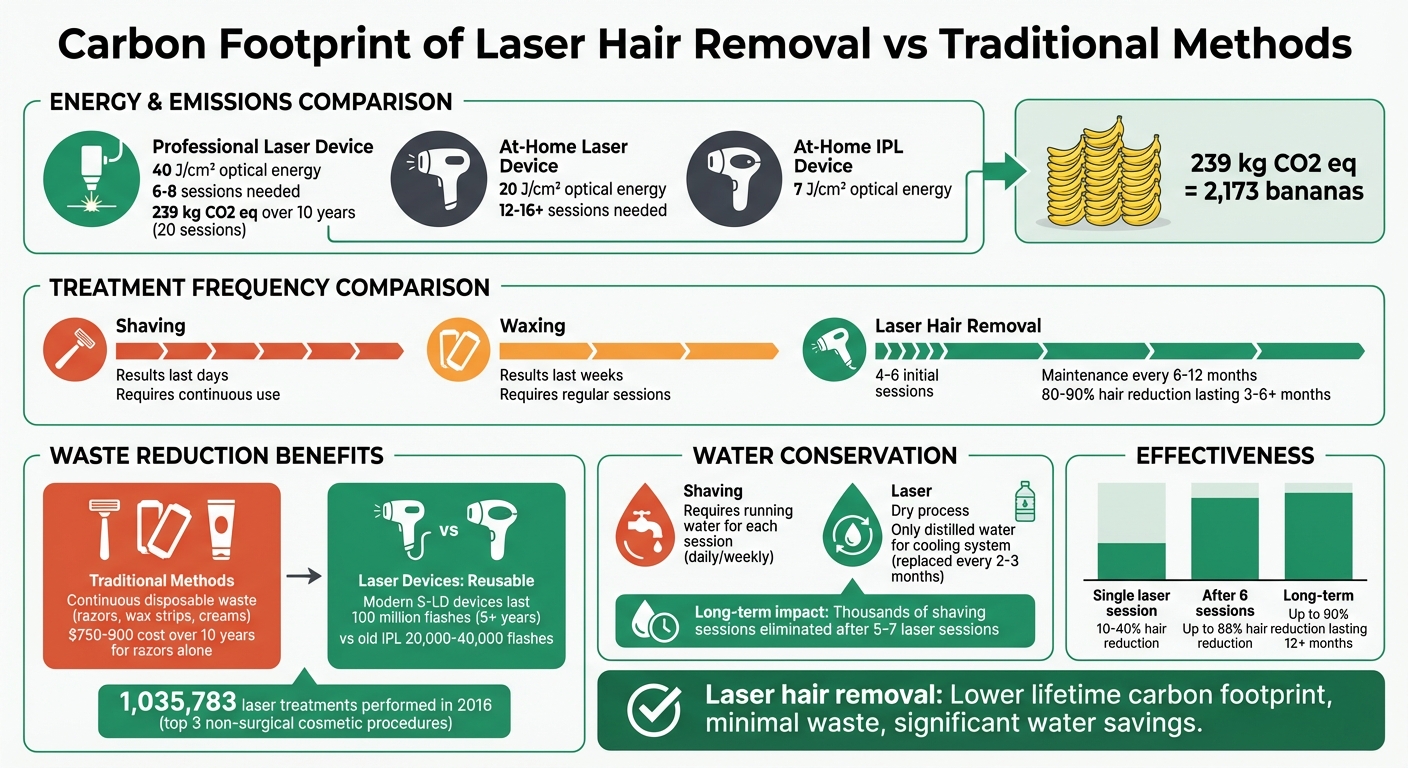
Environmental Impact Comparison: Laser Hair Removal vs Traditional Methods
Energy Use and Greenhouse Gas Emissions
Electricity Requirements of Laser Hair Removal Devices
The energy demands of laser hair removal devices can differ significantly based on whether they’re professional-grade or designed for at-home use. Professional devices typically deliver around 40 J/cm² of optical energy, while at-home devices top out at approximately 20 J/cm². Meanwhile, at-home IPL devices operate at a lower energy level, producing about 7 J/cm².
These energy differences directly influence electricity consumption. A standard full-leg treatment session takes roughly 45 minutes. Professional devices can complete a treatment course in 6 to 8 sessions, while at-home devices, due to their lower power output, require more than double that number to achieve comparable results. These distinctions not only impact treatment effectiveness but also significantly shape the devices' long-term environmental footprint. Interestingly, the electricity used during the "use stage" of these devices contributes more to their overall carbon footprint than the materials involved in manufacturing.
"The use stage has a relatively bigger contribution to the potential environmental impacts, compared to the raw material acquisition stage." - Sustainable Production and Consumption Journal
Over a span of 10 years with 20 sessions, an at-home laser device is estimated to produce around 239 kg CO2 eq, accounting for both its manufacturing and electricity use. To put that into perspective, this is equivalent to the emissions from about 2,173 bananas. In contrast, electrolysis, a more energy-intensive procedure, generates even higher emissions due to its frequent sessions and extended treatment durations.
Next, let’s explore how advancements in technology are making these devices more energy-efficient.
Energy Efficiency in Newer Devices
Recent advancements in laser technology have focused on reducing energy waste while improving performance. For instance, in October 2022, Ulike introduced the Sapphire Ice-cooling Air3 device, which boosted total energy utilization to 21 J while incorporating enhanced cooling features for greater user comfort. Similarly, in March 2022, Lumenis launched the Splendor X device in the UK, offering CE-approved capabilities for multiple treatments on a single energy-efficient platform.
"Modern laser hair removal devices are designed to be energy-efficient, utilizing advanced technology to deliver effective treatments with minimal power consumption." - Femme Moderne Center for Aesthetics
Newer systems are also integrating multi-use platforms like the Quanta EVO Light series, which allow clinics to perform various treatments using a single device. This approach eliminates the need for multiple energy-intensive machines. For example, the Femme Moderne Center for Aesthetics in Draper, Utah, uses a single platform equipped with multiple handpieces and wavelengths, reducing its environmental impact significantly compared to maintaining separate devices. Additionally, modern Alexandrite and IPL systems offer faster treatment times, which means the devices stay powered on for shorter durations during each session. These innovations collectively help lower the lifetime carbon footprint of laser hair removal treatments.
Laser Hair Removal vs. Traditional Hair Removal Methods
Waste Production and Resource Use
Traditional hair removal methods like shaving, waxing, and depilatory creams generate a continuous stream of waste. These methods depend on disposable items such as razors, wax strips, and creams, all of which require manufacturing, transportation, and eventual disposal throughout a person's lifetime.
Laser hair removal, on the other hand, operates on a different model. These devices are reusable tools capable of delivering thousands of treatments without producing physical waste like traditional methods. However, they aren't entirely waste-free. Each laser session releases a plume containing 377 identified compounds, including 13 carcinogens and over 20 environmental toxins. While this biohazardous smoke raises occupational health concerns for practitioners, it doesn't generate the same volume of physical waste as traditional methods.
"Laser hair removal has become the leading therapy option for long-term results... [Traditional] methods are relatively inexpensive, convenient and easily accessible, the results are short-lived, and require regular repetitive treatments." - Mandy M. Thomas, Department of Somatology, University of Johannesburg
The difference in frequency is also worth noting. Shaving offers results that last only a few days, waxing extends this to a few weeks, but laser hair removal typically requires just 4 to 6 initial sessions, with maintenance needed only once every 6 to 12 months. This reduced frequency means fewer resources are consumed over time compared to traditional methods.
When looking beyond waste, the overall energy and material demands further highlight the differences between these approaches.
Lifetime Costs to the Environment
An analysis of the environmental impact over time reveals a more complex picture. Traditional hair removal methods rely on the ongoing production of consumables like razor blades, packaging, and chemical products. This creates a continuous cycle of resource extraction, manufacturing emissions, and transportation impacts that persists as long as these methods are used.
Laser devices, on the other hand, require a significant upfront investment in specialized manufacturing and consume electricity during their use. However, their ability to achieve long-term hair reduction means their environmental footprint levels off after the initial treatment phase. A single laser session can reduce hair by 10% to 40%, and with repeated treatments, reductions of up to 90% can last for 12 months or longer. This permanence sharply contrasts with the ongoing environmental toll of traditional methods.
The waste comparison becomes even more striking when considering the popularity of laser hair removal. In 2016, it ranked among the top three non-surgical cosmetic procedures, with 1,035,783 treatments performed. If even a portion of these individuals had continued using traditional methods, the resulting waste from disposable products would have been immense. Though laser treatments emit ultrafine particles - up to 129,376 particles per cubic centimeter - this exposure is minimized with the use of pre-laser lotions.
Waste Reduction and Material Efficiency
Eliminating Single-Use Products
Switching from traditional hair removal methods to laser technology dramatically changes how we think about waste. Methods like shaving, waxing, and chemical depilatories create a constant stream of disposable waste over a person’s lifetime.
Laser hair removal disrupts this cycle. After completing 4 to 6 initial sessions, most people only need maintenance treatments every 6 to 12 months. This means fewer treatments overall and eliminates the steady production and disposal of temporary hair removal products. By replacing disposable razors and waxing kits, laser devices cut down on the resources needed for manufacturing and transportation.
Consider this: the cost of daily razor use alone can add up to $750 to $900 over a decade. Laser devices not only save money but also reduce waste. Their durability further minimizes environmental harm by lowering the need for frequent replacements.
Device Lifespan and Replacement Frequency
The longevity of laser devices plays a big role in reducing their environmental impact. Modern S-LD (Super-Light Emitting Diode) devices are built to last, with a lifespan of 100 million flashes - enough for at least 5 years of use. Compare that to older IPL systems, which typically last for only 20,000 to 40,000 flashes.
"Laser cutting, on the other hand, uses a focused beam of light that doesn't require the same level of consumables or maintenance, resulting in fewer emissions throughout the equipment's life cycle." - Stephens Gaskets
This extended lifespan means less electronic waste. These devices are made with high-quality materials like synthetic ruby crystals, alexandrite crystals, and Neodymium-doped Yttrium Aluminum Garnet (Nd:YAG), along with sapphire or quartz tips that can handle high heat and remain reusable. Unlike traditional tools that rely on replaceable blades or parts, laser technology uses focused light beams that don’t wear out mechanically. This reduces the need for replacements, cuts down on raw material extraction, and shrinks the overall material footprint of the equipment.
The combination of durability and efficiency not only decreases electronic waste but also lowers the lifetime carbon footprint of laser treatments. This reinforces the environmental benefits of adopting laser technology for hair removal.
sbb-itb-6dba428
Advances in Eco-Friendly Laser Design
Recyclable Materials and Cleaner Manufacturing
Laser device manufacturers are making strides in sustainability by incorporating energy-efficient components and advanced LED chips capable of supporting up to 100 million flashes, which helps cut down on electronic waste. One standout technology, Super-Light Emitting Diode (S-LD), uses targeted near-infrared beams (780–850 nm) to deliver consistent energy with deeper penetration. This precision reduces the number of treatment sessions needed - typically just 3 to 5 - resulting in lower electricity use overall. Beyond these material advancements, manufacturers are rethinking device designs to extend their lifespan and further minimize waste.
Multi-Use Platforms and Extended Device Life
Sustainability is also being advanced through multi-use platform designs. Devices like the "Trio" handpiece combine three wavelengths (755 nm, 810 nm, and 1,064 nm) into a single unit. This eliminates the need for multiple machines, cutting down on resource use. By consolidating capabilities, clinics can offer a variety of treatments without relying on separate specialized equipment.
"The large spot size provides efficacious hair removal due to photon recycling and increased depth of penetration." – Yasmeen Jabeen Bhat, Department of Dermatology, STD & Leprosy
Systems like the Vectus take this further by incorporating an 18-mm spot size, which enhances photon recycling to improve penetration depth and speed up treatments while reducing wasted energy. Additionally, vacuum-assisted technology draws the skin closer to the handpiece, lowering the required fluence. Meanwhile, SHR mode operates at 10 Hz to efficiently prevent overheating. These advancements not only make devices more versatile but also reduce the need for frequent replacements, significantly lowering the carbon footprint of laser treatments. Together, these innovations streamline procedures and contribute to a more sustainable lifecycle for laser devices.
Water Conservation Benefits
Laser hair removal isn't just about reducing carbon emissions - it also helps conserve water, a resource that's especially precious in areas struggling with water scarcity. Unlike traditional grooming methods like shaving, which often involves running water for lathering and rinsing (frequently while the shower is running), laser hair removal is a completely dry process. The only water involved is a small amount of distilled water used to maintain the laser device's cooling system, which typically needs replacement every 2–3 months.
Quantifying Water Savings
The difference in water usage between shaving and laser hair removal is significant. Shaving requires regular upkeep - daily or weekly sessions - to keep skin smooth. Each session involves water use, adding up over time. In contrast, laser hair removal requires far fewer sessions, making it a much more water-efficient option.
The long-term impact is even more compelling. After completing a standard laser treatment course, which generally consists of 5 to 7 sessions, most individuals experience 80-90% hair reduction. These results can last for 3 to 6 months initially and often extend beyond a year after the final session. Compare that to the thousands of shaving sessions a person might undertake over a lifetime, each consuming several liters of water, and the water savings from laser treatments become undeniable. Over time, the need for water during grooming is drastically reduced.
Benefits for Water-Scarce Areas
This water-saving advantage has broader implications for communities where water is a limited resource. In regions dealing with water shortages, the shift from traditional grooming methods to laser hair removal could make a meaningful difference. Shaving large areas like legs or backs, for example, requires substantial water use, while laser treatments offer long-lasting hair reduction without the same environmental cost.
The environmental benefits aren't limited to personal grooming. Professional laser devices are designed to use minimal water - just enough distilled water to keep the cooling system running smoothly, with filter replacements needed only every 5 to 6 months. When you consider this against the cumulative water consumption of millions of people shaving daily or weekly, the contrast is stark. Laser hair removal emerges as a practical solution for conserving water, especially in water-stressed regions. By cutting down on both energy and water use, it offers a more sustainable approach to personal care.
Conclusion
Based on the energy, waste, and water conservation insights discussed earlier, laser hair removal emerges as a more environmentally conscious option. With advancements in eco-friendly laser technology and the long lifespan of professional devices, diode lasers can deliver up to 88% hair reduction after just six sessions, significantly reducing the need for disposable grooming products.
Today’s laser machines are designed with energy efficiency in mind, resulting in a smaller carbon footprint compared to traditional, disposable hair removal methods. Plus, maintenance sessions are only needed occasionally, making it a much less resource-intensive choice compared to the ongoing demands of conventional alternatives.
"Choosing laser hair removal is more than a personal decision - it's a sustainable one." – London Premier Laser & Skin Clinic
FAQs
Is laser hair removal more eco-friendly than traditional hair removal methods?
Yes, laser hair removal tends to be a greener option compared to traditional hair removal methods like shaving, waxing, or using chemical products. The key reason is that laser treatments offer longer-lasting results, which means fewer sessions and less frequent upkeep. Over time, this translates to a reduced demand for resources and materials.
In contrast, traditional methods often involve repeated purchases of disposable razors, waxing kits, or chemical-based products. These items not only generate more waste but also contribute to a higher overall carbon footprint. Laser devices, on the other hand, are built for precision and efficiency, producing minimal waste and consuming less energy per session. Plus, the extended period of reduced hair regrowth with laser treatment makes it a more eco-conscious choice in the long run.
What innovations have made laser hair removal devices more energy efficient?
Recent advancements in laser hair removal technology are making strides toward reducing energy consumption and promoting eco-friendly practices. For instance, high-efficiency lasers, like advanced fiber lasers, now operate with over 50% energy efficiency, significantly lowering power usage. On top of that, the introduction of higher-power diode lasers has enhanced treatment effectiveness without requiring additional energy. These updates not only boost the performance of the devices but also align with efforts to create a more environmentally conscious approach to beauty treatments.
How does laser hair removal help save water?
Laser hair removal plays a role in conserving water by cutting down on the need for traditional hair removal methods like shaving and waxing. Shaving, for example, often involves water-intensive products like shaving creams and requires frequent rinsing during use. Since laser hair removal provides a longer-lasting solution, it significantly reduces the frequency of these water-consuming routines over time.
On top of that, it helps lessen the environmental footprint tied to disposable razors and waxing strips, which generate considerable waste. This makes laser hair removal an eco-friendlier option for long-term hair removal.