
Chromium and Hormonal Balance: What Studies Show
Chromium supplementation may help women with PCOS manage insulin resistance and improve hormonal balance. Research highlights its potential to support blood sugar control, reduce inflammation, and alleviate PCOS symptoms like irregular cycles, acne, and weight struggles.
Key Takeaways:
- Insulin Sensitivity: Chromium improves how cells respond to insulin, lowering fasting insulin levels and HOMA-IR scores.
- PCOS Symptoms: Studies show reductions in acne prevalence (from 20% to 3.3%) and improvements in menstrual regularity with higher chromium doses (1,000 μg/day).
- Inflammation: Chromium reduces oxidative stress markers like hs-CRP and MDA, contributing to better metabolic health.
- Hormonal Effects: Mixed results on testosterone levels, but clinical benefits like reduced hirsutism are evident.
While promising, current research faces limitations like small sample sizes and short trial durations. Chromium works best as part of a broader PCOS management plan, including lifestyle changes and medical guidance.
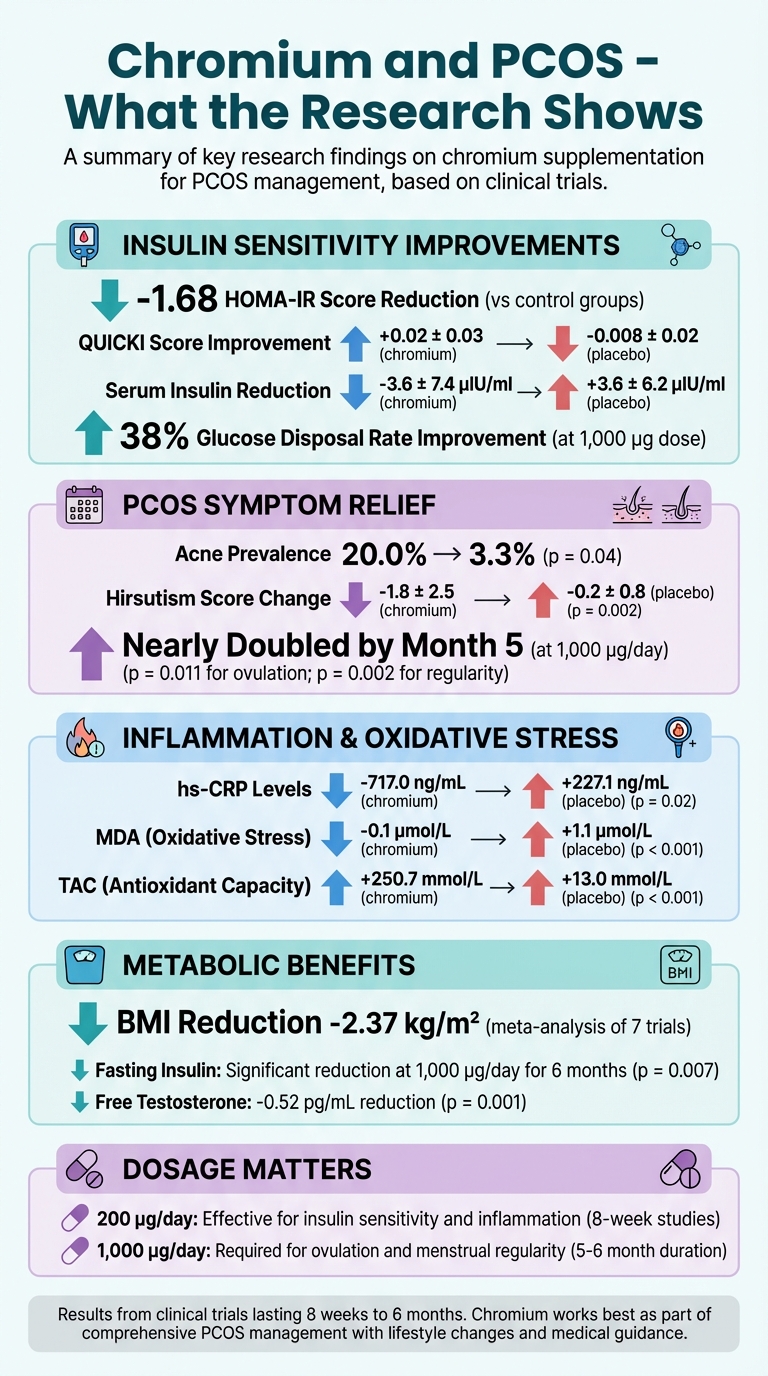
Chromium Supplementation Effects on PCOS: Key Research Findings and Metrics
Use Chromium Picolinate for Insulin Resistance – Benefits of Chromium – Dr. Berg
How Chromium Affects Insulin Sensitivity
When cells fail to respond effectively to insulin, the pancreas compensates by producing more of it. This overproduction of insulin prompts the ovaries to release additional androgens, which can throw hormonal balance off track. Chromium supplementation has been shown to improve how cells respond to insulin, potentially addressing this imbalance.
Research on Chromium and Blood Sugar Control
Clinical trials have explored how chromium impacts the body’s ability to process glucose. In 2015, researchers Mehri Jamilian and Zatollah Asemi conducted a double-blind study involving 64 women with PCOS over an eight-week period. Participants who took 200 µg of chromium picolinate daily experienced a 3.6 ± 7.4 µIU/ml reduction in serum insulin levels, while those in the placebo group saw an increase of 3.6 ± 6.2 µIU/ml.
The benefits of chromium supplementation extend beyond just insulin levels. A meta-analysis of multiple studies revealed that chromium significantly reduced HOMA-IR scores - a key measure of insulin resistance - by -1.68 compared to control groups. Another marker of insulin sensitivity, the QUICKI score, also improved. Women taking chromium saw increases of +0.02 ± 0.03, while the placebo group experienced a decline of -0.008 ± 0.02.
In a pilot study, women with PCOS who took 1,000 µg of chromium picolinate showed a 38% average improvement in glucose disposal rate. This indicates their bodies became much more efficient at moving glucose from the bloodstream into cells for energy.
How Chromium Works at the Cellular Level
The positive clinical outcomes of chromium supplementation are tied to its actions at the cellular level. Chromium operates through the chromomodulin pathway. It binds to chromomodulin, forming a complex that attaches to insulin receptors on cell surfaces. This interaction activates the receptor's tyrosine kinase activity, enhancing insulin function.
"The interaction between chromium and insulin has been elucidated by the discovery of low–molecular weight chromium-binding substance, which binds chromium and the insulin receptor, activating the insulin receptor's kinase activity." - Robert G. Brzyski, M.D., Ph.D., University of Texas Health Science Center
Chromium also plays a role in improving cell membrane function. It helps reduce membrane cholesterol, making it easier for glucose to pass through and enter cells. Additionally, chromium boosts the activity of Glut-4 transporters, facilitating greater glucose uptake in muscle cells. On a genetic level, chromium influences the expression of proteins involved in glucose metabolism, supporting the body’s ability to manage blood sugar on multiple fronts. These cellular improvements contribute to better hormonal balance for women with PCOS.
Effects on Hormone Levels and PCOS Symptoms
Impact on Testosterone and Androgen Levels
The relationship between chromium and testosterone levels is a bit of a mixed bag. A meta-analysis of seven randomized controlled trials found that chromium supplementation significantly reduced free testosterone levels by 0.52 pg/mL (p = 0.001). On the flip side, another meta-analysis of six trials showed increases in both total testosterone (SMD 0.36) and free testosterone (SMD 0.80) in women taking chromium.
Interestingly, even with these varied hormonal outcomes, clinical symptoms like acne and hirsutism show consistent improvement. For instance, an eight-week study involving 200 µg/day of chromium picolinate saw acne prevalence drop from 20.0% to 3.3% (p = 0.04) and hirsutism scores significantly decrease (−1.8 ± 2.5 compared to −0.2 ± 0.8 in the placebo group, p = 0.002). These skin and hair improvements might be linked more to chromium's ability to lower oxidative stress and inflammation rather than directly affecting testosterone levels.
This evidence highlights chromium's potential role in addressing the hormonal imbalances at the heart of PCOS. For women dealing with PCOS-related acne or unwanted facial hair, Oana Health offers prescription solutions like Spironolactone and Eflornithine that can work alongside metabolic treatments.
While the effects on testosterone levels remain inconsistent, these biochemical shifts often translate into better menstrual regularity for many women.
Changes in FSH, LH, and Menstrual Cycles
When it comes to FSH and LH levels, studies suggest that chromium supplementation doesn’t make a big difference. Instead, its benefits seem to stem from metabolic improvements that indirectly support reproductive health. Higher doses - up to 1,000 µg/day - taken over five to six months have been shown to significantly boost ovulation and menstrual regularity. One study reported that this dosage nearly doubled the chances of ovulation and regular menstruation by the fifth month (p = 0.011 for ovulation; p = 0.002 for menstrual regularity). On the other hand, lower doses of 200 µg taken for shorter periods generally failed to restore regular cycles. For example, a pilot study using 200 µg daily for four months found that only 8% of cycles in the chromium group were ovulatory, compared to 19% in the placebo group.
"Chromium picolinate is useful in PCOS to reduce IR [insulin resistance] and stimulate ovulation." – Amr N, Abdel-Rahim HE
sbb-itb-6dba428
Metabolic and Anti-Inflammatory Benefits
Effects on Blood Sugar, Cholesterol, and Weight
Chromium plays a role in improving BMI, cholesterol levels, and overall metabolic health. A meta-analysis of seven randomized controlled trials revealed that chromium supplementation led to a BMI reduction of 2.37 kg/m². Another study conducted between 2014 and 2015 observed 85 women with PCOS who took 1,000 µg of chromium daily for six months. The results showed notable reductions in both BMI and fasting insulin levels (p = 0.007).
When it comes to cholesterol and triglycerides, the findings are less consistent. One study involving 64 women found a near-significant reduction in triglycerides (12.4 mg/dL) and VLDL-cholesterol (2.5 mg/dL) over an eight-week period (p = 0.05). However, a meta-analysis of six randomized controlled trials with 351 participants found no significant differences in total cholesterol or triglycerides between those who received chromium and those who took a placebo. Based on current evidence, chromium seems to be more effective in aiding weight management than in regulating lipid levels. These metabolic improvements also contribute to reducing systemic inflammation.
Reducing Oxidative Stress and Inflammation
Chromium’s benefits extend beyond metabolism, as it also helps combat inflammation and oxidative stress. A randomized, double-blind trial at Arak University of Medical Sciences in November 2015 evaluated 60 women with PCOS who took 200 µg of chromium daily for eight weeks. The results were striking: high-sensitivity C-reactive protein (hs-CRP) levels dropped by 717.0 ng/mL in the chromium group, while the placebo group saw an increase of 227.1 ng/mL (p = 0.02).
The same trial highlighted chromium’s impact on oxidative stress markers. Participants in the chromium group experienced a 0.1 µmol/L decrease in malondialdehyde (MDA), a marker of oxidative stress, compared to a 1.1 µmol/L increase in the placebo group (p < 0.001). Total antioxidant capacity (TAC) also rose significantly, increasing by 250.7 mmol/L in the chromium group versus just 13.0 mmol/L in the placebo group (p < 0.001). Mehri Jamilian, the lead researcher, noted:
"Taking chromium for 8 weeks among women with PCOS had beneficial effects on acne, hirsutism, hs-CRP, TAC, and MDA levels."
These findings are particularly relevant for women with PCOS, as inflammation and oxidative stress contribute to higher cardiovascular risks and insulin resistance. By reducing these factors, chromium may also help stabilize hormones and alleviate symptoms.
Research Gaps and Future Studies
While there are some encouraging findings regarding chromium's potential benefits, the current body of research faces several challenges that hinder its clinical application. One major issue is the small sample sizes in many studies, with some meta-analyses including fewer than 150 participants per group. Another limitation is the short duration of most trials, typically lasting only 8 weeks to 4 months. Such brief timelines are often insufficient to observe significant changes in key areas like menstrual regularity, ovulation rates, or hair growth patterns. To truly assess chromium's role in addressing PCOS, these gaps must be addressed.
The combination of short study durations and small sample sizes may also explain why some trials fail to show meaningful effects on ovulation or insulin sensitivity. Adding to the complexity is the wide range of dosages used, from 200 μg to 1,000 μg daily. Furthermore, findings on critical markers like testosterone, LH, FSH, and insulin are inconsistent, making it harder to draw clear conclusions.
To overcome these challenges, future research should focus on a few key priorities. Large-scale, multicenter trials with standardized protocols are essential. These studies should include longer follow-up periods - ideally 6 to 12 months - and adopt consistent dosing strategies. Additionally, researchers need to hone in on specific PCOS subtypes, factoring in variables like age and BMI, to minimize the high levels of heterogeneity present in current studies. As noted by experts at BMC Endocrine Disorders:
"to reduce heterogeneity more research in specific PCOS populations, (e.g. defined age and BMI ranges) and consistent approaches to intervention delivery, duration and comparators are needed".
Addressing these research gaps is critical to building the stronger evidence base discussed earlier in this article.
Conclusion
Research into the role of chromium in managing PCOS shows promise, particularly with chromium picolinate. Studies have shown it can help reduce insulin resistance, as reflected in improved HOMA-IR scores and lower fasting insulin levels. Over time, consistent use has been linked to nearly doubling ovulation rates and improving menstrual regularity. Beyond these benefits, chromium has also been noted to reduce inflammatory markers and assist with weight management .
That said, the findings are not without limitations. The observed effects, while present, may be modest, and their clinical significance is still up for debate. Results concerning hormonal markers like testosterone, LH, and FSH have been mixed. Another challenge is the short duration of many studies - typically lasting only 8 to 12 weeks - with relatively small participant groups. For reproductive symptoms, benefits may require a longer commitment, with some evidence suggesting five to six months of consistent use.
While these metabolic improvements are encouraging, chromium should be viewed as part of a broader treatment strategy. It’s a helpful addition but not a standalone solution for PCOS management. Lifestyle changes remain the foundation of treatment, and any decision to include chromium supplementation should be made with a healthcare provider familiar with your specific symptoms and metabolic needs.
FAQs
How can chromium help improve insulin sensitivity in women with PCOS?
Chromium may help improve insulin sensitivity in women with PCOS by aiding the body in processing glucose more effectively and reducing insulin resistance. Research indicates that taking chromium supplements can support better glucose tolerance and lead to steadier blood sugar levels, which might also contribute to improved hormonal balance.
Some studies suggest that chromium has the potential to positively impact metabolic markers and insulin regulation - both of which are often out of balance in women with PCOS. By targeting these concerns, chromium could assist in managing certain symptoms associated with the condition.
What challenges exist in understanding how chromium affects PCOS?
Researching chromium's effects on PCOS comes with its fair share of challenges. While some studies hint that chromium supplements might aid in tackling insulin resistance and other metabolic concerns, the findings are all over the map. This inconsistency often stems from factors like small participant groups, varying study methods, and differences in dosage levels or supplementation periods.
On top of that, many of these studies are either short-term or exploratory, making it tough to draw conclusions about chromium's long-term impact or safety. Some trials even report little to no improvement in insulin levels or hormonal balance. These mixed results underline the pressing need for larger, more comprehensive studies to clarify how chromium might help in managing PCOS.
Can chromium supplements replace healthy lifestyle changes for managing PCOS?
Chromium supplements are not a stand-in for making healthy lifestyle changes when managing PCOS. That said, studies indicate chromium can play a role in improving insulin sensitivity and supporting metabolic health, especially when paired with a nutritious diet, consistent exercise, and other positive habits.
To get the most out of chromium or any supplement, it’s essential to combine them with lifestyle adjustments that work for you. Be sure to consult with a healthcare professional to create a personalized plan for managing your PCOS effectively.