
Combined Oral Contraceptives: Acne Treatment Guide
Combined oral contraceptives (COCs) are a proven option for treating hormonal acne, especially if your breakouts worsen around your period or don't respond to topical treatments. These pills work by balancing hormones, reducing oil production, and calming inflammation. Here's how they help:
- Lowering Androgens: COCs reduce testosterone levels by 40%-50%, shrinking oil glands and decreasing sebum production.
- Blocking DHT: Some COCs, like those with drospirenone, block androgen receptors in the skin, further reducing acne.
- FDA-Approved Options: Pills like Yaz, Ortho Tri-Cyclen, Estrostep Fe, and Beyaz are specifically approved for acne treatment, though other formulations may also work.
Results typically take 3-6 months, with a 40%-60% reduction in acne lesions. Side effects like spotting or nausea may occur early but usually improve over time. For severe acne, COCs can be combined with other treatments like retinoids or isotretinoin. Always consult a healthcare provider to choose the best option for your needs.
Best BIRTH CONTROL for HORMONAL ACNE| Dr Dray
How Birth Control Pills Work to Clear Acne
To understand why combined oral contraceptives (COCs) are effective for hormonal acne, it helps to dive into the biological processes at play. These pills tackle acne through two key actions: reducing androgens and calming inflammation.
How Hormone Balance Reduces Acne
The magic of COCs lies in their ability to lower active androgen levels in your body. When you take COCs daily, they reduce the production of luteinizing hormone (LH) and follicle-stimulating hormone (FSH). This, in turn, decreases ovarian testosterone production and boosts levels of sex hormone-binding globulin (SHBG), which binds to free androgens. As a result, active androgens in your bloodstream drop - studies show free testosterone levels typically decrease by 40% to 50%.
The progestin component of COCs also plays a role by limiting the formation of dihydrotestosterone (DHT). Certain formulations, like those containing drospirenone, even block androgen receptors in the skin, preventing any remaining androgens from triggering oil production in your glands. This hormonal balancing act is a major reason why acne improves.
Reducing Oil Production and Skin Inflammation
Once androgen levels are under control, your sebaceous glands shrink and produce less oil (sebum). Estrogen in COCs directly reduces both the size of sebaceous glands and their sebum output. With less oil, there’s a reduced opportunity for P. acnes bacteria to thrive, which means less inflammation and fewer clogged pores. This domino effect significantly lowers the risk of inflammatory acne lesions. In fact, a meta-analysis of nearly 5,000 patients found that combined hormonal treatments led to a 55% reduction in acne lesions after just six months of use.
Choosing the Right Birth Control Pill for Acne
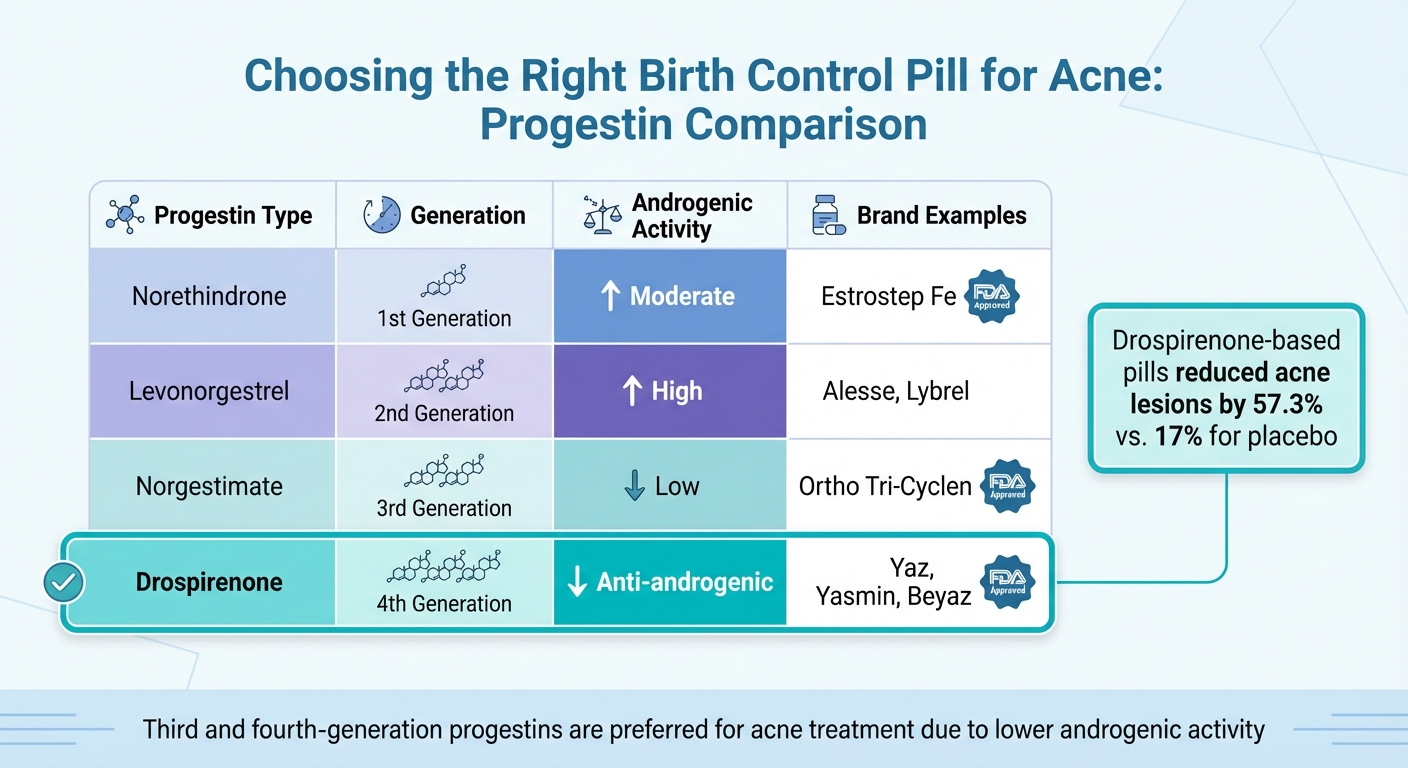
Birth Control Pill Progestin Types for Acne Treatment Comparison
When it comes to managing acne with birth control pills, only four combined oral contraceptive (COC) formulations have received FDA approval specifically for this purpose: Ortho Tri-Cyclen (norgestimate), Estrostep Fe (norethindrone acetate), Yaz (drospirenone), and Beyaz (drospirenone with levomefolate). That said, many other pills are prescribed off-label and can be just as effective. The main factor that sets these pills apart is the type of progestin they contain. Choosing the right option depends on understanding these progestin types and tailoring the dosage to match the severity of your acne.
How Different Progestin Types Impact Acne
Progestins are categorized into generations based on their chemical structure and how much androgenic activity they exhibit. Androgenic activity refers to how much a progestin mimics male hormones, which can contribute to acne. Here's a breakdown:
- First- and second-generation progestins (like norethindrone and levonorgestrel) are derived from testosterone and tend to have moderate to high androgenic activity. These are less ideal for acne treatment.
- Third-generation progestins (like norgestimate and desogestrel) are modified to reduce androgenic effects, making them better suited for acne management.
- Fourth-generation progestins (like drospirenone) stand out because they actively block androgen receptors in the skin, working similarly to the acne treatment spironolactone. In one study, a drospirenone-based pill reduced acne lesions by 57.3%, compared to just 17% for a placebo.
Here’s a quick comparison of progestin types and their effects:
| Progestin Type | Generation | Androgenic Activity | Brand Examples |
|---|---|---|---|
| Norethindrone | 1st | Moderate | Estrostep Fe |
| Levonorgestrel | 2nd | High | Alesse, Lybrel |
| Norgestimate | 3rd | Low | Ortho Tri-Cyclen |
| Drospirenone | 4th | Anti-androgenic | Yaz, Yasmin, Beyaz |
Aligning Acne Severity with the Right Pill
Choosing the right COC depends largely on the severity of your acne. For mild cases, COCs can be paired with topical treatments for effective results. If your acne is moderate or severe, a combination of COCs with treatments like retinoids or isotretinoin may be necessary. In cases of severe acne, COCs are often used alongside or as a prelude to isotretinoin, which requires strict contraceptive measures.
The estrogen dose in COCs also plays a role. Most pills contain between 20 and 35 mcg of ethinyl estradiol. Monophasic pills, which deliver the same dose of hormones daily, are often recommended as a starting point because they’re straightforward and budget-friendly. With consistent use, you can expect noticeable improvements in your acne within 3 to 6 months.
For tailored advice on managing hormone-related acne, it's best to consult a healthcare provider. Services like Oana Health offer telehealth consultations and customized treatment plans to address your specific needs.
sbb-itb-6dba428
Treatment Timeline: When You'll See Results
Using combined oral contraceptives to treat acne requires patience. Unlike topical treatments that often show results within weeks, these pills work gradually by rebalancing hormones. Since hormone regulation plays a key role in improving acne, understanding the treatment timeline can help you manage expectations and stay consistent. Here’s what you can anticipate month by month.
Month-by-Month Changes to Expect
The first three months are mostly an adjustment phase. During this time, your body is getting used to synthetic estrogen and progestin. Visible changes in acne may not happen yet, and you might experience side effects like spotting, breakthrough bleeding, nausea, or mild breast tenderness. These symptoms typically subside after three to four cycles.
Between three and six months, you’re likely to notice improvements. Inflammatory acne, such as papules and pustules, often clears up faster than non-inflammatory types like blackheads and whiteheads. Clinical studies often assess progress at the six-month mark, with "responders" defined as those who achieve at least a 50% reduction in facial papules and pustules. Though some improvements might appear as early as four months, six months is generally the benchmark for evaluating how well the treatment is working.
After six months, acne lesions typically reduce by 40% to 60%, compared to about a 30% reduction in placebo groups. Alongside this improvement, you may notice less oily skin, smaller-looking pores, and reductions in both inflammatory and non-inflammatory acne. Dermatologists, including Arrington EA, Patel NS, Gerancher K, and Feldman SR, emphasize the importance of patience: "The patient should know that it might take several months to see antiacne results, and she should not discontinue the medication if it does not work right away".
Dealing with Initial Breakouts and Adjustment Periods
It’s not uncommon for acne to temporarily worsen during the first few months of treatment. This happens because certain synthetic progestins can initially interact with androgen receptors before the estrogen’s positive effects take hold. While this might feel discouraging, it’s a normal part of the process.
Sticking to a consistent daily routine is crucial. Taking your pill at the same time every day helps maintain steady hormone levels, which can reduce side effects like spotting. However, around 20% of women stop using oral contraceptives during the early months due to breakthrough bleeding. Staying committed through this adjustment period is key to seeing results.
If you experience severe side effects or notice unusual symptoms - like excessive hair growth or sudden, severe acne - it’s important to consult your healthcare provider. These could indicate underlying hormonal conditions that might need further investigation.
Tracking Your Progress and Setting Realistic Goals
Once you’ve started treatment, it’s important to have a system in place to monitor your progress. Keep in mind that results won’t happen overnight - improvements tend to show up gradually over several months. By focusing on specific, measurable changes, you’ll be better equipped to determine how well your treatment is working.
Signs Your Treatment Is Working
One of the clearest signs of progress is a reduction in new breakouts. Inflammatory acne - those red, painful bumps and pustules - should start to clear up more noticeably than blackheads and whiteheads. When you see fewer inflammatory lesions, it’s a good indication that the treatment is effective.
Another sign to look for is less oily skin. Dr. Erin Higgins, an Ob/Gyn at Cleveland Clinic, explains:
"Estrogen works to decrease the amount of circulating testosterone in your body, so it cuts off that excess oil production".
This reduction in oiliness often leads to smaller pores and fewer inflammatory lesions, both of which signal that the treatment is on the right track. Additionally, experiencing fewer flare-ups over time is another positive sign.
Take note of your skin’s overall appearance as well. If a clinician describes your skin as "clear" or "almost clear", it’s a strong marker of success. After three to six months, improvements like fewer lesions, reduced redness, and a smoother texture suggest that your treatment is working effectively.
When to Contact Your Healthcare Provider
While tracking progress is crucial, it’s equally important to know when to seek professional advice. If you’ve been consistent with your treatment for six months and haven’t seen improvement, it’s time to consult your healthcare provider. Dr. Erin Higgins emphasizes:
"If your acne doesn't start to clear up after about six months, talk with your healthcare provider about other options".
Your doctor may recommend adjusting your prescription or exploring alternative treatments.
You should also reach out to your provider sooner if you experience breakthrough bleeding lasting more than four months, as this might indicate a need to adjust your hormone dosage. Additionally, if acne is accompanied by symptoms like irregular periods, excessive body hair growth, or sudden weight gain, these could point to an underlying condition such as PCOS.
Seek immediate medical attention if you notice symptoms of a blood clot, such as sudden leg swelling, chest pain, shortness of breath, severe headaches, vision issues, or intense abdominal pain. Though rare, these side effects require urgent care. Regular follow-up visits with your healthcare provider are also essential for monitoring your blood pressure and addressing any side effects, as oral contraceptives can sometimes lead to hypertension.
Conclusion: Using Birth Control Pills for Clearer Skin
Combined oral contraceptives (COCs) are a proven option for addressing hormonal acne by targeting the root cause: hormonal imbalances. By reducing ovarian androgen production and significantly lowering free testosterone levels, these pills tackle the hormonal triggers behind excess oil production and breakouts. Clinical studies have shown that COCs can reduce total acne lesion counts by 40% to 60%, with particularly noticeable improvements in inflammatory acne, such as papules and pustules.
The key to achieving results lies in selecting the right formulation, staying consistent, and being patient. While only four COCs are FDA-approved for treating acne, other formulations may also work well when tailored to individual needs. Taking the pill at the same time daily enhances both its contraceptive and anti-acne effects. Pairing it with topical treatments, like retinoids, can further boost results. It’s important to note that improvements typically take three to six months, and initial side effects, such as breakthrough bleeding or minor breakouts, are common.
As highlighted by Heather L. Salvaggio and Andrea L. Zaenglein from Penn State:
"Combined oral contraceptives and other hormonally targeted treatments can be effective in this group of patients and should be considered in the treatment plan for females with acne."
Beyond clearer skin, COCs offer additional health benefits, including reliable contraception, better menstrual cycle regulation, and long-term protection against conditions like endometrial and ovarian cancers. This comprehensive approach makes them an excellent option for those dealing with adult-onset acne, perimenstrual flares, or acne resistant to standard treatments. Speak with your healthcare provider to determine if COCs are the right choice for your needs.
If you're considering this treatment, Oana Health offers telehealth consultations with licensed medical professionals who can assess your situation and provide personalized care. With prescriptions delivered directly to your home and free shipping, Oana Health makes managing hormonal acne more convenient. Visit Oana Health to learn more and schedule a consultation.
FAQs
How do combined oral contraceptives help treat acne?
Combined oral contraceptives combine estrogen and progestin, working together to help reduce acne by lowering androgen levels in the body. Androgens are hormones that can boost sebum (oil) production in the skin, which often leads to clogged pores and breakouts. By suppressing this process, these contraceptives can help manage both inflammatory acne (like red pimples) and non-inflammatory acne (such as blackheads and whiteheads).
This approach is commonly suggested for women whose acne is linked to hormonal imbalances, including conditions like PCOS. However, it’s essential to consult a licensed medical professional to determine if this treatment is suitable for your specific needs.
What should I know about using birth control pills to treat acne?
When considering combined oral contraceptives (COCs) for acne treatment, it’s essential to select a pill that aligns with your health needs and skin objectives. COCs that include estrogen and a low-androgenic progestin (such as drospirenone, norgestimate, or desogestrel) are often the most effective at improving acne. While many individuals begin to see progress within about three months, it may take 6–12 months to achieve the full benefits.
It’s important to weigh potential risks before starting. Factors like smoking (if you're over 35), migraines with aura, uncontrolled high blood pressure, or a history of conditions such as venous thromboembolism (VTE) should be taken into account. If you experience symptoms of hormonal imbalances - such as irregular menstrual cycles or excessive hair growth - a hormonal evaluation might help in selecting the right option. Additionally, a blood pressure check is recommended prior to starting COCs, though a pelvic exam or Pap smear is generally not necessary.
For a simpler and more tailored experience, Oana Health provides telehealth consultations with licensed clinicians. They review your medical history, suggest the most suitable COC, and deliver the prescription directly to your door, making acne treatment both convenient and accessible.
What should I expect in the first few months of using combined oral contraceptives (COCs) for acne?
In the first couple of months after starting combined oral contraceptives (COCs) for acne, it’s not unusual to see a temporary increase in breakouts. This happens as your body adjusts to the new hormone levels. The good news? These initial flare-ups usually settle down within a few weeks. By the 3-month mark, many people notice fewer blackheads, whiteheads, and inflamed pimples. With consistent use, even more noticeable improvements often occur by the 6-month point.
To help manage this transition period, your healthcare provider might suggest pairing COCs with topical treatments like retinoids or benzoyl peroxide. Most women tolerate COCs well, but mild side effects - like breast tenderness, nausea, or spotting - can pop up, especially during the first few cycles. Your provider will typically schedule a follow-up to track your progress and address any concerns.
For a more convenient option, Oana Health offers telehealth services. Licensed clinicians can assess your needs, prescribe COCs tailored to you, and have them shipped directly to your door - for free.