
Customizing Cardio Plans for Fertility Goals
Moderate cardio can improve fertility, but overdoing it may cause harm. The right balance helps regulate hormones like estrogen and progesterone, improves ovulation, and reduces stress by lowering cortisol levels. However, excessive cardio - over 4 hours of intense activity weekly - can disrupt cycles, shorten luteal phases, or even stop menstruation.
Key takeaways:
- Ideal exercise: 30–60 minutes of moderate activity daily (e.g., walking, swimming).
- PCOS benefits: Vigorous exercise may improve ovulation and insulin sensitivity.
- Avoid overtraining: Excessive cardio can reduce progesterone by 22% and leptin by 6.6%, affecting implantation.
- Track progress: Monitor your menstrual cycle, energy levels, and recovery to adjust intensity.
A balanced routine combining cardio, proper nutrition, and stress management is essential for supporting fertility goals. Always consult a healthcare provider for personalized advice.
How Exercise Affects Fertility - Dr Lora Shahine
How Cardio Affects Fertility and Hormones
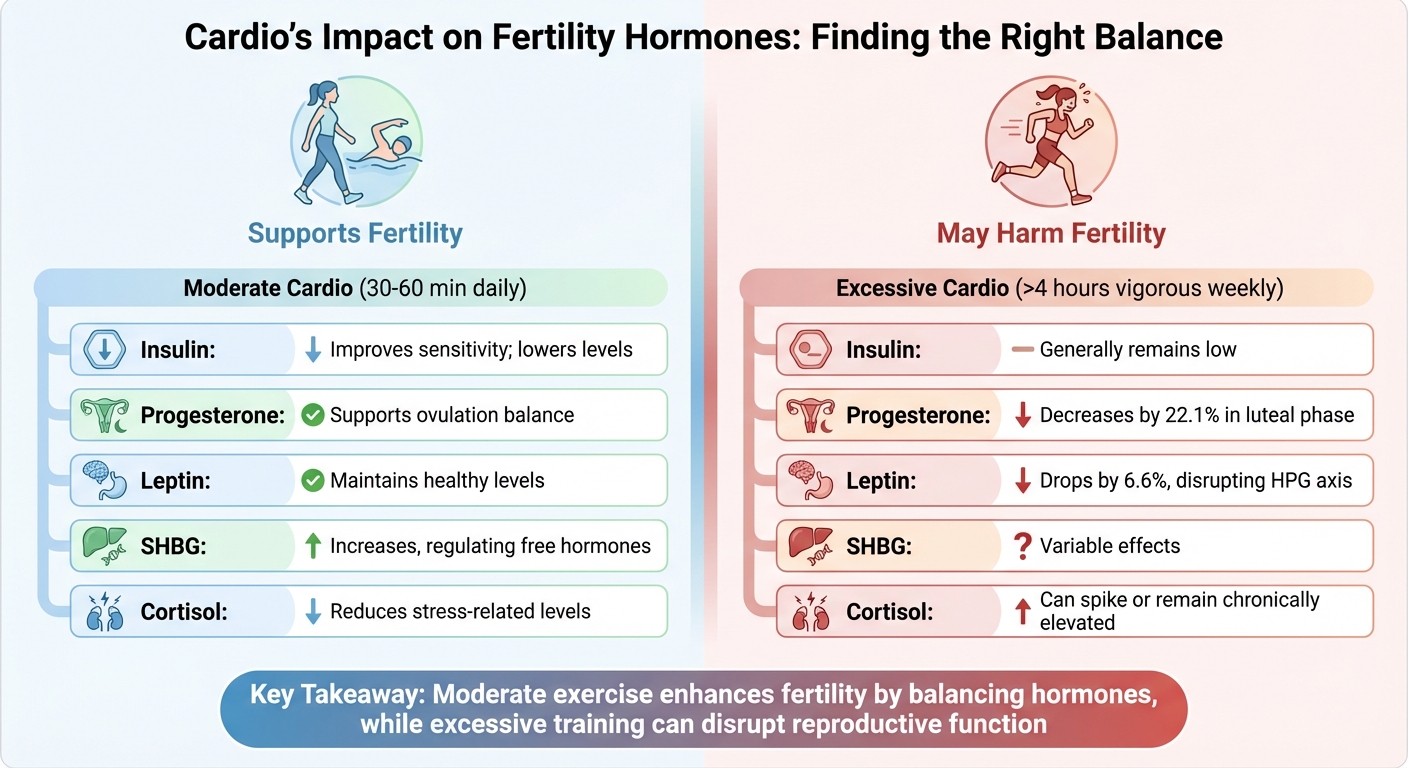
How Moderate vs Excessive Cardio Affects Fertility Hormones
Cardio's Effect on Hormone Balance
Cardio plays a key role in fertility by interacting with the hypothalamic-pituitary-gonadal (HPG) axis. Engaging in moderate cardiovascular exercise can enhance insulin sensitivity, which helps prevent irregular or missed ovulation.
For women dealing with PCOS, this is particularly important. Regular cardio can lower elevated insulin and androgen levels, which supports normal ovulation. Additionally, exercise boosts levels of Sex Hormone Binding Globulin (SHBG), a protein that helps regulate active hormone levels in the bloodstream. This regulation helps maintain consistent menstrual cycles.
The ideal range? 30 to 60 minutes of vigorous exercise daily. This amount is linked to a reduced risk of anovulatory infertility. Moderate cardio also lowers both total and free estradiol levels, which can help manage conditions tied to estrogen dominance. Since anovulation is behind about 30% of female infertility cases, these hormonal shifts from exercise can have a meaningful impact.
When Too Much Cardio Hurts Fertility
While moderate cardio supports hormonal balance, overdoing it can have the opposite effect. Pushing beyond limits - such as exceeding 60 minutes of vigorous cardio daily - can disrupt reproductive hormones and raise the risk of anovulation. This happens because excessive exercise can lower leptin levels and lead to HPA axis dysfunction, which interferes with the secretion of key hormones like GnRH, LH, and FSH - essential components for ovulation.
The stats paint a clear picture: high-intensity exercise is linked to a 22.1% drop in luteal phase progesterone and a 6.6% decrease in serum leptin levels. These changes can shorten the luteal phase and lower progesterone, making it harder for a fertilized egg to implant successfully.
| Hormone | Effect of Moderate Cardio | Effect of Excessive Cardio |
|---|---|---|
| Insulin | Improves sensitivity; lowers levels | Generally remains low |
| Progesterone | Supports ovulation balance | Can decrease by 22.1% in luteal phase |
| Leptin | Maintains healthy levels | Can drop by 6.6%, disrupting the HPG axis |
| SHBG | Increases, regulating free hormones | Variable |
| Cortisol | Reduces stress-related levels | Can spike or remain chronically elevated |
Striking the right balance is crucial. Supporting your reproductive health through exercise means finding a routine that energizes your body without overtaxing it.
Evaluating Your Current Fitness and Health
Checking Your Baseline Fitness and Health
Before diving into a new cardio routine, it’s important to understand where you’re starting from. Tracking your baseline fitness can help you figure out the right intensity for your body while keeping things safe and effective.
Start with a simple test: walk one mile at a comfortable pace. During this, track three things - your resting pulse, your pulse immediately after the walk, and the time it takes you to complete the mile. This quick assessment gives you a snapshot of your cardiovascular fitness and helps you decide on a safe starting intensity. Next, take a look at your body composition. You can calculate your BMI using the standard Imperial formula and measure your waist circumference just above your hipbones. These numbers can help identify if weight management should be a priority in your overall fertility plan.
Your menstrual cycle is another key indicator of how your current activity level might be affecting your fertility. Pay attention to cycle length and regularity. Things like missed periods, breakthrough bleeding, or a luteal phase shorter than 10 days could signal that your exercise intensity is too high.
To monitor your exercise intensity in real time, try the "Talk Test". If you can talk but not sing during an activity, you’re likely at a moderate intensity. If you can only say a few words before needing to catch your breath, you’ve entered vigorous territory. This simple method helps you avoid overtraining without needing any fancy gadgets.
"If you are in good health, you do not have to see your doctor before you begin a moderate physical activity program. But you should talk with your doctor before starting... if you have a chronic medical condition." - American College of Obstetricians and Gynecologists (ACOG)
If you have conditions like PCOS, insulin resistance, or a history of irregular periods, it’s a good idea to consult a healthcare provider before creating your plan. This is especially critical because around 75% of lean women with PCOS are insulin resistant, making exercise essential for improving insulin function - even if weight loss isn’t your main goal. For tailored advice, platforms like Oana Health (https://oanahealth.com) offer telehealth services specializing in PCOS and hormonal health, which can complement your fitness strategy.
These evaluations lay the groundwork for a personalized fitness plan, ensuring it aligns with your fertility goals. Once you’ve established your baseline, you can explore how specific health conditions might shape your cardio routine.
How Health Conditions Affect Your Cardio Plan
After evaluating your fitness, it’s time to customize your cardio plan based on any health conditions you may have, like PCOS or insulin resistance. These adjustments ensure your routine supports your fertility goals effectively.
For women with PCOS, the usual exercise advice can be flipped. While vigorous activity might hinder fertility in women with a healthy weight, it’s often recommended for those with PCOS to boost ovulation rates. Research shows that even a modest 5% to 10% reduction in body weight can significantly improve PCOS symptoms and reproductive health. Vigorous aerobic or resistance training tends to be more effective than moderate activity for improving insulin sensitivity and reducing androgen levels in women with PCOS.
If you’re dealing with insulin resistance, your muscles may struggle to use blood sugar efficiently for energy. Regular cardio can help your muscles process blood sugar better, which reduces excess androgen production - a common factor that disrupts ovulation. Keep an eye out for signs like fatigue, frequent cravings, excessive thirst, skin tags, or darkened patches of skin around your neck and armpits.
For women with obesity or a high BMI, starting slow is key. If you’ve been sedentary, begin with just 5 minutes of activity a day and add 5 minutes each week to reduce the risk of injury. While the CDC recommends at least 150 minutes of moderate-intensity aerobic activity per week for general health, women with obesity aiming to improve fertility may benefit from gradually working up to 300 minutes per week.
| Condition | Impact on Fertility/Cardio Plan | Recommended Modification |
|---|---|---|
| PCOS | Irregular ovulation, high androgens | Vigorous aerobic or resistance training often encouraged |
| Insulin Resistance | High blood sugar, poor egg quality | Regular cardio to improve insulin sensitivity |
| Obesity | Reduced conception rates | Start gradually; aim for up to 300 minutes weekly |
| Anovulation | Difficulty conceiving due to lack of ovulation | Reduce intensity if strenuous exercise is a factor |
The bottom line? Your cardio plan should fit your unique health profile instead of relying on generic advice. Tailoring your routine this way ensures it’s both effective and supportive of your overall fertility goals.
sbb-itb-6dba428
Building Your Personalized Cardio Plan
Setting Intensity, Frequency, and Duration
Once you've assessed your baseline fitness, it's time to shape your cardio routine. For most women trying to conceive, moderate-intensity cardio works best. On a scale of 0 to 10 - where 0 is complete rest and 10 is maximum effort - moderate intensity usually falls between 5 and 6, while vigorous intensity starts around 7 or 8. A simple way to measure this is the Talk Test: if you can talk but not sing during your workout, you're likely in the moderate range.
The general recommendation is 150 minutes of moderate aerobic activity each week - think 30 minutes a day, five days a week. If you prefer more intense workouts, remember that one minute of vigorous activity counts as two minutes of moderate exercise. If you're just starting out, ease into it with shorter sessions, like 15 minutes four times a week, and build up gradually. Your baseline fitness level will help you determine the right intensity to start with. Research involving over 4,000 women found that exercising up to three hours per week was linked to regular menstrual cycles and improved fertility. On the other hand, women engaged in high-intensity training, such as athletes, often faced longer times to conceive.
Keep an eye on your menstrual cycle - it’s a key marker of reproductive health. Dr. Lora Shahine describes it as “a vital sign of reproductive health”. If your periods become irregular or stop, it might mean your workout routine is too intense. For women undergoing IVF, limiting exercise to under four hours per week is recommended, as exceeding five hours has been linked to lower IVF success rates.
Once you've figured out the right intensity and frequency, the next step is choosing activities that align with your fertility goals.
Selecting the Best Cardio Activities for Fertility
Not all cardio exercises are equally beneficial when it comes to fertility. Low-impact activities that improve circulation without putting too much stress on your joints or endocrine system are ideal. Brisk walking (at least 2.5 mph) is a great option - it’s easy to adjust and can be done almost anywhere. Swimming is another excellent choice, offering a full-body workout with minimal strain on your joints. Cycling on flat terrain at a leisurely pace (under 10 mph) can also be effective. If you enjoy indoor cycling, opt for “low-impact” or “recovery” classes rather than high-intensity interval training (HIIT) or Tabata sessions.
Other good options include water aerobics, active yoga, and doubles tennis. The idea is to engage in activities that don’t push you to the point of exhaustion. While some experts suggest keeping your heart rate below 140 bpm when trying to conceive, this guideline can vary depending on your fitness level.
For women with PCOS or a higher BMI, the approach may need to be adjusted. Vigorous aerobic exercise or resistance training is often recommended to improve insulin sensitivity and boost fertility. Activities like jogging, swimming laps, or singles tennis may be particularly beneficial in these cases. Studies show that women who exercise moderately for 30 to 60 minutes daily have a lower risk of ovulatory infertility. However, women with PCOS may need to push a bit harder to see improvements in hormone regulation.
Once you’ve selected activities that suit your needs, focus on gradually increasing your workload while prioritizing recovery.
Adding Progression and Recovery Time
A balanced cardio plan combines steady progression with adequate recovery. If you're used to intense workouts, avoid stopping abruptly - ease off gradually to prevent shocking your system. Many fertility-focused programs suggest increasing workout intensity every two weeks, allowing your body to adapt without unnecessary stress. This approach supports both cardiovascular health and reproductive harmony.
Recovery is just as critical as the workout itself. Incorporate rest days or alternate cardio with low-impact strength training or active recovery activities like yoga. These practices help manage cortisol levels and improve blood flow to reproductive organs. During the luteal phase of your cycle (the second half) or the “two-week wait,” consider switching from high-intensity activities like running or HIIT to gentler options such as brisk walking or swimming. These adjustments can help maintain progesterone levels and support implantation.
"Too much intensity with too little recovery = increased inflammation, fatigue, and cycle irregularities."
– Dr. Kayla Borchers, Doctor of Physical Therapy
Pay attention to your body’s signals. Extreme fatigue or missed periods could indicate that your routine is too demanding and that you need more rest. Overtraining can lead to elevated free radicals, which may damage egg DNA and reduce fertilization chances. Remember, your body makes progress during rest, not just during exercise. For those undergoing IVF, it’s generally recommended to keep strenuous activity under four hours per week, as women who exceed this limit may experience a 40% reduction in successful birth rates compared to those who exercise less.
If you’re unsure about how to balance your cardio routine with your fertility goals, consider reaching out to the expert team at Oana Health.
Combining Cardio with Other Fertility-Supporting Practices
Adding Nutrition and Stress Management
Cardio works best when combined with smart nutrition and stress management techniques. Exercise helps muscles utilize blood sugar without relying heavily on insulin, and when paired with a low-glycemic diet, it can effectively address insulin resistance - a key factor in hormonal imbalances like PCOS. Including healthy fats, lean proteins, and antioxidants in your meals enhances the benefits of cardio by improving blood flow and protecting eggs and sperm from oxidative damage.
Managing stress is just as important. While moderate cardio can reduce cortisol levels and boost endorphins, overdoing it may have the opposite effect, increasing stress hormones and signaling your body to deprioritize reproduction. Practices like yoga, deep breathing, or mindfulness exercises can help activate the parasympathetic nervous system - your body's "rest and digest" mode - which supports reproductive health far better than the "fight or flight" state triggered by intense workouts.
Simple adjustments can have a big impact. For example, taking a 10- to 15-minute walk after your largest meal can help regulate blood sugar and insulin levels. Swapping high-intensity workouts for recovery rides or gentle yoga can also make a difference. Research supports this approach: one study found that women with PCOS who practiced yoga for 35 to 40 minutes, five times a week for six months saw significant reductions in hormones like TSH, FSH, and LH. Another study showed that 60% of women with PCOS who engaged in resistance training three times a week improved their menstrual cycles, with 17% achieving pregnancy within two months.
These strategies help lay the groundwork for another critical aspect of fertility: recovery.
Why Recovery and Sleep Matter
Recovery and sleep are essential components of any fertility-focused plan. While cardio and a balanced diet are important, your body needs rest to truly benefit. Overtraining without proper recovery can elevate cortisol levels, increase inflammation, and disrupt menstrual cycles. Women who create large calorie deficits are especially at risk - studies show that around 85% experience at least one luteal phase defect, which can interfere with implantation. To avoid this, ensure you're eating enough to support your activity level and include rest days or active recovery activities, like stretching or gentle yoga.
During the luteal phase - or the "two-week wait" - it’s wise to scale back on intensity. This isn’t the time to start a rigorous routine. Instead, focus on light movement that avoids adding stress to your body. Sleep is equally important; aim for seven to nine hours a night to support hormone production and allow your body to recover from daily activities.
Cardio as Part of Your Complete Fertility Plan
Cardio is a valuable tool, but it’s only one piece of the fertility puzzle. To maximize its benefits, combine it with medical guidance and lifestyle changes tailored to your needs. For women with PCOS or other hormone-related challenges, moderate cardio paired with treatments like insulin sensitizers or hormone therapy often delivers better results than either approach alone. While moderate exercise supports conception, excessive activity - more than four hours a week of vigorous workouts - can disrupt the luteal phase and reduce fertility.
If you’re managing PCOS, insulin resistance, or other hormonal imbalances, professional guidance can help you strike the right balance. Services like Oana Health offer telehealth options specializing in PCOS and hormone-related conditions, providing personalized, evidence-based treatments to complement your cardio and nutrition efforts.
Conclusion
Creating a cardio routine tailored to fertility means finding the right balance for your body and hormones. Studies show that moderate exercise can lower infertility risks by 5% for every hour of weekly activity. However, pushing too hard - like engaging in over 4 hours of vigorous exercise - may decrease implantation success by as much as 40%. Striking this balance is key to preparing your body for the strategies we've covered.
Your menstrual cycle often reflects how well your routine supports reproduction. As Dr. Lora Shahine, a Reproductive Endocrinologist, notes:
"The more strenuous exercise you put on your body, the less your body will focus on reproduction".
If you notice irregular periods or they stop altogether, it might be time to dial back the intensity. Keep your heart rate within 50% to 70% of your maximum (calculated as 220 minus your age) to maintain a moderate and supportive pace.
Cardio works best when paired with other fertility-focused habits, like proper nutrition, stress management, and recovery. For those navigating PCOS or hormonal imbalances, telehealth platforms such as Oana Health provide tailored care to complement your fitness plan. By combining these tools with a balanced approach to exercise, you're building a well-rounded fertility strategy.
Consistency and balance are your best allies. Start with where you are, pay attention to how your body responds, and make adjustments as needed. By aligning your cardio routine with your reproductive health, you’re taking a thoughtful step toward optimizing your fertility.
FAQs
How do I know if my cardio routine is impacting my fertility?
If your cardio routine is causing noticeable changes in your menstrual cycle, it might be affecting your fertility. Engaging in excessive high-intensity workouts can sometimes lead to irregular periods or disrupt ovulation, which could make conception more challenging. On the other hand, maintaining moderate, consistent exercise is often beneficial, as it helps support hormonal balance and can enhance fertility. Keep an eye on your body's signals - things like irregular cycles or persistent fatigue might mean it's time to tweak your workout routine to better align with your fertility goals.
What are the best cardio exercises for managing PCOS and supporting fertility?
The most effective cardio exercises for women with PCOS are those that enhance insulin sensitivity, encourage hormonal balance, and are sustainable in the long run. Low-impact activities such as walking, cycling, swimming, and yoga are fantastic options. These workouts are gentle on the joints, help reduce cortisol levels, and aid in regulating blood sugar - key factors in managing PCOS symptoms.
If you're up for a challenge, High-Intensity Interval Training (HIIT) is another great option. This involves short bursts of intense activity followed by rest periods. HIIT is not only time-efficient but also helps improve insulin sensitivity, supports fat loss, and boosts overall metabolic health. A balanced approach - mixing moderate, low-impact exercises with occasional high-intensity sessions - can deliver excellent results.
The key is to customize your cardio routine based on your fitness level and how your body responds. Consistency matters most, so aim for at least 120 minutes of moderate exercise weekly to promote hormonal health and support fertility goals.
How can I combine cardio, nutrition, and stress management to support fertility?
Balancing exercise, diet, and stress management plays a crucial role in supporting fertility. Incorporate moderate-intensity activities like brisk walking, swimming, or yoga into your routine. These types of exercises can help maintain hormone balance and alleviate stress, both of which are important for reproductive health. On the flip side, avoid overtraining or engaging in high-intensity workouts, as they might interfere with your menstrual cycle or hormonal well-being.
Complement your fitness plan with a nutrient-dense diet to provide your body with the energy and essential nutrients it needs for reproductive health. Adding stress-reducing practices, such as mindfulness exercises or gentle yoga, can help keep cortisol levels in check, which may positively influence fertility.
Finally, listen to your body and make adjustments as necessary. By tracking your menstrual cycle and observing how your body reacts to exercise, you can refine your approach to achieve the best possible outcomes.