
Eflornithine vs. Herbal Alternatives for Hirsutism
Struggling with unwanted facial hair? Hirsutism, often caused by conditions like PCOS, affects 5–10% of women in the U.S. Two common treatment options are Eflornithine cream (a prescription medication) and herbal remedies like spearmint tea or licorice root. Here's what you need to know:
- Eflornithine: FDA-approved, slows hair regrowth directly at the follicle level. Results in 4–8 weeks with consistent use. Side effects are mild and localized.
- Herbal Remedies: Natural options like spearmint tea and saw palmetto aim to reduce androgens. Evidence is limited, effects take longer, and results vary.
Quick Comparison
| Feature | Eflornithine | Herbal Remedies |
|---|---|---|
| How It Works | Blocks hair follicle enzyme | Alters hormone levels |
| Effectiveness | Backed by clinical trials | Limited, small-scale studies |
| Time to Results | 4–8 weeks | Months, if any improvement |
| Side Effects | Mild skin irritation | Hormonal changes, potential risks |
| Cost | $69–$115/month | Varies, often less expensive |
Eflornithine provides consistent results, while herbal remedies may appeal to those seeking natural approaches. For best results, consult a healthcare provider to tailor your treatment plan.
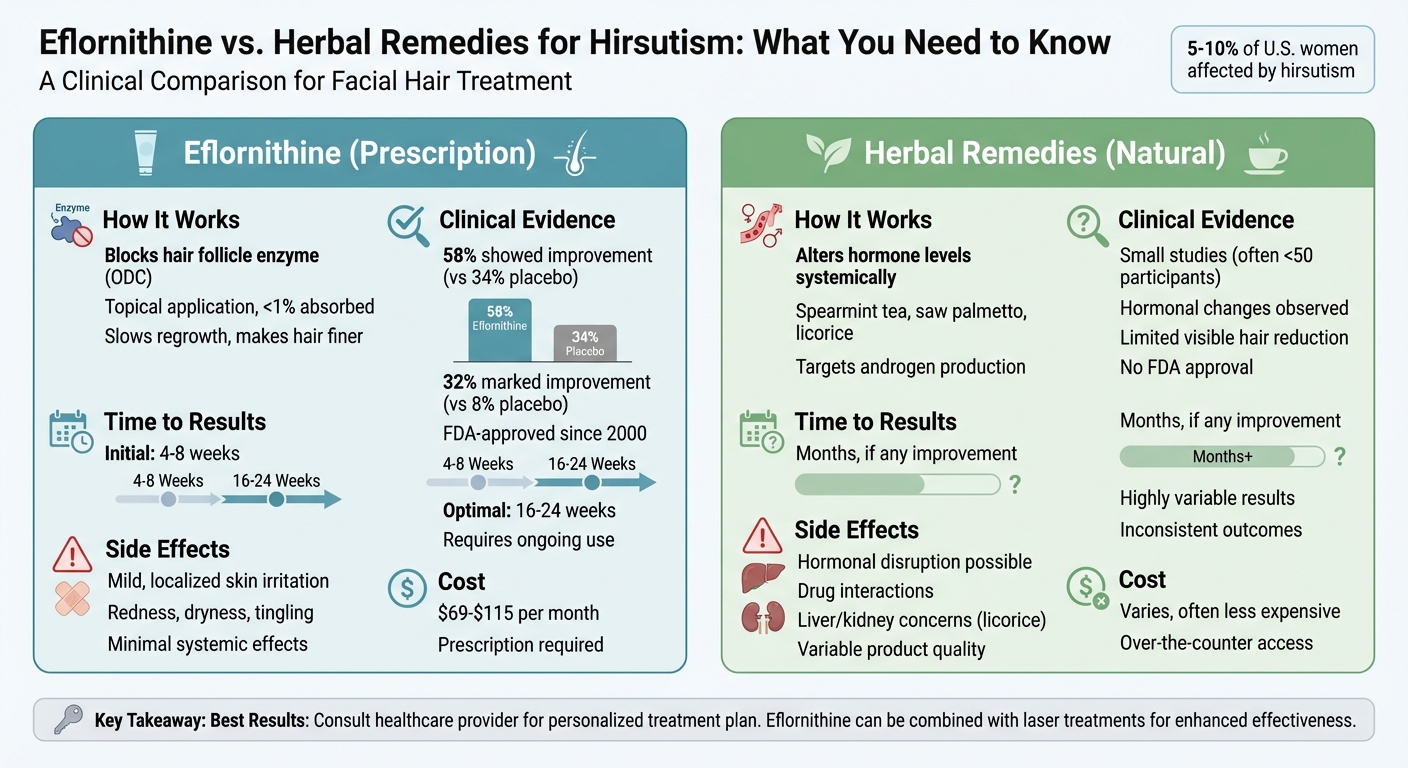
Eflornithine vs Herbal Remedies for Hirsutism: Side-by-Side Comparison
Eflornithine: A Prescription Solution
How Eflornithine Works
Eflornithine hydrochloride cream, sold under the brand name Vaniqa in the United States, is a prescription treatment that targets an enzyme called ornithine decarboxylase (ODC) found in hair follicles. This enzyme is responsible for producing polyamines, which play a key role in promoting rapid hair growth. By blocking ODC, eflornithine slows down hair growth, making the hair finer and less noticeable.
This FDA-approved cream contains 13.9% eflornithine hydrochloride (equivalent to 15% eflornithine base). It is applied in a thin layer twice a day, with at least eight hours between applications, to areas like the upper lip, chin, and cheeks. Because the cream works directly on the skin, less than 1% is absorbed into the bloodstream, ensuring that its effects remain localized. This feature contributes to its strong safety profile.
It’s important to note that eflornithine doesn’t remove existing hair or damage hair follicles. Instead, it reduces the rate and thickness of regrowth. So, you’ll need to continue using your usual hair removal methods - such as shaving, waxing, or threading - while the cream gradually makes hair less visible. This mechanism is what underpins its clinical benefits.
Clinical Evidence and Effectiveness
Studies have shown that eflornithine delivers measurable results. After 24 weeks of twice-daily use, 58% of women using the cream reported some improvement in facial hirsutism, compared to 34% on placebo. Additionally, 32% of eflornithine users were rated as "successfully treated" (marked improvement or better), versus just 8% of placebo users. Another study found that 35% of patients experienced significant improvement with eflornithine, compared to 9% with placebo.
Most women begin to see results after 4 to 8 weeks of regular use, with more noticeable improvements by the 16 to 24-week mark. Patient feedback highlights additional benefits, such as a 33% reduction in discomfort, compared to 15% for placebo users, reflecting meaningful enhancements to daily life.
Eflornithine is even more effective when combined with laser hair removal. Research indicates that using the cream alongside laser treatments results in better outcomes than laser alone. Eflornithine slows hair regrowth between laser sessions, potentially reducing the number of treatments needed. Many dermatologists recommend continuing eflornithine during and after laser treatments to maintain results. For those seeking prescription-based care, services like Oana Health provide convenient, personalized treatment plans, delivering the medication directly to your door.
Safety and Side Effects
Eflornithine cream is generally well tolerated, with most side effects being mild and limited to the application site. Common issues include temporary irritation, redness, burning, stinging, dryness, itching, or rash. These symptoms often improve with continued use or by reducing the application frequency to once a day. Serious side effects are rare due to the cream’s minimal absorption into the bloodstream.
While the long-term safety of eflornithine beyond 24 weeks hasn’t been extensively studied in clinical trials, many women have used it safely for years in everyday practice. Pregnant or breastfeeding women should use caution, as safety data in these cases is limited. The cream should only be used under medical supervision if necessary. It’s also worth noting that eflornithine is not intended for use on the scalp or large body areas - its use is restricted to the face and nearby areas.
If you stop using eflornithine, hair growth usually returns to its original rate and thickness within about 8 weeks. This means the cream is best suited for long-term maintenance rather than a permanent solution, requiring ongoing use to sustain its benefits. Up next, we’ll take a closer look at herbal alternatives for managing hirsutism.
Herbal Alternatives for Hirsutism
After exploring the prescription benefits of eflornithine, let’s take a closer look at natural herbal alternatives.
Common Herbal Remedies
Many women opt for herbal remedies as a more natural way to manage unwanted facial hair. Popular choices include spearmint tea, licorice root, saw palmetto, and green tea. These are typically available as teas, capsules, or tinctures, often without standardized dosing guidelines.
Each herb works in its own way. For instance, spearmint (Mentha spicata) has been linked to reduced free testosterone levels and increased luteinizing hormone (LH) and follicle-stimulating hormone (FSH), which may indicate a mild anti-androgen effect. Licorice (Glycyrrhiza glabra) contains compounds that could inhibit enzymes involved in androgen production, potentially lowering testosterone. Saw palmetto (Serenoa repens) is thought to block 5α-reductase, an enzyme that converts testosterone into the more potent dihydrotestosterone (DHT), though its effects can be inconsistent. Green tea, particularly its active compound EGCG, may influence androgen activity through its antioxidant and anti-inflammatory properties, though direct evidence of its impact on hair growth remains limited.
Next, let’s dive into the clinical evidence behind these herbal remedies.
Evidence for Herbal Options
The clinical data supporting herbal treatments is limited, often based on small studies with short follow-up periods. For example, randomized trials with women experiencing hirsutism and PCOS showed that drinking spearmint tea (1 cup twice daily for a month) significantly reduced free testosterone levels. However, no meaningful change in Ferriman–Gallwey hirsutism scores was observed during that time.
Licorice has also been studied for its impact on testosterone. In one trial, women who consumed 3.5 g/day of licorice over two months saw their testosterone levels drop from about 27 ± 8 ng/dL to 17 ± 4 ng/dL. Despite these hormonal changes, noticeable improvements in hair reduction were minimal, and the results didn’t match the effectiveness of prescription treatments.
Saw palmetto has even less evidence. While it’s been studied for conditions like benign prostatic hyperplasia and male pattern hair loss, controlled trials specifically addressing hirsutism in women are scarce. Most findings come from studies where it’s used as part of a multi-herb regimen. Similarly, green tea is better known for its effects on weight management and insulin resistance in PCOS rather than direct benefits for hirsutism.
A major limitation across these studies is their small sample sizes (often fewer than 50 participants) and short durations (1–3 months). While hormonal shifts are often observed, visible improvements in hair reduction are typically modest or take longer to appear, making it tough to draw strong conclusions about their long-term effectiveness.
Safety and Potential Risks
Safety is an essential consideration when using herbal remedies. Here’s a look at the potential risks associated with these options.
Although herbal remedies are often seen as safe, they can cause side effects or interact with medications. Spearmint tea, for instance, is generally well tolerated, but prolonged or excessive use could influence reproductive hormones. Women trying to conceive should avoid it.
Licorice carries more serious risks. High doses or chronic use - especially those exceeding 100 mg/day of glycyrrhizic acid - can lead to issues like high blood pressure, low potassium (hypokalemia), swelling, and even heart rhythm problems. This makes it unsafe for women with cardiovascular or kidney disease or those on medications like diuretics, digoxin, or corticosteroids unless under strict medical supervision.
Saw palmetto is usually linked to mild gastrointestinal discomfort, but rare cases of pancreatitis and liver toxicity have been reported. Its anti-androgen effects mean it’s not suitable for women who are pregnant, trying to conceive, or not using reliable contraception. It may also affect hormone levels and blood clotting, so it’s important to inform healthcare providers before undergoing hormone tests or surgery.
Green tea, when consumed as a beverage, is generally safe. However, concentrated green tea extracts can occasionally cause liver injury, usually within the first three months of use. Women with liver conditions or those taking other liver-affecting medications should approach green tea supplements with caution.
It’s always a good idea to discuss any herbal products with a healthcare provider or pharmacist to identify potential interactions or contraindications. If you’re considering combining herbal remedies with prescription treatments, services like Oana Health can help coordinate your care to ensure safety and effectiveness.
In the next section, we’ll compare these herbal remedies to eflornithine in terms of efficacy, evidence, and safety.
Eflornithine vs. Herbal Alternatives: Direct Comparison
This comparison breaks down the key differences between eflornithine and herbal remedies, helping you decide which option aligns with your needs based on how they work, the strength of evidence, ease of use, and safety.
How They Work
Eflornithine works directly at the hair follicle level. When applied to areas like the upper lip or chin, it blocks the enzyme ornithine decarboxylase (ODC), which plays a key role in hair growth. This slows the growth of new hair and results in finer, slower regrowth. With less than 1% of the cream absorbed into the body, its effects are limited to the treated areas, making it a targeted solution.
Herbal alternatives, on the other hand, take a systemic approach. For example, spearmint tea may reduce free testosterone levels, while saw palmetto is thought to block 5-alpha-reductase, an enzyme that converts testosterone into a more potent form. These remedies aim to alter the hormonal environment that contributes to excessive hair growth, rather than directly affecting hair follicles. Because they work throughout the body, their effects can take longer to appear and may vary widely between individuals.
These contrasting mechanisms also influence the quality and reliability of the evidence supporting each option.
Quality of Evidence
Eflornithine has undergone extensive testing in double-blind, placebo-controlled trials. Studies show that women using eflornithine 13.9–15% cream twice daily for 24 weeks experienced noticeable results. Between 35–58% of participants saw measurable benefits compared to 9–34% in placebo groups, and 32% achieved marked improvement, compared to just 8% with placebo. This robust data led to its FDA approval in 2000.
In contrast, herbal remedies lack the same level of rigorous testing. Most studies have been small, short-term (1–3 months), and lacked proper controls or blinding. While some research suggests hormonal changes - like reduced free testosterone from spearmint tea - these studies rarely show consistent improvements in visible hair growth. Additionally, no herbal remedy has been tested on a scale large enough to meet FDA standards.
Ease of Use
Eflornithine is simple to use: apply the cream to clean, dry facial skin twice daily. Once it dries, you can follow up with makeup or sunscreen, making it easy to incorporate into your daily routine. Services like Oana Health simplify access by offering prescription eflornithine treatments, such as Hairless Hype, starting at $69 for 20g or $139 for 60g, with free home delivery.
"It's been a little over 5 weeks, and I've noticed a dramatic reduction in my facial hair growth. This has been such a relief for me. You really have to stick with it and be patient to notice results!" – Allison L., Hairless Hype user
Herbal remedies often require more effort. For example, you might need to brew and drink 1–2 cups of spearmint tea daily or take saw palmetto supplements at specific times, often with meals. The lack of regulation for herbal products in the U.S. means that product strength and quality can vary, complicating the process. Results are often subtle and may take months to notice, leaving you uncertain about their effectiveness.
Safety Comparison
Safety is another area where these treatments differ significantly.
Eflornithine’s side effects are mostly local and mild, such as redness, dryness, tingling, or occasional acne at the application site. These reactions are usually temporary and can be managed by reducing application frequency or taking a short break. Because so little of the cream is absorbed into the body, systemic side effects are rare.
Herbal remedies, despite being labeled as "natural", can have broader and less predictable effects. For example, they may disrupt menstrual cycles, impact fertility, strain the liver or kidneys with long-term use, or interact with medications like blood thinners or birth control pills. Since supplements aren’t regulated as strictly as prescription medications, their purity and potency can vary. If you’re considering herbal supplements - especially if you have hormone-related conditions or take multiple medications - it’s important to consult a healthcare professional.
For those who prefer a safer, more predictable option, telehealth services like Oana Health offer prescription eflornithine treatments under medical supervision, ensuring a reliable alternative to self-directed herbal approaches.
sbb-itb-6dba428
Choosing the Right Treatment for You
As discussed earlier, selecting the right treatment depends on factors like the severity of hair growth, underlying health conditions, and your personal goals.
Factors to Consider
Eflornithine, approved by the FDA for facial hair (like on the upper lip or chin), is most effective for mild, localized cases. For more pronounced facial hirsutism - thicker, darker hair spread across larger areas - a combination approach often works best. This might include using eflornithine to slow hair regrowth, alongside laser or IPL treatments, and systemic therapies if hormonal imbalances are present.
Addressing underlying health conditions is crucial. For instance, hirsutism caused by PCOS or insulin resistance often requires more than just topical or herbal solutions. Companies like Oana Health offer treatment plans that pair eflornithine with therapies targeting both hair growth and insulin resistance. Victoria A., a satisfied user of Hairless Hype, shared her experience:
"Oana's telehealth service is fantastic! It's helped manage my insulin levels and reduce excess hair growth I was experiencing due to PCOS. I'm recommending this to all my friends with PCOS."
The timeline for results also varies. With eflornithine, you might notice improvements after 4–8 weeks, with more significant changes by 24 weeks - though not everyone responds. Herbal remedies, on the other hand, often take longer and yield less predictable outcomes. Budget is another factor: eflornithine costs between $69 and $115 per month, while the cumulative cost of over-the-counter herbal options can add up over time.
These considerations can help shape a combination approach tailored to your needs.
Combining Treatments
Pairing eflornithine with laser or IPL treatments can enhance and prolong results. A common plan involves scheduling laser or IPL sessions every few weeks or months, with regular application of eflornithine cream between sessions to slow regrowth. You might also explore combining this with herbal remedies aimed at hormonal balance, but be cautious - introduce new products gradually to avoid skin irritation.
It’s worth noting that there’s limited clinical research on combining eflornithine with herbal supplements. Always discuss such combinations with a healthcare provider, especially if you’re taking medications like blood thinners, blood pressure drugs, or hormone-related treatments.
For hirsutism linked to PCOS, lifestyle changes - such as maintaining a healthy weight, following a balanced diet, and exercising - can improve insulin resistance and lower androgen levels, boosting the effectiveness of both eflornithine and herbal treatments.
Working with Medical Professionals
While these strategies can guide your treatment plan, professional medical advice is essential to ensure safety and effectiveness. A licensed healthcare provider can create a personalized plan based on your history, the severity of hirsutism, and any underlying conditions. This is especially critical if you have PCOS, insulin resistance, or sudden-onset hair growth, as these may signal more serious issues like androgen-secreting tumors.
Telehealth services, such as Oana Health, simplify access to expert care. Their licensed physicians review your medical history and craft science-backed treatment plans, which might include eflornithine alongside other proven options like Metformin for insulin resistance or Spironolactone for reducing androgen levels. Plus, the convenience of delivery and free shipping makes it easier to stick to your regimen.
If you’re considering herbal remedies, use them as part of a comprehensive care plan under medical supervision. For example, Oana Health highlights the potential of Shatavari:
"may help balance hormones, lower androgens, and reduce PCOS‑related facial hair when used with medical care and lifestyle changes."
A healthcare provider can help you monitor potential interactions, track your progress, and adjust your treatment for the best results.
Conclusion
Eflornithine cream stands out as the only FDA-approved prescription option specifically created to slow facial hair growth in women. Clinical trials have shown that eflornithine delivers measurable improvement when compared to a placebo. The cream works directly at the hair follicle level, is generally well tolerated with mostly mild skin reactions, and has minimal systemic absorption (less than 1%). However, it’s a maintenance treatment, requiring consistent use for 4–8 weeks to see results. Stopping the treatment usually results in hair growth returning to baseline levels within about 8 weeks.
On the other hand, herbal alternatives like spearmint tea, saw palmetto, and Shatavari are sometimes considered for a more natural approach. While small studies hint at potential hormonal benefits, the evidence backing these remedies is far less robust compared to eflornithine. Additionally, herbal treatments lack the standardized testing and dosing seen in prescription medications and may carry risks, such as drug interactions or unintended hormonal effects, especially when used without medical oversight.
For the best results, eflornithine can be paired with other treatments, such as laser or IPL procedures, traditional hair removal methods like waxing or threading, and systemic therapies like oral contraceptives or anti-androgens. These combinations address both visible hair growth and underlying hormonal imbalances, often linked to conditions like PCOS. If you’re considering herbal supplements, it’s crucial to use them as part of a broader treatment plan under professional guidance rather than replacing proven medical options.
Since excessive hair growth (hirsutism) can signal underlying issues like PCOS or insulin resistance, consulting a healthcare provider is essential. Working with a clinician - whether in person or through telehealth services like Oana Health - ensures a personalized approach. Licensed providers can prescribe eflornithine, monitor for potential interactions with herbal products, and design a treatment plan tailored to your specific needs, addressing both the cosmetic and medical aspects of hirsutism.
FAQs
How does Eflornithine compare to herbal remedies for managing hirsutism?
Eflornithine cream is a prescription option created to help reduce the growth of unwanted facial hair. It works by targeting specific enzymes involved in hair growth, offering a solution supported by scientific research and clinical testing.
Herbal remedies, in contrast, can differ greatly in their ingredients and effectiveness since they aren't regulated or standardized like prescription treatments.
For a more dependable and tailored approach to managing hirsutism, prescription treatments like Eflornithine - recommended by licensed healthcare providers - tend to deliver more consistent and predictable outcomes compared to herbal alternatives.
Are herbal remedies for hirsutism safe to use, and do they have any side effects?
Herbal remedies for hirsutism are often promoted as natural solutions, but their safety and effectiveness can be inconsistent. While certain herbs might offer mild benefits in reducing unwanted hair, they don't undergo the same level of study or regulation as prescription options like Eflornithine cream. This lack of oversight means the quality, strength, and potential risks of herbal products can vary greatly from one brand to another.
Using herbal remedies isn’t without risks. Some can lead to side effects like skin irritation or allergic reactions, and they may even interfere with other medications you’re taking. That’s why it’s essential to consult a healthcare professional before trying any new treatment, particularly herbal ones. Expert advice ensures you’re choosing safe and effective options tailored to your needs.
Can I use eflornithine with laser hair removal for better results?
Yes, combining eflornithine with laser hair removal can improve results. Eflornithine helps by slowing down hair growth, while laser hair removal focuses on reducing the existing hair. Together, these treatments can offer an effective way to tackle unwanted facial hair. That said, it’s important to consult a healthcare professional to determine if this combination suits your needs.