
How Endorphins Help Women Manage PCOS Symptoms
If you're managing PCOS, here's some good news: endorphins can help reduce stress, improve mood, and ease fatigue - all common challenges of the condition. These natural chemicals, released during physical activity, lower cortisol levels, enhance insulin sensitivity, and stabilize mood swings. You don’t need intense workouts - short walks, yoga, or light stretching can trigger endorphins and support hormonal balance.
Key Takeaways:
- PCOS affects hormones, causing symptoms like irregular cycles, weight gain, and mood swings.
- Stress worsens PCOS by increasing cortisol, which disrupts hormones and insulin.
- Endorphins from exercise lower cortisol, improve sleep, and boost energy.
- Activities like walking, strength training, and yoga are effective and easy to start.
For best results, combine exercise with medical care tailored to PCOS. Even small steps, like a 10-minute walk, can make a difference in how you feel.
What PCOS Does to Women's Bodies and Minds
PCOS Basics and Common Symptoms
Polycystic ovary syndrome (PCOS) is a hormonal condition affecting between 6% and 12% of women of reproductive age in the United States, making it one of the most prevalent endocrine disorders in this group. Doctors typically diagnose PCOS when at least two of the following three criteria are met: irregular or absent ovulation, elevated levels of male-type hormones (androgens), and ovaries with a polycystic appearance on an ultrasound.
At its core, PCOS disrupts the balance of key hormones like androgens, luteinizing hormone (LH), and follicle-stimulating hormone (FSH). A striking 70–80% of women with PCOS also experience insulin resistance, which triggers the body to release more insulin. This excess insulin encourages fat storage around the abdomen and raises androgen levels. These hormonal shifts can interfere with ovulation, metabolism, and even the health of your skin, hair, and weight.
In everyday life, PCOS can present a series of frustrating challenges. Irregular or missed periods can make planning and routines feel unpredictable. Weight gain - especially around the midsection - often occurs even when eating habits seem reasonable, and shedding those pounds can feel nearly impossible. Adult acne and unwanted facial hair may require constant management, while thinning hair on the scalp becomes an unwelcome reminder of the condition. Dark, velvety patches of skin (known as acanthosis nigricans) are another common sign of insulin resistance. On top of that, energy crashes and strong cravings for carbs - both tied to insulin resistance - can sap your energy and productivity. Over time, these metabolic challenges increase the risk of developing prediabetes (seen in 30–40% of women with PCOS), type 2 diabetes, high cholesterol, high blood pressure, and heart disease.
How PCOS and Stress Feed Each Other
PCOS doesn’t just affect the body - it takes a toll on mental health as well. Women with PCOS are more likely to experience depression, anxiety, and mood swings compared to those without the condition. Biologically, elevated androgens, insulin resistance, and chronic low-grade inflammation can interfere with brain chemicals that regulate mood and energy. Meanwhile, physical symptoms like weight gain and unwanted hair can chip away at self-confidence, adding to emotional distress. Issues with fertility and unpredictable cycles often bring additional layers of stress and grief.
Unfortunately, PCOS and stress can create a self-reinforcing loop. Women with PCOS often have higher baseline cortisol levels and a heightened stress-response system, especially when insulin resistance and abdominal fat are involved. Chronic stress raises cortisol, which in turn increases blood sugar, intensifies cravings, and worsens insulin resistance. This can further disrupt the hormonal signals between the brain and ovaries, making menstrual irregularities and ovulation problems even more pronounced.
Stress can also derail efforts to stay active, maintain routines, and get restful sleep. Emotional eating, often triggered by stress, can lead to further weight gain and deepen insulin resistance, perpetuating the cycle. Sleep disturbances, including sleep apnea - which is more common in women with PCOS - add to daytime fatigue, making it even harder to stick to healthy habits.
Understanding that struggles with mood, energy, and stress are part of PCOS - not personal shortcomings - is key. Early and comprehensive care that addresses both the physical and emotional aspects of PCOS can lower long-term health risks and improve daily life. Telehealth platforms like Oana Health offer tailored, evidence-based solutions for managing issues like insulin resistance, unwanted facial hair, acne, hair thinning, and mental health concerns. By providing personalized care, these services help women create routines that promote hormonal balance and emotional well-being. Tackling these interconnected challenges can pave the way for the mood-boosting effects of regular exercise and a more balanced life.
How Endorphins Help Manage PCOS Symptoms
What Endorphins Do in Your Body
Endorphins are your body’s natural painkillers and mood elevators. These neurotransmitters latch onto opioid receptors, soothing discomfort and lifting your spirits - think of the "runner’s high" you might feel after a good workout.
But their job doesn’t stop there. Endorphins also team up with dopamine and serotonin, two chemicals that play a big role in keeping you motivated, steadying your mood, and helping you sleep better. These effects are especially helpful for women managing PCOS, as stress and mood swings are common challenges.
Why Endorphins Matter for Women with PCOS
Endorphins are particularly valuable for women with PCOS because they naturally combat stress by lowering cortisol, the body’s primary stress hormone. Even simple activities like walking or light stretching can interrupt stress signals in the brain. This is significant because high cortisol levels can worsen two key PCOS symptoms: insulin resistance and excess androgens.
Another benefit? Endorphins help stabilize mood. Acting as natural opioids, they not only lift your spirits but also help convert serotonin into melatonin, which improves sleep quality and boosts your energy during the day. This can make a big difference in reducing anxiety and depression while helping you cope with the hormonal ups and downs that come with PCOS.
On top of that, endorphins enhance how your body uses oxygen and support mitochondrial function during exercise. This means even moderate physical activity can leave you feeling more energized, helping to fight the fatigue often associated with PCOS. Plus, the endorphin release from exercise improves insulin sensitivity and lowers stress levels.
Incorporating activities that trigger endorphin release - like exercise - into your daily routine is a powerful way to support hormonal balance and manage PCOS symptoms alongside medical treatments.
Exercises That Release Endorphins for PCOS Management
Low-Impact Cardio Options
Activities like brisk walking, swimming, and cycling are great for releasing endorphins while improving insulin sensitivity. If you're new to exercise, start with 5–10 minutes of moderate walking on flat ground and gradually add 5 minutes each week . For those dealing with joint pain in the knees, hips, or back, swimming or water aerobics can be a fantastic alternative, as water reduces the strain on your joints. Another low-impact option is stationary cycling - whether on an upright or recumbent bike - which is gentle on the joints .
To see benefits, aim for 150 minutes of moderate-intensity cardio per week, which breaks down to about 30 minutes on most days. If that sounds like too much, split it into shorter sessions of 10–15 minutes throughout the day. Even these brief bursts of activity can improve your mood, reduce stress, and help regulate blood sugar levels . While cardio supports heart health and calorie burning, pairing it with strength training can enhance hormone balance and muscle strength.
Strength Training for Hormone Balance
Adding resistance exercises to your routine can further support hormone regulation. These exercises - whether done with your body weight, free weights, or resistance bands - improve insulin sensitivity, potentially lower circulating insulin levels, and help reduce excess androgen production. This can address common PCOS symptoms like irregular menstrual cycles, acne, and unwanted hair growth . Beyond these benefits, strength training also boosts mood through the release of feel-good chemicals .
You don’t need a gym to get started. Simple bodyweight exercises like squats, wall push-ups, glute bridges, step-ups, and modified planks can be done right at home. Begin with 1–2 sets of 8–12 repetitions for each exercise, 2–3 times a week on nonconsecutive days. As you get stronger, increase to 2–3 sets . Building lean muscle not only helps with weight management but also increases your resting metabolism. Consistent 20–30 minute sessions, combined with cardio, can lead to noticeable improvements in both your metabolic health and overall well-being .
Yoga, Pilates, and Tai Chi for Stress Relief
For managing stress and encouraging hormonal balance, practices like yoga, Pilates, and tai chi are excellent options. These exercises combine movement with focused breathing and mindfulness, reducing stress and promoting the release of calming neurochemicals like endorphins . They can also help lower anxiety, improve sleep, and stabilize mood swings often associated with PCOS.
The slow, intentional movements and deep breathing in these practices activate the parasympathetic nervous system - your body’s "rest and digest" mode - which helps counteract the effects of chronic stress and high cortisol levels . Beginners can start with yoga poses like child’s pose, cat-cow, and supported bridge. Introductory Pilates routines focusing on core strength and controlled breathing, as well as tai chi’s slow, flowing movements, are also great choices . Aim for 20–30 minutes of these practices 2–3 times a week, or even shorter 10–15 minute sessions on busier days.
If you're unsure where to begin, online videos can guide you through these exercises, or you can join a local class. For those experiencing significant anxiety, depression, or emotional eating related to PCOS, combining these stress-relief practices with personalized medical care from providers like Oana Health can offer more comprehensive support. Together, these strategies can make a meaningful difference in managing PCOS symptoms.
sbb-itb-6dba428
Creating Your Exercise Plan for PCOS Relief
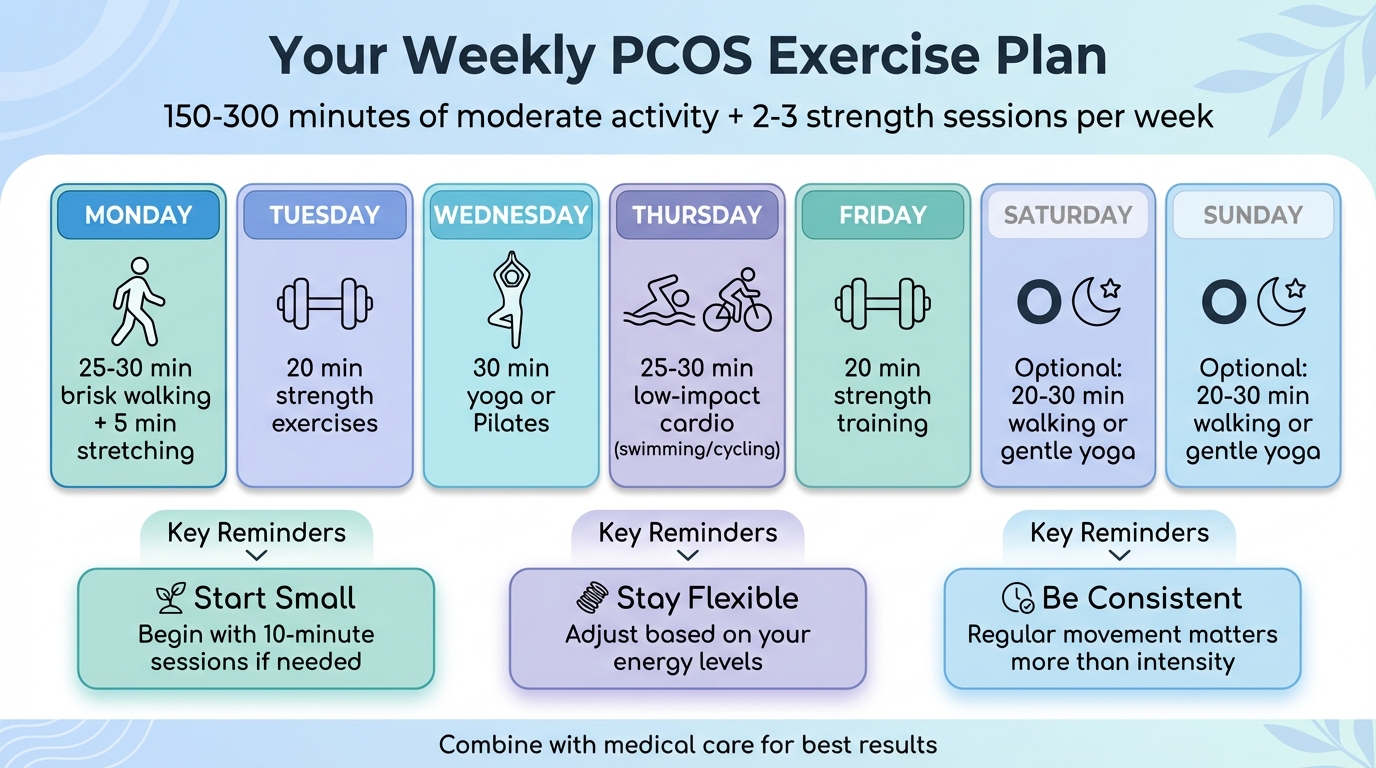
Weekly PCOS Exercise Plan: 7-Day Routine for Hormone Balance
Weekly Exercise Recommendations
To support PCOS management, aim for 150–300 minutes of moderate aerobic activity each week (or 75–150 minutes of more vigorous activity). Add 2–3 strength training sessions into your routine. If this feels overwhelming, start small with 10-minute sessions spread throughout your day.
Here’s what a balanced week could look like:
- Monday: 25–30 minutes brisk walking + 5 minutes stretching
- Tuesday: 20 minutes of strength exercises
- Wednesday: 30 minutes of yoga or Pilates
- Thursday: 25–30 minutes of low-impact cardio, like swimming or cycling
- Friday: 20 minutes of strength training
- Weekend: Optional 20–30 minutes of walking or gentle yoga
This plan emphasizes consistent, manageable movement rather than intense workouts. Feel free to adjust based on your energy levels and schedule.
Working Around Fatigue and Time Constraints
Life can get hectic, and dealing with fatigue might make sticking to a plan tricky. On those days, short and frequent activities - like 5–10 minutes of walking, marching in place, or even light dancing - can still make a difference. These small bursts of movement release endorphins and help with blood sugar regulation.
Using the “minimal effective dose” strategy - committing to just 5–10 minutes of gentle movement daily - can keep you on track without pushing too hard. Balance your routine by alternating higher-energy days with recovery-focused days, such as stretching, restorative yoga, or slow, deep breathing. This approach avoids overexertion while still addressing stress and mood.
For convenience, try home workouts like online yoga classes, resistance band routines, or bodyweight exercises. These eliminate the need for a gym trip and make it easier to stay consistent. Simple tricks like setting reminders, pairing exercise with daily habits, or prepping workout clothes in advance can help remove barriers. Keeping a journal to track your energy levels can also be helpful. For example, if you notice you feel most energized in the late morning, plan workouts during that time.
Combining Exercise with Medical Treatment
Exercise doesn’t just work on its own - it’s a powerful complement to medical treatments for PCOS. Regular physical activity improves insulin sensitivity, which can help regulate ovulation and menstrual cycles. When paired with a nutrition plan focused on whole foods, exercise can amplify the effects of insulin-sensitizing medications like metformin, often prescribed to reduce insulin resistance and lower the risk of developing diabetes.
This combined approach supports not only physical health but also emotional well-being. The mood-boosting benefits of exercise, thanks to endorphins, make it an essential part of managing PCOS symptoms.
For more tailored support, Oana Health offers telehealth services specializing in PCOS and hormone care. Their clinicians can create personalized plans for managing symptoms like insulin resistance, weight changes, unwanted facial hair, acne, and hair loss. They’ll help you determine safe starting points for exercise, how to gradually increase intensity, and how to align workouts with your nutrition and medication schedules. Since their care is entirely virtual - with prescriptions delivered to your door for free - you can easily adjust your plan as your symptoms or energy levels change, making it easier to stick with your routine and see long-term results [1].
Conclusion
Exercise-induced endorphins provide a practical way to manage PCOS symptoms, offering relief from the challenging cycle of fatigue, weight gain, and mood swings that amplify stress and hormonal imbalances. Even short bursts of movement can make a difference, easing stress, boosting mood, and improving sleep - all while helping to restore hormonal balance.
You don’t need a dramatic lifestyle change to start seeing results. Just 5–10 minutes of movement - like a brisk walk, gentle stretches, or dancing around your living room - can trigger endorphins and help regulate blood sugar. As Carrie S. shared, "I get the same benefits but no more upset stomach and nausea, and this helps me stick with it a lot more consistently." Small, consistent efforts can lead to meaningful improvements.
On tougher days, even five minutes of light activity can be a powerful form of self-care. Over time, you can build on this foundation, knowing that every little bit contributes to your overall well-being.
It’s important to remember that exercise works best when combined with medical care. This partnership can help break the stress cycle of PCOS more effectively. Consulting with a healthcare professional can provide safe starting points for movement and help integrate physical activity with treatments like insulin-sensitizing medications. For personalized support, Oana Health offers telehealth services tailored to PCOS management, including plans to address insulin resistance, mood changes, and other symptoms, with the convenience of prescriptions delivered to your door.
Take a small step today - pick a 5–10 minute activity and add it to your calendar. There’s no perfect workout, just consistent choices that help reduce stress and improve how you feel.
FAQs
How do endorphins help with managing PCOS symptoms?
Endorphins, often referred to as "feel-good" hormones, are powerful allies in managing PCOS symptoms. These natural chemicals, released during physical activity, can help ease stress, uplift your mood, and boost your energy levels. For those dealing with PCOS, this can make a real difference in tackling challenges like mood swings, fatigue, and stress.
Beyond improving your emotional state, endorphins also play a part in promoting relaxation and supporting hormonal balance - an essential factor in managing PCOS. The best part? You don't need intense workouts to reap these benefits. Simple activities like walking or practicing yoga can stimulate the release of endorphins, helping you feel better both mentally and physically.
What exercises are most effective for boosting endorphins and managing PCOS symptoms?
Regular physical activity offers women with PCOS a natural way to boost endorphins, the "feel-good" hormones that uplift mood and ease stress. Great options for this include aerobic exercises like brisk walking, jogging, cycling, swimming, or even dancing. Strength training and yoga are equally beneficial, as they not only encourage the release of endorphins but also help promote hormonal balance and enhance mental health.
Adding these activities to your routine can make a big difference in managing common PCOS symptoms like fatigue, mood swings, and stress, helping you feel more in control and energized.
Can quick workouts really help with PCOS symptoms?
Even short workouts can play a big role in managing PCOS symptoms. Physical activity stimulates the release of endorphins, those "feel-good" hormones that can help lift your mood, reduce stress, and combat fatigue.
This makes exercise an effective way to tackle common PCOS struggles like mood swings and low energy. The key is consistency - short, regular sessions can add up to meaningful improvements over time!