
Essential Oils for Hirsutism: How Long for Results?
Using essential oils like lavender and tea tree for hirsutism can reduce hair thickness and growth over time. Research shows that consistent, twice-daily application for 3-6 months is needed to see noticeable changes. These oils work locally on hair follicles and are best used as a complementary approach alongside medical treatments for hormonal imbalances, such as PCOS.
Key Takeaways:
- Timeline for Results: 3-6 months of consistent use.
- How They Work: Anti-androgenic properties reduce hair growth at the follicle level.
- Best Practices: Dilute oils with a carrier oil, apply twice daily, and follow safety precautions.
- When to Consult a Doctor: If no results after 6 months or if symptoms worsen.
For mild cases, essential oils may help. However, for more severe or persistent hirsutism, combining them with medical treatments is often more effective.
How Long Until You See Results
Essential Oils for Hirsutism: Timeline and Results Guide
What Studies Show
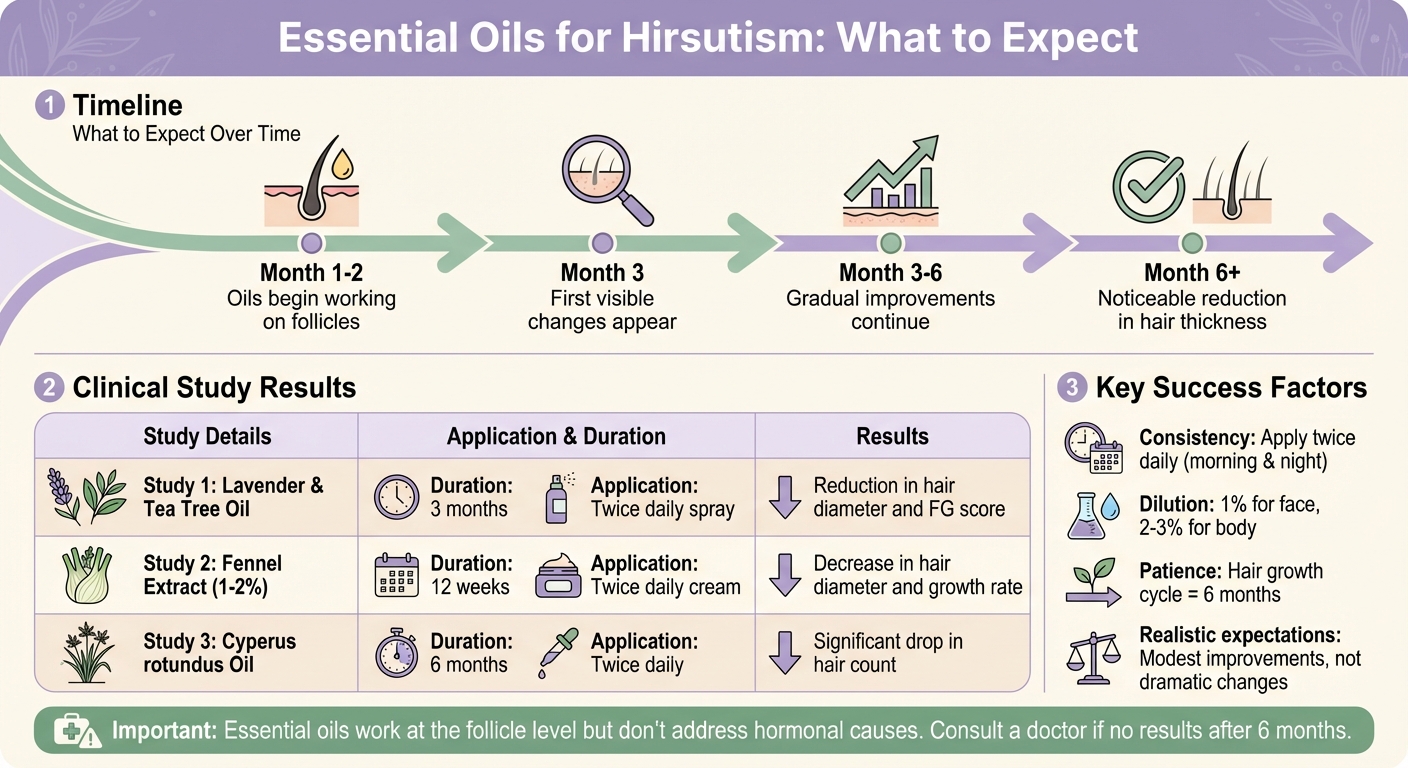
Clinical research offers clear timelines for when you might notice changes. For example, a study conducted at Marche Polytechnic University observed that women with mild hirsutism who applied a lavender and tea tree oil spray twice daily for 3 months saw a significant reduction in hair thickness and hirsutism scores.
Another trial evaluated the effects of fennel extract cream (1% and 2% concentrations) applied twice daily for 12 weeks. The findings showed a measurable decrease in hair diameter and growth rate among women with idiopathic hirsutism. Similarly, a 6-month study involving 91 women tested Cyperus rotundus (nut grass) oil and found it significantly more effective than a placebo in reducing hair count.
| Essential Oil Treatment | Study Duration | Key Outcome |
|---|---|---|
| Lavender & Tea Tree Oil | 3 Months | Reduction in hair diameter and FG score |
| Fennel Extract (1-2%) | 12 Weeks | Decrease in hair diameter and growth rate |
| Cyperus rotundus Oil | 6 Months | Significant drop in hair count |
These findings suggest that results typically emerge within a 3- to 6-month timeframe.
What to Expect: 3-6 Months of Consistent Use
The hair growth cycle plays a major role in how quickly you’ll see results. Hair grows in phases, which last about six months. Even if essential oils begin working on the hair follicles immediately, changes won’t be noticeable until the current growth phase ends.
"Hair follicles grow for about 6 months before falling out. Therefore, it takes many months of taking medicine before you will notice a decrease in hair growth." - MedlinePlus
With consistent, twice-daily application, expect gradual changes over 3 to 6 months. While progress may not be dramatic or immediate, steady use during this period can lead to visible improvements.
How to Use Essential Oils for Best Results
Application Instructions
To get the most out of essential oils, proper application is key. Always dilute essential oils with a carrier oil before applying them to your skin. For facial areas like the chin or jawline, stick to a 1% dilution - this means mixing 1 drop of essential oil with 1 teaspoon (5 mL) of carrier oil. For larger body areas, such as the abdomen or chest, a 2–3% dilution (2–3 drops per teaspoon) works best.
Apply the diluted mixture to clean skin twice daily - once in the morning and again at night. Gently massage it into the skin to help it absorb into the hair follicles. Keep in mind, results align with the natural hair growth cycle, so patience is important.
When choosing a carrier oil, consider your skin type. Jojoba oil is a great option for oily or acne-prone skin because it closely resembles natural sebum and won’t clog pores. Sweet almond oil is better suited for normal to dry skin, while grapeseed oil is ideal for sensitive or very oily skin.
Follow these steps to ensure safe application and get the best results.
Safety Precautions
Before using essential oils, perform a 24-hour patch test to check for any adverse reactions. Apply a small amount of the diluted oil to the inside of your wrist and wait a full day to see if redness, itching, or irritation occurs.
Avoid applying essential oils to broken or recently treated skin. Be especially cautious with citrus oils, as they can increase sensitivity to sunlight. If you're pregnant, breastfeeding, or taking hormone-related medications like birth control or spironolactone, consult your healthcare provider before use.
If irritation does happen, don’t rinse with water - it can push the oil deeper into your skin. Instead, use a carrier oil or whole milk to wash the affected area.
Why Results Vary from Person to Person
Factors That Affect Results
How individuals respond to essential oils can differ widely, and several factors come into play. One major influence is the root cause of your hirsutism. If conditions like Polycystic Ovary Syndrome (PCOS), Cushing's syndrome, or adrenal disorders are behind your excess hair growth, elevated androgen levels may require medical treatments beyond topical solutions. It’s worth noting that 70% to 80% of people with PCOS experience hirsutism.
Follicle sensitivity is another critical factor. Nearly half of women with mild hirsutism have idiopathic hirsutism, where normal androgen levels still lead to excessive hair growth. Dr. John Mihailidis sheds light on this:
"The level and duration of exposure to androgens, the local 5-alpha-reductase activity, and the intrinsic sensitivity of the hair follicle to androgen action determine whether vellus hair is converted to terminal hair"
Your genetics and ethnicity also play a role. Women of Mediterranean, Hispanic, South Asian, or Middle Eastern backgrounds naturally tend to have more body hair, which can set different baseline expectations. Lifestyle factors, such as body weight, can further influence outcomes. For example, obesity may increase male hormone production, while losing even 5% of body weight can help lower androgen levels and reduce excessive hair growth.
These variables underscore the importance of tracking your progress and consulting a healthcare professional if you’re not seeing results.
When to See a Doctor
If you’ve been using essential oils consistently for six months without noticeable improvement, it might be time to consult a doctor. Sudden or rapid hair growth could indicate a more serious condition, such as a tumor, and should be addressed immediately.
Be alert to signs of virilization, which can include a deepening voice, increased muscle mass, male-pattern baldness, or clitoral enlargement. Other symptoms like irregular periods, infertility, or darkened skin patches (acanthosis nigricans) may also require medical attention.
For personalized care, telehealth services like Oana Health provide science-backed treatments for hirsutism and PCOS-related symptoms. Licensed professionals can prescribe medications like Spironolactone or Eflornithine, which may deliver quicker results compared to essential oils alone.
sbb-itb-6dba428
Using Essential Oils with Other Hirsutism Treatments
Essential Oils as a Complementary Option
Essential oils work best as an added layer of care rather than the main solution for managing hirsutism. While they can provide soothing benefits for the skin and may help reduce hair growth over time, they don’t address the root cause - hormonal imbalances . Essential oils act at the follicle level, but treatments like spironolactone and oral contraceptives target the hormonal issues driving excessive hair growth, offering a more thorough approach .
For instance, pharmacological treatments for hirsutism have been shown to reduce hair growth by 19% to 41% after six months, depending on the medication used. Meanwhile, a 2013 study demonstrated that a lavender and tea tree oil spray could reduce hair diameter in women with mild hirsutism without affecting systemic hormone levels. This suggests that combining these approaches - essential oils and medical treatments - might achieve results that neither could provide on their own. For those seeking additional support, telehealth services offer convenient access to prescription treatments backed by science.
Medical Treatment Options Through Telehealth
If essential oils alone don’t meet your needs, prescription treatments can offer more targeted solutions for hirsutism. Oana Health provides telehealth consultations with licensed medical professionals who can prescribe effective treatments for hirsutism and PCOS-related symptoms.
Two popular options include Eflornithine, a topical cream that slows facial hair growth by inhibiting specific enzymes, and Spironolactone, an oral medication that blocks androgen receptors throughout the body . These prescriptions are delivered straight to your door with free shipping, making it easier to stay consistent with your treatment. You can also continue using diluted essential oils alongside these medications to help soothe your skin and promote healthy follicles - just remember to perform a patch test to avoid any potential sensitivities.
Conclusion
Using essential oils for hirsutism requires both patience and a clear understanding of what to expect. Research indicates that applying these oils twice daily over a period of 3 to 6 months can result in modest improvements, such as finer hair and slower regrowth.
Consistency is key - missing applications can reduce their effectiveness at the follicle level. While diluted lavender and tea tree oils can help soothe the skin and slightly slow hair growth, they don’t address the hormonal imbalances that cause hirsutism.
For the best results, a combined approach is often recommended, as outlined in the earlier discussion on pairing essential oils with medical treatments. If you don’t see noticeable progress after several months or if your hirsutism is more pronounced, consulting a healthcare provider is essential. Services like Oana Health offer telehealth consultations with licensed professionals who can prescribe treatments delivered straight to your home. Staying consistent and combining strategies can help you manage hirsutism more effectively.
FAQs
How effective are essential oils compared to medical treatments for hirsutism?
Essential oils offer a gentle and natural way to support hormonal balance and improve skin health. Oils like lavender, tea tree, spearmint, and clary sage are believed to have mild anti-androgenic effects and can help soothe skin irritation. That said, their impact on reducing unwanted hair is modest at best, and noticeable changes often require 3 to 6 months of consistent use. Most of the evidence supporting their use comes from anecdotal accounts or small-scale studies.
On the other hand, medical treatments like oral contraceptives, anti-androgens such as spironolactone, topical creams, and laser hair removal have much stronger clinical support. These methods can significantly reduce hair growth in a shorter time frame - often within weeks or months. For example, laser treatments can achieve up to 90% hair reduction after multiple sessions. However, these medical options can be more expensive and may come with side effects like nausea or headaches.
For a well-rounded approach, many healthcare providers suggest combining essential oils with medical treatments. While the oils can enhance overall skin and hormonal health, medical therapies remain the go-to choice for faster and more noticeable results in reducing unwanted hair.
What should I do if essential oils cause skin irritation?
If you notice redness, itching, burning, or any other signs of irritation after applying essential oils for hirsutism, here’s what you should do:
- Stop using the oil right away. This helps prevent the irritation from worsening.
- Rinse the area with cool water. Gently pat your skin dry afterward. Avoid scrubbing, as it can aggravate the irritation.
- Reach out to a healthcare provider. A professional, like an Oana Health clinician, can assess the reaction and guide you toward safer alternatives, such as adjusting the oil’s dilution or considering prescription treatments.
Taking these steps can help calm your skin and ensure you’re using a treatment approach that works safely for you.
Can I use essential oils to manage hirsutism during pregnancy?
Essential oils are sometimes used as a natural approach to managing hirsutism, but their safety during pregnancy remains unclear. Take spearmint oil, for instance - while often mentioned for reducing facial hair, it’s generally not considered safe for pregnant women or individuals with liver or kidney issues. It’s crucial to consult a healthcare provider before using essential oils, especially during pregnancy.
Most research on essential oils for hirsutism involves non-pregnant adults, and even then, results typically take at least three months to appear. Given the lack of studies on how these oils might affect pregnancy or interact with hormonal changes, experts usually recommend steering clear of essential oils for hirsutism while pregnant.
If you’re dealing with unwanted facial hair during pregnancy, you might want to explore professional guidance. A telehealth provider like Oana Health offers access to licensed professionals who can create personalized, prescription-based treatments that are safe for pregnancy and tailored to your specific needs.