
GLP-1 Agonists vs Traditional PCOS Medications
If you're navigating PCOS treatment, here's the key takeaway: GLP-1 agonists like Semaglutide and Tirzepatide can offer greater weight loss, better metabolic control, and improved hormonal balance compared to traditional options like Metformin and Spironolactone.
- Weight loss: GLP-1 agonists lead to more significant results (e.g., 6.09 kg in 16 weeks) versus Metformin (2.25 kg).
- Hormonal improvements: GLP-1s reduce testosterone and regulate cycles better than Spironolactone, which primarily targets symptoms like acne and hair growth.
- Fertility: GLP-1s combined with Metformin show higher natural pregnancy rates (35%) compared to Metformin alone (15%).
Quick Comparison
| Feature | GLP-1 Agonists (Semaglutide/Tirzepatide) | Metformin | Spironolactone |
|---|---|---|---|
| Avg. Weight Loss | 6.09 kg (16 weeks) | 2.25 kg | Minimal impact |
| Hormonal Balance | Reduces testosterone, boosts SHBG | Limited effect | Blocks androgen receptors |
| Fertility Support | 35% pregnancy rate (with Metformin) | 15% pregnancy rate | Not recommended |
| Primary Use | Weight, metabolism, fertility | Insulin resistance | Acne, hirsutism |
While traditional medications remain effective for specific symptoms, GLP-1 agonists address multiple PCOS challenges simultaneously. Pairing these with Metformin can further enhance outcomes.
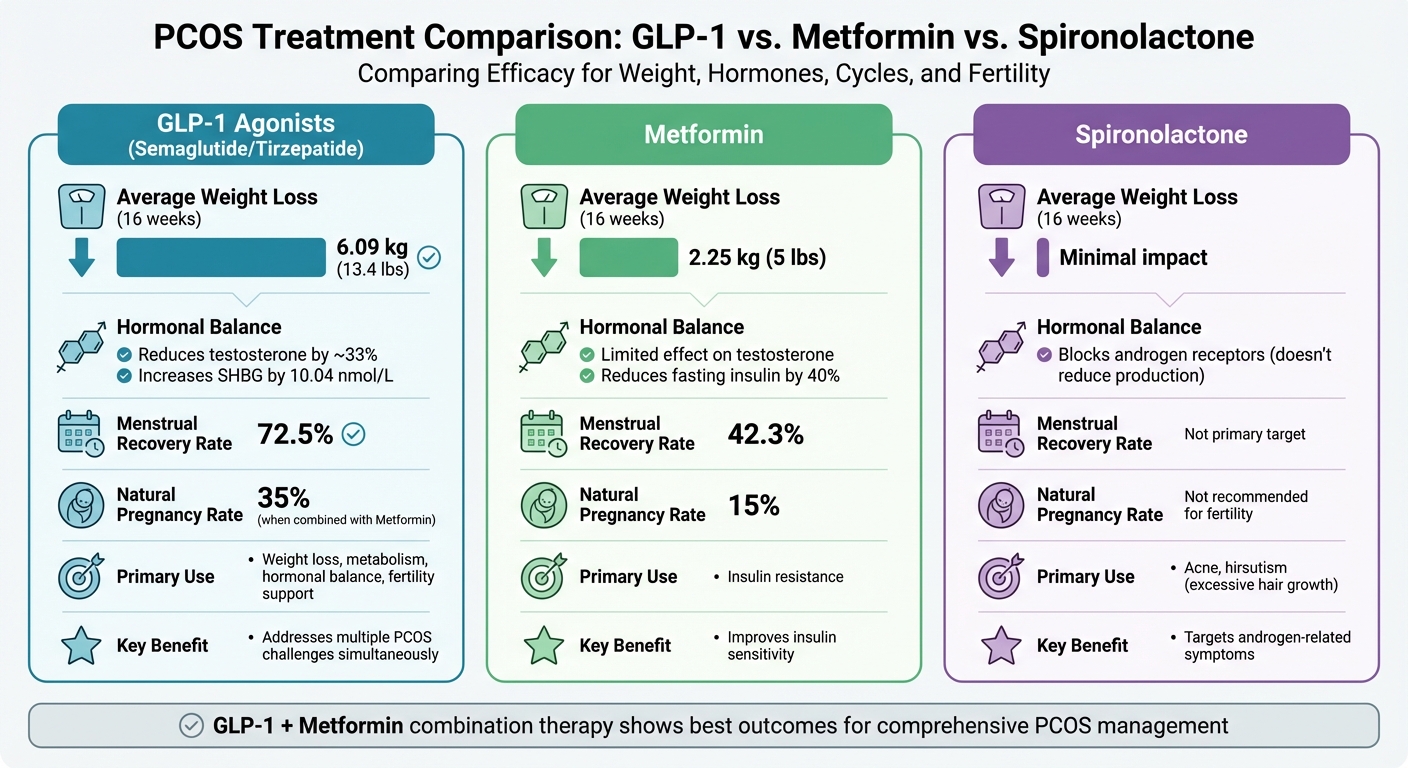
GLP-1 Agonists vs Traditional PCOS Medications Comparison Chart
Do GLP-1 (Weight Loss) Medications Help with PCOS?
What Are GLP-1 Agonists and How Do They Work?
GLP-1 receptor agonists are lab-created versions of a natural hormone called glucagon-like peptide-1. This hormone is released after meals and plays a key role in controlling blood sugar levels and appetite. Medications like Semaglutide and Tirzepatide replicate these effects.
These drugs work through several mechanisms. They target the hypothalamus to boost feelings of fullness and slow down how quickly the stomach empties. This process helps avoid sudden blood sugar spikes. Additionally, they promote insulin release while suppressing glucagon, a hormone that increases blood sugar. Together, these effects are particularly helpful for managing common PCOS symptoms.
"The satiety effect of GLP1-agonists reduces your food intake, appetite and hunger. These combined effects often result in weight loss." - Cleveland Clinic
For women dealing with PCOS, these medications offer more than just weight management. They help improve hormonal balance by lowering excess insulin, which is a key driver of ovarian androgen production. Research highlights the results: significant decreases in total testosterone and the Free Androgen Index, along with increased levels of SHBG (sex hormone-binding globulin), a protein that neutralizes extra testosterone. For example, a 32-week study showed that women taking liraglutide at 3 mg per day experienced an average weight loss of 5.7%.
Beyond hormonal benefits, GLP-1 agonists also reduce inflammation and oxidative stress, addressing the insulin resistance seen in 75% of lean women with PCOS and up to 95% of those with obesity. This multi-faceted approach tackles a wide range of PCOS symptoms, from metabolic issues to hormonal imbalances, offering a more comprehensive solution.
Traditional PCOS Medications: Metformin and Spironolactone
While GLP-1 agonists bring new metabolic advantages to the table, tried-and-true treatments like Metformin and Spironolactone are still widely used for managing PCOS. These medications focus on specific symptoms rather than addressing the condition as a whole.
Metformin works by improving insulin sensitivity, which is a key issue for many with PCOS. It reduces the liver's glucose production and enhances how muscles respond to insulin. This process involves activating AMPK, which helps the body absorb glucose more effectively. Studies show that Metformin can lower fasting serum insulin levels by about 40%. However, its impact on weight management is limited. For instance, during a 16-week clinical trial, women with PCOS using Metformin alone lost an average of just 2.25 kg (around 5 lbs). Its effectiveness also decreases in individuals with a BMI over 35 kg/m². Additionally, gastrointestinal side effects are common and can make it difficult for some to stick with the treatment.
On the other hand, Spironolactone targets androgen-related symptoms like hirsutism (excessive hair growth) and acne. It works by blocking androgen receptors and is often prescribed alongside oral contraceptives to prevent pregnancy due to its potential risks to fetal development. While effective for these symptoms, Spironolactone doesn't address insulin resistance, which is a major driver of PCOS. It also has little impact on fertility or weight loss. This is particularly concerning because about 80% of women with PCOS are overweight or obese, and traditional antiandrogen treatments like Spironolactone don't offer much help in this area.
Both medications have their limitations. For example, Metformin's modest weight-loss results and low pregnancy success rates - just 15% for women using it alone - highlight its shortcomings compared to fertility-focused drugs like Letrozole or Clomiphene. Similarly, while Spironolactone is effective for managing androgen-related symptoms, it doesn't tackle broader issues like insulin resistance or weight management.
Next, we’ll dive into how GLP-1 agonists compare to these traditional options, offering a more comprehensive look at managing PCOS symptoms.
sbb-itb-6dba428
Comparing GLP-1 Agonists and Traditional PCOS Medications
When it comes to managing PCOS, the focus often revolves around addressing weight gain, insulin resistance, and hormonal imbalances. While medications like Metformin and Spironolactone have been the go-to options for years, newer treatments like GLP-1 receptor agonists are gaining attention, particularly for their effectiveness in weight loss and improving metabolic health.
Side Effects and Tolerability
Both GLP-1 agonists and Metformin can cause gastrointestinal side effects, such as nausea and diarrhea. However, nausea and headaches are more frequently reported with GLP-1 agonists. A meta-analysis of PCOS patients highlighted increased risks of nausea, vomiting, and dizziness with these medications. Despite these side effects, they are typically mild to moderate and tend to subside within the first month. In a clinical trial comparing semaglutide and Metformin to Metformin alone, 80% of participants completed the 16-week study without dropping out due to side effects. To reduce discomfort, clinicians usually start semaglutide at a low dose (0.25 mg weekly) and gradually increase it every four weeks.
Beyond tolerability, GLP-1 agonists offer added benefits by enhancing satiety, regulating appetite, and supporting glucose-dependent insulin release. These effects contribute to greater weight loss and improved insulin sensitivity compared to traditional treatments.
Semaglutide vs. Metformin for Weight Loss and Metabolic Control
A randomized trial conducted at Chongqing Medical University in 2025 compared the effects of Metformin alone to a combination of Metformin and Semaglutide in 80 overweight or obese women with PCOS. Over 16 weeks, the combination group lost an average of 6.09 kg (about 13.4 lbs), nearly triple the 2.25 kg (about 5 lbs) lost by the Metformin-only group.
Meta-analyses further highlight the benefits of GLP-1 agonists, showing an additional BMI reduction of 1.11 units and weight loss of 1.81 kg compared to Metformin alone. These agents also reduce waist circumference by an average of 5.16 cm compared to placebo. Insulin sensitivity improvements are notable as well, with GLP-1 therapy achieving a standardized mean difference of –0.40 compared to Metformin. Patients who achieve more than 10% weight loss often experience significant improvements in fasting blood glucose and HOMA-IR levels, making them "high responders" to treatment.
Tirzepatide vs. Spironolactone for Hormonal Balance and Fertility
While addressing metabolic health is essential, managing hormonal imbalances is equally critical for PCOS. Spironolactone, a traditional option, is effective in reducing androgen-related symptoms like acne and unwanted facial hair by blocking androgen receptors. However, it doesn't reduce overall androgen production and has limited impact on menstrual irregularities. In contrast, GLP-1 agonists, such as Tirzepatide and Semaglutide, offer broader hormonal benefits.
In the Chongqing trial, the combination of Semaglutide and Metformin significantly reduced total testosterone levels and the Free Androgen Index compared to Metformin alone. Additionally, GLP-1 therapy increased Sex Hormone-Binding Globulin (SHBG) by about 10.04 nmol/L, which helps lower free circulating testosterone levels.
Menstrual cycle regularity also improved more with GLP-1 treatment. In the same trial, 72.5% of participants on combination therapy regained regular menstrual cycles, compared to 42.3% of those on Metformin alone. Furthermore, natural pregnancy rates were higher with combination therapy (35%) compared to Metformin monotherapy (15%). Since Spironolactone must be discontinued when trying to conceive due to potential risks, it is not recommended for women seeking pregnancy.
| Outcome Measure | GLP-1 + Metformin (Combination) | Metformin Alone | Spironolactone |
|---|---|---|---|
| Avg. Weight Loss (16 wks) | 6.09 kg | 2.25 kg | Minimal impact |
| Natural Pregnancy Rate | 35% | 15% | Not recommended for fertility |
| Menstrual Recovery Rate | 72.5% | 42.3% | Not primary target |
| SHBG Increase | +10.04 nmol/L | Baseline | Not measured |
| Primary Use | Weight, metabolism, fertility | Insulin resistance | Hirsutism, acne |
Using GLP-1 Agonists and Traditional Medications Together
Combining GLP-1 receptor agonists with Metformin is emerging as an effective approach for managing PCOS. This strategy targets both metabolic and hormonal issues, addressing weight management, insulin resistance, and reproductive health simultaneously.
The 2025 trial results showed that patients using Semaglutide and Metformin together lost an average of 6.09 kg over 16 weeks. Meta-analyses also reveal BMI reductions of 0.88 to 2.05 kg/m² with the addition of GLP-1 agonists. Insulin resistance significantly improves as well, with studies reporting a mean HOMA-IR reduction of about 1.58 compared to Metformin alone. This combination therapy provides a more comprehensive solution for PCOS management than relying on Metformin alone.
When to Consider GLP-1 Agonists for PCOS
GLP-1 agonists can be particularly helpful for certain groups of women with PCOS. For those who are overweight or obese - a category that includes 38% to 88% of women with PCOS - these medications can deliver better weight loss and metabolic improvements compared to other treatments. Similarly, for the 50% to 90% of PCOS patients who experience insulin resistance, GLP-1 agonists address the root issues in signaling pathways.
These medications are worth considering if metformin hasn’t worked well for you or causes side effects. Women with signs of metabolic syndrome are also strong candidates for this therapy. Dr. Maka Siamashvili from the University of Maryland School of Medicine emphasizes:
"Especially strong consideration should be given to GLP-1 RAs when developing treatment strategies for PCOS women who are overweight or obese, glucose intolerant, have CVD or its attendant risk factors, and/or are seeking treatment for infertility."
For women looking to conceive, GLP-1 agonists may help regulate menstrual cycles and improve pregnancy chances, especially if first-line fertility treatments haven’t been effective. However, it’s crucial to stop these medications before actively trying to get pregnant, as there isn’t enough data on their safety during pregnancy.
These factors highlight how GLP-1 agonists can sometimes outperform traditional PCOS treatments, leading many to explore convenient options like telehealth.
Getting GLP-1 Treatments Through Telehealth
Telehealth makes accessing GLP-1 treatments simpler and more convenient. Platforms like Oana Health provide a streamlined process for starting GLP-1 therapy. You don’t need a prior prescription - board-certified professionals review your medical history to determine if the treatment is right for you. It all starts with a quick 2-minute PCOS assessment, followed by a detailed health intake evaluated by licensed providers.
Oana Health offers oral semaglutide at $199 per month, including free delivery. They also provide a combination option with metformin, which may enhance metabolic outcomes. This sublingual (under-the-tongue) version is taken daily, eliminating the need for injections. Over a 12-week period, patients typically lose 5% to 10% of their starting body weight. Currently, Oana Health serves 28 U.S. states, including major areas like CA, TX, FL, and NY, making care more accessible.
All treatments come with ongoing medical oversight and e-prescribing services, ensuring that your care is personalized and closely monitored throughout the process.
Conclusion
Choose your treatment based on your specific symptoms and health goals. GLP-1 agonists like semaglutide and tirzepatide are highly effective for promoting weight loss and improving metabolic health. Clinical studies show that combining GLP-1 agonists with metformin leads to better weight loss outcomes. Additionally, GLP-1 agonists have been found to lower testosterone levels by about 33%.
Traditional treatments also play an essential role. Metformin remains a key option for improving insulin sensitivity and supporting fertility, with research showing pregnancy rates of 10.7% compared to just 3.2% for GLP-1 analogs. Meanwhile, spironolactone is commonly used to manage hormonal imbalances and reduce symptoms like unwanted facial hair.
When comparing treatment strategies, combination therapy stands out. Pairing GLP-1 agonists with metformin has shown impressive results: a 72.5% menstrual cycle recovery rate and a 35% natural pregnancy rate. These numbers significantly outperform metformin alone, which achieves rates of 42.3% and 15%, respectively. This approach addresses both metabolic and hormonal concerns effectively.
Work with licensed professionals to customize your treatment plan. As Dr. Maxim John Levy Barnett explains:
"Individualized treatment plans should leverage these complementary profiles to optimize PCOS management".
For expert guidance, Oana Health provides telehealth consultations with licensed specialists in PCOS care. Professional support ensures your treatment plan is safe, effective, and tailored to your needs.
FAQs
How can GLP-1 agonists help improve fertility in women with PCOS?
GLP-1 agonists, like Semaglutide and Tirzepatide, show potential in supporting fertility for women with PCOS by addressing some of the condition's core issues. These medications are known to assist with weight loss, reduce insulin resistance, and lower fasting insulin levels - all of which are often tied to the hormonal imbalances seen in PCOS.
Beyond these benefits, GLP-1 agonists may also improve ovarian function and help regulate menstrual cycles. This can lead to more consistent ovulation, which is a key factor in increasing the likelihood of conception. By tackling these underlying challenges, these medications present a hopeful option for women navigating PCOS-related fertility concerns.
What are the most common side effects of GLP-1 agonists compared to traditional PCOS medications?
GLP-1 agonists, including semaglutide and tirzepatide, are known to cause gastrointestinal side effects like nausea, vomiting, and diarrhea. These symptoms are usually more noticeable at the start of treatment as your body adapts to the medication.
On the other hand, traditional PCOS treatments such as metformin and spironolactone come with their own side effects. Metformin often causes stomach discomfort, while spironolactone can lead to hormonal shifts, including breast tenderness or changes in menstrual cycles. It may also impact potassium levels, so monitoring is essential.
When considering a new treatment, talking with a healthcare provider about potential side effects is key to finding the right fit for your situation.
When might GLP-1 agonists be a better option than traditional PCOS treatments?
GLP-1 agonists, such as semaglutide and tirzepatide, might offer a more effective approach to managing PCOS, particularly when metabolic issues like obesity and insulin resistance are a primary concern. These medications have demonstrated potential in aiding weight loss and enhancing insulin sensitivity, two common hurdles for individuals with PCOS.
They are often considered when traditional treatments, such as metformin, or lifestyle changes fail to adequately address these metabolic challenges. Additionally, GLP-1 agonists may be an option for those who experience side effects or cannot tolerate standard therapies. If you're looking into treatment options, it's important to consult with a healthcare provider to find what works best for your specific situation.