
5 Stress Management Tips for Reducing Hirsutism
Hirsutism, or unwanted hair growth, often stems from hormonal imbalances, particularly in women with PCOS, where 70-80% experience it. Stress can worsen this condition by increasing cortisol and androgen levels, which fuel excessive hair growth. Managing stress effectively can help regulate these hormones and support medical treatments like Spironolactone or Eflornithine. Below are five practical stress management strategies to help reduce hirsutism:
- Mindfulness Meditation: Just 10-15 minutes a day can lower cortisol and create hormonal balance.
- Regular Exercise: Activities like walking or swimming lower stress and reduce androgen levels.
- Adaptogenic Herbs (e.g., Ashwagandha): May help lower cortisol and support hormonal stability.
- Consistent Sleep Routine: Quality sleep reduces cortisol and improves insulin sensitivity.
- Mindful Breathing: Simple techniques, like deep belly breathing, calm the mind and regulate stress hormones.
While results may take 3-6 months due to the hair growth cycle, combining stress management with medical treatments and weight management (losing 5% of body weight) can make a noticeable difference. Always consult a healthcare provider for personalized advice.
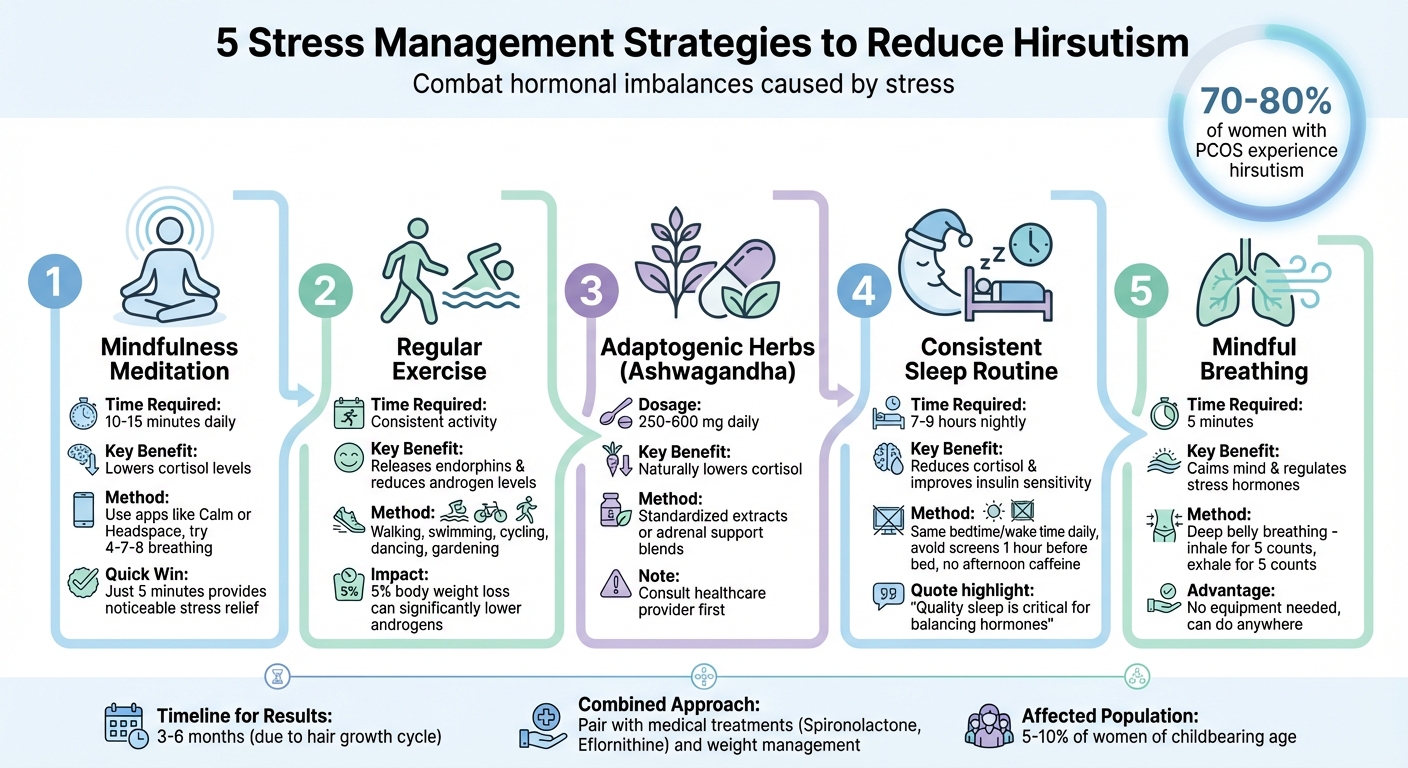
5 Stress Management Strategies to Reduce Hirsutism Symptoms
1. Practice Daily Mindfulness Meditation
How It Helps Reduce Stress
Mindfulness meditation can shift your body out of the fight-or-flight mode and into a calmer rest-and-digest state. This shift helps lower cortisol levels, which, when elevated, can lead to increased androgen production and worsen hirsutism. Ruchika Behal, a Functional Medicine Health & Nutrition Coach at Almond ObGyn, highlights this connection:
A balanced nervous system leads to balanced hormones, and when your body feels safe, it can thrive - not just survive.
Spending just 10–15 minutes a day using guided meditation apps like Calm or Headspace can help manage cortisol levels. Breathing techniques such as 4-7-8 or box breathing, practiced for as little as five minutes, offer noticeable stress relief. This reduction in stress doesn’t just soothe your mind - it also creates the right conditions for better hormonal health.
Supporting Hormonal Balance
Chronic stress can throw off the HPA axis, increase insulin resistance, and ramp up androgen production - all factors that can worsen hirsutism. By managing stress, mindfulness benefits both your mental health and physical well-being, particularly for women dealing with PCOS.
Easy to Incorporate Into Your Day
Mindfulness is surprisingly easy to weave into even the busiest schedule. Whether it’s a quick micro-meditation lasting just a few minutes or a more focused 30-minute session, consistency is key. Simple relaxation exercises in the evening can also improve sleep quality, which further supports hormonal balance.
2. Engage in Regular Exercise
How Exercise Eases Stress
Exercise is a natural stress reliever, thanks to its ability to release endorphins - those feel-good chemicals that lift your mood. Activities like walking, swimming, or cycling can help break the cycle of stress, which often exacerbates hirsutism. Pairing exercise with other stress management techniques can help balance hormones and improve overall well-being.
As Mayo Clinic puts it:
"Exercise in almost any form can act as a stress reliever. Getting active can boost your feel-good endorphins and distract you from daily worries."
By focusing on your movements during exercise, you can practice a form of active mindfulness, which helps release daily tension. Beyond stress relief, regular physical activity also reduces symptoms of anxiety and depression, contributing to a healthier mind and body.
Supporting Hormonal Balance
Exercise also directly addresses one of the underlying causes of hirsutism: elevated androgen levels. Excess weight can increase androgen production, but shedding even a small percentage of body weight - around 5% - can significantly lower these levels and slow unwanted hair growth. The Cleveland Clinic highlights this connection:
"Losing even 5% of your body weight can lower your androgen levels and stop excessive hair growth."
For women managing PCOS, incorporating consistent exercise can be a game changer in regulating hormones. However, it’s important to remember that due to the natural hair growth cycle, noticeable changes may take several months to appear.
Making Exercise Part of Your Day
The good news? You don’t need a gym membership or elaborate routines to reap the benefits. Everyday activities like gardening, dancing, or even brisk walking can help reduce stress and support hormonal balance - consistency is what counts.
3. Use Adaptogenic Herbs like Ashwagandha
How Ashwagandha Helps Reduce Stress
Ashwagandha is known for its ability to naturally lower cortisol levels, the hormone your body releases during stress. Elevated cortisol can lead to hormonal imbalances often associated with hirsutism. Research indicates that taking 250–600 mg of ashwagandha daily can significantly reduce cortisol levels. By calming your stress response and keeping cortisol in check, ashwagandha may help disrupt the chain of hormonal events that result in excessive androgen production. This reduction in cortisol creates an environment where hormones can regain balance.
Supporting Hormonal Balance
Reducing cortisol not only eases stress but also helps regulate other hormonal processes. Chronic stress tends to raise cortisol levels, which can worsen insulin resistance and stimulate the ovaries to produce more androgens - key contributors to hirsutism. Dr. Jolene Brighten, NMD, FABNE, highlights the role of adaptogens like ashwagandha in managing stress:
One way to help your body better respond to stress is by experimenting with adaptogens like Ashwagandha and Rhodiola, which may help promote stress resilience and support adrenal function.
By addressing stress, ashwagandha may play a role in restoring hormonal balance and reducing androgen-related symptoms.
Simple Ways to Add Ashwagandha to Your Routine
Incorporating ashwagandha into your daily life is straightforward. Look for standardized extracts with doses ranging from 250 mg to 600 mg, as these amounts are supported by clinical studies. Ashwagandha is available as a standalone supplement or as part of adrenal support blends that often include other adaptogens like Rhodiola. Before starting any new supplement, it’s essential to consult a healthcare professional. If you’re looking for tailored advice on managing hormonal imbalances and hirsutism, consider connecting with a licensed provider through Oana Health.
sbb-itb-6dba428
4. Establish a Consistent Sleep Routine
How Sleep Helps Reduce Stress
Getting 7–9 hours of quality sleep every night can significantly lower cortisol levels, which helps ease stress and its effects on the body. Elevated cortisol over time can worsen symptoms of hirsutism. As Ruchika Behal, Functional Medicine Health & Nutrition Coach at Almond ObGyn, puts it:
Quality sleep is critical for lowering cortisol and balancing hormones.
The Link Between Sleep and Hormonal Balance
Lack of sleep doesn’t just leave you feeling tired - it can increase cortisol levels and worsen insulin resistance, which plays a role in excess androgen production. High insulin levels can trigger the ovaries to produce more testosterone and other male hormones, contributing to the thick, dark hair associated with hirsutism. Sticking to a consistent sleep schedule can help keep your hormones in check.
Simple Ways to Build a Sleep Routine
To regulate your internal clock, aim to go to bed and wake up at the same time every day - even on weekends. Create a calming pre-bedtime routine: dim the lights, stay off screens for at least an hour before bed, and try relaxing activities like sipping chamomile tea. Also, steer clear of caffeine and alcohol in the afternoon to protect your sleep quality.
For tailored advice on managing hormonal imbalances and hirsutism, you might consider reaching out to a licensed provider through Oana Health. This sleep-focused approach works hand in hand with other stress-reduction strategies, offering a more comprehensive way to manage hirsutism.
5. Try Mindful Breathing Techniques
How It Can Help Reduce Stress
Mindful breathing is a simple yet powerful way to help calm your mind and body. By focusing on your breath, you can ease stress and potentially address stress-related hormonal imbalances that may contribute to hirsutism. The best part? It only takes a few minutes. Try deep belly breathing with rhythmic counting: inhale slowly for a count of 5, then exhale for another count of 5. Just five minutes of this practice can make a difference.
Supporting Hormonal Balance
Stress plays a significant role in hormonal fluctuations, especially with cortisol - the "stress hormone" often linked to conditions like Cushing's syndrome. Since hirsutism is influenced by androgens, managing stress can help keep those hormones in check. As the Endocrine Society highlights:
many women feel distressed, anxious and depressed if they have hirsutism.
Mindful breathing is one way to address this cycle, offering a sense of control and calm.
Easy to Incorporate into Your Day
One of the best things about mindful breathing is how effortless it is to fit into your daily life. You don’t need any special equipment or setup - just find a comfortable spot, whether you're sitting, lying down, or even on the go. It’s a simple, adaptable practice that can seamlessly become part of your routine.
Conclusion
Managing stress plays a key role in addressing hormonal imbalances that contribute to hirsutism. Techniques like mindfulness, regular exercise, quality sleep, breathing exercises, and the use of adaptogenic herbs can help reduce cortisol levels, which are often linked to excessive hair growth. For women with hirsutism - affecting about 5% to 10% of women of childbearing age - these lifestyle adjustments can be particularly beneficial, especially when paired with weight management strategies.
It's important to note that results take time due to the hair growth cycle, often requiring at least six months to become noticeable. However, during this period, stress management not only helps address the physical symptoms but also alleviates the emotional toll that hirsutism can impose. This highlights why combining lifestyle changes with medical supervision is so crucial.
Hirsutism can sometimes indicate underlying conditions like PCOS, which is linked to 70% to 80% of cases. Persistent symptoms should prompt a professional evaluation. Since PCOS-related hirsutism is often tied to hormonal imbalances, integrating stress management with targeted treatments can provide a well-rounded approach. Services like those offered by Oana Health provide science-backed solutions, including medications like Spironolactone to manage unwanted hair growth and Eflornithine to slow facial hair development. With licensed medical professionals reviewing your health history, these personalized treatments are conveniently delivered to your doorstep with free shipping.
For the best outcomes, pairing stress management with medical treatments is essential. Even modest weight loss - around 5% - can help lower androgen levels. If you experience rapid hair growth or symptoms of virilization, such as a deepening voice, seeking medical advice is strongly recommended.
Achieving hormonal balance requires a combination of daily stress management practices and expert medical care tailored to address the root causes of the condition.
FAQs
How does stress impact hirsutism symptoms?
Stress has a way of throwing your hormones off balance, and that can make hirsutism worse. When you're under stress, your body ramps up production of cortisol, often called the stress hormone. Higher cortisol levels can lead to a spike in androgens - those male hormones linked to excessive hair growth in areas like the face, chest, and back.
This is especially evident in women dealing with conditions like PCOS, where hormones are already out of sync. Over time, chronic stress can further disrupt your body's ability to regulate hormones, making hirsutism symptoms more noticeable. Incorporating stress-relief practices like mindfulness, regular physical activity, and eating a well-rounded diet can help bring your hormones back into balance and ease symptoms.
How can adaptogenic herbs like Ashwagandha help with stress and hirsutism?
Adaptogenic herbs like Ashwagandha are often celebrated for their ability to help the body cope with stress by regulating cortisol levels. Cortisol, often referred to as the stress hormone, plays a key role in the body's stress response. When cortisol levels run high, it can throw off hormonal balance and lead to increased androgen production - both of which can aggravate hirsutism, particularly in women dealing with PCOS.
By helping to lower cortisol levels and promoting hormonal balance, Ashwagandha may ease stress-related factors that contribute to excessive hair growth. Pairing adaptogens with stress-reducing practices like mindfulness, regular physical activity, and a nutrient-rich diet can further support hormonal health and make managing hirsutism more manageable.
How long does it take for stress management techniques to help with hirsutism?
Stress management techniques often require 6 to 12 months to yield visible changes in hirsutism symptoms. This timeframe can differ based on factors like how much stress a person experiences, how consistently they practice these techniques, and their general health.
Although lowering stress levels on its own might not fully address hirsutism, pairing it with other treatments can lead to improved outcomes. Staying patient and committed is essential to achieving progress.