
How Androgens Affect Hair Growth in Women
Androgens, hormones like testosterone, play a key role in hair growth patterns in women. They can stimulate thicker hair growth on the face and body while causing thinning on the scalp. This dual effect is due to how androgens interact with hair follicles in different areas of the body. Elevated androgen levels, often linked to conditions like PCOS, can lead to issues such as hirsutism (excessive facial/body hair) and androgenic alopecia (scalp hair thinning). Treatments like Spironolactone, Oral Minoxidil, and lifestyle changes, including weight management and exercise, can help manage these effects. Consult a specialist for tailored solutions.
Key Points:
- Androgens and Hair: Stimulate growth of thicker hair in some areas but thin scalp hair.
- Causes of Imbalance: PCOS is the most common cause of high androgen levels in women.
- Treatment Options: Include medications (e.g., Spironolactone, Oral Minoxidil) and lifestyle adjustments.
- Consult a Specialist: Early intervention can address symptoms effectively.
For more detailed insights, explore the interaction between androgens and hair follicles, the role of DHT, and treatment options for managing androgen-related hair issues.
HORMONES AND HAIR REGROWTH FOR WOMEN| DR DRAY
This video explains how androgenic hair growth is managed through medical and lifestyle changes.
sbb-itb-6dba428
How Androgens Change Hair Follicle Cycles
Hair follicles have a dynamic relationship with androgens, thanks to specialized receptors that respond to these hormones. This interaction plays a key role in conditions like hirsutism and scalp thinning. At the heart of this process is the dermal papilla, a group of specialized cells located at the base of each follicle. These cells house androgen receptors, which act like molecular switches activated by hormones such as testosterone or DHT (dihydrotestosterone). Once these hormones bind to the receptors, they trigger changes that influence the hair follicle's growth cycle, leading to varied hair patterns across different parts of the body.
Androgen Receptors in Hair Follicles
The behavior of androgen receptors in the dermal papilla changes depending on where the follicle is located. When activated, these receptors alter how different layers of cells communicate, directly affecting how long hair remains in its growth phase. Interestingly, female frontal follicles have about 40% fewer androgen receptors and three times less 5α-reductase than male follicles. This difference helps explain why women are generally less prone to severe scalp hair loss, even when androgen levels are high.
On the scalp, androgen receptor activation triggers the release of inhibitory signals like TGF-β1, TGF-β2, Dickkopf-1, and IL-6, which suppress hair growth. However, in areas such as the face and body, the same activation promotes the release of IGF-1 and Stem Cell Factor, which encourage the transformation of fine vellus hairs into thicker, terminal hairs.
How DHT Affects Hair Growth
DHT is a powerful player in the way androgens influence hair follicles. It is about ten times more active than testosterone when it comes to hair growth regulation. DHT is formed when the enzyme 5α-reductase (primarily type 2) converts testosterone within the skin and hair follicles. Because DHT binds more strongly to androgen receptors than testosterone, even minimal amounts can have a significant impact on hair growth patterns.
On the scalp, DHT shortens the anagen (growth) phase of hair. Normally, 80% to 90% of scalp hair is in this active growth phase, which typically lasts two to six years. But when DHT levels are too high, this balance is disrupted. For example, in androgenetic alopecia, the normal ratio of growing to resting hair can plummet from 12:1 to as low as 5:0. As a result, hair follicles shrink, producing finer strands that may eventually fail to break through the skin. Additionally, the regrowth of new hair to replace shed strands becomes delayed.
In contrast, DHT has the opposite effect on androgen-sensitive areas like the face, chest, and abdomen. Here, it stimulates fine vellus hairs to grow into thicker, darker terminal hairs. DHT also influences the activity of dermal papilla cells, keratinocytes, and melanocytes, leading to the noticeable changes seen in hirsutism and its medical causes. Since hair follicles typically grow for about six months before shedding, it can take six to twelve months of consistent treatment to observe improvements in either unwanted body hair or scalp hair density.
Why Androgens Thin Scalp Hair but Increase Facial and Body Hair
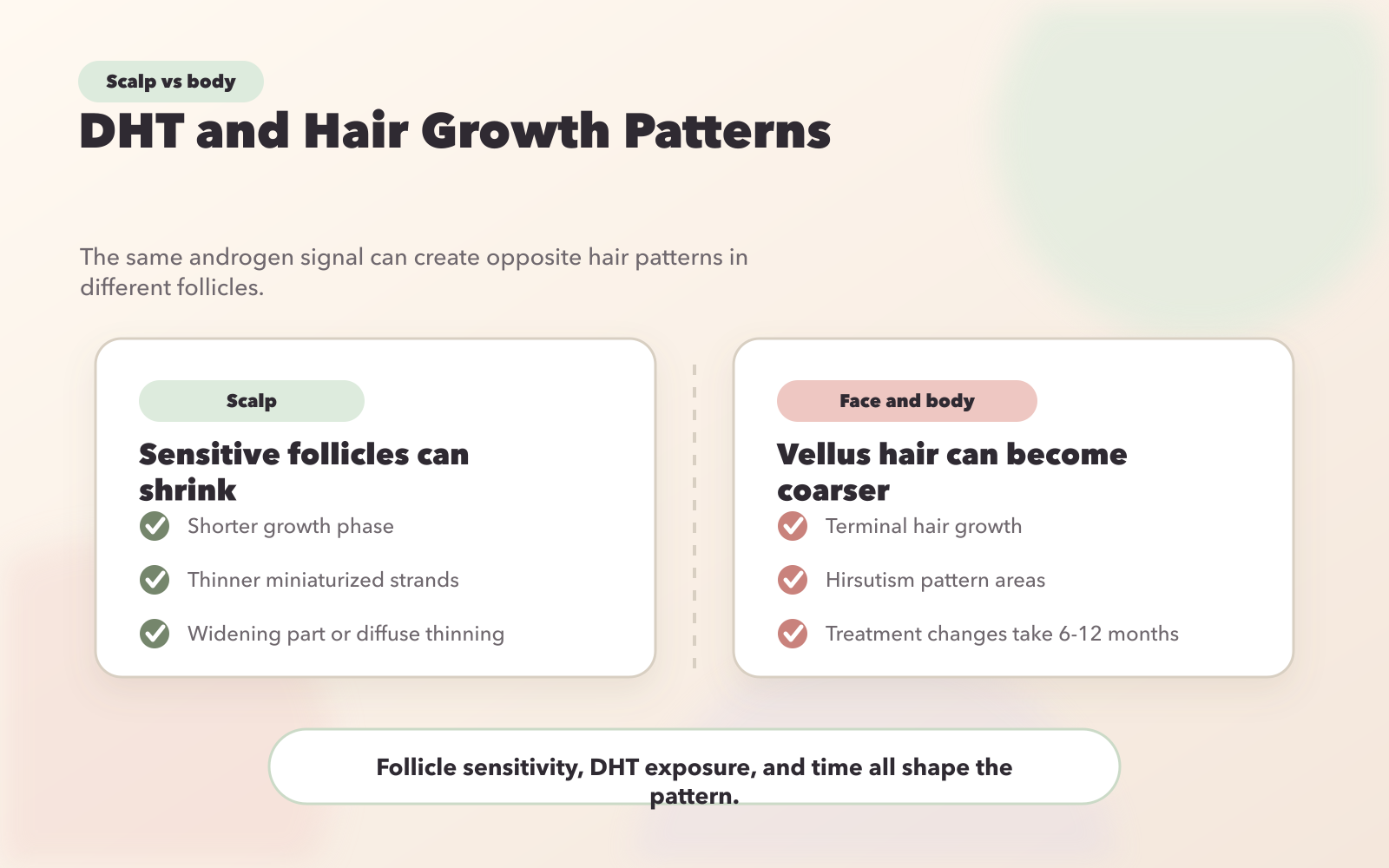
How DHT Affects Scalp vs Body Hair Growth in Women
Let’s dive into the puzzling phenomenon where androgens, like dihydrotestosterone (DHT), cause hair thinning on the scalp while promoting thicker, darker hair on the face and body. This paradox stems from the way hair follicles in different areas respond to DHT based on genetics and local enzyme activity.
"Androgens are the main regulator of human hair follicles, changing small vellus follicles producing tiny, virtually invisible hairs into larger intermediate and terminal follicles making bigger, pigmented hairs." - Valerie Anne Randall, Professor, University of Bradford
Why Scalp Hair Thins
On the scalp, DHT triggers a process called miniaturization. This shrinks hair follicles into smaller vellus follicles, producing thinner, shorter, and lighter hairs over time. It also shortens the anagen (growth) phase of the hair cycle, leaving hair less time to grow to its full length and thickness. This process is at the heart of androgenetic alopecia, which impacts around 30 million women in the United States. It often appears as thinning at the crown or a widening part line.
The severity of scalp hair thinning isn’t just about DHT levels - it’s also about genetic sensitivity. Some women’s hair follicles are more reactive to DHT, which explains why individuals of Mediterranean, Middle Eastern, and South Asian descent may experience more noticeable thinning even with normal hormone levels. This insight is key to developing targeted treatments for androgen-related hair loss, often driven by insulin resistance and androgen excess.
Why Facial and Body Hair Grows
In contrast, DHT stimulates the growth of facial and body hair. It transforms fine, nearly invisible vellus hairs into thicker, darker terminal hairs. This process contributes to conditions like hirsutism, which affects up to 10% of women, with around 75% of cases linked to Polycystic Ovary Syndrome (PCOS).
"Elevated levels of androgens can cause fine, 'vellus' hair follicles to produce larger, darker 'terminal' hair, which leads to hirsutism." - Endocrine Society
To measure the severity of hirsutism, the Ferriman-Gallwey scoring system is often used, with scores above 7 (out of 36) considered abnormal. In extreme cases of hyperandrogenism, women may experience virilization. This condition combines scalp hair loss with increased facial and body hair growth, along with other changes like a deepened voice or increased muscle mass. It’s a striking example of how androgens can produce opposing effects on different parts of the body at the same time.
How to Manage High Androgen Levels for Better Hair Health
Understanding how androgens affect hair follicles is key to managing their impact. Addressing high androgen levels often involves a mix of lifestyle changes and medical treatments. The right approach depends on factors like symptom severity, conditions such as PCOS, and individual health goals. For women experiencing significant hirsutism, medications are usually the first step. However, for those with PCOS or obesity, lifestyle adjustments can play a crucial role in improving overall metabolic health. These changes are particularly important as hormonal imbalances often respond well to modifications in daily habits.
Lifestyle Changes to Lower Androgen Levels
One of the most effective ways to manage high androgen levels is through weight management. For those who are overweight, shedding extra pounds can help lower androgen levels and slow excessive hair growth. This connection is largely tied to insulin resistance and hormonal imbalances. Elevated insulin levels prompt the ovaries to produce more androgens while reducing the liver's production of Sex Hormone-Binding Globulin (SHBG), which helps regulate hormone activity.
Regular exercise is another essential component. It not only aids in weight management but also reduces insulin resistance, a primary factor in elevated androgen production. For women with PCOS, maintaining a healthy weight and staying active are some of the best ways to reduce the likelihood of worsening symptoms. While these lifestyle changes may not directly address hair growth severity, they are critical for improving metabolic health and work well alongside medical treatments.
Medications for Androgen-Related Hair Problems
For women dealing with androgen-related hair issues, several medications can help. Oral contraceptives are often the first choice for those not planning a pregnancy. If hirsutism persists after six months, an anti-androgen is typically added to the treatment plan.
Spironolactone is a widely used option for reducing both hirsutism and hair thinning caused by androgens. It works by blocking androgen receptors and inhibiting the enzyme responsible for converting testosterone into DHT. A six-month course of 100 mg Spironolactone can lead to a 19%-20% reduction in hirsutism scores. However, it requires effective contraception due to its potential impact on pregnancy.
For facial hair, Eflornithine cream slows new growth by targeting enzymes in hair follicles. While it doesn't remove existing hair, it’s often paired with laser therapy for better results. Oral Minoxidil, on the other hand, stimulates hair regrowth and addresses scalp thinning. Since hair follicles take time to respond, all hormonal medications require at least six months of consistent use to show noticeable effects.
Treatment Comparison Table
Here’s a quick overview of key treatment options, their mechanisms, benefits, and pricing:
| Treatment | Mechanism | Benefits | Oana Health Pricing |
|---|---|---|---|
| Spironolactone | Blocks androgen receptors and inhibits 5α-reductase | Reduces hirsutism and scalp thinning; also used for hormonal acne | $14/month |
| Topical Spironolactone | Targets androgen receptors directly at hair follicles | Minimizes hair thinning with fewer systemic effects | $43/month |
| Eflornithine 12% | Inhibits ornithine decarboxylase in hair follicles | Slows new facial hair growth and reduces hair size | $69/month |
| Oral Minoxidil | Stimulates hair follicles and extends the growth phase | Promotes scalp hair regrowth and reduces thinning | $25/month |
| Metformin & Spironolactone | Combines insulin sensitivity improvement with androgen blocking | Offers dual benefits for PCOS management | $32/month |
Oana Health offers telehealth consultations with licensed professionals who can prescribe these treatments based on your specific needs. Plus, they provide free shipping directly to your home.
Conclusion
Understanding how androgens influence hair growth is a key step in addressing both thinning scalp hair and excessive facial or body hair. Around 80% to 90% of women with hyperandrogenism are diagnosed with PCOS, but these conditions can be managed effectively with the right combination of medical treatments and lifestyle changes. This knowledge helps shape the path forward for those seeking solutions.
Treating hair-related concerns takes time and dedication. It can take up to six months for hair follicles to show noticeable improvements with treatment. A blend of targeted medications and lifestyle adjustments can make a significant difference in managing androgen-related hair issues.
"If hirsutism causes distress, it is okay to ask for treatment, even if your healthcare provider says it is 'mild'." – Endocrine Society
If you notice rapid hair growth or experience symptoms like irregular periods or acne, it’s important to consult a specialist. Platforms like Oana Health offer telehealth consultations with licensed professionals who focus on hormone-related conditions. They can create personalized treatment plans, including options like Spironolactone, Eflornithine, or Oral Minoxidil, and ensure these treatments are delivered straight to your door.
FAQs
Do I need high testosterone to have androgen-related hair loss?
No, elevated testosterone levels are not required for androgen-related hair loss to occur. Female pattern hair loss can develop even when androgen levels are normal or low. This often stems from increased sensitivity to androgens or other underlying factors. Addressing these sensitivities is crucial for managing the condition effectively.
Which lab tests help confirm high androgens or PCOS?
Blood tests like serum testosterone and dehydroepiandrosterone sulfate (DHEAS) can help identify high androgen levels or confirm PCOS. If DHEAS levels are elevated, it might suggest that the excess androgens are coming from the adrenal glands.
When should I see a specialist for sudden hair changes?
If you experience sudden or rapid changes in your hair, particularly alongside symptoms like irregular periods or signs of hormonal imbalance, it's crucial to consult a specialist as soon as possible. These changes might point to an underlying medical issue that requires proper evaluation and care. Addressing the problem early can make managing the symptoms much easier and more effective.