
How Diet Affects Metformin Dosage in PCOS
Diet plays a crucial role in how well metformin works for managing PCOS symptoms. Here's what you need to know:
- Metformin's function: It reduces glucose production, improves glucose uptake, and lowers insulin levels, which helps manage PCOS symptoms like irregular cycles and high androgen levels.
- Diet impact: High-glycemic foods spike insulin, reducing metformin's effectiveness, while low-glycemic foods (like whole grains and vegetables) enhance its benefits.
- Meal timing matters: Taking metformin with food reduces absorption by up to 30%, but it minimizes side effects. Consistent meal patterns and a balanced diet amplify results.
- Mediterranean diet benefits: Rich in healthy fats, fiber, and lean proteins, it improves insulin sensitivity and supports weight management.
- Processed foods to avoid: Sugary and high-fat meals counteract metformin's effects, potentially requiring higher doses.
Pairing metformin with the right food choices can improve its results significantly. However, if symptoms persist, consult a healthcare provider for dosage adjustments or additional treatments.
PCOS, Metformin and Intermittent Fasting for Weight Loss
How Insulin Resistance Affects Metformin Dosage
Insulin resistance isn't the same for everyone with PCOS, and this difference directly influences how much metformin is needed. For women with severe insulin resistance, higher doses of metformin are often necessary to see results. On the other hand, women with milder resistance may achieve similar benefits with lower doses. This is why doctors often adjust metformin dosages based on factors like BMI and initial insulin levels to ensure effective management of PCOS.
How Metformin Works in PCOS
To understand why metformin dosages vary, it helps to know how the medication works. Metformin reduces the body's insulin requirements by targeting three key areas: it lowers glucose production in the liver, decreases glucose absorption in the intestines, and boosts glucose uptake in muscles. These effects not only help regulate blood sugar but also reduce ovarian stimulation, which can lower androgen levels and alleviate PCOS symptoms.
Typically, the dosage for treating PCOS falls between 1,500 mg and 2,550 mg daily. Women with higher BMIs - often in the range of 35 to 40 - who also have severe insulin resistance tend to see significant improvements. In fact, some studies have reported up to a 60% drop in insulin levels after 12 months of combining metformin with a tailored diet.
"Metformin is more effective in populations with greater insulin resistance and higher insulin levels." – Antoni J. Duleba, Division of Reproductive Endocrinology and Infertility, University of California Davis
Why Diet Matters for Insulin Resistance
What you eat can significantly affect how well metformin works. When you consume high-glycemic foods, your blood sugar spikes, prompting a surge in insulin. These sharp rises in insulin can counteract the benefits of metformin. Additionally, food intake can reduce how much metformin your body absorbs, making the timing and makeup of your meals especially important.
A 12-month study offered some insight: women who took 2,550 mg of metformin daily while following a calorie-controlled diet (1,500 to 2,000 calories per day) saw notable improvements. Those with severe insulin resistance experienced a 64% drop in their resistance scores, while those with milder resistance saw a 13% reduction. Both groups also lost about 7% of their body weight. This highlights how diet not only complements metformin but can amplify its effects, with individual results depending heavily on baseline insulin resistance levels. These findings emphasize the importance of combining dietary strategies with medication to maximize effectiveness.
Dietary Factors That Affect Metformin Effectiveness
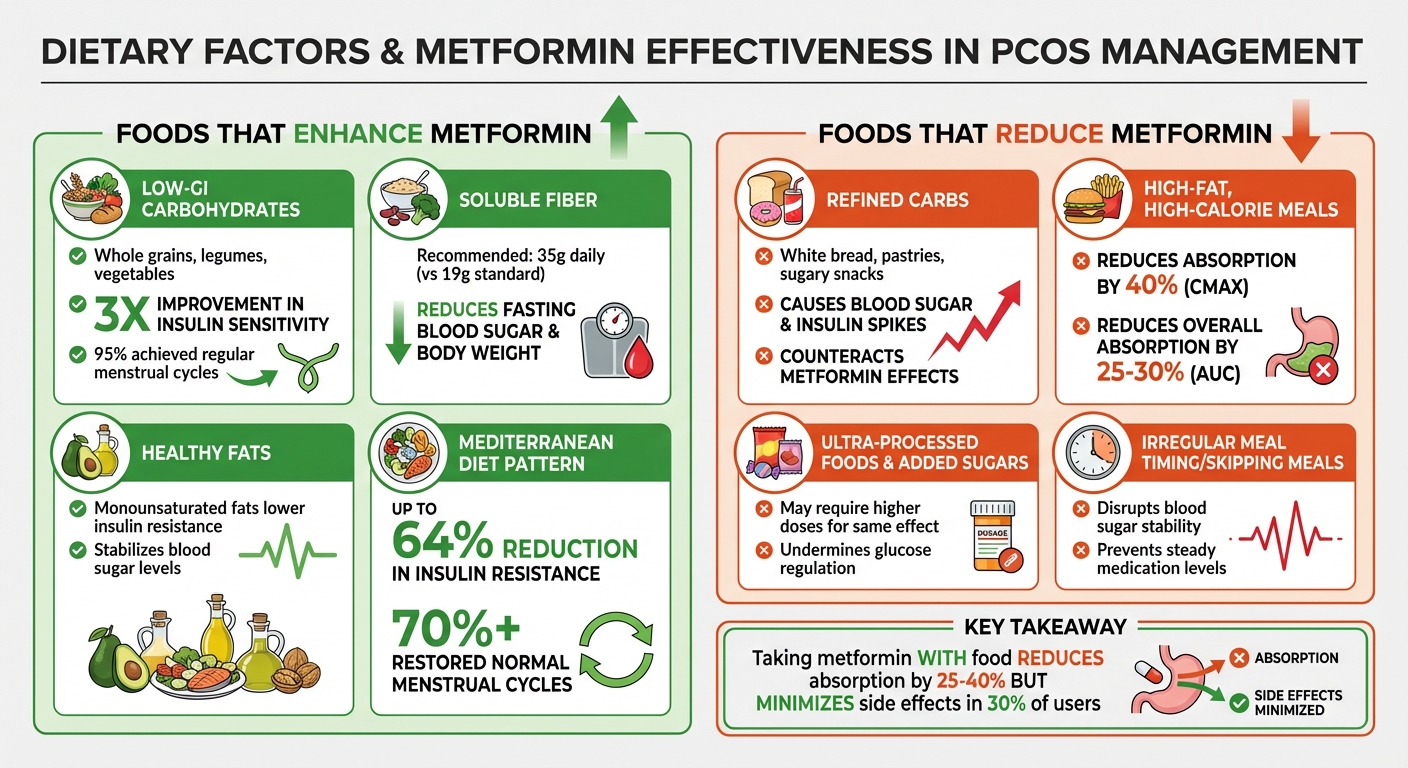
How Diet Choices Impact Metformin Effectiveness in PCOS Treatment
What you eat and when you eat it can significantly impact how well metformin works for managing PCOS. By understanding how certain dietary choices interact with the medication, you can enhance its benefits without needing to increase your dose.
Carbohydrate Type and Timing
Refined carbs - like white bread, pastries, and sugary snacks - can cause blood sugar and insulin levels to spike, which counteracts metformin's effects. On the other hand, low-GI (glycemic index) carbohydrates such as whole grains, legumes, and vegetables release glucose more slowly, helping to stabilize insulin levels.
Interestingly, taking metformin with food reduces its peak concentration (Cmax) by about 40% and its overall absorption (AUC) by 25–30%. However, taking it with meals is still recommended because it significantly reduces common gastrointestinal side effects, making the medication easier to tolerate.
Research highlights the benefits of a low-GI diet: one study found that it tripled improvements in insulin sensitivity. In this study, 95% of women on a low-GI diet experienced regular menstrual cycles, compared to just 63% of those on a standard diet.
The macronutrient composition of your meals also plays a key role in maximizing metformin's effectiveness.
Protein, Fiber, and Fat in Meals
The balance of protein, fiber, and healthy fats in your meals can further enhance how well metformin works. For example, soluble fiber - found in foods like oats, beans, and vegetables - lowers a meal's glycemic load, helping to prevent sharp insulin spikes. Studies show that adults with insulin resistance who consume around 35 grams of fiber daily (compared to 19 grams) see significant reductions in fasting blood sugar and body weight.
Healthy fats, particularly monounsaturated fats from sources like olive oil, avocados, and nuts, have also been linked to lower insulin resistance in women with PCOS. In fact, low intake of these fats and fiber is associated with greater insulin resistance and higher androgen levels. While it's true that high-fat, high-calorie meals can slow metformin absorption, including moderate amounts of healthy fats in balanced meals can help stabilize blood sugar and improve the medication's tolerability.
"Dietary interventions that focus on a low-glycemic index and glucose control are an efficient first-line dietary solution for the management of impaired glucose tolerance and IR, which subsequently improves weight management, quality of life and PCOS-related symptoms." – Current Nutrition Reports
Dietary Habits That Reduce Metformin Effectiveness
While some dietary choices can amplify the benefits of metformin, others can significantly hinder its effectiveness. Understanding which habits to avoid is just as important as knowing what helps.
Processed Foods and Added Sugars
Ultra-processed foods, particularly those packed with added sugars, can interfere with metformin's ability to regulate glucose. These foods can cause blood sugar spikes, undermining metformin's role in suppressing liver glucose production and improving muscle glucose uptake. Consuming excessive added sugars may even necessitate higher doses of the medication to achieve the same results.
Research highlights that meals high in fat and calories - commonly found in processed foods - can reduce metformin absorption:
"High-fat, high-calorie diet lowered the extent and rate of absorption while slowing the absorption of metformin. These findings suggest that it is necessary to increase the dosage of MH in order to maintain the same treatment effect when administration of MH after a high fat, high calorie diet." – Heliyon
Hidden sugars in everyday items like flavored yogurt, salad dressings, ketchup, and specialty coffee drinks can also undermine the medication. Even foods marketed as "healthy" can pose risks if they are high in saturated fats or sodium, potentially increasing inflammation and worsening insulin resistance.
Irregular Meal Timing and Skipping Meals
Inconsistent eating patterns can disrupt blood sugar stability, making it harder for metformin to perform effectively. Studies have shown that meal timing plays a critical role in supporting insulin sensitivity. For example, research involving lean women with PCOS found that consuming a large breakfast (980 calories) and a small dinner (190 calories) led to significant reductions in insulin levels (54%) and free testosterone (50%). On the other hand, reversing this pattern - having a small breakfast and a large dinner - offered no such benefits.
Skipping meals introduces another challenge. Since metformin is typically taken with food to minimize gastrointestinal side effects, missing a meal could mean taking the medication on an empty stomach, reducing its efficacy. This inconsistency can prevent metformin from reaching steady levels in the body, which usually occurs within 24 to 48 hours of regular dosing.
Maintaining a consistent meal schedule, with a focus on a hearty breakfast and regular eating intervals, aligns with the medication's mechanism and supports the body's natural insulin sensitivity rhythms.
sbb-itb-6dba428
Dietary Strategies to Improve Metformin Results
Smart dietary choices can significantly enhance how well metformin works for managing PCOS symptoms.
Following a Low-Glycemic Index Diet
A low-GI diet helps stabilize blood sugar levels, making it easier for metformin to regulate glucose. Foods like whole grains, legumes, and non-starchy vegetables release sugar gradually, unlike refined breads, pastries, or sugary snacks that cause rapid spikes.
"The concept of a low-glycemic index (GI) diet aims to reduce glycaemic load (GL) and therefore reduce subsequent blood sugar spikes and insulin responses to ingested foods and drinks, contributing to reduced IR." – Current Nutrition Reports
Incorporating about 35 grams of soluble fiber daily can make a big difference. Foods like oats, beans, chia seeds, and berries not only lower the GI of meals but also improve fasting glucose levels and boost insulin sensitivity. Pairing this with a Mediterranean-style eating plan, rich in balanced macronutrients and antioxidant-packed foods, can further support metformin’s effectiveness.
Using Mediterranean-Style Eating Patterns
The Mediterranean diet is particularly beneficial for women with PCOS who are taking metformin. It emphasizes vegetables, whole grains, olive oil, nuts, fish, and lean proteins while cutting back on processed foods and saturated fats. This approach directly tackles insulin resistance, a key issue in PCOS.
Research highlights the power of this diet. One 12-month study reported that combining metformin with a Mediterranean diet reduced insulin resistance by up to 64% and restored normal menstrual cycles in more than 70% of participants. The diet’s focus on whole, nutrient-dense foods not only enhances insulin sensitivity but also makes it easier to stick with long-term.
Additionally, eating a balanced Mediterranean-style meal alongside metformin can help reduce common side effects like gastrointestinal discomfort, which affects up to 30% of users.
"Dietary interventions that focus on a low glycaemic index and glucose control are an efficient first-line dietary solution for the management of impaired glucose tolerance and IR, which subsequently improves weight management, quality of life and PCOS-related symptoms." – Current Nutrition Reports
When Diet Changes Aren't Enough
Even the best dietary plans might not bring the expected benefits of metformin for some women managing PCOS. Persistent symptoms or unchanged fasting insulin levels can signal that dietary changes alone aren't doing the job. Research shows that women starting treatment with high fasting insulin levels (above 20 μU/ml) often need therapy adjustments if those levels don't improve within three months. This highlights the importance of seeking professional advice when diet alone doesn’t suffice.
The Need for Medical Guidance
When dietary efforts fall short, medical intervention becomes essential. Monitoring key health markers like menstrual cycles, testosterone levels, fasting blood sugar, and kidney function is critical. Studies suggest that metformin helps restore regular menstrual cycles in about 50% to 70% of women with PCOS. However, women with higher initial testosterone levels may require additional treatments. Regular kidney function tests are crucial, as is screening for vitamin B12 deficiency, a common issue with long-term metformin use. If menstrual cycles stretch beyond 35 days, hirsutism worsens, or HbA1c levels remain at or above 5.7%, your healthcare provider may need to adjust the dosage or add complementary therapies.
How Oana Health Can Help

For women needing more advanced care, Oana Health delivers personalized telehealth solutions. Their plans start at just $22 per month for Oral Metformin ER and go up to $199 per month for combination therapies like Oral GLP-1 & Metformin, designed to tackle both insulin resistance and weight management. Plus, they offer free shipping straight to your door.
If standard metformin therapy isn’t enough, Oana Health’s providers can recommend advanced treatments to address insulin resistance and weight concerns. Beyond medications, Oana Health also supports women dealing with other PCOS-related issues, such as hair loss, unwanted facial hair, and mental health challenges. Their comprehensive approach ensures care extends beyond just diet and a single medication, offering a more holistic solution to managing PCOS.
Conclusion
Managing PCOS with metformin involves more than just taking the medication - it’s about pairing it with the right food choices to maximize its effectiveness. Research shows that high-fat, high-calorie meals can reduce metformin absorption by up to 40%, while a fiber-rich, low-glycemic diet can improve insulin sensitivity and even help regulate menstrual cycles. These dietary differences can determine whether metformin delivers the results you’re looking for.
Recent studies highlight the strong connection between metformin and diet. Together, they create a powerful combination, improving outcomes regardless of your initial insulin levels. It’s clear that what you eat plays a critical role in how well metformin works.
Timing your medication with meals is also key. This not only helps reduce gastrointestinal side effects - which affect up to 30% of patients - but also ensures the drug performs at its best. On the flip side, poor dietary habits can hinder metformin’s effectiveness. Adopting a Mediterranean-style diet, loaded with whole grains, vegetables, and healthy fats, provides the ideal foundation for the medication to work as intended. However, if dietary changes don’t fully address your symptoms, further medical support may be necessary.
For those still struggling with symptoms or irregular cycles despite these efforts, Oana Health offers personalized telehealth solutions. Starting at just $22 per month, they provide Oral Metformin ER and tailor treatment plans to meet your unique needs, helping you take control of your health.
FAQs
How does the timing of meals impact the effectiveness of metformin for PCOS?
The timing of your meals plays a crucial role in how effectively metformin manages PCOS. Taking metformin 30 to 60 minutes before eating can enhance its absorption and performance. This timing works with your body’s natural metabolic processes, helping to regulate blood sugar levels more effectively. It also promotes the release of hormones like GLP-1, which aids in insulin secretion.
Consistency is equally important. Taking metformin at the same time each day - such as before breakfast or dinner - can further improve its benefits by aligning with your body’s natural rhythms. This routine can enhance insulin sensitivity and better control glucose levels, both of which are essential for managing PCOS symptoms. Be sure to stick to your healthcare provider’s guidance for the best outcomes.
How can dietary changes improve the effectiveness of metformin for managing PCOS?
Diet plays a critical role in supporting the effectiveness of metformin for managing PCOS symptoms. Cutting back on high-glycemic foods and refined carbs can boost insulin sensitivity, which is a major concern for women with PCOS. Incorporating balanced meals rich in fiber, healthy fats, and protein can further help regulate blood sugar and insulin levels, working hand-in-hand with metformin.
Timing your meals and controlling portions are equally important. Opting for smaller, balanced meals throughout the day can keep blood sugar levels steady, enhancing the medication's impact. Steering clear of sugary drinks and processed foods can also help avoid blood sugar spikes that may interfere with metformin’s benefits. For a more tailored approach, platforms like Oana Health provide science-based plans to optimize your treatment.
Why do some women with PCOS require higher doses of metformin?
Women with PCOS often face increased insulin resistance, which can sometimes require higher doses of metformin. Since the body may not respond as effectively to insulin, adjusting the dosage might be necessary to help regulate blood sugar levels and support hormonal balance.
What you eat also plays a role in how well metformin works. A diet high in carbohydrates or irregular meal patterns can interfere with the medication's effectiveness. Pairing metformin with a balanced diet and eating meals at consistent times can make a noticeable difference. Always check with your healthcare provider before making any changes to your medication or diet plan.