
How Estrogen Affects Hair Growth
Estrogen plays a key role in hair growth by extending the growth phase (anagen phase) of hair follicles, improving thickness, and reducing hair shedding. When estrogen levels drop - due to menopause, postpartum changes, or hormonal imbalances - hair can thin, follicles may shrink, and shedding increases. Here's what you need to know:
- Estrogen and Hair Growth: Estrogen binds to hair follicle receptors, prolonging the growth phase and protecting follicles from DHT (a hormone linked to hair thinning).
- Hormonal Shifts: Pregnancy increases estrogen levels, leading to thicker hair, while postpartum and menopause-related drops in estrogen often trigger shedding.
- Treatment Options: Hormone replacement therapy (HRT), topical or oral medications like Minoxidil and Spironolactone, and balanced nutrition can help manage estrogen-related hair loss.
If you're noticing hair thinning, consult a healthcare provider to check hormone levels and explore treatment options. Early action can improve outcomes.
Topical Estrogen for Female Pattern Hair Loss
How Estrogen Affects the Hair Growth Cycle
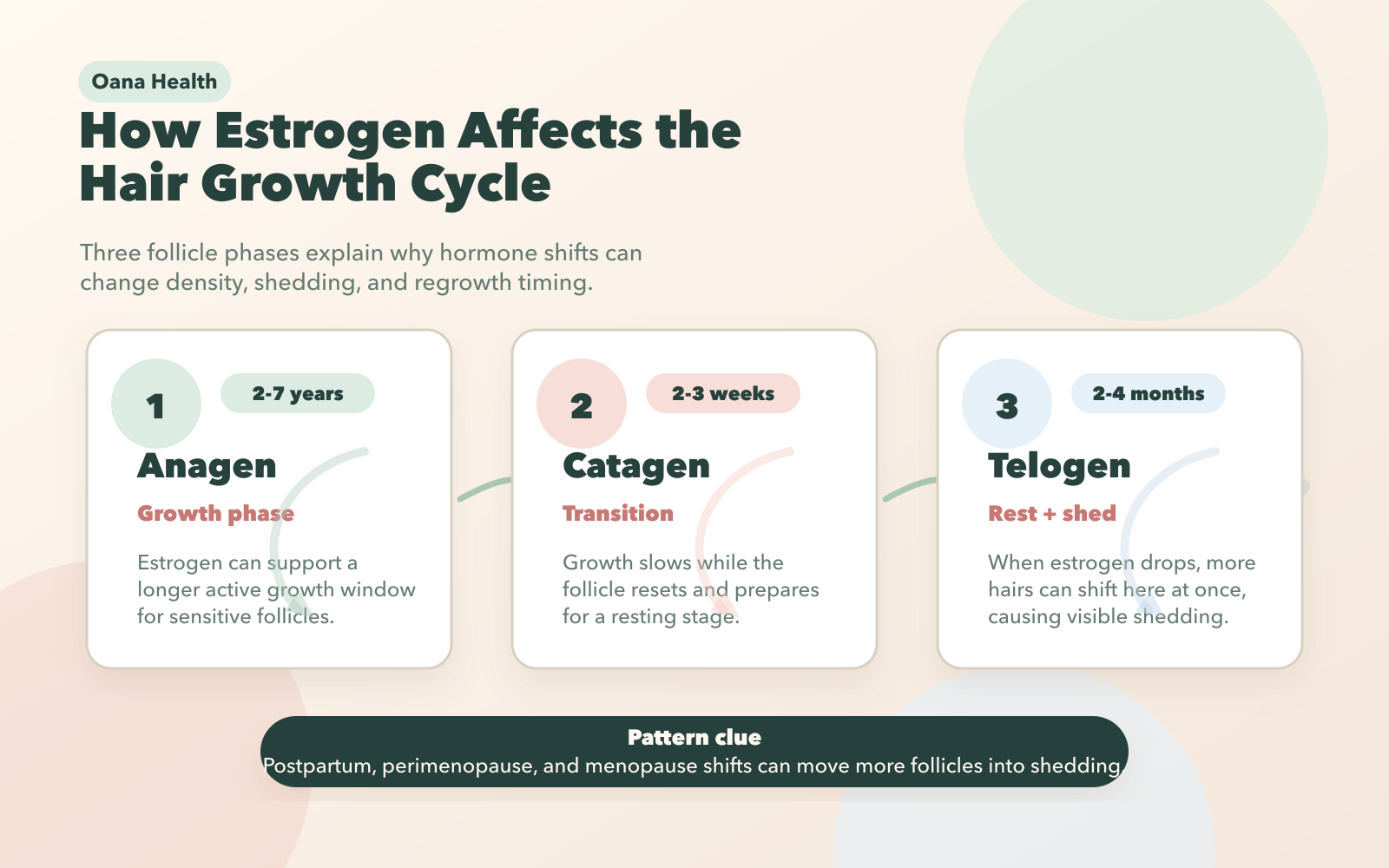
How Estrogen Affects the Hair Growth Cycle: 3 Phases Explained
To understand estrogen's role in hair growth, it helps to first look at the hair growth cycle. Each strand of hair goes through a series of phases: growth, transition, rest, and shedding. Estrogen actively influences these stages, particularly by regulating their timing and duration. Let’s break down how this hormone impacts the cycle.
The 3 Phases of Hair Growth
Hair follicles follow a repeating cycle with three main phases:
- Anagen (Growth Phase): This is when hair grows actively, driven by rapid cell division in the follicle. For scalp hair, this phase can last anywhere from two to eight years, allowing strands to grow longer and thicker.
- Catagen (Transitional Phase): Over roughly two weeks, the follicle begins to shrink and disconnects from its blood supply, signaling the end of active growth.
- Telogen (Resting Phase): During this two-to-three-month period, hair remains in the follicle before eventually shedding to make way for new growth. In healthy hair, the ratio of anagen to telogen is typically between 6:1 and 8:1. However, in cases of female pattern hair loss, this ratio can drop to anywhere between 0.1:1 and 3:1.
How Estrogen Extends the Growth Phase
Estrogen plays a key role in prolonging the anagen phase, keeping hair in its growth stage for as long as possible. For example, during pregnancy, elevated estrogen levels extend this phase, resulting in fuller, thicker hair. However, the drop in estrogen levels after childbirth often triggers significant shedding.
"Estrogens stimulate hair development by extending the anagen (growth) phase of hair follicles, increasing the number of active hair follicles, and keeping hair growing." - Doctor's Desk, Clinikally
Beyond extending the growth phase, estrogen helps regulate the transitions between phases. It does this by influencing proteins like TGF-β2 and BMP4, which are involved in triggering the catagen phase and maintaining the telogen phase.
Effects on Follicle Receptors and Scalp Blood Flow
Estrogen affects hair growth on a cellular level by binding to specific receptors in the follicles. These receptors, Estrogen Receptor alpha (ERα) and Estrogen Receptor beta (ERβ), are present in hair follicles, with ERα being particularly concentrated in the dermal papilla cells. This interaction helps regulate the hair growth cycle and follicle activity.
Another way estrogen supports hair health is by improving scalp blood flow. Enhanced circulation ensures that hair follicles receive the nutrients they need for growth. Additionally, estrogen helps maintain a balance between estradiol and testosterone, reducing the conversion of testosterone into dihydrotestosterone (DHT). DHT is a hormone associated with the shrinking of hair follicles, a common issue in female pattern hair loss.
Interestingly, hair follicles can also produce estrogen themselves. This happens through the enzyme aromatase, which converts androgens into 17β-estradiol, further influencing local hair growth.
How Estrogen Helps and Harms Hair Health
How Estrogen Improves Hair Health
Estrogen plays a vital role in hair health by binding estradiol to receptors in hair follicles. This process stimulates protein production and cell growth, which contribute to strong, flexible hair that's less likely to break.
It also helps regulate sebum production, which keeps hair moisturized and prevents it from becoming dry and brittle. On top of that, estrogen's anti-inflammatory properties promote a healthier scalp by reducing the likelihood of issues like dandruff or psoriasis.
"Adequate levels [of estradiol] contribute to stronger, more resilient hair, while decreased levels can lead to weaker, breakage-prone hair." - Nava Health
These benefits are especially noticeable during high-estrogen periods, such as pregnancy. During this time, the hair's anagen phase - the active growth stage - lasts longer, leading to faster growth, thicker strands, and less shedding. Normally, about 85% to 90% of scalp follicles are in this growth phase. Maintaining balanced estrogen levels is crucial for these effects to continue.
Problems from Estrogen Fluctuations or Excess
While estrogen supports hair strength, imbalances can have the opposite effect. A sudden drop in estrogen, for instance, can lead to telogen gravidarum, a condition that causes rapid hair shedding.
During menopause, declining estrogen levels shift the hormonal balance, giving DHT (dihydrotestosterone) more influence. This can shrink hair follicles and shorten the growth cycle, contributing to hair thinning. In fact, over 50% of women will experience noticeable hair loss at some point, and female pattern hair loss (FPHL) affects about 30 million women in the United States alone.
On the other hand, excess estrogen - sometimes caused by medications - can also disrupt hair growth. The key is achieving hormonal balance. Both too much and too little estrogen can lead to problems that affect hair health.
If your hair is thinning suddenly, it might be worth checking your hormone levels, including estradiol, FSH, and LH, as well as thyroid function and iron levels. These tests can help pinpoint any underlying issues. Managing estrogen levels effectively is a critical step in addressing hair loss.
sbb-itb-6dba428
How Estrogen Affects Hair at Different Life Stages
Pregnancy and Postpartum Hair Changes
During pregnancy, estrogen levels skyrocket, keeping hair in its growth phase much longer than usual. By the 20th week, many women notice their hair feels thicker and shinier. This happens because higher estradiol levels delay the natural shedding cycle, and improved blood circulation delivers extra nutrients to hair follicles.
After childbirth, however, estrogen levels drop significantly, leading to rapid hair shedding. This temporary phase, known as telogen effluvium, typically begins 2–3 months postpartum and peaks between 3–6 months. While it can be unsettling, most women find their hair returns to its usual state within 6–12 months.
"It's called telogen effluvium, a temporary shedding phase triggered by the hormone shift. It looks alarming, but trust me, your hair will bounce back within 6–12 months." - Shereen Timani, M.D., FAAD, FASDP, FASMS
To help your hair recover, focus on nutrient-rich foods like iron-packed spinach and lentils, protein sources such as eggs and nuts, and Omega-3 fatty acids from salmon or chia seeds. Use a wide-tooth comb on wet hair and avoid tight hairstyles that might stress fragile strands. If shedding lasts over a year or appears patchy, it could signal issues like iron deficiency or postpartum thyroiditis.
These hormonal shifts during and after pregnancy pave the way for changes that occur later in life.
Menopause and Hair Thinning
As women age, estrogen plays a smaller role in hair health, and its decline during menopause often leads to thinning. Lower estrogen levels cause hair follicles to shrink and shorten the growth cycle. In fact, 25% of women experience female pattern hair loss by age 49, 41% by age 69, and over 50% by age 79.
"Since our hair follicles reside in our collagen layer of the skin (the dermis), and estrogen is responsible for keeping this layer thick and healthy, the 'home' of the hair follicle shrinks as estrogen declines, leading to weaker follicles and increased hair shedding." - Dr. Neda Mehr, Board-Certified Dermatologist, Hoag
Beyond thinning, menopause also reduces sebum production, leaving hair feeling dry and brittle. The anagen (growth) phase becomes shorter, resulting in weaker, thinner strands. Hair loss can take a toll emotionally, with 55% of women experiencing symptoms of depression. However, 89% report improved psychological well-being after treatment.
Hormone Replacement Therapy (HRT) for Hair Loss
Hormone Replacement Therapy (HRT) offers a way to address hair thinning during menopause by balancing estrogen levels and extending the growth phase of hair. HRT comes in various forms, including oral tablets, transdermal patches, topical gels, and vaginal rings or creams. By maintaining the collagen layer that supports healthy follicles, HRT helps prevent premature shedding.
"HRT helps keep your hair in its growth phase for longer, and therefore stops it from moving into its shedding phase prematurely." - Anabel Kingsley, Brand Owner, Philip Kingsley
Before starting HRT, consult a specialist to find a hair-friendly formulation, as some versions contain androgenic progestogens that could worsen thinning. A thorough blood panel is essential to rule out other issues like thyroid dysfunction or deficiencies in iron and vitamin D. Women undergoing systemic estrogen therapy should also have yearly checkups, including breast and pelvic exams, to monitor for potential side effects.
Hormonal treatments take time - expect at least six months to see noticeable results. However, HRT is not suitable for everyone, particularly those with a history of breast or uterine cancer, deep vein thrombosis, pulmonary embolism, stroke, or active liver disease.
Treatment Options for Estrogen-Related Hair Loss
How to Check for Hormonal Imbalances
Before diving into treatment, it’s crucial to determine if your hair loss stems from hormonal imbalances. Signs like acne, irregular periods, bloating, or headaches may point to hormonal fluctuations, so it’s worth paying attention to these symptoms.
Doctors often test hormone and nutrient levels to pinpoint any imbalances. For instance, testosterone levels in adult women are usually below 40 ng/dL; higher levels might indicate conditions like PCOS, which can exacerbate hair loss. Physical exams can also reveal if hair follicles are shrinking. Additionally, life events such as childbirth, menopause, or stopping birth control pills can trigger estrogen-related hair loss.
Once an imbalance is identified, targeted treatments can help restore balance and improve the health of your hair.
Medical Treatments for Hormonal Hair Loss
Prescription treatments offer effective options for addressing hormonal hair loss. Take Oral Minoxidil, for example, which promotes hair growth by extending the anagen (growth) phase and boosting blood flow to hair follicles. At $25/month, it’s both affordable and easy to take. Another option is Topical Spironolactone, which costs $43/month and works by blocking DHT receptors in the scalp, making it a great choice for hormone-related hair loss tied to menopause or PCOS.
Oana Health provides convenient access to these treatments through telehealth services. After completing a short online medical form, a licensed provider reviews your details, and if approved, your prescription is shipped directly to your home with free delivery. Clinical studies show that most users notice thicker hair and reduced shedding within six months of consistent use. In fact, a retrospective study found that nearly 75% of women experienced stabilization or improvement with spironolactone treatment.
It’s important to be patient with hormonal treatments, as they typically require 6 to 12 months of consistent use to see meaningful results. Some users may experience increased shedding during the first few months as the hair cycle resets. Also, if you’re using topical minoxidil, remember to wash your face after application to prevent unwanted hair growth.
Comparing Prescription Hair Loss Treatments
Here’s a quick comparison of prescription options to help you decide which treatment might work best for you:
| Treatment | Cost | Delivery Method | Best For |
|---|---|---|---|
| Oral Minoxidil | $25/month | Pill | Women seeking an affordable, easy-to-use solution for general hair loss |
| Topical Spironolactone | $43/month | Cream/Solution | Women with hormone-related loss (e.g., menopause or PCOS) needing a targeted approach |
| Oral Spironolactone | $30/month | Pill | Women requiring systemic androgen blocking for PCOS or menopause-related thinning |
Conclusion
Estrogen plays a key role in keeping hair healthy by extending the growth phase (anagen phase), managing oil production, and shielding hair follicles from damage caused by androgens. When estrogen levels drop - whether due to menopause, postpartum changes, or hormonal imbalances - hair follicles can shrink, shed hair prematurely, and cause noticeable thinning.
The encouraging part? Addressing estrogen imbalances with targeted, evidence-based treatments can help. For example, spironolactone has been shown to stabilize or improve hair density in nearly 75% of women. However, most treatments require patience, as results typically take six to 12 months to become noticeable.
Acting early is key. If you’re seeing signs of thinning hair, it’s a good idea to consult a healthcare provider to check for hormonal imbalances. Early intervention can slow hair loss and improve your chances of regrowth.
Platforms like Oana Health make it easier than ever to access personalized, science-backed treatments from the comfort of your home. With a quick online medical form, a licensed provider reviews your information, and if approved, your prescription is shipped directly to your door with free shipping. Whether it’s menopause-related thinning, postpartum shedding, or PCOS-driven hair loss, the care you receive is tailored to your unique hormonal needs and life stage.
Take charge of your hair health by understanding the connection between estrogen and hair growth. Addressing hormonal imbalances early can make a real difference in maintaining healthy, strong hair for the long term.
FAQs
What role does estrogen play in hair growth and hair loss?
Estrogen plays a key role in regulating the hair growth cycle, which consists of three distinct phases: anagen (growth), catagen (transition), and telogen (rest). When estrogen levels are high, the growth phase tends to shorten while the resting phase extends. Over time, this can result in hair that becomes thinner and shorter. On the other hand, when estrogen levels drop - such as during perimenopause or menopause - the hormone's protective impact on hair follicles diminishes. This allows other hormones, like DHT, to contribute to thinning hair or even hair loss.
For women dealing with hair loss linked to low estrogen, hormone replacement therapy (HRT) can be an effective option. It helps restore hormonal balance, encouraging longer growth phases and reducing shedding. Companies like Oana Health offer personalized telehealth solutions for hormone-related hair loss, with licensed professionals prescribing treatments that are conveniently delivered straight to your door.
What are the most effective treatments for hair loss caused by low estrogen levels?
When tackling hair loss linked to low estrogen, hormone replacement therapy (HRT) is often used to help rebalance hormone levels. This treatment is commonly combined with FDA-approved options like topical minoxidil, which can encourage hair growth and enhance hair thickness.
If you're dealing with estrogen-related hair loss, speaking with a licensed medical professional is essential. They can help create a treatment plan tailored to your needs, addressing hormonal imbalances and promoting healthier hair growth over time.
How can hormonal imbalances be identified and treated to prevent hair loss?
Hormonal imbalances linked to hair loss can be identified through a mix of medical evaluations, physical exams, and lab tests. A healthcare provider typically examines factors such as menstrual cycle regularity, weight fluctuations, stress levels, medications, and any family history of hair loss. They might also conduct a scalp exam or perform a "pull test" to gauge hair shedding. If an imbalance is suspected, blood tests can assess hormone levels, including estrogen, progesterone, testosterone, and thyroid hormones, to uncover the root cause. In some instances, a scalp biopsy might be necessary to rule out other underlying conditions.
Once the imbalance is identified, treatments aim to restore hormonal levels and encourage healthy hair growth. Options may include hormone replacement therapy (HRT) or oral contraceptives to address low estrogen, while anti-androgen medications like spironolactone are often used for conditions like PCOS. For added convenience, telehealth services such as Oana Health provide personalized hormone assessments and prescription treatments delivered straight to your door. Beyond medical therapies, adopting a balanced diet, managing stress effectively, and practicing gentle hair care can further support scalp and hair health.