
Low vs. High Spironolactone Doses: What Works Best?
What’s the best spironolactone dose for hair loss? It depends on your goals and tolerance for side effects.
- Low doses (12.5–50 mg/day): Effective for mild-to-moderate hair loss and better tolerated, with fewer side effects like dizziness or menstrual changes. Results take 6–12 months to appear.
- High doses (80–200 mg/day): Better for severe hair loss, offering faster and stronger results (noticeable changes in 4–6 months), but with increased risks of side effects like fatigue, breast tenderness, and elevated potassium levels.
The right dose balances effectiveness with safety. Most women start low and adjust based on progress and side effects over time. Always consult a healthcare provider for personalized treatment.
Low Dose Spironolactone: What to Expect
Typical Low Dose Ranges
Low-dose spironolactone typically falls between 12.5–50 mg per day. In the United States, dermatologists often begin with a 25 mg once-daily dose, adjusting based on how well the patient tolerates it and the progress in hair health. A 2024 study involving 62 women with female pattern hair loss reported doses within this range, averaging around 35 mg/day. This cautious dosing strategy aims to balance effectiveness while keeping side effects to a minimum, offering a path toward visible improvements in hair density.
Effectiveness of Low Doses
Even at these reduced doses, spironolactone has shown the ability to improve hair health. The 2024 study revealed that women taking 12.5–50 mg/day for roughly a year experienced statistically significant reductions in hair loss severity. Their Sinclair scale scores dropped from 2.47 to 1.81. When researchers excluded participants using other treatments, the scores improved from 2.63 to 1.95 (P=0.004), confirming that spironolactone alone contributed to the progress. However, patience is key - most women notice meaningful changes only after 6–12 months of consistent use.
Benefits of Low Doses
One of the biggest advantages of sticking to doses at or below 50 mg/day is the lower risk of side effects. Compared to higher doses, patients report fewer issues like dizziness, breast tenderness, menstrual changes, and low blood pressure. In the same study, only 3 out of 62 patients (4.8%) experienced mild hyperkalemia, and other side effects, such as increased urination, were minor and resolved with small adjustments to the dose. This gentler side-effect profile makes low-dose spironolactone a good option for long-term use, particularly for individuals prone to side effects or managing other health conditions. Many doctors also combine low-dose spironolactone with treatments like topical minoxidil or low-level light therapy. This approach helps boost results without significantly increasing the risk of adverse effects.
High Dose Spironolactone: What to Expect
Typical High Dose Ranges
When it comes to high-dose spironolactone, the range usually falls between 80–200 mg/day, with many dermatologists opting for 100–200 mg/day to address moderate to severe hair thinning. These doses aren’t started all at once; instead, they’re gradually increased over weeks or even months. This slow titration allows healthcare providers to monitor key factors like blood pressure, kidney function, and potassium levels. The goal? To strike a balance between maximizing results and keeping things safe.
Effectiveness of High Doses
Higher doses of spironolactone are often linked to stronger anti-androgen effects, which can translate into noticeable reductions in hair shedding and better hair density over time. Research backs this up: one systematic review found that 81% of women reported improvements in hair growth or stabilization with doses around 80–110 mg/day. Another study, an open-label trial, showed that 44% of women taking 200 mg/day experienced hair regrowth after 12 months. While some changes may be apparent within 3–6 months, the more significant improvements often take closer to 9–12 months. It’s important to note, though, that "success" usually means slowing or stopping hair loss combined with mild-to-moderate thickening - not a complete restoration to pre-thinning density.
Risks of High Doses
While higher doses can boost effectiveness, they also come with a greater chance of side effects. Common issues reported with doses in the 80–200 mg/day range include:
- Menstrual irregularities (spotting or changes in cycles)
- Breast tenderness or enlargement
- Fatigue and dizziness
- Low blood pressure (hypotension)
- Increased need to urinate
Because spironolactone is a potassium-sparing diuretic, there’s also a heightened risk of elevated potassium levels, or hyperkalemia. Serious complications are rare in healthy, premenopausal women, but it’s still standard practice for clinicians to check baseline kidney function and potassium levels before starting treatment. Follow-up testing is typically recommended after dose increases, especially when nearing the 150–200 mg/day range. High doses can also worsen breast tenderness and PMS-like symptoms, which may lead some patients to use oral contraceptives for added cycle regulation.
Spironolactone for hair loss| Dr Dray
sbb-itb-6dba428
Low vs. High Dose Spironolactone: Direct Comparison
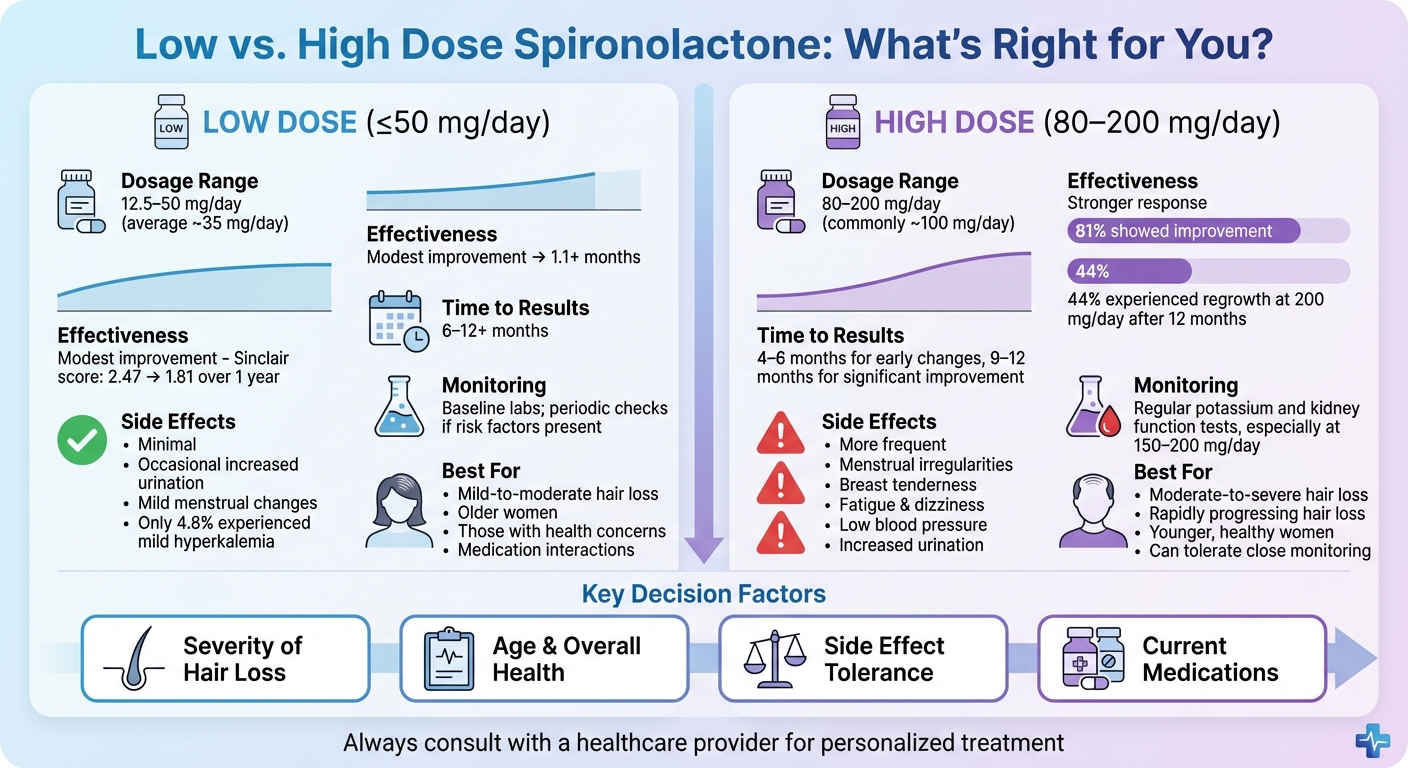
Low vs High Dose Spironolactone for Hair Loss: Side-by-Side Comparison
Comparing Low and High Doses
Deciding on the right dose of spironolactone is all about finding a balance between how quickly you want results, how effective you need the treatment to be, and how much you're willing to tolerate potential side effects. Higher doses - 80–200 mg/day - tend to show faster and more noticeable improvements in hair density and reduced shedding. You might start seeing early changes within 4–6 months, with more pronounced results by 9–12 months. In contrast, lower doses - ≤50 mg/day - are effective for mild-to-moderate hair loss, but the changes are typically slower and more subtle due to the gentler anti-androgen effect.
However, side effects tend to increase with higher doses. Low-dose therapy is often the better choice for older women, those with kidney or heart issues, or anyone particularly sensitive to hormonal shifts. On the other hand, higher doses are generally more suitable for younger, otherwise healthy women dealing with more severe or rapidly progressing hair loss, provided they can handle the closer lab monitoring required at these levels.
The table below highlights the key differences between low and high doses.
Comparison Table
| Factor | Low Dose (≤50 mg/day) | High Dose (80–200 mg/day) |
|---|---|---|
| Typical Range | 12.5–50 mg/day (average ~35 mg/day) | 80–200 mg/day (commonly around 100 mg/day) |
| Effectiveness | Modest but meaningful improvement; Sinclair score decreased from 2.47 to 1.81 over ~1 year | Stronger response; 81% of women showed improvement, with 44% experiencing regrowth at 200 mg/day after 12 months |
| Time to Results | 6–12+ months, usually on the longer end | 4–6 months for early changes, 9–12 months for more significant improvement |
| Common Side Effects | Minimal; occasional increased urination, mild menstrual changes | More frequent menstrual irregularities, breast tenderness, fatigue, dizziness, low blood pressure |
| Monitoring Needs | Baseline labs; periodic checks if risk factors are present | Regular potassium and kidney function tests, especially at 150–200 mg/day |
| Best For | Mild-to-moderate hair loss, older women, those with health concerns or on interacting medications | Moderate-to-severe or rapidly progressing hair loss, younger healthy women who can tolerate monitoring |
Factors to Consider When Choosing a Dose
When deciding on a dose, there are a few essential factors to keep in mind.
The severity of hair loss is a major consideration. Low doses are often enough for mild hair loss, but more advanced cases may require higher doses for better results. Your age and overall health also play a role. Older women or those with conditions like kidney issues, high blood pressure, or diabetes are typically better suited for low-dose therapy to reduce risks like elevated potassium levels or drops in blood pressure.
Another key factor is your tolerance for side effects. If you're sensitive to hormonal changes, starting with a low dose is usually the safest approach. For those looking for quicker results, a higher dose might be an option - but only with careful monitoring. Other medications you're taking can also influence your dose. For example, women already using topical or oral minoxidil might see good results with lower spironolactone doses. Meanwhile, those on ACE inhibitors or potassium supplements need to exercise caution, regardless of the dose.
Ultimately, the "right" dose is highly individual. Most experts suggest starting with a conservative approach and adjusting every 3–6 months based on how your hair responds, the side effects you experience, and your lab results. This way, your treatment plan can be tailored to your specific needs.
Getting Personalized Spironolactone Treatment Through Telehealth
Why Personalized Dosing Matters
When it comes to treating hair loss with spironolactone, a one-size-fits-all approach simply doesn’t work. Since spironolactone is often prescribed off-label for female pattern hair loss, doctors need to customize the dosage for each person. Factors like overall health, hormone levels, PCOS status, blood pressure, kidney function, and the severity of hair loss all play a role in determining the right dose. Research shows that effective doses can range from as low as 12.5 mg to as high as 200 mg per day. For many women, a range of 80–110 mg often delivers results. Women with PCOS or elevated androgen levels might require higher doses, while those with cardiovascular risks may need lower ones to stay safe.
A dermatology review revealed that about 75% of women taking an average of 100 mg daily (with doses spanning 25 to 200 mg) for at least six months experienced less shedding, thicker hair, and noticeable regrowth. Another study focused on lower doses - between 12.5 mg and 50 mg daily (averaging 35 mg) - also showed significant improvements in hair loss over a year. These findings highlight the importance of tailoring treatment to individual needs, rather than relying on generic prescriptions. Telehealth services make this personalized approach easier and more accessible.
How Oana Health Supports Hair Loss Treatment
Oana Health takes personalized dosing seriously, starting with your very first consultation. As a telehealth service specializing in female hormone health and PCOS-related issues, Oana Health ensures that spironolactone dosing is customized to fit into the broader picture of a woman’s hormonal and overall health. The process kicks off with a simple online intake form that gathers details about your hair loss history, PCOS diagnosis, current medications, and how you’ve responded to treatments in the past. Licensed clinicians then review this information and prescribe a starting dose based on proven ranges, typically beginning at 25–50 mg and adjusting upward as needed.
Oana’s care doesn’t stop there. Through secure messaging or video consultations, their clinicians keep track of your progress, monitor for side effects, and tweak the dosage over time. They can also recommend additional therapies, such as oral minoxidil or hormonal contraception, when appropriate. You can even share scalp photos to document changes and receive expert feedback. Research indicates that spironolactone often works better when paired with other treatments like minoxidil. For patients looking for stronger results or hitting a plateau, Oana may add topical minoxidil 5% or low-dose oral minoxidil to the regimen.
Convenience and Affordability with Telehealth
Oana Health’s telehealth model eliminates many of the obstacles that often make it hard to get proper care. Everything - from consultations and follow-ups to prescription renewals - can be done from the comfort of your home. This is a game-changer for women juggling busy schedules, dealing with transportation challenges, or living far from specialists. Plus, treatments are shipped directly to your door with free shipping, so there’s no need for extra pharmacy trips. Oana Health also offers clear subscription pricing, starting at $32/month for combination packs and $25/month for oral minoxidil, making it easier to manage costs.
Adjusting doses or checking for side effects is quick and simple through messaging or short virtual appointments, saving you the time and expense of traditional in-office visits. Oana’s ongoing support includes automatic refills and 24/7 accessibility, helping you stay consistent with your treatment. Most women begin to see results within 6–12 months or longer. As one satisfied user, Margaret K., shared:
"Thanks to Oana, my menstrual cycles are more regular, and my skin has never looked better! I also love the 24/7 accessibility and customer service that always goes the extra mile."
Conclusion: Finding the Right Dose for Your Hair Loss
Key Takeaways
Spironolactone can be effective for hair loss at both low and high doses, but the right dose depends on your individual needs. Low doses (12.5–50 mg/day) can provide noticeable benefits with fewer side effects, making them a good option for women who are older, more sensitive to medications, or managing other health conditions. On the other hand, higher doses (100–200 mg/day) may deliver faster results but come with a higher risk of side effects, such as menstrual irregularities, breast tenderness, and dizziness. The goal is to strike a balance that aligns with your health, tolerance, and hair loss objectives.
Consistency and patience are critical. It often takes 6–12 months to see results from spironolactone. About 75–80% of women notice reduced shedding, thicker hair, or regrowth when they commit to their treatment plan and work closely with their healthcare provider to fine-tune their dose. Combining spironolactone with treatments like topical or oral minoxidil can also enhance results, especially if progress slows. Regular follow-ups and monitoring are particularly important, especially at higher doses. Starting with professional advice is key to finding the dose that works for you.
Next Steps with Oana Health
Effective treatment begins with personalized care. Finding the right spironolactone dose is a process tailored to your specific needs. If you’re considering spironolactone for hair loss, an online consultation is a great first step. Oana Health simplifies this process with telehealth services. Their team of clinicians specializes in female hormones, PCOS, and hair loss, offering customized spironolactone treatment plans that evolve with your progress and any side effects.
Oana Health provides secure messaging, virtual visits, and direct medication delivery with free shipping, ensuring you’re supported every step of the way - from your first dose to long-term care.
Ready to begin? Complete their quick online intake form to connect with a licensed provider and create a personalized hair loss treatment plan. Whether you start with a lower dose or aim for higher results, you’ll have expert guidance to help you find what works best for your needs.
FAQs
What are the common side effects of taking a high dose of spironolactone?
High doses of spironolactone can result in hyperkalemia, which is when potassium levels in the blood become too high. This condition might bring on symptoms such as muscle weakness or an irregular heartbeat. Other possible side effects include dehydration, dizziness, and hormonal shifts that could impact your menstrual cycle.
Before starting spironolactone, make sure to talk with a healthcare provider about the appropriate dosage and how to monitor for side effects. This helps ensure the treatment is both safe and effective.
What does spironolactone do for hair loss?
Spironolactone works to combat hair loss by targeting androgen receptors and reducing androgen levels in the body. This action helps slow or minimize hair thinning linked to hormonal imbalances, especially in women dealing with conditions like PCOS.
By tackling the hormonal causes of hair loss, spironolactone supports healthier hair growth over time. It has become a widely chosen treatment for women experiencing androgen-related hair thinning.
Can spironolactone be used with other treatments for hair loss?
Yes, spironolactone can be used alongside other treatments to tackle hair loss effectively. For instance, topical treatments such as eflornithine, metformin lotion, or azelaic acid can work well with spironolactone. These options may help manage unwanted hair growth or promote healthier hair overall.
It's important to consult a licensed healthcare provider to find the right combination of treatments tailored to your specific needs and medical history.