
Top 5 Ways to Manage Hair Shedding on Hormonal Therapy
Hair shedding from treatments like Spironolactone or Minoxidil can seem alarming but is often a temporary adjustment phase. These therapies work by balancing hormones and stimulating hair growth, with noticeable improvements typically appearing in 3–6 months. To manage shedding and encourage regrowth, here are five practical strategies:
- Use Topical Minoxidil: Extends the hair growth phase and improves scalp blood flow. Results can show in 3–6 months, with up to 18% increased hair density after a year.
- Adjust Spironolactone Dosage: Reduces DHT levels, curbing hair loss. Dosages between 25–200 mg/day are common, with visible benefits in 6–12 months.
- Support Nutrition: Iron, zinc, and vitamin D deficiencies can worsen hair loss. Supplements and a balanced diet can help.
- Gentle Scalp Care & Stress Reduction: Use hydrating shampoos, avoid tight hairstyles, and manage stress through meditation or scalp massages.
- Track Progress with Medical Guidance: Regular check-ins with a provider help fine-tune treatments and monitor results.
Consistency and patience are key. Work with a healthcare provider to customize your plan and monitor progress.
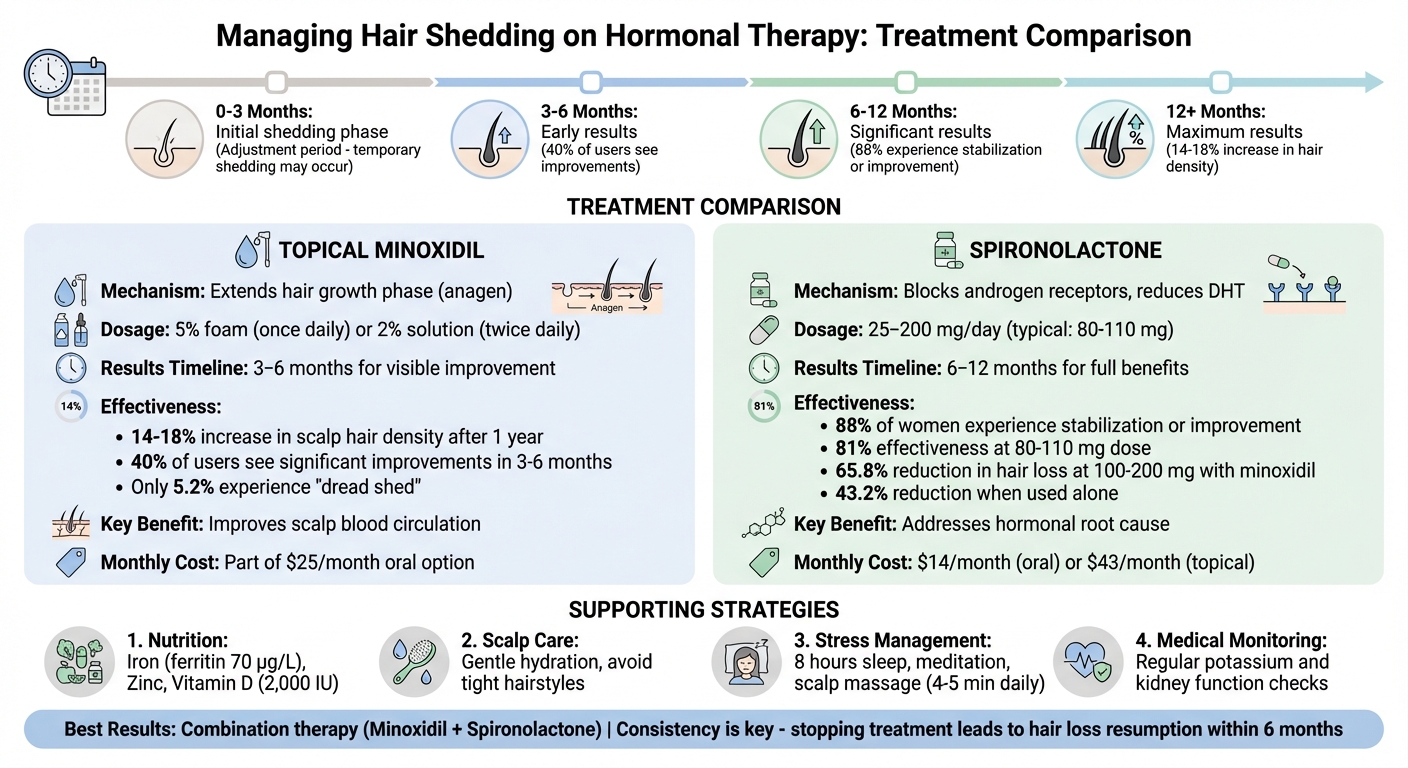
Hair Loss Treatment Comparison: Minoxidil vs Spironolactone Effectiveness and Timeline
1. Add Topical Minoxidil to Your Treatment Plan
Effectiveness in Reducing Shedding
Topical Minoxidil works by prolonging the anagen phase - the active growth stage of your hair cycle. This prevents hair from entering the shedding phase prematurely, addressing temporary hair loss often seen during hormonal therapy.
The results speak for themselves: women using 5% topical Minoxidil can achieve a 14% to 18% increase in scalp hair density after one year of consistent use. Additionally, around 40% of users notice significant improvements in hair thickness within 3–6 months. For those concerned about the initial "dread shed" (temporary shedding after starting treatment), only 5.2% of users experience this effect.
Ease of Integration with Hormonal Therapy
Minoxidil pairs well with hormonal treatments like Spironolactone. While Spironolactone works to block androgens - the hormones responsible for hair loss - Minoxidil directly stimulates hair follicles. This dual-action approach often delivers better results than using either treatment on its own.
"Combining spironolactone with minoxidil, a well-known topical treatment that stimulates hair growth, can amplify the results." - Dr. Sean Behnam
Using Minoxidil is simple: apply it to a clean, dry scalp once daily if using the 5% foam, or twice daily for the 2% solution. If you’re also applying topical Spironolactone, make sure your scalp is clean before each application. Together, these treatments block hormonal triggers while stimulating follicle activity, creating the optimal conditions for healthier hair.
Support for Overall Hair Health
Minoxidil does more than just reduce shedding - it also helps improve scalp health. By boosting blood circulation to the scalp, it enhances the delivery of nutrients to hair follicles. This creates a more supportive environment for regrowth, even though it doesn’t directly address hormonal imbalances.
When applying, stick to the scalp only. And remember, consistency is key: stopping treatment typically leads to the loss of regrown hair within six months.
2. Adjust Your Spironolactone Dosage
Addressing the Underlying Causes of Hair Loss
Spironolactone helps reduce hair shedding by blocking androgen receptors and lowering levels of testosterone and DHT (dihydrotestosterone). Dosages typically range from 25 mg to 200 mg per day. Most people start with 25–50 mg daily and gradually increase to an effective range of 80–110 mg, which has shown up to 81% effectiveness in reducing hair loss. Higher doses (100–200 mg), especially when paired with minoxidil, can reduce hair loss by as much as 65.8%. Adjusting your dosage carefully can make a noticeable difference in hair shedding.
Proven Results in Reducing Hair Loss
Research indicates that about 88% of women taking oral spironolactone experience stabilization or improvement in hair loss. When used alone, spironolactone at doses between 25–200 mg can reduce hair shedding by 43.2%.
"Spironolactone works by binding to these receptor sites before DHT can, blocking DHT's access to them. This prevents the hormone from exerting its effects." – XYON Health
It’s important to note that consistent use is key. It may take anywhere from 6 to 12 months of regular dosing to see the full benefits.
Supporting Overall Hair Health
Getting the most out of spironolactone involves more than just adjusting the dosage. Regular monitoring of potassium levels and kidney function is crucial. To improve absorption and minimize stomach discomfort, take the medication with food at the same time each day. If dizziness occurs - a common side effect - try standing up slowly to give your blood pressure time to adjust.
If you’re considering spironolactone as a treatment option, Oana Health offers oral spironolactone starting at $14 per month. Licensed medical professionals will review your health history to determine the best dosage for your needs.
3. Support Hair Growth with Nutrition and Supplements
Addressing Nutritional Deficiencies and Hair Loss
Nutrition plays a key role in managing hair shedding, especially when combined with topical and hormonal treatments. Deficiencies in nutrients like iron, zinc, and vitamin D can make hair loss worse during hormonal therapy. Research shows that women experiencing hair loss often have ferritin levels around 30 μg/L below the normal range. Raising this to about 70 μg/L may help encourage regrowth. Another study involving 312 participants found that individuals with hair loss tend to have lower zinc levels.
As Emily L. Guo from Baylor College of Medicine explains, "Hair follicles have high metabolic demands, and deficiencies in insufficient protein and calories or micronutrients can impair growth".
Complementing Hormonal Therapy with Nutrition
Nutritional support works hand in hand with hormonal treatments to improve hair follicle health. For example, omega-3 and omega-6 fatty acids may encourage follicle growth and help block 5α-reductase, an enzyme linked to hair loss. Supplements like saw palmetto and zinc can also play a role by reducing the conversion of testosterone to DHT, a hormone associated with hair thinning. It's important to check your nutrient levels through blood tests before starting any supplements.
Boosting Overall Hair Health
Antioxidants, such as vitamins C and E, help combat oxidative stress - a factor often tied to hair loss. Including a multivitamin with B vitamins, zinc, and at least 2,000 IU of vitamin D in your routine can provide additional support. If your diet is low in red meat, an iron supplement might also be helpful. However, all supplements should be taken under the guidance of a healthcare professional.
4. Practice Gentle Scalp Care and Reduce Stress
Ease of Integration with Hormonal Therapy
Pairing gentle scalp care with stress management can work wonders alongside hormonal treatments like Spironolactone or Minoxidil. These lifestyle tweaks don’t just support your hair - they amplify the effectiveness of medical therapies. Dr. Westin Childs, D.O., underscores this point:
"Before you jump into using supplements and medications these factors [stress, diet, sleep] MUST be managed. In fact, in terms of importance, they are probably the most important things that you can do to manage hair loss".
Start with a gentle, hydrating shampoo and conditioner to protect your hair from breakage and split ends. Instead of vigorously towel-drying, wrap your hair in a microfiber towel to absorb water quickly while reducing friction. Tight hairstyles like ponytails or braids can strain your hairline, so opt for looser styles to avoid traction alopecia. This gentle care routine complements hormonal therapy, helping to create the ideal environment for healthier follicles.
Support for Overall Hair Health
Daily scalp massage is a simple yet effective way to improve blood circulation and manage stress - both of which can lead to thicker, stronger hair. Spend 4 to 5 minutes massaging your scalp in circular motions. For an added boost, use essential oils like rosemary, peppermint, or lavender during your massage. Not only does this encourage hair strength, but it also primes your body to respond better to medical treatments.
Potential to Address Underlying Causes of Hair Loss
Stress is a major culprit behind hair loss, often triggering conditions like telogen effluvium, which can cause up to 50% of hair to shed within three months. Tackling stress can stabilize hormonal fluctuations and enhance the results of your treatments. Incorporate stress-relief techniques such as meditation, yoga, or deep breathing exercises into your daily life. Prioritize getting eight hours of sleep each night - this helps regulate hormones like melatonin and serotonin, both of which play a role in the hair growth cycle. Once stress is under control, hair often begins to regrow within three to six months, though noticeable changes may take several months to a year.
sbb-itb-6dba428
5. Track Your Progress with Medical Guidance
Starting and Adjusting Hormonal Therapy
A licensed healthcare provider can initiate treatment with low doses of oral minoxidil or spironolactone, gradually adjusting the dosage to minimize side effects while encouraging hair regrowth. Regular follow-ups are essential, particularly for monitoring potassium levels and kidney function when using oral antiandrogens like spironolactone. Platforms such as Oana Health make it easy to connect with your provider through telehealth consultations, so you can stay on top of your treatment plan without needing to visit an office. This consistent monitoring ensures a safe and effective path toward improvement.
Measuring Results in Hair Shedding Reduction
Working closely with a healthcare provider allows you to track progress and fine-tune your treatment plan. Many patients notice visible improvements in hair density and a reduction in shedding within 3 to 6 months of consistent use. For example, studies show that about 40% of patients see significant results with 5% minoxidil during this timeframe. Providers can also help you navigate early shedding phases, which are common and temporary, to avoid prematurely stopping treatment. Additionally, they can determine if you're responding to topical treatments, as the activation of topical minoxidil relies on a specific scalp enzyme that not everyone produces in sufficient amounts.
Supporting Overall Hair Health
Beyond visual changes, lab assessments provide a deeper look into your progress. Hormone levels (testosterone, estrogen, progesterone) and thyroid function (Total and Free T3) are key markers that can be monitored through lab tests. Ferritin levels, which impact hair growth, can also be evaluated to ensure your body is in the optimal range - sometimes even beyond the standard "normal" limits. To complement these assessments, taking standardized photos every 3 to 6 months under consistent lighting and styling conditions gives both you and your provider a clear visual record of your progress.
Addressing the Root Causes of Hair Loss
Medical guidance plays a critical role in identifying underlying causes of hair loss, such as PCOS, menopause, or other conditions that may require tailored treatments. Providers can safely combine therapies, like pairing spironolactone with oral minoxidil, to target hair loss from both hormonal and circulatory perspectives. They also help set realistic expectations and emphasize the importance of consistency, as stopping medication often leads to resumed hair loss. Dr. Marie Leger, MD, PhD, FAAD, Medical Director, explains:
"Each person's journey with hair loss treatment is unique - we're here to support your progress every step of the way".
HORMONES AND HAIR REGROWTH FOR WOMEN| DR DRAY
Treatment Options Comparison
When it comes to managing hormonal hair loss, choosing the right treatment can feel overwhelming. Oana Health provides prescription-based solutions designed to address different aspects of hormone-related shedding. Here's a closer look at two popular options to help you decide.
Oral Minoxidil is priced at $25 per month. This medication works by stimulating hair follicles and improving blood flow to the scalp, which encourages hair growth.
Topical Spironolactone costs $43 per month. Applied directly to the scalp, it targets androgen activity to prevent follicle miniaturization. This localized approach reduces the likelihood of systemic effects.
| Treatment | Monthly Cost | Key Features |
|---|---|---|
| Oral Minoxidil | $25 | Oral stimulant; most budget-friendly; free shipping |
| Topical Spironolactone | $43 | Topical anti-androgen; localized action; free shipping |
Both options include free shipping and are delivered straight to your door. To find the treatment that aligns with your hormonal needs and hair loss pattern, consult a provider through Oana Health's telehealth platform.
Conclusion
Tackling hair shedding during hormonal therapy requires a combination of consistent care, balanced nutrition, and regular medical guidance. The best results often come from blending multiple strategies. For instance, using prescription treatments like Minoxidil or Spironolactone alongside proper nutrient intake and healthy habits - such as managing stress and getting enough sleep - can significantly improve outcomes. It's important to stay consistent since stopping medications like Minoxidil can lead to the loss of regrown hair. Pairing these efforts with routine medical check-ins ensures you're on the right track.
Keep in mind, it may take months to notice how hormonal therapy influences your hair. Patience is key, as is staying in touch with a healthcare provider. If excessive shedding occurs, consult a doctor promptly to adjust your treatment plan as needed.
Sticking to a structured approach is essential for steady progress. Professional telehealth services can also add value by tailoring your regimen further. Platforms like Oana Health simplify managing hormonal hair loss with their telehealth model. Through an online consultation, licensed medical professionals evaluate your health history and recommend proven treatments such as Oral Minoxidil or Topical Spironolactone. With free shipping and convenient home delivery, staying consistent with your hair regrowth plan becomes easier than ever.
FAQs
How long does it take to see results from hormonal hair loss treatments like Minoxidil and Spironolactone?
Results from Minoxidil typically start to show after 4 to 6 months of consistent use. On the other hand, Spironolactone usually takes a bit more time, with noticeable improvements often appearing around the 6 to 12-month mark.
Sticking to your treatment plan is essential with both options since they work gradually to tackle hormonal hair loss. Patience and consistency are crucial as your body takes time to respond and adjust.
How does nutrition impact hair shedding during hormonal therapy?
Nutrition plays a crucial role in managing hair shedding, especially when undergoing hormonal treatments like minoxidil or spironolactone. A diet rich in essential nutrients can provide the building blocks your body needs to support healthy hair. For instance, protein fuels keratin production, iron ensures oxygen reaches hair follicles, and zinc, selenium, and B-vitamins contribute to overall follicle health. On top of that, omega-3 fatty acids, vitamin C, and vitamin A play a part in reducing inflammation and keeping the scalp hydrated.
Adopting a nutrient-packed eating pattern, such as the Mediterranean diet, can naturally deliver these key nutrients. This approach emphasizes vegetables, fruits, whole grains, lean proteins, and healthy fats, creating a foundation for stronger hair follicles and a more balanced hair-loss cycle. Plus, it can complement the effects of hormonal therapies. If your diet alone doesn’t cover all your nutritional needs, targeted supplements can provide an extra boost to fill in the gaps.
How does managing stress improve the results of hair loss treatments?
Managing stress is a crucial part of boosting the success of hormonal hair loss treatments like minoxidil or spironolactone. Elevated stress levels can lead to increased cortisol production - a hormone that contributes to hair shedding and disrupts the natural growth cycle of hair follicles. By keeping stress in check, you create a healthier environment for your scalp, which helps these treatments work more effectively.
To tackle stress, consider incorporating relaxation techniques such as meditation or deep breathing into your routine. Prioritize getting 7–9 hours of quality sleep each night, and engage in moderate physical activities like walking or yoga. If you need extra support, professional counseling or joining a support group can be valuable options. Pairing stress management strategies with a tailored treatment plan, such as those available through Oana Health, can address both the physical and emotional aspects of hair loss, leading to more effective results.