
Checklist: Starting Metformin with Myo-Inositol
If you're managing PCOS or insulin resistance, combining Metformin and Myo-Inositol might be a helpful treatment option. These two work differently but complement each other to improve insulin sensitivity, regulate cycles, and address symptoms like acne, unwanted hair growth, and weight challenges.
Key Points:
- Metformin: Lowers liver glucose production and improves insulin response.
- Myo-Inositol: Repairs insulin receptors, helping cells absorb glucose better.
- Combination Benefits: Studies show higher ovulation (65% vs. 50%) and pregnancy rates (46.7% vs. 11.2%) compared to Metformin alone.
- Who Benefits: Women with PCOS, insulin resistance, or fertility goals.
- Side Effects: Metformin may cause nausea or diarrhea; Myo-Inositol has fewer side effects.
Getting Started:
- Consult Your Doctor: Share symptoms, health history, and goals (e.g., fertility, weight, acne).
- Baseline Tests: Check fasting glucose, insulin resistance (HOMA-IR), kidney/liver function, and vitamin B12.
- Start Slow: Begin with low doses of Metformin (500-850 mg daily) and Myo-Inositol (2,000-4,000 mg daily) to minimize side effects.
- Track Progress: Use a symptom journal and schedule follow-ups to adjust treatment as needed.
Consistency is key - most improvements, like regular cycles, may take 3-6 months. Pair this therapy with a balanced diet and exercise for better results.
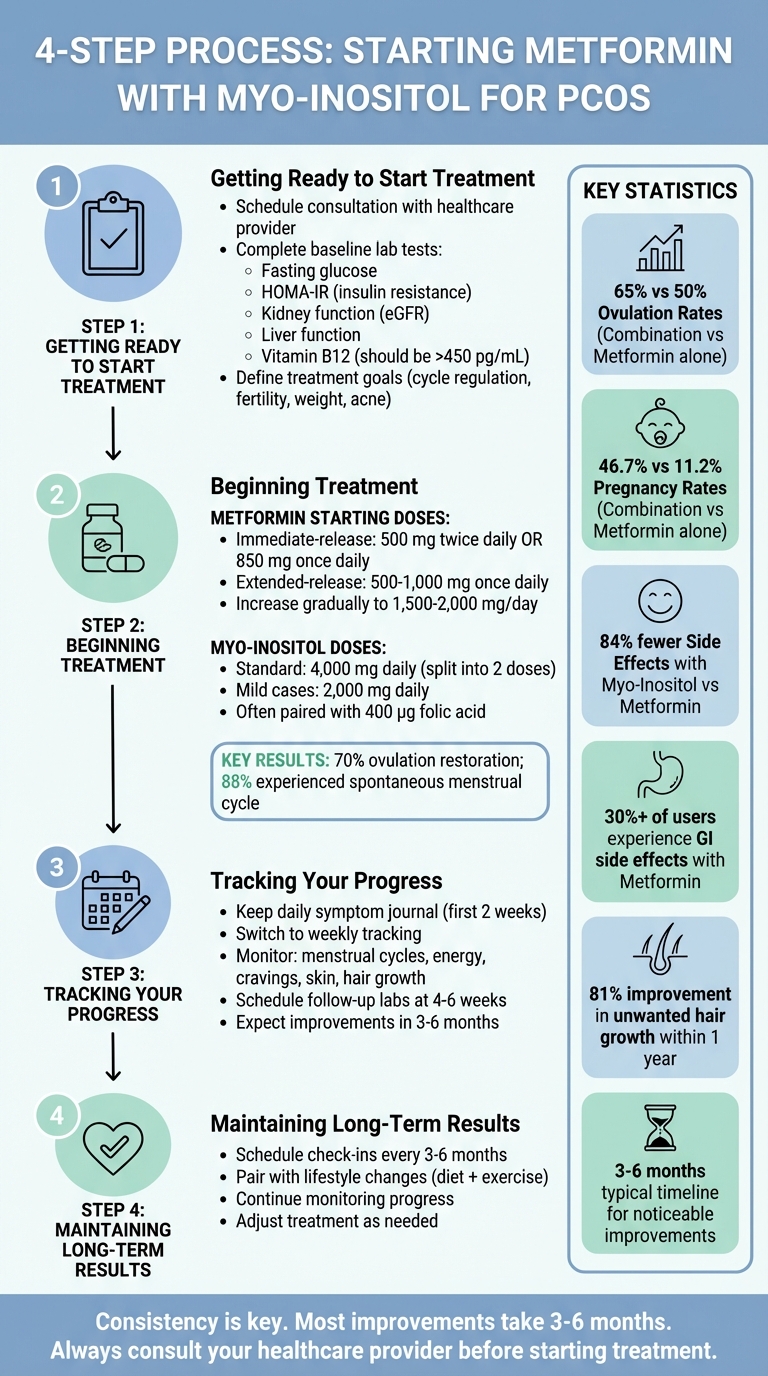
4-Step Guide to Starting Metformin with Myo-Inositol for PCOS Treatment
Metformin vs Inositol in PCOS [What you need to know]
Step 1: Getting Ready to Start Treatment
To kick off your treatment journey effectively, it's important to take a few preparatory steps. These include scheduling a consultation, completing baseline lab tests, and setting clear treatment goals.
Schedule a Consultation with Your Healthcare Provider
Start by booking an appointment with a licensed healthcare provider who has experience treating PCOS and insulin resistance. For example, Oana Health offers a quick 5-minute telehealth intake to get the process started. During this consultation, share your current health information and any symptoms you're experiencing.
Be sure to discuss potential risk factors like kidney or liver issues, or conditions such as lactic acidosis, congestive heart failure, or severe dehydration. Also, describe your common PCOS symptoms. If you’ve noticed signs of insulin resistance - like sugar cravings, fatigue, or darkened patches of skin (known as acanthosis nigricans) - mention these as well. Don’t forget to tell your provider about any supplements you’re taking to avoid overlapping or conflicting treatments.
Your reproductive goals are especially important. Whether you’re looking to improve fertility, manage weight, or address concerns like acne or unwanted hair growth, these objectives will guide your treatment plan.
Get Your Baseline Lab Tests
Before starting treatment, your provider will likely recommend baseline lab tests to assess your overall health and determine if Metformin is right for you. Common tests include fasting glucose, HOMA-IR (to evaluate insulin resistance), kidney function (eGFR), liver function, and vitamin B12 levels.
For accurate results, you’ll need to fast for 8–12 hours before glucose and HOMA-IR tests. Also, make sure your vitamin B12 levels are above 450 pg/mL, as long-term Metformin use can interfere with B12 absorption. If you’ve experienced gastrointestinal sensitivity in the past, talk to your provider about alternative options like topical Metformin or extended-release (XR) formulations to minimize side effects.
These lab results will help your provider create a treatment plan tailored to your specific needs.
Define Your Treatment Goals
Setting clear and measurable goals is essential. Whether you aim to regulate your menstrual cycles, reduce acne, manage your weight, or address unwanted hair growth, having defined objectives will help track your progress.
It’s important to keep your expectations realistic. Metformin typically takes about 3 to 4 weeks of daily use before you’ll notice any changes. Clinical research shows that 81% of women experience significant improvement in unwanted hair growth within a year of consistent treatment.
Tracking your progress can be incredibly helpful. For example, if menstrual regularity is your goal, keep a log of your cycle length and frequency. If you’re focusing on skin or hair changes, consider taking photos to document your starting point. Angela Grassi, MS, RDN, LDN, and Founder of the PCOS Nutrition Center, explains how Metformin works:
"Metformin works as an insulin-sensitizer to reduce your production of glucose... It suppresses the liver's production of glucose, increases the sensitivity of your liver, muscle, fat, and cells to the insulin your body makes, and decreases the absorption of carbohydrates you consume."
Having a solid understanding of how treatments like Metformin and Myo-Inositol work will help you set achievable goals and stay motivated throughout your journey.
Step 2: Beginning Metformin and Myo-Inositol
After completing your baseline tests and setting clear goals, it’s time to kick off your treatment plan. The secret to a successful start? Go slow and give your body the chance to adapt. With your lab results and objectives in hand, you’re ready to begin. Here’s how to ease into your treatment and manage it effectively.
Start Low and Increase Gradually
When starting Metformin, begin with a low dose to reduce the chances of stomach upset. For immediate-release tablets, the typical starting dose is 500 mg twice daily or 850 mg once daily. For extended-release versions, you’ll usually start at 500–1,000 mg once daily. Gradually increase the dose - by 500 mg weekly or 850 mg every two weeks - until you reach around 1,500–2,000 mg per day. Anything below 1,500 mg may not be as effective.
Myo-Inositol, on the other hand, is generally well tolerated. The standard dose is 4,000 mg daily, split into two doses of 2,000 mg. For milder cases, 2,000 mg daily (1,000 mg twice daily) may suffice. This 4,000 mg regimen is often paired with 400 μg of folic acid, and studies have shown impressive results: ovulation was restored in 70% of participants, and 88% experienced at least one spontaneous menstrual cycle.
Timing and Taking Your Medications
Once your dosage is set, it’s important to stick to a routine. Here are some guidelines to help:
- Metformin: To reduce nausea or diarrhea, take it with meals. For standard tablets, doses are usually split between breakfast and dinner. Extended-release tablets are best taken once daily with your evening meal. Avoid crushing or chewing the tablets, as this can interfere with the slow-release mechanism. If you miss a dose, skip it and move on to your next scheduled dose - don’t double up.
- Myo-Inositol: Available as a powder or capsule, it’s usually taken in two divided doses throughout the day. It’s often combined with folic acid, which supports reproductive health.
Here’s a quick reference table for timing and food requirements:
| Medication Type | Typical Frequency | Best Time of Day | Food Requirement |
|---|---|---|---|
| Metformin (Standard Tablet) | 2–3 times daily | With meals | Always with food |
| Metformin (Extended-Release) | Once daily | With the evening meal | Always with food |
| Myo-Inositol | Twice daily | Morning and evening | Flexible timing |
Be Mindful of Side Effects
Metformin can cause nausea, vomiting, and diarrhea, especially at the beginning. These side effects affect over 30% of users but often improve as your body adjusts.
"Starting with a low dose and gradually increasing, or using extended-release formulations, can help reduce gastrointestinal side effects."
If these symptoms persist, talk to your healthcare provider about alternatives like extended-release Metformin or even topical formulations. For example, Metformin cream - priced around $89/month - may offer similar benefits with fewer gastrointestinal issues.
Myo-Inositol is generally easier on the body. Research shows it has 84% fewer side effects than Metformin while being just as effective at regulating menstrual cycles and lowering testosterone levels. Angela Grassi, MS, RDN, LDN, highlights:
"Inositol is an effective and safe treatment in polycystic ovary syndrome... and as effective as Metformin for most outcomes, without the side effects."
Interestingly, Myo-Inositol may also help ease some of Metformin’s gastrointestinal discomfort when used together. Keep an eye on how your body responds as you continue with your treatment plan. Regularly tracking your progress will help fine-tune your approach.
sbb-itb-6dba428
Step 3: Tracking Your Progress
Once you've started treatment, keeping tabs on your progress is essential to fine-tune your regimen. The first few weeks might bring noticeable improvements, but you could also experience some side effects. By carefully monitoring your symptoms, you'll gather valuable insights to share with your healthcare provider, helping to shape your treatment plan.
Keep a Symptom Journal
For the first two weeks, jot down your symptoms daily, then switch to weekly tracking as your body begins to adapt. Pay close attention to areas where you're most likely to see changes, such as menstrual cycle consistency, energy levels, food cravings, skin clarity, and unwanted hair growth. For menstrual cycles, log start dates and duration - most women notice more regular cycles within 3 to 6 months of treatment. If you're addressing skin or hair concerns, taking "before" photos can help you objectively track progress, as improvements in acne or excessive hair growth tend to happen gradually.
"It's been a little over 5 weeks, and I've noticed a dramatic reduction in my facial hair growth. This has been such a relief for me. You really have to stick with it and be patient to notice results!" - Allison L.
Be sure to document any ongoing side effects as well. Persistent issues like nausea or fatigue can be important to discuss with your provider, who might suggest changes such as switching to an extended-release formulation. Your symptom journal will be an invaluable tool during follow-up appointments.
Plan for Follow-Up Lab Tests
Tracking how you feel is important, but lab work provides a clearer picture of your progress. Schedule follow-up tests about 4 to 6 weeks after starting treatment. These tests typically check markers like insulin sensitivity, glucose levels, and vitamin B12. Monitoring vitamin B12 is especially important if you're taking Metformin long-term, as it can sometimes lead to deficiencies. Your provider will use these results, alongside your symptom notes, to evaluate how well the treatment is working and decide if adjustments are needed.
Fine-Tune Your Treatment
Based on your symptom tracking and lab results, your healthcare provider may recommend tweaking your treatment. This could include increasing your dosage, adding complementary therapies, or making other changes to better suit your needs. If you're not seeing the progress you hoped for or are struggling with side effects, bring these concerns up during your consultation. Finding the right approach is a process, and it often takes a bit of collaboration and adjustment to get it just right.
Step 4: Maintaining Long-Term Results
Once you've adjusted your dosage and seen some progress, it's time to shift your focus to maintaining those results over the long haul. Many women notice improvements in menstrual regularity within 3–6 months, but staying consistent with your plan and attending regular check-ups is key to continued success.
Schedule Regular Check-Ins Every 3–6 Months
Make it a habit to check in with your healthcare provider every 3–6 months. These appointments are a chance to assess how well your treatment is working. Your provider will likely monitor changes in ovulation, reductions in unwanted hair growth, and progress in weight management. These regular evaluations help ensure your therapy stays on track and adjusts as needed.
Pair Treatment with Lifestyle Changes
Medications like Metformin and Myo-Inositol are most effective when supported by healthy lifestyle habits. A balanced diet and consistent exercise remain essential for managing PCOS. Even losing a small amount of weight can significantly improve symptoms and reduce the risk of developing type 2 diabetes over time. Incorporating these changes into your routine not only boosts the effectiveness of your treatment but also promotes overall well-being. When combined with professional guidance, these habits can help you achieve sustainable progress.
Continued Support with Oana Health

For added convenience and care, telehealth services like Oana Health offer ongoing support tailored to your needs. They provide features such as automatic medication refills and 24/7 access to licensed healthcare professionals, all from the comfort of your home. With free shipping, treatments are delivered straight to your door. For instance, Oral Metformin ER starts at $22 per month, while the Metformin & Spironolactone pack is available for $32 per month. Oana Health also offers savings plans to make long-term hormonal treatments more accessible and budget-friendly.
"Oana's telehealth service is fantastic! It's helped manage my insulin levels and reduce excess hair growth I was experiencing due to PCOS." - Victoria A.
Conclusion
Starting Metformin alongside Myo-Inositol should follow a carefully planned approach. This combination can help tackle insulin resistance by reducing glucose production in the liver and improving glucose uptake in muscles. These changes may lower insulin and androgen levels, which can support the return of regular menstrual cycles.
Give your body the time it needs to adapt. Noticeable improvements, like more consistent menstrual cycles and reduced androgen-related symptoms (such as acne), often take 3–6 months of consistent treatment.
To minimize common gastrointestinal side effects - experienced by over 30% of patients - begin with a low dose and gradually increase it. Taking the medication with meals can also improve your body’s tolerance. Keep track of your symptoms over six months to ensure the treatment is working effectively.
Regular follow-ups are essential to monitor your progress and safety. These check-ins allow for dose adjustments, keeping an eye on rare risks like lactic acidosis, and incorporating sustainable lifestyle changes. Healthy habits remain a key part of managing PCOS alongside medication.
For additional help, Oana Health offers telehealth services that include 24/7 access to licensed professionals, automatic prescription refills, and free shipping - making it easier to stay on top of your health journey.
FAQs
How long does it take to see results with Metformin and Myo-Inositol?
Most individuals begin to see changes in menstrual regularity and insulin sensitivity within 1 to 3 months of consistently using Metformin and Myo-Inositol. For others, benefits such as improved hormonal balance and ovulation may take a bit longer - typically around 3 to 6 months.
Keep in mind, progress can differ from person to person based on factors like overall health, lifestyle habits, and how diligently the treatment plan is followed. It's always a good idea to check in with your healthcare provider for tailored advice and to keep track of your progress.
What should I do if I have side effects from Metformin?
If you're dealing with side effects from Metformin, there are a few simple strategies that might help. For mild symptoms like nausea, try taking your dose with food - it can make a big difference in easing discomfort. Experiencing diarrhea? Make sure to stay hydrated by drinking plenty of fluids. If vomiting occurs, sip small amounts of water to avoid dehydration. However, if these issues don’t improve or get worse, it’s time to reach out to your healthcare provider.
Keep an eye out for more serious side effects, such as dizziness, muscle pain, rapid breathing, or signs of lactic acidosis - which could include unusual weakness, extreme drowsiness, or severe abdominal pain. These symptoms are serious and require immediate medical attention. If you experience anything severe, stop taking Metformin and consult your doctor without delay.
Can Myo-Inositol help ease Metformin’s side effects like nausea or diarrhea?
Myo-Inositol is known to potentially ease some of the common gastrointestinal issues linked to Metformin, such as nausea and diarrhea. Many find it to be a milder alternative with fewer side effects. When combined, these supplements may work together to improve insulin sensitivity and help manage symptoms associated with PCOS.
Before starting this combination, it’s crucial to discuss it with a healthcare professional to ensure it aligns with your individual health needs.