
Metformin and Ovarian Function: What Studies Show
Metformin is widely recognized for its role in managing PCOS (Polycystic Ovary Syndrome), a hormonal condition affecting millions of women. It improves ovarian function by addressing insulin resistance, reducing androgen levels, and promoting ovulation. Here's what you need to know:
- How It Works: Metformin lowers insulin levels, reduces testosterone, and supports hormone balance. It also enhances follicle development and ovulation.
- Ovulation and Pregnancy: Women on metformin are up to 2.94 times more likely to ovulate. When combined with clomiphene, success rates improve further.
- Menstrual Regularity: Metformin helps regulate cycles in 40% of women with PCOS.
- Endometrial Health: It improves uterine lining and increases implantation markers, aiding fertility.
- Effectiveness: Works best for non-obese women. Obese women may see better results combining it with other treatments.
While metformin is effective, its long-term reproductive impacts need more research. Side effects like nausea and diarrhea are common but manageable. Combining metformin with other therapies often yields better outcomes.
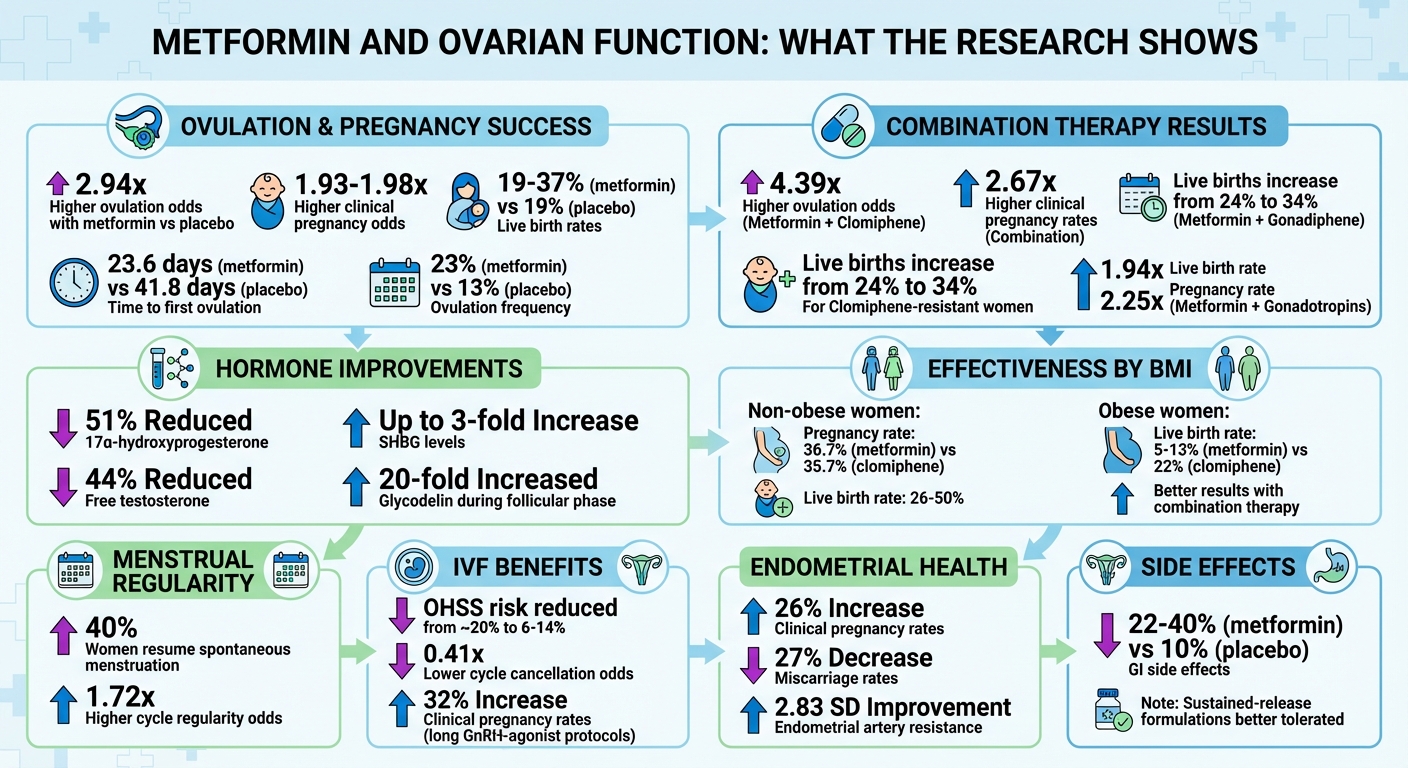
Metformin Effects on PCOS: Key Statistics and Success Rates
How Metformin Works to Improve Ovarian Function
Insulin Sensitivity and Hormone Balance
Metformin plays a key role in addressing the elevated insulin levels, or hyperinsulinemia, that contribute to many symptoms of PCOS. By lowering insulin levels, it reduces the activity of the ovarian enzyme cytochrome P450c17α, which is responsible for converting progesterone into androgens like testosterone in the theca cells of the ovary. Research highlights that metformin treatment can lower basal serum 17α-hydroxyprogesterone - a precursor to testosterone - by 51%.
Another important effect of metformin is its ability to increase the liver's production of Sex Hormone-Binding Globulin (SHBG), a protein that binds to testosterone in the bloodstream. With metformin use, SHBG levels can rise up to threefold. This is significant because only "free" testosterone, which is unbound, can enter cells and trigger symptoms like acne or excess hair growth. By increasing SHBG, metformin reduces free testosterone levels by 44%.
Metformin also helps balance luteinizing hormone (LH) levels, which are often too high in individuals with PCOS. Lower LH levels promote more regular ovulation signals. Additionally, at the cellular level, metformin enhances glucose metabolism in granulosa cells, creating a healthier environment that supports egg maturation and follicle development. These hormonal changes collectively support normal follicle progression and improve ovarian function.
Effects on Follicle Development and Ovulation
In PCOS, small ovarian follicles, typically less than 10mm in size, often experience "follicular arrest" - a condition where they fail to mature due to the disruptive effects of excess androgens and insulin. Metformin helps break this cycle by reducing androgen levels within the ovaries, allowing follicles to develop normally.
Metformin also significantly improves ovulation rates, increasing the odds nearly threefold (OR=2.94). When combined with clomiphene citrate, the odds rise even further to 4.39. Unlike clomiphene, metformin does not thin the uterine lining, potentially creating better conditions for embryo implantation.
In addition to aiding ovulation, metformin enhances the uterine environment. It increases levels of serum glycodelin - a protein essential for pregnancy - by 20-fold during the follicular phase. Glycodelin helps prepare the uterine lining for embryo attachment, addressing the "hostile" uterine environment often associated with PCOS. By improving both follicle maturity and uterine receptivity, metformin bridges the gap between ovarian function and endometrial health.
Lowering Inflammation and Oxidative Stress
PCOS is often accompanied by elevated levels of reactive oxygen species (ROS), which can damage cells and impair egg quality, particularly when combined with high LH levels. Metformin mitigates this damage by lowering ROS levels in follicular granulosa cells, protecting them from oxidative stress.
The medication also reduces inflammation by suppressing pyroptosis, a form of inflammatory cell death. It achieves this by downregulating inflammatory components such as NLRP3 and caspase-1. Metformin activates the AMPK signaling pathway while inhibiting the RAGE/NF-κB pathway, which decreases the production of advanced glycation end products (AGEs) that are linked to ovarian aging. This dual action not only reduces systemic and local inflammation but also improves blood flow to the ovaries, creating a more favorable environment for healthy follicle development.
What Clinical Studies Show About Metformin and Ovulation
Ovulation and Pregnancy Rates
Research confirms that metformin significantly boosts ovulation rates in women with PCOS compared to a placebo. Women taking metformin have 2.55 to 2.94 times higher odds of ovulating than those who receive no treatment. Additionally, live birth rates improve from approximately 19% with a placebo to 19–37% when using metformin.
Metformin almost doubles the chances of clinical pregnancy, with odds ratios ranging from 1.93 to 1.98. In one study, ovulation frequency improved to 23% with metformin, compared to just 13% for placebo, while the average time to first ovulation decreased from 41.8 days to 23.6 days. When combined with gonadotropins, metformin doubles live birth rates (OR 1.94) and more than doubles pregnancy rates (OR 2.25).
Beyond ovulation, metformin also helps regulate menstrual cycles, providing additional benefits for women with PCOS.
Menstrual Cycle Regularity
Metformin has been shown to improve menstrual regularity, with odds ratios of 1.72. In a case series involving 48 women with anovulatory PCOS, 40% resumed spontaneous menstruation and showed signs of ovulation after using metformin alone.
This improvement is tied to metformin's ability to reduce insulin levels and balance hormone levels, creating a more stable hormonal environment. As a result, many women experience more predictable menstrual cycles, even before ovulation is fully restored. This makes metformin a valuable option for those seeking better cycle regularity, regardless of immediate fertility goals.
These benefits are further enhanced when metformin is used in combination with other treatments.
Metformin vs. Clomiphene and Combination Treatments
When comparing metformin to clomiphene, outcomes vary based on body type. In obese women, clomiphene tends to be more effective, with metformin showing lower live birth odds (OR 0.30). However, in non-obese women, metformin appears to perform better, with live birth odds of 1.71.
The strongest evidence supports combination therapy. Adding metformin to clomiphene citrate increases ovulation odds by 4.39 times compared to clomiphene alone. It also raises clinical pregnancy rates by 2.67 times. This combination is particularly effective for women resistant to clomiphene - those who do not respond to clomiphene on its own. Studies indicate that combination therapy improves ovulation odds (OR 1.57 to 1.65) and clinical pregnancy rates (OR 1.59 to 1.62).
Metformin also plays a role in assisted reproductive treatments. When used with IVF protocols, it lowers the risk of Ovarian Hyperstimulation Syndrome (OHSS) and reduces cycle cancellation rates (OR 0.41). In long GnRH-agonist IVF protocols, metformin may boost clinical pregnancy rates by 32%. However, gastrointestinal side effects, such as nausea and diarrhea, are common, affecting 22% to 40% of women on metformin compared to 10% on placebo.
Metformin's Effects on Hormones and Endometrial Health
Lowering Androgen Levels
One of metformin's key roles in managing PCOS is its ability to reduce androgen levels. It achieves this by lowering insulin levels, which in turn decreases the activity of cytochrome P450c17α - an enzyme that drives excessive testosterone production. This hormonal adjustment helps alleviate common PCOS symptoms like unwanted facial hair and acne. Beyond that, it supports the proper maturation of ovarian follicles, paving the way for normal ovulation.
"In obese women with the polycystic ovary syndrome, decreasing serum insulin concentrations with metformin reduces ovarian cytochrome P450c17α activity and ameliorates hyperandrogenism."
– Nestler JE, et al.
By addressing androgen excess, metformin not only aids in follicle development but also creates a more favorable environment for endometrial health.
Improving Endometrial Receptivity
Metformin also plays a significant role in improving the uterine lining, making it more supportive of pregnancy. A comprehensive meta-analysis of 62 studies involving 6,571 patients revealed that metformin increased endometrial thickness and lowered the endometrial artery resistance index by 2.83 standard deviations - both indicators of better blood flow. These changes were associated with a 26% rise in clinical pregnancy rates and a 27% decrease in miscarriage rates.
On a cellular level, metformin boosts the expression of critical implantation markers like HOXA10 and integrin beta-3, which are often reduced in women with PCOS. It also enhances the presence of GLUT4, a glucose transporter that ensures endometrial cells have the energy they need for implantation. During the follicular phase, metformin has been linked to a dramatic 20-fold increase in glycodelin, a protein essential for embryo implantation. Unlike clomiphene citrate, which can sometimes thin the uterine lining, metformin appears to avoid this issue and may even help restore a healthy endometrial thickness.
sbb-itb-6dba428
Gaps in Current Research and Future Studies
Differences in Study Designs and Results
The variety in study designs has made it challenging to draw clear conclusions about metformin’s effects on ovarian function in women with PCOS. Clinical trials often differ in dosage (ranging from 1,500 to 2,000 mg daily) and pretreatment duration (spanning 4 to 14 weeks). Additionally, many studies fail to stratify results by BMI, despite notable differences in live birth rates - 26%–50% in non-obese women compared to just 5%–13% in obese women. Compounding these issues, some trials suffer from issues like small sample sizes, lack of blinding, or unclear methods of participant allocation.
Beyond these design inconsistencies, the long-term impact of metformin on reproductive health remains a significant question.
Long-Term Effects and Safety
Although metformin appears to improve ovulation and menstrual regularity in women with PCOS, its long-term effects on reproductive and metabolic health remain uncertain. Some evidence suggests it may reduce the risk of type 2 diabetes and cardiovascular disease, but more prospective trials are needed to confirm these potential benefits. Notably, large-scale studies tracking fertility outcomes beyond the first trimester are scarce.
"Further research is needed to define with greater precision the optimal dosage and times to initiate and discontinue metformin in women with PCOS who achieve pregnancy."
– Kerstin MG Brand
There is ongoing debate about whether women should continue taking metformin after conception or stop once a pregnancy is confirmed. Extended follow-up studies are necessary to provide clarity on this issue.
New Areas of Research
To address these gaps, researchers are delving into genetic and cellular factors that may influence metformin’s effectiveness. For instance, emerging studies are exploring gene variants - such as those in STK11, OCT1, and ATM - that could explain why some women with PCOS respond better to metformin than others. This has spurred interest in pharmacogenomics, which could one day enable doctors to predict which patients are most likely to benefit from the treatment.
"Large-scale genome-wide studies are needed to identify markers that can predict metformin responsiveness in women affected with PCOS."
– Diabetologia
Scientists are also investigating combination therapies and the cellular mechanisms of metformin. Some studies focus on its impact on processes like autophagy in ovarian cells, mitochondrial function, and microRNA regulation in the endometrium. Additionally, there’s growing interest in studying metformin’s effects specifically in non-obese women with PCOS, a group that may gain more benefits than previously assumed. These new directions could lead to more tailored treatment plans based on individual genetic and physiological profiles.
Conclusion
Main Findings
Research highlights that metformin plays a key role in improving ovarian function for women with PCOS by enhancing insulin sensitivity and balancing hormones. For instance, one study found that 61% of women experienced improved ovulation after 12 weeks of metformin treatment. Among non-obese women, metformin’s effectiveness is comparable to clomiphene citrate, with pregnancy rates of 36.7% versus 35.7%. However, in obese women, the live birth rate with metformin drops to 5%–13%, compared to 22% with clomiphene. When used during IVF, metformin reduces the risk of ovarian hyperstimulation syndrome significantly, lowering the risk from around 20% to 6%–14%. Additionally, for women who haven't responded to clomiphene alone, combining it with metformin can increase live birth rates from 24% to 34%.
What to Consider if You Have PCOS
Your BMI plays a major role in how effective metformin will be for managing PCOS. Women with a BMI under 30–32 tend to see better results, while those with higher BMIs may benefit more from starting with clomiphene or focusing on lifestyle changes. If clomiphene alone hasn’t worked, metformin - either on its own or in combination - can be a promising alternative.
Metformin is often associated with gastrointestinal side effects, but using sustained-release formulations can improve how well it’s tolerated. On the plus side, metformin does not increase the risk of multiple pregnancies and has no negative effects on the uterine lining. These insights emphasize the importance of individualized care to maximize the effectiveness of PCOS treatments.
How Oana Health Can Help
Oana Health offers specialized telehealth services tailored for women managing PCOS and hormonal conditions. Their licensed professionals provide personalized, evidence-based treatment plans, including Oral Metformin ER for $22 per month or a Metformin & Spironolactone combination therapy for $32 monthly. With free home delivery, these treatments address a range of PCOS symptoms such as insulin resistance, acne, unwanted facial hair, hair loss, and challenges with weight management.
Fertility Treatment of PCOS - Polycystic Ovary Syndrome - Using Metformin
FAQs
How does metformin help women with PCOS ovulate?
Metformin plays a key role in helping women with PCOS ovulate by improving insulin sensitivity. High insulin levels are often tied to elevated androgens (male hormones), which can disrupt hormonal balance. By lowering insulin and androgen levels, metformin helps restore this balance, leading to more regular ovulation.
By targeting insulin resistance, metformin addresses one of the primary causes of ovulation problems in PCOS, providing a well-researched option to enhance fertility for many women.
What are the possible side effects of taking metformin for PCOS?
Metformin is known to be fairly easy on the system for most people, but it’s not without its potential side effects. Common complaints include nausea, diarrhea, bloating, or a general upset stomach, especially when starting the medication. Occasionally, some people might also experience dizziness or muscle pain.
Though rare, there is a serious risk associated with metformin known as lactic acidosis, a condition that requires immediate medical attention. Symptoms like extreme fatigue, trouble breathing, or severe weakness could signal this complication. If you notice anything unusual, reach out to your healthcare provider right away. It’s essential to have a conversation with a medical professional about the potential risks and benefits of metformin based on your personal health situation.
Is metformin more effective for ovulation in non-obese women with PCOS?
Research indicates that metformin can be highly effective as a first-line treatment for promoting ovulation in non-obese women with PCOS. Its primary role is to enhance insulin sensitivity, which helps balance hormone levels and supports proper ovarian function.
If you're navigating PCOS and exploring treatment options, it's essential to consult a healthcare provider to see if metformin is a suitable choice for you. Personalized care programs, such as those provided by Oana Health, can offer customized solutions to meet your specific health needs.