
Metformin Safety for Pregnant Women with PCOS
Metformin is widely used to manage PCOS (Polycystic Ovary Syndrome) and support pregnancy, but its safety during pregnancy is a topic of discussion. Here's a quick summary:
- Why It's Used: Metformin improves insulin sensitivity, helps regulate ovulation, lowers miscarriage risk, and reduces gestational diabetes rates (from 31% to 3%).
- Safety During Pregnancy: Studies show no increased risk of major birth defects and benefits like reduced preeclampsia and neonatal complications. However, concerns remain about potential long-term effects on children, like higher BMI in mid-childhood.
- Side Effects: Common issues include nausea, diarrhea, and occasional gastrointestinal discomfort.
- Breastfeeding: Metformin is considered safe as it passes into breast milk in negligible amounts.
Deciding whether to continue metformin during pregnancy depends on individual health needs and risks. Always consult your healthcare provider for tailored advice.
Why Doctors Prescribe Metformin for PCOS and Pregnancy
How Metformin Manages PCOS Symptoms
Metformin plays a key role in addressing one of the primary issues of PCOS - insulin resistance. It helps the body use insulin more efficiently and reduces glucose production in the liver, providing much-needed metabolic balance for women with PCOS.
One of the standout benefits of metformin is its ability to restore regular menstrual cycles and promote ovulation, which significantly improves the chances of conception. Studies show that women with PCOS taking metformin have live birth rates ranging from 19% to 37%, compared to about 19% for those on a placebo. When combined with clomiphene citrate (Clomid), live birth rates increase further, ranging between 23% and 34%.
However, like most medications, metformin has side effects. Gastrointestinal issues such as nausea and diarrhea are reported in 22% to 40% of users, compared to about 10% for those taking a placebo. Fortunately, these side effects can often be minimized by taking metformin with food and gradually increasing the dosage.
These benefits extend beyond conception, continuing to support women during pregnancy.
What Metformin Does During Pregnancy
Metformin’s role doesn’t stop at helping women conceive. During pregnancy, it provides metabolic support by stabilizing blood sugar levels. The drug crosses the placenta, reaching the fetus at levels comparable to those in the mother. In the fetal liver, metformin activates AMPK, a key enzyme that helps reduce glucose production.
This metabolic stability can help prevent complications during pregnancy. For instance, metformin has been shown to reduce the risk of gestational diabetes significantly. It may also lower the high miscarriage risk seen in women with PCOS, which typically ranges from 30% to 50%. Additionally, metformin can help limit gestational weight gain and reduce the risks of neonatal complications like hypoglycemia and macrosomia.
Interestingly, research suggests that non-obese women with PCOS may see better outcomes with metformin, with live birth rates reaching as high as 50%. In contrast, the benefits for obese women appear to be less pronounced.
Current Medical Guidelines and Debates
Despite its benefits, the use of metformin during pregnancy remains a topic of ongoing discussion. Historically, oral diabetes medications were avoided during pregnancy, but newer evidence supports metformin’s safety, even in the first trimester. A meta-analysis found that the rate of major birth defects in pregnancies exposed to metformin was 1.7%, compared to 7.2% in a control group.
That said, there are still debates. Some experts express concerns about the long-term effects of metformin exposure on children, including a potential link to childhood obesity. These concerns contribute to varying clinical recommendations worldwide for using metformin to treat gestational diabetes.
Today, doctors take an individualized approach when prescribing metformin. Factors like BMI, ethnicity, and the severity of PCOS or gestational diabetes play a role in the decision-making process. Women with PCOS who also have impaired glucose tolerance or Type 2 diabetes are often considered strong candidates for metformin therapy. Additionally, preconception counseling typically advises achieving an A1C level below 6.5% to reduce the risks of complications like congenital anomalies and preeclampsia.
Long Term Study Confirms Safety of Metformin in Pregnant Women
Safety and Risks of Metformin During Pregnancy
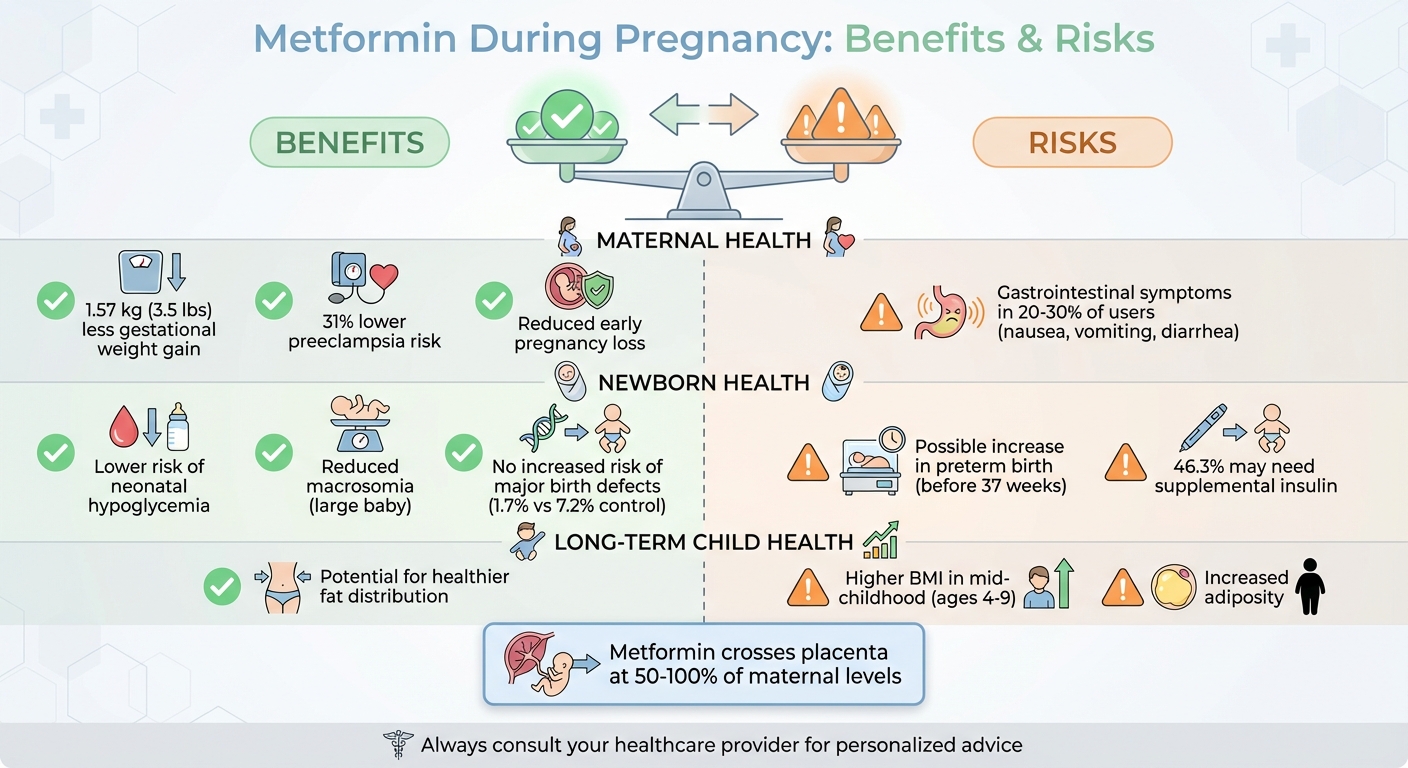
Metformin During Pregnancy: Benefits vs Risks for Mother and Baby
Effects on Maternal Health
Metformin has shown benefits for maternal health, particularly in reducing gestational weight gain and the risk of preeclampsia. Research indicates that metformin can lower gestational weight gain by about 1.57 kg (3.5 lbs) and decrease preeclampsia risk by 31%. Additionally, it has been associated with a reduced likelihood of early pregnancy loss.
However, gastrointestinal side effects - such as nausea, vomiting, and diarrhea - are common, affecting 20–30% of individuals using the medication.
While these maternal benefits and challenges are significant, the impact of metformin on fetal and newborn health is equally critical.
Effects on Fetal and Newborn Health
Studies consistently show that metformin does not elevate the risk of major birth defects. In fact, a meta-analysis of first-trimester exposure found a slightly lower rate of major congenital malformations in the metformin group compared to controls.
"Metformin use in first-trimester pregnancy in women with PCOS or PGDM do not meaningfully increase the MCM [major congenital malformations] risk overall." – BMJ Open Diabetes Research & Care
Although metformin crosses the placenta at 50–100% of maternal levels, newborn outcomes remain generally positive. Babies born to mothers who used metformin have shown a reduced risk of neonatal hypoglycemia and a lower incidence of macrosomia compared to those whose mothers used insulin.
On the other hand, some studies suggest that in utero exposure to metformin may lead to a higher BMI and increased adiposity in children aged 4–9 years.
"Children of mothers with metformin medication during pregnancy had a higher body mass index and were more likely to become obese later in life." – Cureus
There is also some debate over a potential link between metformin use for gestational diabetes and an increased risk of preterm births (before 37 weeks). In the MiG trial, approximately 46.3% of women taking metformin required supplemental insulin to maintain target blood sugar levels.
Research Evidence Summary
The table below highlights the key benefits and potential risks observed in clinical trials:
| Outcome Category | Benefits | Potential Risks |
|---|---|---|
| Maternal Health | - 1.57 kg (≈3.5 lbs) less gestational weight gain - 31% lower preeclampsia risk - Reduced early pregnancy loss |
- Gastrointestinal symptoms in 20–30% of users |
| Newborn Health | - Lower risk of neonatal hypoglycemia - Reduced macrosomia - No increased risk of major birth defects |
- Possible increase in preterm birth |
| Long-term Child Health | - Potential for healthier fat distribution | - Higher BMI in mid-childhood (ages 4–9) - Increased adiposity |
Current research supports metformin's safety in preventing major birth defects and promoting favorable immediate outcomes for newborns. However, the potential for long-term metabolic effects in children remains an area that requires further investigation and careful monitoring. These findings emphasize the importance of tailoring treatment plans to each individual’s needs.
sbb-itb-6dba428
Should You Continue Metformin During Pregnancy?
Deciding whether to continue metformin during pregnancy is a personal choice that requires careful consideration of your health needs and medical advice. It's about finding the right balance between the potential benefits and risks based on your specific situation.
Who Might Consider Continuing Metformin
Metformin can be particularly helpful for women dealing with severe insulin resistance or those with a history of pregnancy complications. For example, women at a high risk for preterm delivery might find metformin beneficial.
Cost and ease of use also play a role. If insulin is too expensive or challenging to administer, metformin offers a practical alternative. The American College of Obstetricians and Gynecologists supports this, stating:
"In women who decline insulin therapy or who the obstetricians or other obstetric care providers believe will be unable to safely administer insulin, or for women who cannot afford insulin, metformin is a reasonable alternative choice".
However, while metformin has its advantages, there are situations where stopping or pausing its use might be necessary.
When to Stop or Pause Metformin
Certain conditions may require you to discontinue metformin. These include developing renal issues, liver disease, or an increased risk of lactic acidosis. Persistent gastrointestinal side effects are another reason to consult your doctor about other options.
It’s important to note that stopping metformin without medical guidance can be risky. Uncontrolled high blood sugar, particularly in the first trimester, can increase the chances of birth defects. Always work closely with your healthcare provider to make these decisions.
Personalized PCOS Care Through Telehealth
Managing PCOS during pregnancy can be complex, but telehealth platforms like Oana Health make it easier to get tailored care. These services connect you with licensed professionals who specialize in PCOS management and can assess your unique needs to determine if metformin is the right fit.
With virtual consultations, you can share real-time glucose data, enabling providers to adjust your dosage as necessary. Oana Health offers Oral Metformin ER starting at $22 per month, including free shipping from FDA-regulated pharmacies. For those requiring additional support, combination treatments like Metformin & Spironolactone are available for $32 per month under medical supervision.
This kind of continuous, personalized care ensures that you can address side effects promptly and fine-tune your treatment plan as your pregnancy progresses.
Using Metformin While Breastfeeding
Continuing from the discussion on metformin's safety during pregnancy, this medication is also considered safe for breastfeeding mothers. For those managing PCOS while nursing, metformin is a viable option. It enters breast milk in amounts so small that they are clinically insignificant. As the NHS notes, "Metformin passes into breast milk in tiny amounts and has not been linked with side effects in any breastfed babies".
Metformin Levels in Breast Milk
Research shows that infants receive only 0.5%–0.65% of the mother's weight-adjusted dose of metformin through breast milk. This translates to an intake of approximately 0.13 to 1.28 mg per day, with a milk-to-plasma ratio ranging from 0.13 to 1.0. Blood glucose levels in infants, measured four hours after feeding, were found to range between 47 and 77 mg/dL.
Because metformin levels in breast milk remain stable throughout the day, there’s no need to plan breastfeeding sessions around your medication schedule.
This minimal exposure ensures safety for your baby while allowing mothers to continue benefiting from metformin's effects after delivery.
Postpartum Benefits for Mothers with PCOS
For mothers managing PCOS, metformin offers essential postpartum benefits. The medication can help with metabolic balance during this period, including an average weight reduction of 5.8% and a decrease in fasting serum insulin by about 40%. These effects are especially helpful during the postpartum phase, when hormonal shifts can intensify PCOS symptoms.
Beyond weight management, metformin aids in restoring regular menstrual cycles and improving hormonal balance. By enhancing insulin sensitivity and lowering androgen levels, it supports overall metabolic health.
Practical Tips for Breastfeeding Mothers
While metformin’s safety profile is reassuring, staying attentive to your baby’s well-being is important. Keep an eye out for signs such as unusual sleepiness, poor feeding, excessive sweating, or increased urination. If any of these symptoms appear, consult your healthcare provider immediately.
Extra care should be taken when breastfeeding newborns, premature babies, or infants with kidney concerns. Always inform your healthcare provider or midwife that you are breastfeeding, so they can ensure it’s safe for your baby while you continue taking metformin. For additional support, platforms like Oana Health offer virtual consultations with licensed professionals who can help manage your postpartum PCOS treatment and adjust your care plan as needed, with medication conveniently delivered to your home.
Conclusion
Metformin plays an important role in managing PCOS during pregnancy and breastfeeding. Studies indicate that using metformin during the first trimester does not raise the risk of major congenital malformations. It might even lower the likelihood of complications like late miscarriage and preterm birth by as much as 63%. However, some research points to possible long-term effects on children, such as higher BMI during early childhood.
These findings highlight the importance of creating treatment plans tailored to individual needs. Deciding whether to use metformin during pregnancy involves balancing benefits like improved insulin sensitivity and a reduced risk of preeclampsia against potential concerns, including fetal exposure. It's worth noting that nearly 46% of women may still need additional insulin support.
Never adjust your metformin dosage without consulting your healthcare provider. Poorly controlled blood sugar levels can pose serious risks to your pregnancy. Regular monitoring of both fetal growth and maternal glucose levels is critical to achieving the best outcomes for you and your baby. Your healthcare provider will guide you through this process, ensuring your care plan is optimized every step of the way.
For personalized PCOS management during pregnancy and postpartum, Oana Health offers access to licensed medical professionals who design customized treatment plans and deliver medications directly to your door, simplifying care during this vital time.
FAQs
What are the potential long-term effects of metformin on children exposed during pregnancy?
Current studies indicate that prenatal exposure to metformin could be linked to a higher likelihood of increased body fat and metabolic syndrome-like conditions in children. That said, there’s still a lack of data on how these effects might play out beyond early childhood.
If you’re pregnant and managing PCOS, it’s crucial to talk with your healthcare provider. They can help you weigh the potential benefits and risks of using metformin, ensuring the best choice for both you and your baby.
Is metformin safe and effective for managing gestational diabetes in pregnant women with PCOS?
Metformin is commonly prescribed to manage gestational diabetes in pregnant women with PCOS. It works by improving insulin sensitivity, reducing glucose production in the liver, and potentially helping to minimize excessive weight gain during pregnancy. Many healthcare providers choose metformin as a first-line treatment because it’s taken orally, offering a more convenient alternative to injections. Additionally, research has shown that metformin can lower the risk of complications like neonatal hypoglycemia and macrosomia.
Insulin, however, is generally reserved for situations where blood sugar levels cannot be adequately controlled with diet or metformin alone. While insulin provides precise blood sugar management, it comes with the need for injections and an increased risk of maternal hypoglycemia. In some cases, a combination of metformin and insulin may be recommended to achieve optimal glucose control.
For pregnant women managing PCOS, Oana Health provides personalized, prescription-based treatments like metformin through its telehealth platform. This makes accessing safe and effective care during pregnancy more convenient.
Is it safe to take metformin while breastfeeding, and what should I watch for in my baby?
Metformin is typically regarded as safe for use during breastfeeding. Research shows that only a small amount of the medication transfers into breast milk, and no adverse effects have been observed in breastfed infants. That said, staying attentive to your baby's well-being is essential.
Keep an eye out for any unusual signs, such as difficulty feeding, extreme drowsiness, irritability, pale skin, sweating, increased appetite, or more frequent wet diapers. If you notice any of these symptoms or have concerns, contact your healthcare provider to ensure everything is on track.