
Metformin vs. Semaglutide: Quality of Life Benefits
When managing PCOS, insulin resistance, or weight-related issues, choosing the right medication can impact your daily life. Here's a quick breakdown of Metformin and Semaglutide, two common options:
- Metformin: A long-standing treatment for insulin resistance. It helps regulate blood sugar, supports ovulation, and offers modest weight loss (~5 lbs over 16 weeks). Side effects include GI discomfort (e.g., diarrhea, nausea), which often improve over time. It's affordable and widely used.
- Semaglutide: A newer GLP-1 receptor agonist. It aids in significant weight loss (~27 lbs in 6 months), improves insulin sensitivity, and addresses PCOS symptoms like irregular cycles and excess androgens. Common side effects are nausea and vomiting, especially during dose adjustments. It's more expensive but highly effective for weight management.
Key takeaway: Metformin is a cost-effective option for mild insulin resistance and fertility support. Semaglutide is better for substantial weight loss and comprehensive metabolic improvements, though it comes with higher costs and stronger side effects.
Quick Comparison
| Feature | Metformin | Semaglutide |
|---|---|---|
| Weight Loss (16 weeks) | ~5 lbs | ~27 lbs |
| Cycle Regularity | 42.3% improvement | 80% improvement |
| Side Effects | GI issues (e.g., diarrhea) | Nausea, vomiting |
| Cost (monthly) | ~$22 | ~$199 |
| Best For | Insulin resistance, fertility | Weight loss, metabolic health |
Choosing the right treatment depends on your goals - whether it's weight loss, managing insulin resistance, or improving fertility. For personalized care, telehealth platforms like Oana Health make these treatments more accessible with home delivery and ongoing support.
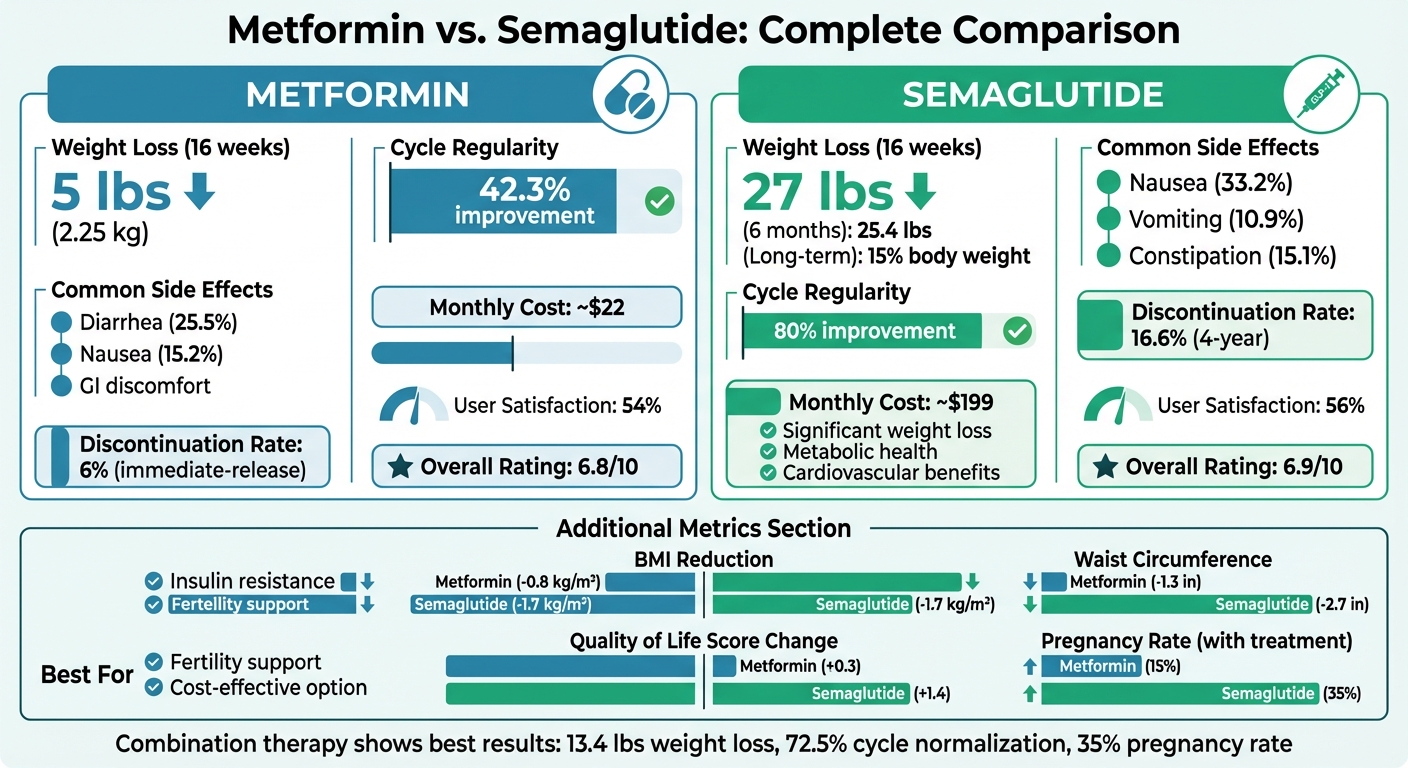
Metformin vs Semaglutide Comparison Chart for PCOS Treatment
How Metformin Affects Quality of Life
Symptom Relief and Health Benefits
Metformin plays a key role in addressing metabolic issues by helping with modest weight loss, lowering androgen levels, and restoring menstrual cycles. For instance, a 16-week clinical trial showed that patients taking 1,000 mg twice daily lost an average of 2.25 kg (around 5 lbs). Even small changes in weight like this can make a difference.
The drug also reduces androgen levels, including testosterone and the Free Androgen Index, which helps ease symptoms such as acne and unwanted facial hair. After 16 weeks of treatment, 42.3% of participants saw their menstrual cycles return, and 15% of previously infertile women conceived naturally during follow-up. These effects stem from Metformin’s ability to improve insulin resistance and balance hormonal communication between the brain and ovaries.
Beyond its impact on reproductive health, Metformin helps lower inflammation markers and stabilize blood sugar levels. This can reduce the risk of developing Type 2 diabetes. For many, these benefits translate into better energy levels and peace of mind about long-term health.
Let’s now look at how these benefits weigh against the potential side effects.
Side Effects and Patient Tolerance
While Metformin provides meaningful benefits, it does come with some challenges, particularly gastrointestinal discomfort. Up to 25% of patients report issues like diarrhea, nausea, bloating, or abdominal cramping when starting treatment. In studies of the immediate-release version, 53% of users experienced diarrhea, and 6% stopped taking the medication because of these issues.
"Taking metformin on an empty stomach is associated with a higher likelihood of nausea, abdominal discomfort, and diarrhea, especially during the initial dose adjustment phase." - Noom Health Expert Team
The good news is that these side effects often fade within a month. Switching to the extended-release version can make a big difference, with only 9.6% of users reporting diarrhea and a much lower discontinuation rate of 0.6%. Starting with a low dose (500 mg daily) and gradually increasing it - preferably with meals - can help most patients adjust more comfortably.
Another potential concern is Vitamin B12 deficiency, which affects about 5% of long-term users. This can lead to symptoms like fatigue or numbness. Regular blood tests can catch this early, and supplementation is usually an easy fix.
How Semaglutide Affects Quality of Life
Weight Loss and Metabolic Benefits
Semaglutide has shown to deliver much greater weight loss compared to Metformin. Clinical trials reveal that patients taking Semaglutide lost over 27 lbs within six months, with long-term studies showing an average reduction of 15% of their starting body weight.
This medication works through a combination of mechanisms: it stimulates insulin secretion, slows down how quickly the stomach empties, and reduces appetite by acting on the central nervous system. A study from the University of Palermo involving 27 obese PCOS patients found that a weekly dose of 0.5 mg resulted in an average weight loss of 16.8 lbs in three months and 25.4 lbs in six months. Additionally, 80% of the patients who responded to the treatment experienced normalized menstrual cycles.
Beyond weight loss, Semaglutide offers several metabolic benefits. It helps shrink waist circumference, lowers blood pressure, and improves cholesterol levels. In a 104-week study, 80% of participants with prediabetes returned to normal blood sugar levels. The SELECT trial also reported a 20% reduction in major cardiovascular events for adults with pre-existing heart disease.
"Semaglutide, independently of its effect on body weight, may represent a good alternative to metformin for improving insulin resistance and preventing type 2 diabetes in PCOS." - Enrico Carmina, MD, University of Palermo School of Medicine
For patients with PCOS, the benefits go beyond weight management. By tackling insulin resistance, Semaglutide reduces excess androgen production, which can alleviate symptoms like acne, unwanted facial hair, and hair loss. Additionally, patients often report reduced pelvic pain, improved mood, and better physical functioning. These changes can significantly enhance daily life and overall well-being.
Side Effects and Patient Tolerance
While the metabolic benefits are impressive, side effects need careful management to ensure patients maintain their quality of life. Gastrointestinal (GI) issues are the most common, especially during the initial dosing period. About 33% of patients experience nausea, particularly during dose escalation. Other side effects include vomiting, constipation, and diarrhea, though these are usually mild to moderate and tend to subside as the body adjusts.
Starting with a low dose, such as 0.25 mg, and gradually increasing it can help minimize discomfort. Simple strategies like avoiding foods that cause bloating or using antacids for heartburn can also make a difference.
However, discontinuation rates for Semaglutide are higher compared to placebos. In a four-year cardiovascular study, 16.6% of patients stopped the medication due to adverse effects, compared to 8.2% in the placebo group. Patients with lower starting BMIs are more likely to discontinue, possibly because they experience greater drug exposure relative to their body size.
Another concern is the loss of lean muscle. While Semaglutide is effective for fat loss, about 40% of the total weight loss comes from lean mass. Some patients also report noticeable facial fat loss. To counteract this, incorporating regular exercise and ensuring adequate protein intake is crucial during treatment.
Despite these challenges, most patients report a significant boost in their overall quality of life and satisfaction with the treatment. The combination of substantial weight loss and improved metabolic health often outweighs the drawbacks. With proper dose adjustments and supportive measures, the side effects can be managed effectively, allowing patients to enjoy the full benefits of Semaglutide.
Side-by-Side Comparison of Quality of Life Effects
Side Effects Comparison
This section lays out the key differences in side effects and their impact on quality of life for Metformin and Semaglutide users.
Both medications can cause gastrointestinal issues, but the specific side effects vary. For Metformin, diarrhea is the most common, affecting 25.5% of users. In contrast, Semaglutide is more likely to cause nausea, reported by 33.2% of users.
Another major distinction lies in how long the effects of each medication last. Metformin's relatively short half-life of 4.5 hours means its effects are limited to dosing times. Semaglutide, with a much longer half-life of 168 hours, causes effects that persist throughout the week.
| Side Effect | Metformin | Semaglutide | Key Difference |
|---|---|---|---|
| Nausea | 15.2% | 33.2% | About twice as common with Semaglutide |
| Diarrhea | 25.5% | 14.7% | More frequent with Metformin |
| Constipation | Rare | 15.1% | Noticeable with Semaglutide |
| Vomiting | Rare | 10.9% | Higher incidence with Semaglutide |
| 2-Year Discontinuation | N/A | 5.9% | Low dropout rate |
| 4-Year Discontinuation | N/A | 16.6% | Dropout rate increases over time |
User satisfaction rates between the two treatments are nearly identical: 56% for Semaglutide versus 54% for Metformin. Similarly, their overall ratings are close, with Semaglutide scoring 6.9/10 and Metformin 6.8/10.
Next, let's examine how these differences in side effects correlate to weight loss and overall well-being.
Weight Loss and Well-Being Results
When it comes to weight loss and overall well-being, Semaglutide stands out with more pronounced results compared to Metformin.
In a 16-week period, users of oral Semaglutide reported an average weight loss of 9.9 lbs (4%), compared to 6.4 lbs (2.5%) for Metformin users. Over longer durations, Semaglutide's benefits become even more evident. At two years, the average weight loss reached 15.2%, with some patients in real-world settings achieving up to 20.4% of their starting weight by 24 months.
| Metric | Metformin | Semaglutide | Advantage |
|---|---|---|---|
| Weight Loss (16 weeks) | 6.4 lbs (2.5%) | 9.9 lbs (4%) | Semaglutide |
| BMI Reduction | –0.8 kg/m² | –1.7 kg/m² | Semaglutide |
| Waist Circumference | –3.4 cm (-1.3 in) | –6.8 cm (-2.7 in) | Semaglutide |
| Quality of Life Score Change | +0.3 | +1.4 | Semaglutide |
| Positive User Reviews | 54% | 56% | Similar ratings |
In addition to physical benefits, Semaglutide also showed improvements in mental health metrics. Results from the SF-36 questionnaire revealed that Semaglutide positively influenced mental health, while Metformin had a minimal effect on mood-related scores. Furthermore, treatment satisfaction, as measured by the Diabetes Treatment Satisfaction Questionnaire, was notably higher for those using Semaglutide.
"Oral semaglutide represents a viable, effective, and safe treatment option for psychiatric patients... psychiatric symptoms were reduced, and quality of life improved."
- Bea Campforts, Department of Psychiatry & Neuropsychology, Maastricht University
sbb-itb-6dba428
What This Means for PCOS Patients
Choosing the Right Treatment
When it comes to managing PCOS, selecting the right treatment can make all the difference. For addressing insulin resistance, Metformin remains a trusted and cost-effective choice. It's been a go-to option for years, helping regulate blood sugar levels and supporting menstrual regularity.
On the other hand, if weight loss is a primary goal - especially when lifestyle changes and Metformin alone aren't enough - Semaglutide stands out as a more effective option. Studies show that combination therapy with Semaglutide and Metformin leads to significantly better outcomes. Patients using this combination experienced an average weight loss of 13.4 lbs over 16 weeks, compared to just 5.0 lbs with Metformin alone. The benefits don’t stop there: the pregnancy rate was higher with combination therapy (35% versus 15%), and menstrual cycle normalization improved dramatically (72.5% compared to 42.3%).
"Compared to MET monotherapy, combination therapy with semaglutide and MET significantly reduced body weight, improved insulin resistance, decreased inflammatory markers, alleviated menstrual irregularities and increased natural pregnancy rates in overweight/obese women with PCOS."
These results highlight how personalized care can positively impact energy levels, fertility, and overall well-being for PCOS patients.
How Telehealth Makes Treatment More Accessible
Accessing the right treatment is only part of the equation - ongoing care and adjustments are equally important. Managing PCOS with Metformin or Semaglutide often requires monitoring and tweaking dosages to address individual needs and side effects like nausea or diarrhea. This is where telehealth platforms shine.
With telehealth, patients can easily schedule follow-ups, adjust treatments, and monitor progress - all from the comfort of home. Platforms like Oana Health specialize in providing science-backed, personalized treatments for PCOS, insulin resistance, and weight management. For instance, they offer:
- Oral Metformin ER: $22/month
- Oral Semaglutide GLP-1: $199/month
- Oral GLP-1 & Metformin (Combination Therapy): $199/month
All options include free shipping, delivered straight to your door.
Telehealth also simplifies the process of insurance approvals and lab monitoring. Key health markers like A1C, kidney function, and vitamin B12 levels can be tracked remotely, reducing the need for frequent in-person visits. For PCOS patients aiming for pregnancy, this approach ensures a smooth transition from weight management to fertility-focused care, offering the specialized oversight needed every step of the way.
How I avoided metformin and Ozempic side effects with PCOS & Diabetes (patient's perspective)
FAQs
What are the key differences in side effects between Metformin and Semaglutide?
Metformin and Semaglutide each come with their own set of side effects.
Metformin is known to cause gastrointestinal discomfort, including nausea, diarrhea, and abdominal pain, particularly when you first start taking it. The good news is that these symptoms often ease as your body adapts to the medication.
Semaglutide, on the other hand, can lead to side effects like nausea, vomiting, constipation, diarrhea, fatigue, and a decreased appetite. In some cases, it may cause more severe gastrointestinal issues that might need medical attention.
Before starting either medication, it's crucial to talk with your healthcare provider. They can help you weigh the options based on your medical history and daily routine to find the best fit for your needs.
What are the key differences in how Semaglutide and Metformin improve metabolic health?
Semaglutide and Metformin both target metabolic health, but they approach it in distinct ways. Semaglutide stands out for its ability to support significant weight loss, improve body composition, and boost overall quality of life, particularly in individuals with type 2 diabetes. It works by mimicking a hormone that helps regulate appetite and digestion, which also assists in controlling blood sugar levels.
Metformin, on the other hand, focuses on improving insulin sensitivity and reducing the liver's glucose production. While it can contribute to weight management, its impact in this area is typically milder compared to Semaglutide. Many patients find that Semaglutide offers greater improvements in energy and well-being, making it a popular choice for those seeking broader metabolic health support.
Why consider combining Metformin and Semaglutide for managing PCOS?
Using Metformin and Semaglutide together can be a game-changer for managing PCOS symptoms like weight gain and insulin resistance. This pairing may boost weight loss, enhance metabolic health, and improve reproductive outcomes more effectively than either medication on its own.
Here’s how they work: Metformin increases insulin sensitivity and lowers glucose production, addressing one of the core issues of PCOS. On the other hand, Semaglutide, a GLP-1 receptor agonist, helps regulate blood sugar levels and promotes a feeling of fullness, which can lead to better control over eating habits. Together, they not only aid in weight management but may also help maintain progress, potentially reducing the risk of weight regain once Semaglutide is discontinued.
For many women with PCOS, this combination offers relief from challenging symptoms and contributes to a noticeable improvement in overall quality of life.