
Minoxidil and Hair Care: Best Practices
Hair loss affects nearly 40% of women by age 50, and for those with hormonal imbalances or PCOS, the challenge can be even greater. Minoxidil, a widely-used treatment, promotes hair regrowth by improving blood flow to hair follicles. Whether you use the topical solution, foam, or oral tablets, consistency and proper application are key to seeing results.
Key Takeaways:
- How It Works: Minoxidil extends the hair growth phase and reactivates dormant follicles.
- Options: Available as 2% and 5% topical solutions/foam or low-dose oral tablets.
- Safety Tips: Avoid use during pregnancy or breastfeeding; consult a doctor if you have heart or kidney conditions.
- Application: Apply to a clean, dry scalp; wait 4 hours before washing or styling.
- Results Timeline: Expect visible improvements in 3–6 months, with full results in 6–12 months.
- Maintenance: Stopping treatment reverses progress within 3–4 months.
Oana Health offers tailored minoxidil treatments, including oral options starting at $25/month, shipped directly to your door. Their telehealth platform provides personalized guidance to optimize your hair regrowth journey.
Stick to a consistent routine, use gentle hair care products, and monitor your progress to achieve thicker, healthier hair.
Preparing Your Scalp and Hair for Minoxidil
Why a Clean Scalp Matters
Minoxidil is designed to work on your scalp, targeting the hair follicles directly - it doesn’t interact with your hair strands. That’s why buildup from oils, dry shampoo, or styling products can interfere with its absorption. As Siddhi Camila Lama, Ph.D., puts it, "Minoxidil works on your skin, not on your hair strands, so make sure that it doesn't get stuck in your hair." Interestingly, less than 5% of minoxidil applied to the skin is absorbed, with most of that happening in the first four hours. For safety, avoid applying it to irritated, sunburned, or damaged skin, as this can increase the risk of side effects due to excessive absorption.
Shampooing and Conditioning Guidelines
The FDA suggests using a mild or gentle shampoo when using minoxidil. Harsh shampoos can irritate your scalp, and buildup from minoxidil over time could reduce its effectiveness. To keep your scalp clean, wash your hair daily or every other day. Look for shampoos with natural cleansing ingredients, and if you deal with scalp issues like dandruff or seborrheic dermatitis, consider treatments like ketoconazole or selenium sulfide shampoos. When using conditioner, apply it only to the hair lengths to avoid creating a barrier on your scalp. Planning to color, perm, or chemically treat your hair? Wash your scalp thoroughly before the procedure and skip minoxidil for 24 hours before and after the treatment.
Getting Ready to Apply
Before applying minoxidil, ensure your scalp is completely dry to prevent the product from diluting or running off. Part your hair to expose the scalp so the medication can make direct contact. Stick to the 4-hour rule: avoid washing your hair or getting it wet for at least four hours after application to ensure maximum absorption. And skip the hairdryer - heat can reduce minoxidil’s effectiveness by up to 50%. With your scalp properly prepared, you’re ready to move on to applying the treatment effectively in the next steps.
How to Apply Minoxidil
Applying Topical Solution
When using a topical minoxidil solution, the standard dose is 1 mL, which is clearly marked on the dropper included with your medication. If you prefer, this amount roughly equals about 20 drops. Start by parting your hair to reveal the thinning areas on your scalp. Fill the dropper to the 1 mL mark, then carefully apply the solution to the center of the affected area. Use your fingers to gently massage the solution into your scalp, ensuring it spreads evenly. After application, wash your hands thoroughly with soap and warm water to avoid unwanted hair growth on other areas. Let the solution dry completely - this typically takes 2 to 4 hours - before styling your hair, wearing a hat, or going to bed to ensure proper absorption.
Applying Topical Foam
For minoxidil foam, men are generally advised to use half a capful of 5% foam twice daily, while women typically apply it once daily. To apply, hold the can upside down and dispense the foam onto clean, dry hands to prevent it from melting too quickly. Part your hair to expose the scalp, then gently massage the foam into the thinning areas using your fingers. Although the foam dries faster than the liquid solution, it’s best to wait 2 to 4 hours before washing your hair or using other products. Don’t forget to wash your hands after applying the foam. One advantage of the foam is that it usually doesn’t contain propylene glycol, which can irritate sensitive scalps. If topical methods aren’t ideal for you, oral minoxidil might be a more convenient option.
Taking Oral Minoxidil
Oral minoxidil, taken as a tablet once daily, offers a simpler alternative for those who find topical application inconvenient or wear hairpieces. The typical dosage for hair loss ranges from 0.25 mg to 5 mg daily, which is much lower than the doses used for treating high blood pressure. Always follow your healthcare provider’s instructions closely. If you miss a dose, don’t double up - just stick to your regular schedule. Studies show that 1 mg of oral minoxidil can deliver results similar to a 5% topical solution for female pattern hair loss. For eligible patients, Oana Health provides treatment starting at $25 per month, including prescriptions from licensed professionals and free home delivery. When starting oral minoxidil, it’s a good idea to monitor your blood pressure weekly and consider limiting alcohol and caffeine, as they can worsen side effects like heart palpitations.
Common Application Mistakes to Avoid
Using more than the recommended dose won’t speed up results and can increase the chance of side effects. If you miss a dose, simply continue with your next scheduled application - don’t try to make up for it. Never apply minoxidil to irritated, sunburned, or damaged skin, as this could lead to excessive absorption and a higher risk of side effects. Be careful to prevent the medication from dripping onto your forehead or face, as this could cause unwanted hair growth. Stick to the 4-hour drying rule to ensure the medication is fully absorbed.
Minoxidil Hacks for Faster, Long Lasting Results | Dermatologist Explains | Dr. Sam Ellis
sbb-itb-6dba428
Using Minoxidil with Hair Care Products and Styling
To get the best results from minoxidil, it’s not just about applying the product - it’s also about how you care for your scalp and style your hair.
Choosing Gentle Hair Care Products
Start by picking shampoos and conditioners that help maintain your scalp’s moisture. Steer clear of sulfate-based products, as they can dry out your scalp and cause irritation. Instead, go for mild, moisturizing formulas that are gentle on both your hair and scalp.
Managing Side Effects
Minoxidil can sometimes cause dryness, flaking, or irritation. To tackle these side effects, consider switching to moisturizing shampoos. For additional hydration, you can use emollient creams or natural oils like coconut oil.
If you experience mild itchiness - something reported by up to 9% of topical users - it might help to use shampoos containing ketoconazole, zinc pyrithione, or salicylic acid. However, if irritation continues, it’s best to consult your clinician and avoid applying other topical products to the same area unless advised.
Planning to color your hair or get a perm? Pause minoxidil use 24 hours before your treatment and wait another 24 hours afterward before reapplying. Also, since minoxidil can make your scalp more sensitive to sunlight, wearing a hat when spending extended time outdoors is a smart move.
Styling Tips During Treatment
When it comes to styling, timing is key. Always apply minoxidil first and wait for it to dry completely before using any styling products. Foam formulas usually take about 10–15 minutes to dry, while liquid versions may require 2–4 hours. This ensures the medication absorbs properly into your scalp.
"High heat can reduce minoxidil effectiveness; use a cool or low-heat setting if blow drying." - HairScience.org
Keep styling products focused on your hair strands, avoiding the scalp to allow the treatment to work effectively. If you’re blow-drying, stick to a cool or low-heat setting after the minoxidil has dried.
Maintaining Results and Adjusting Your Routine
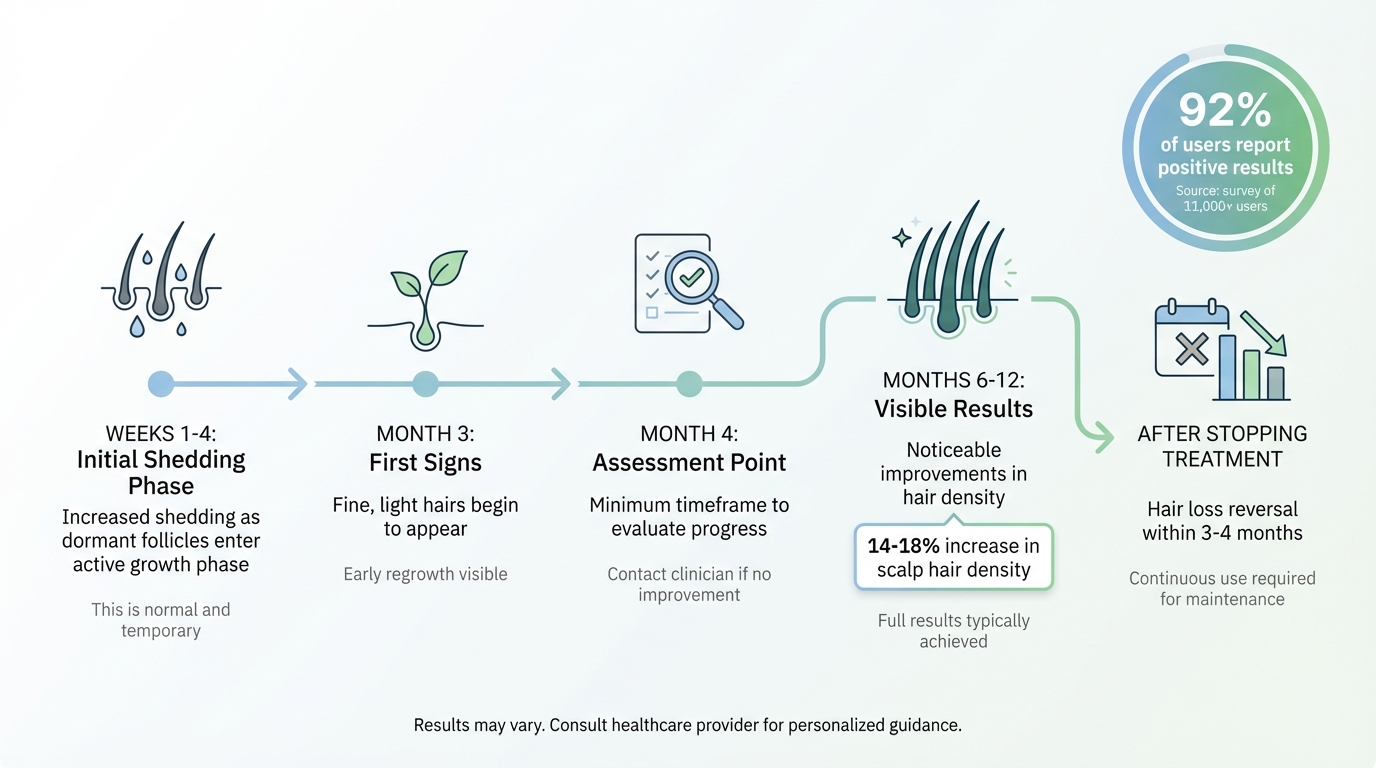
Minoxidil Hair Growth Timeline: What to Expect Month by Month
What to Expect Over Time
Using minoxidil requires dedication and patience. In the first 2–4 weeks, you might notice increased shedding - this happens because dormant hair follicles are shifting into an active growth phase. By the 3-month mark, you may start to see fine, light hairs appearing. Over the next several months, these hairs can thicken, with noticeable improvements in hair density typically visible between 6 and 12 months. Research shows that scalp hair can increase by 14%–18% after a year of consistent use.
However, the benefits of minoxidil only last as long as you keep using it. If you stop, any new hair growth will typically shed within 3–4 months. A survey of over 11,000 users found that 92% rated minoxidil as excellent, good, or fair in slowing or stopping hair loss. This underscores the importance of sticking to the routine.
Tracking Hair and Scalp Changes
Give yourself at least 4 months of regular use before assessing your progress. To track changes effectively, take photos of your scalp every few months. Use consistent angles and lighting to better observe gradual improvements.
Pay attention to how your scalp feels as well. If you notice persistent irritation, it might be worth switching from the liquid to the foam formulation. While local irritation is manageable, more serious symptoms like chest pain, rapid heartbeat, dizziness, or sudden weight gain should prompt immediate medical attention.
If these issues persist or worsen, it’s a good idea to consult your healthcare provider for further guidance.
When to Contact Your Clinician
Proper use of the product is essential, but if you’re not seeing any progress after 4 months or if irritation and shedding continue for more than 2 weeks, it’s time to reach out to your provider.
For those who find topical minoxidil ineffective or irritating, a clinician might suggest switching to oral minoxidil for potentially better results. They can also discuss additional treatments, such as microneedling, finasteride, or spironolactone, to complement your regimen and enhance your results.
If you're looking for personalized support, Oana Health provides telehealth consultations with licensed medical professionals. They can help you adjust your treatment plan, whether that means transitioning to oral minoxidil or exploring options like topical spironolactone. Plus, they’ll deliver your customized treatment plan right to your door for added convenience.
Conclusion
Adding minoxidil to your hair care routine demands consistency and attention to scalp health. To see the best results, apply it regularly to a clean, dry scalp, use gentle hair products, and allow at least 4 hours for absorption. Since minoxidil works directly on your skin and hair follicles, keeping your scalp in good condition is key.
Research shows promising outcomes: 92% of users report positive results, and studies highlight a 14%–18% increase in scalp hair density after a year of use. However, it’s important to know that stopping treatment can lead to hair loss reversal within 3–4 months.
For personalized care, consult a clinician through Oana Health if you experience irritation or don’t notice progress after 4 months. Their telehealth services connect you with licensed professionals who can adjust your treatment plan - whether that means tweaking your topical routine, exploring oral minoxidil, or adding complementary therapies. Plus, they offer the convenience of tailored guidance and doorstep delivery.
Stick to your routine and prioritize scalp care to achieve and maintain thicker, healthier hair.
FAQs
What should I do if I have side effects from using minoxidil?
If you notice side effects such as scalp irritation, excessive shedding, rapid heartbeat, chest pain, or swelling, stop using minoxidil right away and reach out to your doctor. For serious or unexpected symptoms, don’t wait - seek medical attention immediately.
Your health comes first. Talk openly with a licensed medical professional about any concerns. They can assess whether minoxidil is suitable for you or suggest other treatments that better align with your needs.
How can I monitor if my minoxidil treatment is working?
To monitor how well minoxidil is working for you, start by taking clear photos of your scalp before beginning treatment. Then, continue capturing similar photos every 4–6 weeks to track any changes. Signs to watch for include less hair shedding and noticeable new hair growth, which often become apparent after 2–4 months of consistent use, applied twice daily. If you want a more tailored plan, consult with a healthcare provider. They can help evaluate your progress and might recommend additional tools, like a Minoxidil Response Test, if it's an option.
Can I use minoxidil if I color or chemically treat my hair?
Using minoxidil while also coloring your hair or using chemical treatments is generally fine for most people, but reactions can differ from person to person. To play it safe and get the best advice tailored to your needs, it's smart to check in with a dermatologist or healthcare professional. They can guide you based on the condition of your hair and scalp.
If you're already using minoxidil, try to wait at least 24 hours after applying it before getting any chemical treatments done. This gives the product time to fully absorb and helps minimize the chance of irritation.