
Minoxidil and Spironolactone: Safe Together?
Combining minoxidil and spironolactone is a common approach to treating hair loss, especially for hormonal or genetic causes. Minoxidil improves blood flow to hair follicles, while spironolactone reduces hormone-driven hair thinning. Together, they tackle hair loss from two angles, leading to better results for many users. Research shows that this combination can significantly boost hair density and regrowth, with 86.49% of participants in one study seeing improvements compared to 55.27% using minoxidil alone.
However, safety is critical. While generally safe under medical supervision, the combination can cause side effects like dizziness, menstrual irregularities, or changes in potassium levels. Regular monitoring of blood pressure, potassium, and kidney function is essential. This treatment is not suitable for pregnant individuals or those with severe health conditions. Results typically take 3–6 months to appear, with peak outcomes around 12 months.
If you're considering this option, consult a healthcare provider to ensure it aligns with your health needs and goals.
Can Spironolactone Really Help Hair Loss?
How Do Minoxidil and Spironolactone Work?
These two treatments tackle hair loss from different angles, creating a powerful combination. Let’s take a closer look at how each works and why they complement each other so well.
The Science Behind Minoxidil
Minoxidil works by opening potassium channels, which dilates the blood vessels around hair follicles. This improves blood flow, delivering more oxygen and nutrients to the follicles, creating a better environment for hair growth. It also promotes angiogenesis - the formation of new blood vessels - and extends the anagen phase (the active growth period) of the hair cycle. This means hair has more time to grow before it sheds. Additionally, minoxidil helps transform fine, thin hairs into thicker, stronger terminal hairs by stimulating the proliferation of follicle epithelial cells.
"MX is a regulator of potassium ion channels with vasodilatory effects that increase the duration of the anagen phase and induce angiogenesis surrounding hair follicles, thereby contributing to the conversion of miniaturized hairs to terminal hairs."
However, minoxidil alone isn’t a guaranteed solution for everyone. Roughly 40% of users see noticeable improvement after 3 to 6 months of consistent use. This is where spironolactone steps in to fill the gap.
How Spironolactone Targets Hormonal Imbalances
Spironolactone tackles the hormonal side of hair loss. It’s an aldosterone receptor antagonist that also works as an anti-androgen. By blocking androgen receptors and reducing ovarian androgen production, spironolactone helps prevent dihydrotestosterone (DHT) - a hormone that can shrink hair follicles - from binding to those receptors. This protection against DHT’s harmful effects helps preserve follicle health and supports hair regrowth.
"Spironolactone is a synthetic aldosterone receptor antagonist, it reduces total testosterone levels and blocks the androgenetic receptors in target tissues, which is now often used by dermatologists to diminish the effects of testosterone on skin and hair."
- PMC
By addressing the hormonal triggers of hair loss, spironolactone complements the vascular benefits of minoxidil, making the combination more effective.
A Dual-Action Approach
Together, minoxidil and spironolactone provide a comprehensive solution. Minoxidil improves blood flow to stimulate hair growth, while spironolactone protects follicles from hormonal damage. Considering that androgenetic alopecia affects nearly 80% of men and 50% of women during their lifetime, this two-pronged strategy tackles both the vascular and hormonal causes of hair loss more effectively than either treatment alone.
Is It Safe to Use Minoxidil and Spironolactone Together?
When it comes to combining minoxidil and spironolactone, safety is a key concern. For most people, using these two treatments together is considered safe, provided a healthcare professional prescribes and monitors their use.
What Does Research Say About Safety?
Research provides some reassurance about the safety of this combination. In one pilot study involving 100 women taking low-dose oral minoxidil (0.25 mg) and spironolactone (25 mg), only 8% reported mild side effects. The study also observed a small reduction in blood pressure - 4.52 mmHg systolic and 6.48 mmHg diastolic - which was generally well tolerated by healthy participants. However, a separate 24-week trial with 120 women found that combining the two treatments led to more side effects compared to using minoxidil alone, emphasizing the importance of starting with low doses and adjusting under medical supervision.
Potential Risks and Side Effects
While these treatments can be effective, they do come with some risks. Here's what to watch for:
- Blood pressure changes: Both drugs can lower blood pressure. When combined, this effect might cause dizziness or lightheadedness, especially for those already on antihypertensive medications.
- Hyperkalemia: Spironolactone is a potassium-sparing diuretic, which means it can raise potassium levels. Though rare in healthy individuals, this risk is higher for older adults, people with kidney disease or diabetes, or those taking ACE inhibitors, ARBs, or NSAIDs.
- Hormonal side effects: Spironolactone may lead to menstrual irregularities (seen in 22% to 40% of patients), increased urination (about 29%), and breast tenderness (around 17%). It’s also strictly off-limits during pregnancy due to the risk of feminizing a male fetus.
- Minoxidil-specific effects: Topical minoxidil can sometimes cause scalp irritation. Both oral and topical forms may lead to hypertrichosis (unwanted hair growth) and a temporary increase in hair shedding during the first month of use.
Because of these risks, personalized dosing and regular monitoring are critical. Before starting treatment, healthcare providers typically check kidney function, potassium levels, and blood pressure, with follow-up evaluations after one month.
If you're considering these treatments, Oana Health offers telehealth consultations with licensed professionals. They provide personalized treatment plans for oral minoxidil and spironolactone, along with ongoing support and monitoring to ensure safe and effective use.
sbb-itb-6dba428
Who Can Benefit From This Combination?
This treatment approach is designed for specific groups of patients. Let’s explore who may find it most effective and who should steer clear of it.
Patients With PCOS or Hormonal Imbalances
For women managing hormonal imbalances like PCOS, this combination offers a targeted solution. Conditions such as Polycystic Ovary Syndrome or elevated androgen levels make this treatment particularly suitable. Here's why: spironolactone tackles hormonal triggers, while minoxidil promotes follicle growth, creating a powerful one-two punch.
In a randomized trial, 56.7% of women using this combination achieved excellent results, compared to 0% in the group using minoxidil with finasteride. After just four months, 70% of participants reported improved hair density, as opposed to 33.3% in the finasteride group.
"The combination of minoxidil and spironolactone could be considered a more effective treatment than the combination of minoxidil and finasteride in women with AGA, FPHL, and MPHL."
- Afsaneh Sadeghzadeh Bazargan MD, Department of Dermatology, Iran University of Medical Sciences
Women who have tried minoxidil on its own but didn’t see the desired results may benefit from adding spironolactone. Additionally, those experiencing unwanted body hair growth caused by oral minoxidil might find relief with this combination. A 2024 study conducted at NYU Langone Health showed that integrating spironolactone reduced hypertrichosis rates from 40.5% to 17.6%.
Who Should Avoid This Treatment?
While this combination can work wonders for many, it’s not suitable for everyone. Certain conditions and situations make this treatment unsafe, including:
- Pregnancy or breastfeeding
- Severe kidney or liver disease
- Adrenal insufficiency
- Baseline hyperkalemia
- Severe hypotension
Additionally, those taking medications like ACE inhibitors, ARBs, NSAIDs, or digoxin should proceed with caution.
Before starting this treatment, it’s essential to review your full medication list with a healthcare provider to ensure safety.
For a personalized assessment, Oana Health offers telehealth consultations. Their licensed professionals will review your medical history, current medications, and hormone levels to develop a tailored treatment plan for oral minoxidil and spironolactone. This ensures your regimen is both effective and safe.
How Long Does It Take to See Results?
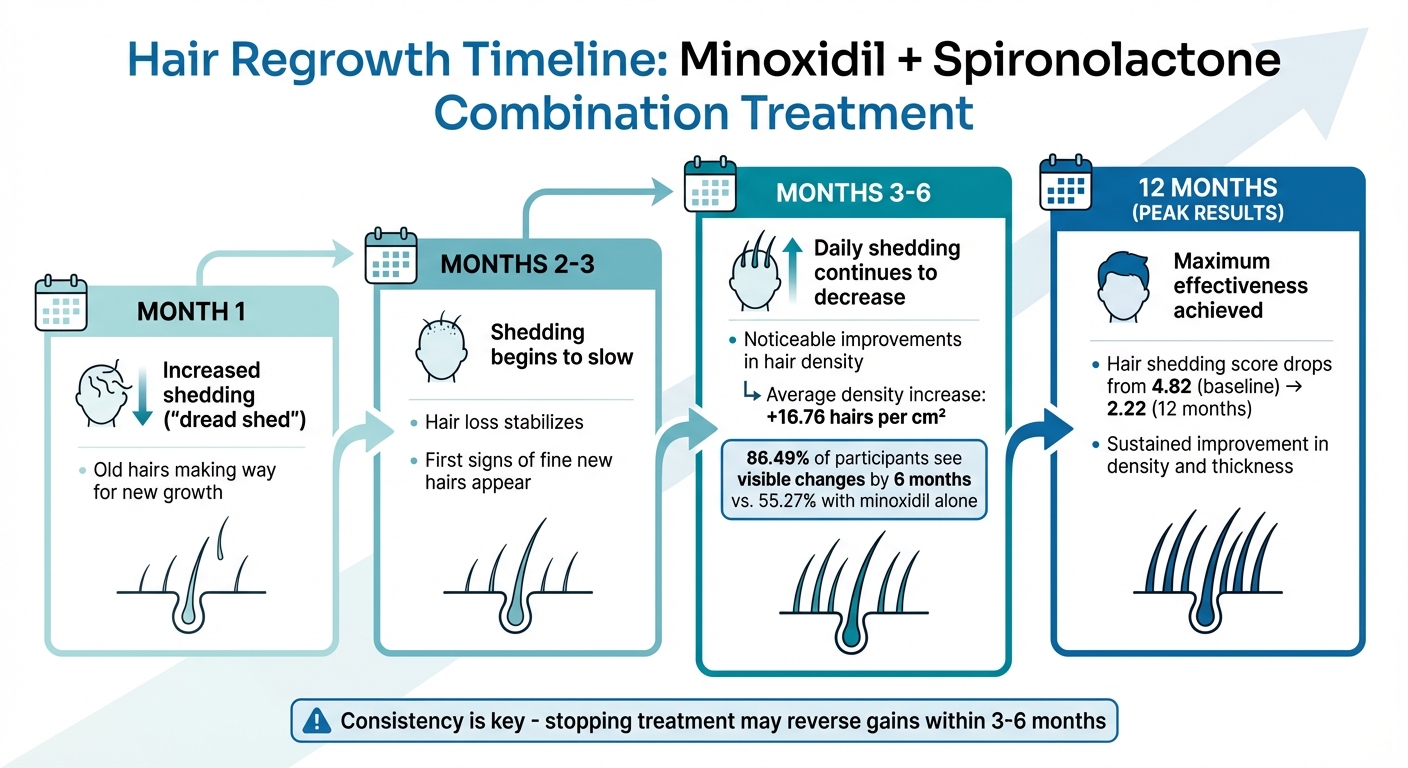
Minoxidil and Spironolactone Hair Regrowth Timeline: What to Expect Month by Month
Hair regrowth takes time, and understanding the timeline can help you stay committed to the process.
What to Expect in the First Few Months
The journey to hair regrowth often follows a predictable timeline. Here's what typically happens:
- Month 1: You might notice increased shedding, often called the "dread shed." While it may seem alarming, this is actually a sign that older hairs are making way for new growth.
- Months 2-3: Shedding begins to slow, and hair loss stabilizes. During this period, you might also start to see the first signs of fine new hairs.
- Months 3-6: Daily shedding continues to decrease, and noticeable improvements in hair density start to appear. A clinical trial even reported an average density increase of 16.76 hairs per square centimeter by week 24.
By the six-month mark, many people experience significant improvements. For example, a study found that 86.49% of participants noticed visible changes in hair density by this point.
- 12 Months: This is where peak results usually emerge. A 2018 pilot study led by Dr. Rodney Sinclair followed 100 women using 0.25 mg of minoxidil combined with 25 mg of spironolactone daily. Over the course of a year, hair shedding scores dropped from 4.82 at the start to 2.52 at six months, and then to 2.22 at 12 months, showing steady progress throughout the year.
Consistency and Patience Are Key
Sticking to your treatment plan is crucial for achieving and maintaining results.
Daily use is non-negotiable - skipping doses or stopping treatment early can slow progress or even reverse your gains. If you stop using the combination altogether, hair loss typically resumes within three to six months.
It's important to give the treatment enough time to work. Experts recommend waiting at least six months before evaluating its effectiveness. Early shedding or slow progress doesn't mean the treatment is failing - it’s simply part of the process as your hair follicles reset their growth cycle.
To track your progress, consider scheduling check-ins every three months. Use standardized photos or trichoscopy to monitor changes and stay motivated.
Conclusion
Combining minoxidil and spironolactone offers a two-pronged approach to addressing hair loss in women: boosting circulation and managing hormonal factors. Clinical evidence supports the effectiveness of this duo, as highlighted by Dr. Rodney Sinclair in his pilot study involving 100 women. He stated, "Once daily capsules containing minoxidil 0.25 mg and spironolactone 25 mg appear to be safe and effective in the treatment of FPHL". Minoxidil promotes hair growth by improving blood flow, while spironolactone counters hormonal triggers linked to hair loss. However, visible results often take several months to appear.
As promising as this treatment is, it requires careful monitoring to manage potential side effects. Medical supervision is essential, as risks like changes in potassium levels, blood pressure fluctuations, and pregnancy-related contraindications need to be addressed. Regular blood tests and follow-ups play a key role in ensuring safety throughout the treatment process.
This approach may not be suitable for everyone. If your hair loss stems from hormonal imbalances or conditions like PCOS, it’s worth discussing this treatment with your healthcare provider to determine if it aligns with your specific health needs.
Oana Health offers telehealth services tailored to hormonal treatments and hair loss management. They provide personalized, prescription-based care delivered directly to your home, supported by licensed medical professionals. This combination therapy, when matched to your health profile, presents a powerful option for tackling hair loss effectively.
FAQs
What are the possible side effects of using minoxidil and spironolactone together?
Using minoxidil and spironolactone together can come with potential side effects, so it’s crucial to use them under the guidance of a healthcare professional. Some common side effects include unwanted hair growth in areas other than the scalp (hypertrichosis), shifts in electrolyte levels, such as elevated potassium (hyperkalemia), and possible fluctuations in blood pressure. Additionally, some individuals using spironolactone might notice irregular menstrual cycles.
Since these medications can impact various systems in the body, regular check-ins with your doctor are important to ensure both safety and effectiveness. Stick to your healthcare provider’s recommendations and promptly share any unusual changes or symptoms you experience.
Can you use minoxidil and spironolactone together to treat hair loss?
Yes, you can use minoxidil and spironolactone together to address hair loss, and they often work well as a team. Minoxidil helps by boosting blood flow to the hair follicles, which encourages hair growth. On the other hand, spironolactone targets hormones, like androgens, that contribute to hair thinning.
This pairing is especially effective for conditions like androgenic alopecia, where hormonal factors play a big role in hair loss. That said, it’s essential to consult a healthcare provider to see if this approach suits your needs and to understand any possible risks or side effects.
Is it safe for everyone to use minoxidil and spironolactone together?
Using minoxidil and spironolactone together may not be safe for everyone. If you're pregnant, dealing with high potassium levels (hyperkalemia), or have specific blood pressure conditions, it's best to avoid this combination unless a healthcare provider advises otherwise.
It's crucial to consult a licensed medical professional to evaluate your unique health situation and decide if this treatment approach is suitable for you.