
Minoxidil Use in PCOS Patients on Thyroid Medications
Key Takeaways:
- PCOS and Hair Loss: Hormonal imbalances, especially elevated androgens like DHT, often cause hair thinning in PCOS. Insulin resistance can worsen this process.
- Minoxidil for Hair Regrowth: Minoxidil, available in topical (2% or 5%) and oral forms (0.25–2 mg daily), stimulates hair growth by extending the hair’s growth phase. Topical versions are less likely to cause systemic side effects.
- Thyroid Conditions in PCOS: Hypothyroidism, common in PCOS, can contribute to hair loss by disrupting the hair growth cycle. Medications like levothyroxine stabilize thyroid hormones, supporting hair regrowth.
- Interaction Between Minoxidil and Thyroid Medications: Topical minoxidil is generally safe for thyroid patients, but oral minoxidil requires careful monitoring due to potential cardiovascular side effects.
Actionable Steps:
- Stabilize thyroid hormone levels (TSH, T3, T4) before starting minoxidil.
- Use topical minoxidil for minimal systemic risks; oral versions may be an alternative if topical options fail.
- Combine minoxidil with anti-androgens (e.g., spironolactone) or insulin-sensitizing medications for better results.
- Monitor for side effects like scalp irritation (topical) or rapid heartbeat (oral).
Quick Overview:
- Topical Minoxidil: Effective, minimal side effects, requires consistent use.
- Oral Minoxidil: Systemic option, higher risk of side effects like hypertrichosis.
- Thyroid Medications: Levothyroxine supports hair regrowth by normalizing thyroid function.
Managing PCOS-related hair loss requires addressing both hormonal imbalances and thyroid issues. Minoxidil, paired with proper thyroid management, can significantly improve outcomes.
Derm explains using Minoxidil with hypothyroidism! #hypothyroidism #minoxidil #dermreacts
Clinical Evidence on Minoxidil for PCOS Hair Loss
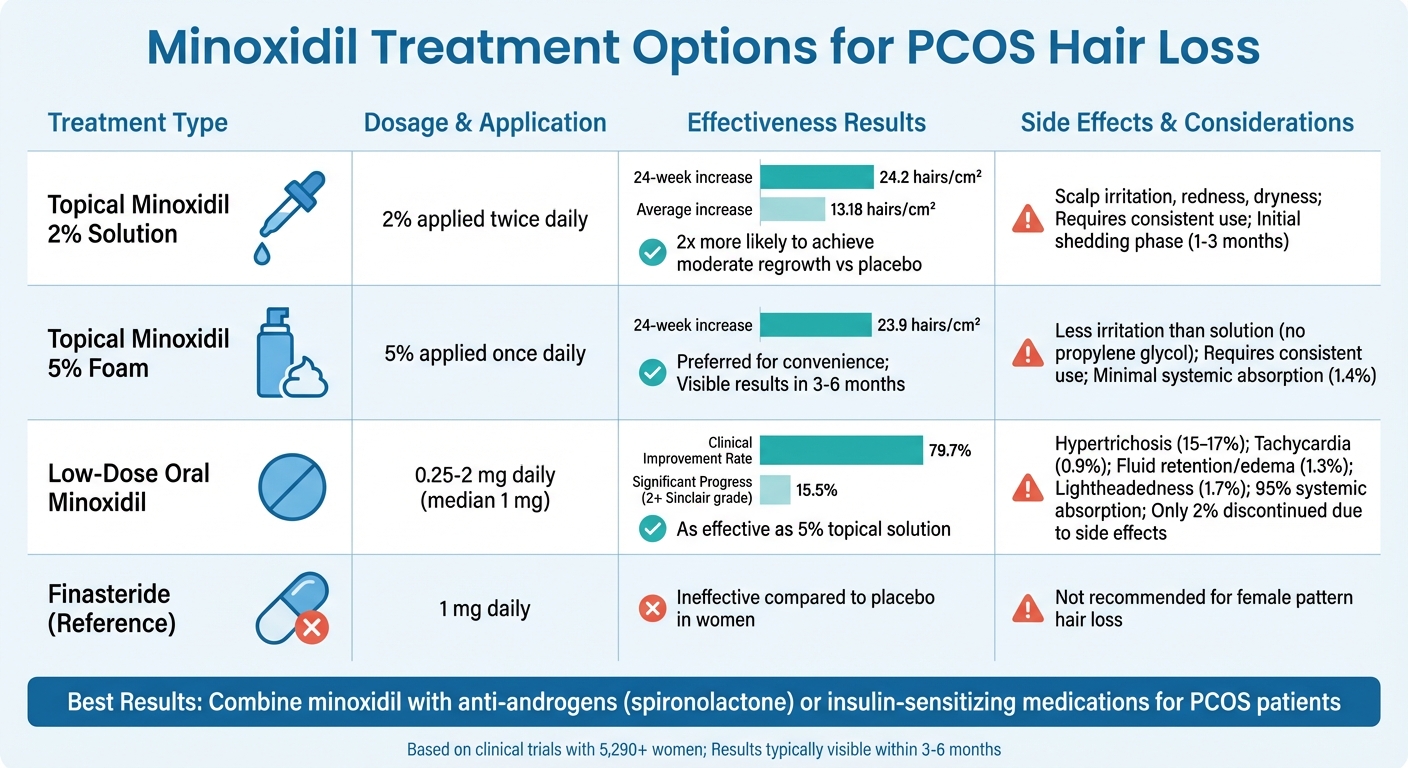
Minoxidil Treatment Options for PCOS Hair Loss: Dosage, Effectiveness and Side Effects Comparison
Topical Minoxidil Results in PCOS Patients
A Phase III trial revealed that using a 5% foam once daily or a 2% solution twice daily increased hair count by around 24 hairs per square centimeter over 24 weeks. Among these, the foam was often preferred due to its convenience.
A Cochrane review analyzing 47 studies with 5,290 women found that minoxidil users saw an average increase of 13.18 hairs per square centimeter. Noticeable improvements typically emerged within 3–6 months, though an initial shedding phase was common during the first few weeks. Women using minoxidil were twice as likely to experience moderate hair regrowth compared to those using a placebo.
"One treatment strategy for female-pattern hair loss is to start with either 5% topical minoxidil twice a day or a low dose of oral minoxidil and escalate the latter if no unacceptable side effects occur." – Dr. Elise A. Olsen, Duke University Medical Center
Oral Minoxidil for Hair Loss
For those who find topical treatments inconvenient or experience scalp irritation, oral minoxidil provides a systemic alternative. A February 2020 study conducted at Ramón y Cajal University Hospital in Madrid followed 148 women taking a median dose of 1 mg daily for about nine months. The results showed that 79.7% of participants experienced clinical improvement, with 15.5% achieving significant progress (defined as a two-grade or higher increase on the Sinclair scale). Only 2% discontinued treatment due to side effects like tachycardia or edema.
A randomized clinical trial also demonstrated that 1 mg of oral minoxidil was as effective as the 5% topical solution for treating female pattern hair loss. The oral version works systemically, relying on liver and platelet sulfotransferase enzymes, which can benefit patients who don't respond well to topical applications. However, hypertrichosis (unwanted hair growth on the face or body) was reported in 15%–17% of patients.
Minoxidil Compared to Other PCOS Hair Loss Treatments
Unlike anti-androgens like spironolactone, which address hormonal imbalances, minoxidil directly stimulates hair follicles. Clinical reviews indicate that finasteride (1 mg) is ineffective for female pattern hair loss when compared to a placebo.
For PCOS patients, combination therapies are often the preferred approach. Pairing minoxidil with anti-androgens like spironolactone can effectively address both follicle stimulation and androgen excess. Additionally, spironolactone's mild diuretic properties may help mitigate fluid retention, a potential side effect of oral minoxidil.
| Treatment Type | Typical Dosage | Key Findings |
|---|---|---|
| Topical Minoxidil (Solution) | 2% twice daily | ~24.2 hairs/cm² increase; requires consistent use |
| Topical Minoxidil (Foam) | 5% once daily | ~23.9 hairs/cm² increase; preferred for ease of use |
| Low-Dose Oral Minoxidil | 0.25–2 mg daily | 79.7% improvement rate; hypertrichosis in 15%–17% |
| Finasteride (Oral) | 1 mg daily | Ineffective compared to placebo in women |
These findings provide a foundation for understanding how minoxidil interacts with thyroid medications, an important factor for PCOS patients also managing thyroid conditions.
Thyroid Medications in PCOS Management
The connection between thyroid function and hair loss in PCOS is complex but significant. This section explores commonly prescribed thyroid medications and their role in managing symptoms.
Common Thyroid Medications for PCOS
Thyroid disorders affect 10% to 15% of individuals with PCOS, making thyroid management an essential part of treatment. The primary medication prescribed is levothyroxine (LT4), a synthetic form of thyroxine (T4), which the body converts into the active hormone triiodothyronine (T3).
"Levothyroxine should remain the standard of care for treating hypothyroidism." – American Thyroid Association Task Force
In some cases, additional thyroid support is needed. Options include liothyronine (LT3), which provides active T3 directly, and Natural Desiccated Thyroid (NDT), a medication derived from porcine thyroid glands that contains both T4 and T3. Achieving normal thyroid hormone levels can enhance metabolic rate, improve insulin sensitivity, and support hair growth - key concerns for PCOS patients.
Hypothyroidism can also lower sex hormone-binding globulin (SHBG), leading to higher levels of free androgens. This hormonal imbalance can exacerbate PCOS symptoms such as hair thinning and hirsutism. Addressing thyroid dysfunction alongside PCOS is crucial for symptom relief. Proper thyroid management not only helps regulate metabolism and hormones but also plays a pivotal role in promoting hair regrowth, as discussed below.
Thyroid Health and Hair Loss
Thyroid medications are vital for tackling hair loss in PCOS. Balanced levels of T3 and T4 hormones are essential for keeping hair follicles in the anagen (active growth) phase, as these hormones directly stimulate follicular activity.
"Hair follicles depend on an optimal balance of thyroid hormones - particularly the active hormone triiodothyronine (T3) and the storage hormone thyroxine (T4) - to stay in the active growth (anagen) phase." – Mary Shomon, Patient Advocate
When T3 and T4 levels fall too low, hair follicles prematurely shift to the telogen (resting) phase, leading to hair loss. Starting levothyroxine treatment can sometimes cause temporary hair shedding during the first 4 to 8 weeks as hormone levels stabilize. Both insufficient and excessive thyroid hormone levels can contribute to ongoing hair thinning, emphasizing the importance of maintaining a precise therapeutic range. One hallmark of hypothyroidism is thinning or loss of the outer third of the eyebrows.
For PCOS patients with thyroid dysfunction, stabilizing thyroid levels is often a prerequisite for hair regrowth treatments like minoxidil to be effective. Proper thyroid function supports minoxidil’s ability to stimulate hair follicle activity, making it a critical component of a comprehensive approach to managing hair loss.
sbb-itb-6dba428
Safety and Interaction Risks: Minoxidil with Thyroid Medications
Understanding how minoxidil interacts with thyroid medications is essential for PCOS patients managing hair loss and thyroid issues. The potential risks depend on whether you’re using a topical or oral form of the medication.
Safety of Topical Minoxidil in Thyroid Patients
Topical minoxidil is absorbed at a very low rate (about 1.4%), which significantly reduces the likelihood of systemic interactions with thyroid medications like levothyroxine. To date, no major pharmacological interactions between the two have been documented. Maintaining stable thyroid levels is key, as untreated thyroid imbalances can interfere with hair regrowth.
"While topical formulations have minimal systemic absorption and are considered relatively safe, they require consistent use for sustained results." – Paloma Health
Because of its low absorption, topical minoxidil is often the preferred option for patients dealing with both PCOS and thyroid conditions. Oral minoxidil, on the other hand, requires more careful consideration due to its systemic effects.
Oral Minoxidil: Risks and Precautions
Oral minoxidil is absorbed systemically at a much higher rate (95%), which increases cardiovascular risks. For PCOS patients with thyroid conditions, this means extra caution is needed. A study involving 1,404 patients on low-dose oral minoxidil reported side effects such as unwanted hair growth (15.1%), lightheadedness (1.7%), fluid retention (1.3%), and rapid heartbeat (0.9%). More severe complications, including pericardial effusion, have been observed in 3% to 5% of patients taking higher doses for blood pressure management. Since both thyroid imbalances and oral minoxidil can cause tachycardia, monitoring symptoms becomes even more complex.
Monitoring and Managing Side Effects
Given the differing risks of topical and oral minoxidil, close monitoring is essential. Be on the lookout for symptoms like rapid heartbeat, chest pain, sudden weight gain (over 5 pounds), or swelling in the face, hands, or ankles - these should be addressed immediately by a healthcare provider.
If you’re using topical minoxidil, check your scalp regularly for irritation, redness, or dryness. Allergic contact dermatitis, often caused by the propylene glycol in liquid formulations, can sometimes occur. Switching to a foam formulation may help reduce irritation. Always wash your hands thoroughly after applying topical minoxidil to prevent accidental transfer to your face or eyes.
For PCOS patients combining minoxidil with thyroid medications, working with both an endocrinologist and a dermatologist is crucial for coordinated care. Regular monitoring of TSH, free T4, and free T3 levels will help optimize thyroid management while addressing hair loss. If you’re considering oral minoxidil and have a history of thyroid issues, it’s important to discuss alternative treatments with your healthcare provider.
Clinical Recommendations for PCOS Patients on Minoxidil
Starting Minoxidil Treatment: Best Practices
Before beginning minoxidil treatment, it’s crucial to stabilize your thyroid hormone levels. Hair regrowth typically starts only after optimizing TSH, free T4, and free T3 levels. Once your thyroid is stable, experts suggest starting with either 5% topical minoxidil applied twice daily or a low dose of oral minoxidil. The dose can be increased gradually, provided there are no significant side effects.
Low-dose oral minoxidil (LDOM) - defined as ≤5 mg/day - rarely impacts blood pressure. For those using the topical form, ensure your scalp is completely dry before application to improve absorption. Avoid blow-drying afterward, as this can reduce the medication’s effectiveness by up to 50%. Be prepared for the "Dread Shed", a temporary increase in hair shedding during the first 1-3 months. Although alarming, this shedding indicates dormant follicles transitioning into an active growth phase.
Once you’ve established a routine, combining minoxidil with other therapies can further enhance its effectiveness for PCOS patients.
Combining Minoxidil with PCOS and Thyroid Treatments
To address the hormonal imbalances associated with PCOS, combining treatments can yield better results. Minoxidil is most effective when paired with therapies targeting the root causes of hair loss. Anti-androgen medications like spironolactone and insulin-sensitizing agents such as metformin can amplify minoxidil’s benefits. Additionally, addressing common nutritional deficiencies - like low levels of iron (ferritin), zinc, and selenium - can further improve outcomes.
One key factor to consider: if you’re taking low-dose aspirin, it could interfere with the effectiveness of topical minoxidil by inhibiting sulfotransferase enzymes in the hair follicles. It’s important to discuss this with your healthcare provider to determine the best course of action for your specific needs.
Personalized Solutions Through Telehealth
Telehealth offers a convenient way to manage PCOS, thyroid conditions, and hair loss with a holistic approach. Platforms like Oana Health provide tailored treatments for PCOS-related hair loss, including oral minoxidil, starting at $25 per month. Licensed healthcare professionals prescribe evidence-based treatments, which are delivered directly to your home at no additional cost. This setup allows for regular follow-ups and dose adjustments based on your response, helping you manage potential side effects like hypertrichosis or fluid retention more effectively.
Conclusion
Dealing with hair loss caused by both PCOS and thyroid conditions calls for a well-rounded strategy that tackles the root causes. Treatments like topical and oral minoxidil have shown promising results, but their success hinges on first stabilizing thyroid hormone levels and addressing the hormonal imbalances behind the hair loss. Research supports the effectiveness of topical minoxidil, while low-dose oral minoxidil has shown success rates exceeding 65%.
A solid treatment plan often combines minoxidil with anti-androgens, insulin-sensitizing medications, and essential nutritional support. Consistency is key - stopping treatment can lead to a reversal of progress.
Working closely with healthcare providers who specialize in thyroid and hormone management is crucial. Telehealth platforms, such as Oana Health, offer personalized care, starting at $25 per month with free home delivery. These services ensure ongoing monitoring and allow for dose adjustments tailored to your specific needs and side effects. This personalized care model aligns with earlier findings on the importance of individualized treatment.
FAQs
Is it safe to use minoxidil for hair loss if I have PCOS and take thyroid medication?
Yes, minoxidil is considered safe for individuals with PCOS who are also taking thyroid medication like levothyroxine. This is because there are no known direct interactions between the two. Minoxidil primarily works by improving blood flow to hair follicles, which is unrelated to the thyroid hormone pathways that regulate hair growth and shedding.
To use minoxidil effectively, follow the recommended guidelines: apply a 2% solution twice daily or a 5% foam once daily. After application, avoid wearing tight caps or wigs, as this can increase absorption and may lead to side effects like unwanted hair growth in other areas.
For those managing PCOS and seeking personalized care, Oana Health provides telehealth services tailored to your needs, including advice on safely incorporating minoxidil with other treatments. Always consult your healthcare provider before starting any new medication to ensure it aligns with your overall health plan.
What are the side effects of topical versus oral minoxidil, especially for PCOS patients on thyroid medications?
Topical minoxidil is known for causing localized skin reactions. These can include scalp irritation, itching, dryness, redness, and, in some cases, unwanted facial hair growth. These effects are generally confined to the area where the product is applied.
On the other hand, oral minoxidil, often used to address hair loss or manage hypertension, may result in systemic side effects. These can range from increased hair growth on other parts of the body to more concerning issues like weight gain, rapid heartbeat, chest pain, and fluid retention.
For individuals with PCOS who are also on thyroid hormone treatments, it’s especially important to weigh these side effects carefully. Consulting with a licensed provider, such as those at Oana Health, can help you decide whether topical or low-dose oral minoxidil is the better option for your specific hormonal and cardiovascular needs.
Can combining minoxidil with other treatments improve hair growth in women with PCOS?
Yes, combining minoxidil with other treatments can improve hair regrowth for women dealing with PCOS-related hair loss. Studies indicate that incorporating options like topical 17α-estradiol, anti-androgens, or 5α-reductase inhibitors may deliver better outcomes. On top of that, procedures such as microneedling or platelet-rich plasma (PRP) therapy have also shown encouraging results in supporting hair growth.
However, it’s crucial to work with a healthcare provider to identify the right treatment plan tailored to your needs. This is especially important if you’re managing PCOS alongside other health concerns, such as thyroid hormone imbalances, to ensure both safety and effectiveness.