
Omega-3 for Acne and Hair Loss in PCOS
Struggling with acne or hair loss caused by PCOS? Omega-3 fatty acids may help. These essential fats, found in foods like fatty fish and walnuts or in supplements, can reduce inflammation, balance hormones, and improve insulin sensitivity - all key factors in managing PCOS symptoms.
Here's what you need to know:
- Acne Relief: Omega-3s lower androgen levels, reducing oil production and inflammation that worsens breakouts.
- Hair Health: They improve scalp blood flow, nourish follicles, and slow hair thinning.
- Insulin Sensitivity: Omega-3s help regulate blood sugar and reduce the excess androgens linked to PCOS.
- Sources: Eat salmon, mackerel, flaxseed, and walnuts, or take supplements with 1,000–2,000 mg EPA/DHA daily.
For best results, combine omega-3s with a balanced diet, regular exercise, and, if needed, prescription treatments. Results typically take 3–6 months of consistent use. Always consult a healthcare provider before starting supplements.
How PCOS Causes Acne and Hair Loss
High Androgen Levels and Their Effects
In PCOS, the ovaries produce an excess of testosterone and dihydrotestosterone (DHT). Studies show that around 70–80% of women with PCOS exhibit signs of hormonal imbalance. When testosterone converts to DHT in the skin, it overstimulates sebaceous glands, leading to an overproduction of sebum. This creates an ideal environment for Cutibacterium acnes to thrive, triggering inflammation.
This process often turns simple blackheads into more severe inflammatory acne, especially along the jawline, chin, and neck. Because androgen levels tend to stay elevated in PCOS, these breakouts can persist into adulthood. On the scalp, DHT causes susceptible hair follicles to shrink, shortening the hair growth cycle. This results in thinner, weaker strands and an increase in shedding. Over time, this leads to diffuse thinning, which is most noticeable at the crown and part line - hallmarks of female-pattern hair loss.
At the same time, androgens can transform fine, light vellus hairs into coarse, dark terminal hairs in areas like the face, chest, and other parts of the body, a condition known as hirsutism. Insulin resistance, a common feature of PCOS, further amplifies these hormonal disruptions.
Insulin Resistance and Inflammation
Insulin resistance is another key player in PCOS. In this condition, cells become less responsive to insulin, prompting the pancreas to produce more to keep blood sugar levels in check. Elevated insulin levels stimulate the ovaries to produce more androgens while also reducing sex hormone-binding globulin (SHBG). This increase in free testosterone fuels excess oil production and accelerates hair follicle shrinkage.
Insulin resistance also contributes to chronic low-grade inflammation, a defining feature of PCOS. This heightened inflammatory state, coupled with oxidative stress, makes clogged pores more likely to become red, swollen, and painful rather than remaining as small comedones. Inflammation around hair follicles can disrupt the normal hair growth cycle, speeding up follicle miniaturization and worsening hair thinning. Together, these hormonal and metabolic imbalances create a challenging environment, making targeted treatments essential.
PCOS Acne: The Diet & Lifestyle Fix That Actually Works | Evidence-Based
How Omega-3 Fatty Acids Help With PCOS Acne and Hair Loss
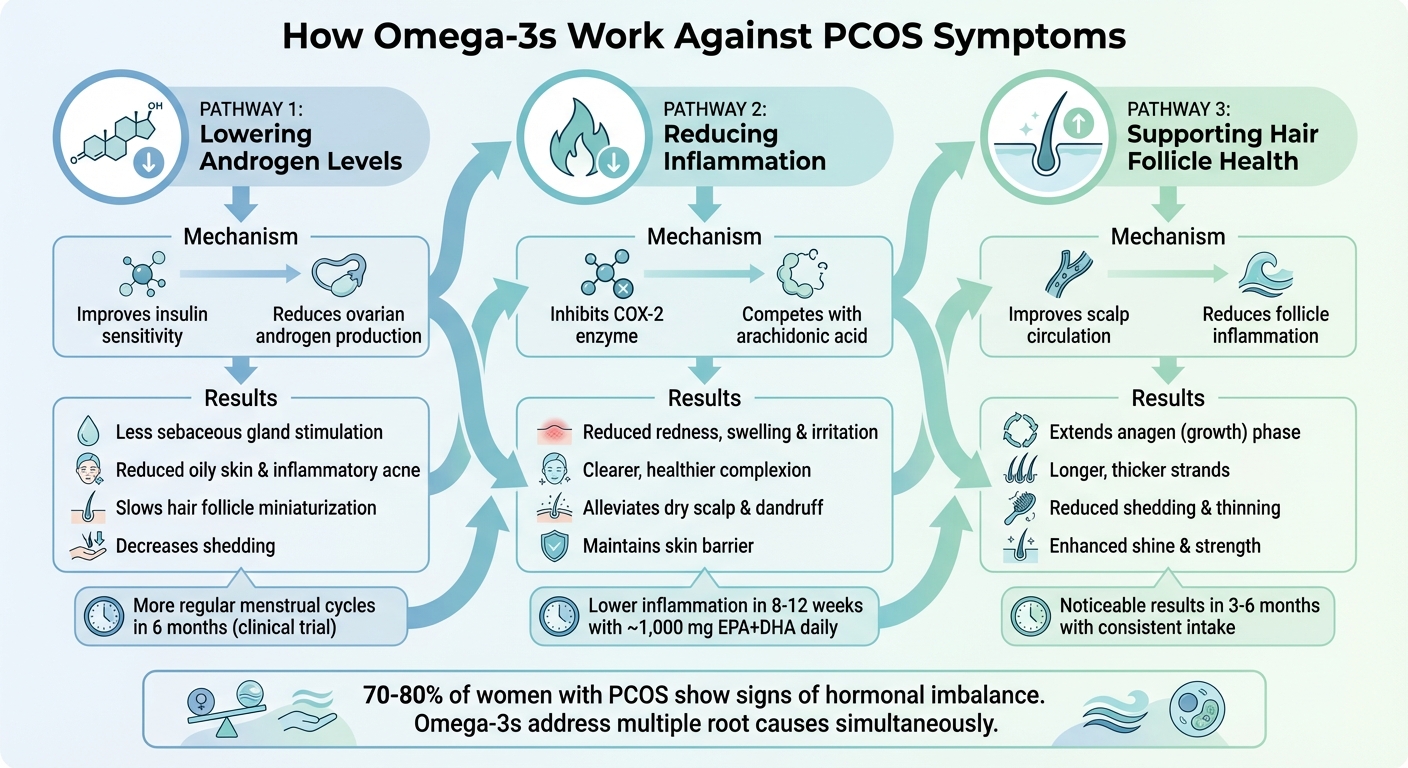
How Omega-3 Fatty Acids Help Manage PCOS Acne and Hair Loss
Omega-3 fatty acids provide a natural approach to addressing some of the hormonal and inflammatory imbalances associated with PCOS, offering potential benefits for both skin and hair health.
Lowering Androgen Levels
One of the ways omega-3 fatty acids can help is by reducing androgen levels - a key factor in many PCOS symptoms. These fatty acids improve insulin sensitivity, which may lower the production of androgens in the ovaries. This reduction in androgens can lead to less stimulation of the sebaceous glands, potentially easing oily skin and reducing inflammatory acne. Studies back this up, showing that higher omega-3 intake is linked to better hormonal and metabolic outcomes. For example, a six-month randomized controlled trial found that women with PCOS who took omega-3 supplements experienced more regular menstrual cycles and better cholesterol levels. Since elevated androgens are also linked to PCOS-related hair loss, balancing these hormones may help slow hair follicle miniaturization and reduce shedding over time. By addressing androgen excess and its effects, omega-3s contribute to improvements in both skin health and hair vitality.
Reducing Inflammation and Improving Skin
Omega-3 fatty acids integrate into the cell membranes of the skin and scalp, where they help regulate inflammatory pathways. By inhibiting cyclooxygenase-2 (COX-2) and competing with arachidonic acid, omega-3s can reduce redness, swelling, and irritation often associated with acne-prone skin. A daily dose of approximately 1,000 mg of combined EPA and DHA has been shown to lower inflammation in women with PCOS within 8–12 weeks. This reduction in inflammation contributes to clearer skin and a healthier complexion. On the scalp, omega-3s provide hydration and can alleviate issues like dry scalp and dandruff. Their moisturizing properties also help maintain the skin barrier, reducing irritation and promoting overall scalp health. These anti-inflammatory benefits create a foundation for healthier skin and hair.
Supporting Hair Follicle Health
Omega-3 fatty acids also play a role in supporting hair follicles. They improve scalp circulation and reduce inflammation around follicles, which can promote a healthier hair growth cycle. Additionally, omega-3s help extend the anagen phase - the active growth phase of hair - leading to longer, thicker strands. By stabilizing hormonal activity, they address hormone-driven hair loss, reducing both shedding and thinning. For noticeable results, consistent intake of omega-3s - either through diet or supplements - is typically required for 3–6 months. Over this period, benefits such as reduced hair shedding, improved strength, and enhanced shine often become apparent.
sbb-itb-6dba428
How to Use Omega-3s Safely and Effectively
Omega-3s play a key role in managing PCOS symptoms like hormonal imbalances and inflammation. To use them effectively, you can incorporate them into your diet or opt for supplements. Here's how to do it right.
Food Sources of Omega-3s
Fatty fish is the best source of EPA and DHA, the omega-3 forms most studied for PCOS benefits. Salmon, mackerel, sardines, herring, and anchovies are excellent options. Experts suggest eating two servings of fatty fish per week, with each serving being about 3–6 ounces (roughly the size of a deck of cards), to help improve skin hydration and reduce inflammation.
Plant-based sources provide ALA, another type of omega-3 that the body partially converts to EPA and DHA. Foods like chia seeds, ground flaxseed, walnuts, and pumpkin seeds are great choices. For example, you can mix 1–2 tablespoons of ground flaxseed or chia seeds into yogurt, oatmeal, or smoothies. A handful of walnuts makes a great salad topping. Additionally, soy-based foods like edamame, tofu, and soybeans offer omega-3s along with plant protein, which may also aid in improving insulin sensitivity.
Here’s a sample day to help you meet your omega-3 needs:
- Breakfast: Greek yogurt topped with 2 tablespoons of ground flaxseed and ¼ cup of walnuts.
- Lunch: A salad with 3–4 ounces of canned wild salmon.
- Snack: A serving of edamame.
- Dinner: 4–6 ounces of baked mackerel served with vegetables and quinoa, plus an optional tablespoon of chia seeds.
This approach can provide several grams of omega-3s daily, which aligns with the amounts used in studies showing improvements in insulin sensitivity and reductions in androgen levels for women with PCOS. If you struggle to meet these amounts through food alone, supplements can help fill the gap.
Selecting Omega-3 Supplements
When choosing omega-3 supplements, focus on products that clearly indicate the EPA and DHA content per serving rather than just listing the total fish oil amount. A combined daily dose of 1,000–2,000 mg of EPA and DHA is often recommended for managing PCOS-related inflammation and metabolic issues. Most high-quality supplements deliver this amount in 1–2 capsules.
Pay attention to quality indicators. Look for third-party certifications like USP, NSF, or IFOS, which confirm that the product has been tested for purity, heavy metals, and oxidation levels. High-quality supplements often mention "molecular distillation" or similar purification processes and ensure minimal contaminants like mercury or PCBs. Always check the expiration date and store supplements in a cool, dark place to maintain their freshness.
For pre-formed EPA and DHA, you can choose between fish oil (from salmon, anchovies, or sardines) and algae-based omega-3 supplements. Algae-based options are ideal for vegetarians, vegans, or those with fish allergies, as long as the EPA and DHA amounts are comparable to fish oil supplements. However, plant-based supplements containing only ALA, like flax or chia oil, may not provide the same benefits since ALA converts inefficiently to EPA and DHA.
For better absorption and to minimize side effects like a fishy aftertaste, take omega-3 capsules with meals that include some fat. Splitting the dose - taking half in the morning and half in the evening - can also help reduce digestive discomfort. If you're sensitive to the taste, try enteric-coated capsules or refrigerated liquid fish oil to minimize odor and aftertaste.
Side Effects and Safety Information
While omega-3 supplements are generally well tolerated, mild side effects like fishy aftertaste, burping, nausea, or loose stools can occur. Starting with a lower dose and gradually increasing it often reduces these issues. Switching to a high-quality product or trying algae-based supplements may also help.
It's important to note that higher doses of omega-3s can increase bleeding time, which is a concern if you're on blood thinners or have a bleeding disorder. If you're taking medications like warfarin, heparin, DOACs, or high-dose aspirin, consult your doctor before starting omega-3 supplements. Similarly, if you have a fish or shellfish allergy, planned surgery, or a bleeding condition, talk to your healthcare provider. Algae-based products may be a safer alternative in these cases.
Finally, keep in mind that noticeable changes in skin and hair may take 3–6 months of consistent omega-3 intake, as seen in many PCOS studies. Patience and regular use are key to seeing results.
Combining Omega-3s With Other PCOS Treatments
Omega-3s can help manage PCOS symptoms, but they work best when combined with other proven treatments. Addressing high androgens, insulin resistance, and chronic inflammation requires a comprehensive approach. A well-rounded plan that focuses on hormonal balance, metabolic health, and improving skin or hair quality often delivers better results than relying on a single method. To make the most of omega-3s, pair them with targeted diet and lifestyle adjustments.
Diet and Lifestyle Changes
For omega-3s to be most effective, they should be part of an anti-inflammatory lifestyle. This means prioritizing meals loaded with non-starchy vegetables, lean proteins, and high-fiber carbs like beans and lentils. At the same time, cut back on refined carbs and sugary drinks. Aim for two servings of fatty fish per week, and include plant-based omega-3 sources like walnuts or ground flaxseed in your daily diet.
Regular exercise is another key piece of the puzzle. Try to get at least 150 minutes of moderate-intensity activity, like brisk walking, each week, and incorporate some strength training. Even a small weight loss - 5–10% of your body weight - can help reduce androgen levels and amplify the anti-inflammatory effects of omega-3s. These changes can also support healthier skin and hair.
Telehealth Options for PCOS Treatment
Telehealth platforms like Oana Health offer convenient, personalized PCOS treatment options. After a quick online medical consultation, you’ll receive a tailored treatment plan. This may include medications like spironolactone for acne or oral minoxidil for hair loss, along with advice on incorporating omega-3s and lifestyle changes into your routine. Medications are shipped directly to your home, with free delivery.
When to Add Prescription Treatments
If lifestyle changes and omega-3 supplementation don’t deliver the desired results, prescription medications may be necessary. For acne, treatments like spironolactone are often recommended when breakouts are moderate to severe, involve scarring, or persist after 3–6 months of lifestyle adjustments and omega-3 use. Spironolactone works by blocking androgen receptors and reducing oil production, while omega-3s help by decreasing systemic inflammation and slightly improving insulin resistance and androgen levels.
For hair loss, oral minoxidil is typically added when thinning becomes noticeable, such as a widening part, and hasn’t responded to hormonal management, nutrition, and omega-3 supplementation over several months. Minoxidil helps by extending the hair growth phase and thickening hair strands, while omega-3s support scalp health by reducing inflammation and improving circulation.
Combining prescription treatments with omega-3s and lifestyle changes can lead to faster visible improvements. At the same time, this approach addresses the underlying metabolic and inflammatory issues, ensuring better long-term results. Prescription medications should complement - not replace - the foundational benefits of omega-3s and healthy habits.
Conclusion
Omega-3 fatty acids play a valuable role in managing PCOS by helping to lower androgen levels, reduce inflammation, and improve insulin sensitivity. While they are not a cure, they are an important part of a broader approach that includes balanced nutrition, regular exercise, and, when necessary, prescription treatments under the guidance of a healthcare professional.
The benefits of omega-3s don’t appear overnight but develop gradually with consistent use. It usually takes about 3–6 months of regular intake - whether through fatty fish, walnuts, flaxseeds, or supplements - to notice improvements. For best results, combining omega-3 intake with healthy lifestyle habits can create a better environment for clearer skin, healthier hair, and overall hormone balance.
If omega-3s and lifestyle changes alone aren’t enough, prescription treatments might be required. Services like Oana Health offer telehealth consultations with clinicians who specialize in PCOS. These professionals can design personalized plans that integrate omega-3s with medications, providing virtual support and even home delivery.
As always, it’s essential to consult your healthcare provider before starting omega-3 supplements, especially if you have fish allergies, bleeding conditions, or take anticoagulants. A professional consultation ensures omega-3s are safely incorporated into your routine, helping you achieve long-term improvements in PCOS management, from clearer skin to healthier hair and better hormonal balance.
FAQs
How quickly can omega-3s help with acne and hair loss caused by PCOS?
The impact of omega-3s on PCOS symptoms, such as acne and hair loss, often differs from person to person. Many women report seeing positive changes within 8 to 12 weeks, though more visible improvements might take a few months. Staying consistent with omega-3 supplementation is crucial for achieving the best outcomes.
Is it safe to take omega-3 supplements alongside prescription treatments for PCOS?
Yes, omega-3 supplements are typically safe to use alongside prescription treatments for PCOS. That said, you should always check with a healthcare professional before adding them to your regimen. This ensures the supplements won’t interfere with your medications and helps you determine the right dosage for your specific needs.
For those addressing PCOS symptoms like acne or hair loss, omega-3s might be a helpful addition. They can aid in reducing inflammation and promoting hormonal balance. Just remember, a tailored plan created with guidance from a medical expert is always your best bet.
What are the best omega-3 food sources for managing acne and hair loss in PCOS?
For women dealing with PCOS, omega-3 fatty acids can play a key role in promoting hormonal balance while also addressing common concerns like acne and hair loss. You can find these beneficial fats in fatty fish such as salmon, mackerel, sardines, and albacore tuna. If you prefer plant-based options, consider adding flaxseeds, chia seeds, walnuts, and hemp seeds to your meals.
Including these omega-3-rich foods in your diet on a regular basis can help provide the nutrients your body needs to support overall health and better manage PCOS symptoms.