
Role of Protein in PCOS-Related Hair Loss
If you're dealing with hair loss due to PCOS, protein might play a bigger role than you think. Here's why:
- Hair health: Hair is made of keratin, a protein. Without enough protein, your body can’t produce strong, healthy hair.
- Hormonal balance: Protein-rich diets improve insulin sensitivity, reducing excess androgens (like testosterone) that damage hair follicles.
- Nutritional impact: Many women with PCOS experience insulin resistance, which affects how the body uses protein. This can deprive hair follicles of essential nutrients.
A high-protein diet (about 1.2–2.0 grams per kilogram of body weight daily) can help reduce hair loss by stabilizing blood sugar and supporting follicle health. Pairing protein with low-glycemic foods further boosts results. Foods like eggs, salmon, lentils, and Greek yogurt are great options. Combine this with treatments like oral Minoxidil or topical Spironolactone for better outcomes.
Key takeaway: Protein isn’t just for muscles - it’s essential for managing PCOS-related hair thinning. Aim for consistent intake and focus on quality sources to support hair regrowth.
How Protein Supports Hair Growth in PCOS
Hair Structure and Keratin
Hair is primarily made up of keratin, a protein constructed from essential amino acids like L-cysteine and methionine. These amino acids are critical for maintaining the strength and integrity of your hair. If your diet lacks all the essential amino acids, keratin production stops, leading to weaker hair. When the body doesn't get enough protein, it enters a catabolic state, breaking down tissues - including hair follicles - to support more vital functions. Since hair follicles are considered "non-essential", they are among the first to be affected.
"Hair follicle fibrosis and destruction may be body's conscious decision of self-destruction to conserve proteins for more active and vital tissues like muscles." - Suruchi Garg, Department of Dermatology, Aesthetic Surgery and Intervention Dermatology, AURA Skin Institute
One clinical study found that 68.4% of individuals with hair and skin issues consumed less than half of the recommended daily protein intake. This deficiency directly impacts hair strength and increases shedding, which is especially concerning when hormonal imbalances from PCOS are already affecting your hair health.
Understanding the structure of hair helps explain how PCOS-related hormonal imbalances further damage hair follicles.
How PCOS Affects Hair Follicles
PCOS contributes to a process called follicular miniaturization. When your body produces excess androgens - especially testosterone, which converts into dihydrotestosterone (DHT) - these hormones bind to receptors in the scalp. The result? Hair follicles shrink, producing thinner and shorter strands with each growth cycle.
Additionally, PCOS disrupts the natural hair growth cycle. Normally, about 90% of hair follicles should be in the anagen (growth) phase. Elevated androgen levels shorten this phase, causing hair to prematurely enter the resting and shedding phases. At first, the follicles produce finer, weaker strands - often referred to as "miniaturized" hair - before eventually stopping hair production entirely.
Incorporating more protein into your diet can help counteract these effects. A high-protein diet lowers insulin levels and increases SHBG (sex hormone-binding globulin), which binds to androgens in the bloodstream. This prevents androgens from reaching and shrinking your hair follicles. Additionally, reduced insulin levels mean your ovaries produce fewer androgens, offering further protection against hair follicle damage.
Protein Deficiency and Hair Loss in PCOS
How Insulin Resistance Affects Nutrient Absorption
Did you know that 65% to 95% of women with PCOS experience insulin resistance? This condition disrupts the mTOR pathway, which is crucial for protein synthesis. The issue stems from post-binding defects, such as increased serine phosphorylation of IRS-1, that impair how the body uses protein effectively. As a result, lean muscle mass decreases, reducing the number of insulin receptors and depriving hair follicles of the amino acids they need to thrive.
On top of this, insulin resistance leads to elevated insulin levels, which trigger excess androgen production. This reduces SHBG (sex hormone-binding globulin), leaving more free testosterone available to convert into DHT (dihydrotestosterone). DHT is notorious for shrinking hair follicles, further weakening their structure and compounding the effects of low protein availability.
Understanding how these metabolic disruptions affect nutrient absorption is critical for spotting early signs of protein deficiency in PCOS.
Signs of Protein Deficiency in PCOS
One of the most noticeable signs of protein deficiency in PCOS is telogen effluvium, a condition where many hairs abruptly enter the resting phase. If you're seeing clumps of hair in your shower drain or on your pillow, it could mean your hair follicles aren't getting the nutrients they need.
Other warning signs include brittle, fragile strands that break easily and diffuse thinning across the scalp. Over time, your hair may look flatter and less voluminous as the follicles shrink and weaken.
"While hair follicles are among the most metabolically active in the body, and hair growth may be impacted by calorie and protein malnutrition... the links are complex." - Emily L Guo and Rajani Katta
The silver lining? Research shows that high-protein diets can significantly lower fasting insulin levels - by an average of -2.69 μIU/mL in women with PCOS. Even small improvements in insulin sensitivity, like losing just 5% of body weight, can lead to noticeable reductions in hyperandrogenic symptoms, including hair loss.
Incorporating more protein into your diet not only provides the amino acids your hair needs to grow but also helps address insulin resistance and its hormonal effects. It’s a simple yet impactful step toward healthier hair and better overall well-being.
PCOS, Hair Loss, & Insulin Resistance
Recommended Protein Intake and Sources for PCOS
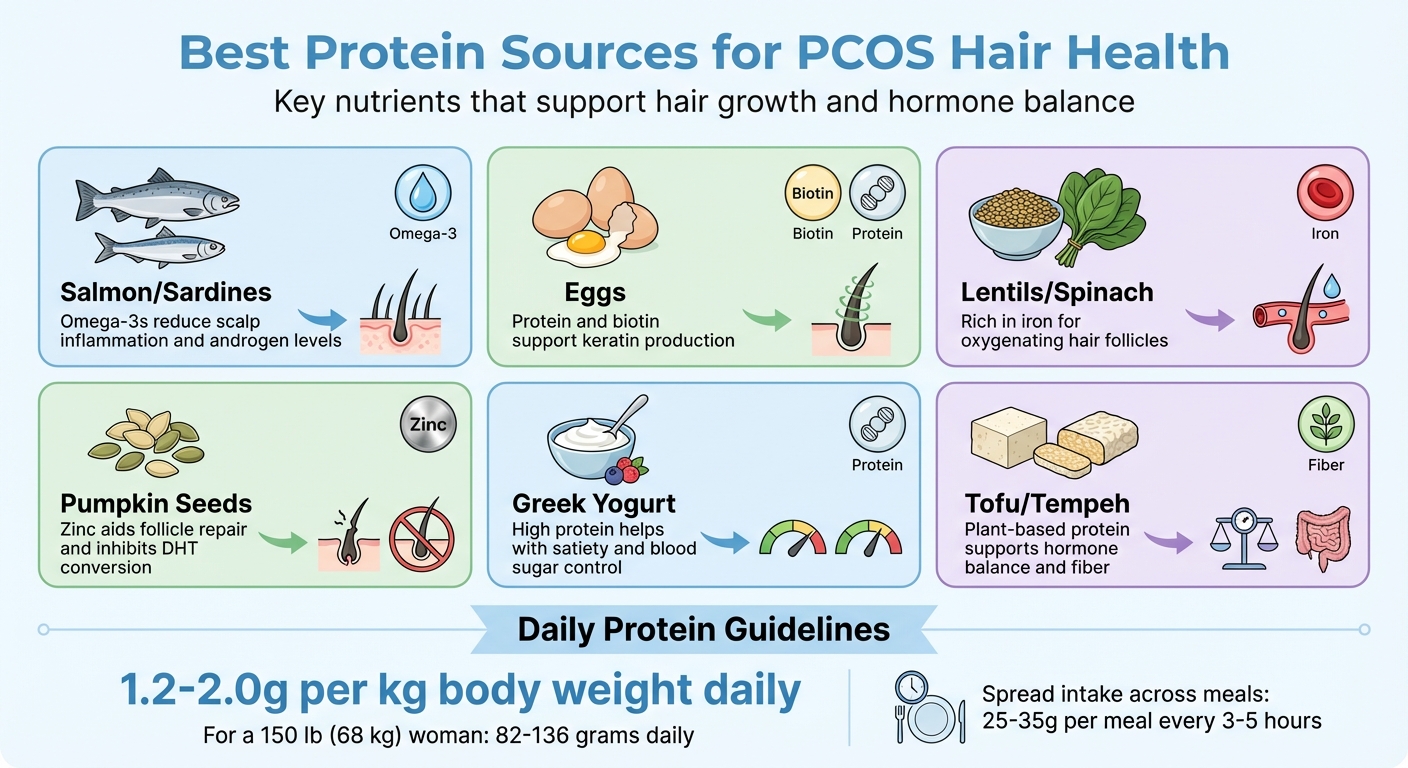
Best Protein Sources for PCOS Hair Health: Key Benefits and Nutrients
Daily Protein Requirements for Women with PCOS
Getting your protein intake right is key when managing PCOS. Women with PCOS are generally advised to consume 1.2 to 2.0 grams of protein per kilogram of body weight daily, depending on activity levels. For instance, if you weigh 150 pounds (about 68 kg), your daily protein target would be around 82 to 136 grams.
"For women with PCOS, a general guideline is to aim for 20-30% of daily calories from protein or about 1.2-2.0 grams of protein per kilogram of body weight." – Hannah Anderson, MA, RDN, LDN, CLS
To determine your needs, divide your weight in pounds by 2.2 to convert it to kilograms. Then, multiply by 1.2 if you're less active or up to 2.0 if you're more physically active. Experts often recommend PCOS patients aim for 120 to 150 grams of protein daily for better weight and symptom management. Spreading this intake across meals - about 25 to 35 grams per meal - can help maintain muscle and keep you feeling full. Eating protein every 3 to 5 hours can also stabilize blood sugar and support muscle protein synthesis.
Now, let’s dive into the best protein sources to meet these needs.
Best Protein-Rich Foods for PCOS
Focusing on high-quality proteins can make a big difference in managing PCOS. Fatty fish like salmon and sardines are excellent choices - they’re packed with protein and omega-3 fatty acids, which can reduce inflammation and help lower testosterone levels. Eggs are another great option, offering protein along with biotin, which is essential for keratin production. Greek yogurt is a standout too, thanks to its high protein content that promotes satiety and helps control blood sugar.
For plant-based options, consider lentils, chickpeas, tofu, tempeh, and quinoa. These foods not only provide protein but also deliver fiber and phytonutrients that support metabolic health. Lentils, in particular, are rich in leucine, an amino acid crucial for muscle protein synthesis. Just 8.9 grams of lentils can deliver the 2 to 3 grams of leucine needed per meal. Pumpkin seeds are another excellent choice, offering zinc for follicle cell repair and helping to reduce DHT conversion, which can impact hair health.
| Protein Source | Key Benefit for PCOS Hair Health |
|---|---|
| Salmon/Sardines | Omega-3s reduce scalp inflammation and androgen levels |
| Eggs | Protein and biotin support keratin production |
| Lentils/Spinach | Rich in iron for oxygenating hair follicles |
| Pumpkin Seeds | Zinc aids follicle repair and inhibits DHT conversion |
| Greek Yogurt | High protein helps with satiety and blood sugar control |
| Tofu/Tempeh | Plant-based protein supports hormone balance and fiber |
Including these foods in your diet can support both PCOS management and hair health.
Combining Protein with Low-Glycemic Foods
Pairing protein with low-glycemic index (low-GI) foods is a smart way to keep blood sugar steady. The "PFF" rule - Protein, healthy Fat, and Fiber-rich carbs - can help balance blood sugar at every meal. Combining protein with low-GI options like quinoa, lentils, leafy greens, berries, or apples can prevent glucose spikes that worsen insulin resistance and increase androgen levels.
"By stabilizing blood sugar through nutrition, you indirectly help calm insulin levels, which in turn can reduce androgen production and lighten the hormonal 'pressure' placed on your hair follicles." – Madison Lawrie, Registered Dietitian
This strategy matters because 75% of individuals with PCOS experience insulin resistance. Protein also slows carbohydrate digestion, preventing the crashes that lead to cravings and insulin spikes. To avoid setbacks, steer clear of processed protein sources like nuggets or heavily processed bars, which often contain Advanced Glycation End Products (AGEs) that can worsen inflammation and insulin resistance. Instead, focus on whole food proteins that provide essential amino acids without unnecessary saturated fats. This approach keeps your hormones balanced and supports overall health.
sbb-itb-6dba428
Combining Protein with Oana Health's PCOS Treatments
Prescription treatments for hormonal imbalances can work even better when combined with a protein-rich diet. Protein provides essential amino acids that support keratin production and hair growth while strengthening the collagen framework needed for healthy hair follicles. Here's how pairing protein intake with specific Oana Health treatments can enhance hair regrowth.
Oral Minoxidil and Protein for Hair Regrowth
Oral Minoxidil ($25/month) improves scalp circulation and extends the anagen (active growth) phase of the hair cycle. But for hair to grow during this extended phase, follicles need essential nutrients. Protein supplies amino acids like lysine and proline, which are critical for keratin production and the structural integrity of growing hair.
Without enough dietary protein, the body may prioritize vital tissues, such as muscles, over hair follicles, potentially leading to their breakdown. A protein-rich diet can help ensure the body has what it needs to support Oral Minoxidil's effects, though results may take several months to a year to become noticeable.
"Hair follicle fibrosis and destruction may be body's conscious decision of self-destruction to conserve proteins for more active and vital tissues like muscles." – Dr. Suruchi Garg, Department of Dermatology, Aura Skin Institute
Topical Spironolactone and Hair Plus Plus
Topical Spironolactone ($43/month) and Hair Plus Plus ($40/month) work by blocking androgen receptors and reducing the impact of DHT on hair follicles. These treatments can be even more effective when combined with a protein-rich diet, which helps manage insulin resistance - a key factor in androgen production for those with PCOS.
Low-protein, high-fat diets, on the other hand, can lower SHBG (sex hormone-binding globulin) levels, increasing DHT conversion and worsening hair loss. Ensuring sufficient protein intake supports healthy SHBG levels and reduces the risk of follicle miniaturization. Additionally, research has shown that 41.7% of women with PCOS who supplemented with zinc experienced a notable reduction in hair loss, compared to just 12.5% in the placebo group. Pairing these dietary strategies with Oana Health treatments can help optimize results.
Research on Protein for PCOS Hair Health
Clinical Studies on Protein and Hair Regrowth
A 2024 meta-analysis published in Nature/Nutrition & Diabetes reviewed eight randomized controlled trials involving 300 women with PCOS. It found that high-protein diets (providing at least 25% of total energy from protein) significantly improved insulin sensitivity, with reductions in fasting insulin levels (–2.69 μIU/mL) and HOMA-IR scores (–0.41). Since insulin resistance is a major driver of androgen overproduction - a key factor in hair follicle miniaturization - these improvements could indirectly support hair health by addressing hormonal imbalances. Essentially, better metabolic health might create conditions that are more favorable for hair regrowth.
In a six-month trial, researchers compared the effects of high-protein diets (over 40% of energy intake) with standard-protein diets (less than 15% of energy intake) in 57 women with PCOS. The high-protein group experienced an average weight loss of 4.4 kg, along with greater reductions in waist circumference and glucose levels. Interestingly, the authors noted that replacing carbohydrates with protein improved glucose metabolism independently of weight loss. These metabolic changes, such as reduced androgen levels, could potentially contribute to hair regrowth, though this connection remains speculative.
However, it’s important to note that no clinical studies have directly investigated hair regrowth as a primary outcome of protein-based interventions in women with PCOS.
Gaps in Current Research
While the metabolic benefits of high-protein diets are clear, their direct impact on hair regrowth remains unproven. The studies conducted so far are limited by small sample sizes (approximately 300 participants in total) and relatively short durations (ranging from 4 to 16 weeks). The long-term effects of sustained high-protein intake on hair health have yet to be explored.
Moreover, researchers have yet to define the optimal diet for managing PCOS. Although high-protein diets show promise in improving insulin resistance, the precise biological mechanisms linking these changes to improved hair follicle health are still unclear. As one research team pointed out, "further RCTs in larger and broader settings are required to confirm these observations and investigate the mechanism behind it". More robust studies are needed to determine whether these metabolic improvements can translate into tangible benefits for hair regrowth.
Conclusion
Protein plays a key role in managing PCOS-related hair loss by providing the amino acids necessary for keratin production and improving insulin sensitivity. Better insulin control helps reduce excess androgen levels, which are known to shrink hair follicles and contribute to hair thinning. High-protein diets support this process, creating a healthier environment for hair regrowth.
To support hair health, aim to get about 30% of your daily calories from protein, which translates to roughly 60–80 grams per day. Focus on bioavailable protein sources such as eggs, poultry, fish, Greek yogurt, and tofu. Pair these with fiber-rich, low-glycemic carbohydrates to keep blood sugar stable and protect your hair follicles from insulin-driven androgen spikes.
This dietary approach works best when combined with targeted medical treatments. Options like oral Minoxidil or topical Spironolactone can complement a protein-rich diet by addressing hair loss directly. As registered dietitian Madison Lawrie explains:
"Since hair is made primarily of keratin, a protein, meeting your daily protein needs is non-negotiable for healthy hair growth".
This combined strategy can help reactivate dormant hair follicles while improving overall hair density.
Protein needs can vary depending on factors like age, activity level, and existing health conditions. Consulting a healthcare provider can help you determine your ideal daily intake and identify any other underlying issues, such as thyroid imbalances or nutrient deficiencies, that may be contributing to hair loss. Keep in mind that dietary changes take time - usually three to six months of consistency - to show visible results in hair density. For tailored guidance, Oana Health offers telehealth consultations to help you integrate nutritional strategies with science-backed treatments designed for your hormonal needs.
FAQs
How does eating more protein help with insulin resistance in women with PCOS?
Eating enough protein can play a key role in improving insulin resistance for women with PCOS. High-protein diets are effective at stabilizing blood sugar levels, which helps reduce insulin spikes and improves the body’s sensitivity to insulin. Experts suggest aiming for 0.7 to 1.2 grams of protein per pound of body weight daily to support these benefits.
Protein isn’t just about blood sugar - it also helps curb cravings and supports healthy weight loss. Both of these factors are essential for managing insulin resistance and balancing hormones. To maximize the benefits, try spreading your protein intake evenly across meals. This approach can enhance glucose metabolism and help keep insulin levels in check. Incorporating high-quality protein sources into your diet is a practical and impactful step toward managing PCOS-related insulin resistance.
What are the best protein sources to support hair health in women with PCOS?
Including the right protein-rich foods in your diet can positively impact hair health, particularly if you're managing PCOS. Fatty fish such as salmon, mackerel, and sardines are fantastic options. They're loaded with omega-3 fatty acids, which can help ease inflammation and support hormone balance - both crucial factors for hair health. Lean poultry like chicken and turkey is another great choice, offering high-quality protein that plays a key role in promoting hair growth. If you're looking for plant-based alternatives, legumes like lentils and chickpeas are excellent. They're packed with protein, fiber, and essential nutrients that nourish your hair from within.
Incorporating these foods into your meals on a regular basis can help improve not just your hair health but also your overall wellness, making it easier to manage PCOS symptoms.
Can increasing protein intake help with hair loss caused by PCOS?
While boosting your protein intake won’t single-handedly reverse hair loss caused by PCOS, it can be a helpful part of managing the condition. Protein provides the building blocks for healthy hair growth and aids in stabilizing blood sugar levels - an essential factor for maintaining hormonal balance.
To see meaningful results, a high-protein diet should be combined with a broader treatment plan. This might include tailored medical interventions, lifestyle adjustments, and a well-rounded nutrition strategy that aligns with your specific needs.