
PCOS Patients Share Experiences with GLP-1 Medications
GLP-1 medications like Semaglutide (Ozempic, Wegovy) and Tirzepatide (Mounjaro, Zepbound) are helping PCOS patients manage symptoms such as insulin resistance, weight gain, and irregular menstrual cycles. Originally developed for type 2 diabetes, these drugs are now used off-label for PCOS treatment due to their ability to regulate appetite, improve blood sugar levels, and promote weight loss.
Key takeaways:
- Insulin resistance affects 35–80% of women with PCOS. GLP-1 medications improve insulin function and reduce symptoms like irregular periods and high testosterone.
- Studies show 80% of obese PCOS patients regain regular menstrual cycles within 6 months of treatment.
- Patients report benefits like weight loss (15–25% of body weight), reduced cravings, and better hormonal balance.
- Common side effects include nausea, constipation, and difficulty meeting nutritional needs due to appetite suppression.
Patients like Sarah and Emily have shared their journeys, highlighting both the benefits and challenges of using GLP-1 medications. While Sarah saw weight loss and improved PCOS symptoms with Semaglutide, she struggled with nausea and digestive issues. Emily, on Tirzepatide, experienced fewer side effects and combined her treatment with supplements for better results.
For those considering these medications, working with a healthcare provider is essential to manage side effects, address nutritional needs, and tailor treatment plans effectively.
Sarah's Experience with Semaglutide
Starting Treatment: First Doses and Adjustments
In November 2022, Sarah began her journey with Semaglutide, starting at a weekly dose of 0.25 mg. For her, this was a last resort before considering bariatric surgery. Her goal was to break free from the frustrating cycle of weight gain, which persisted despite her efforts to stick to healthy eating habits during the day.
The early weeks weren't easy. Sarah dealt with nausea, stomach discomfort, and acid reflux - all common side effects during the initial phase. To manage these, she used prescription anti-nausea medication and over-the-counter remedies for acid reflux. She also learned that where she injected the medication mattered. For instance, injections into her thigh caused worse nausea compared to her stomach. After four weeks, she increased her dose to 0.50 mg, following the recommended titration schedule. However, when she attempted to move up to 1.0 mg, the side effects - bloating, gas, and fatigue - became overwhelming. This setback led her to return to 0.50 mg temporarily until her body adjusted. Despite these early struggles, Sarah began to notice remarkable changes.
Results: Weight Loss and PCOS Symptom Improvement
The progress was undeniable. Within three months, Sarah had lost about 17 pounds, and by the six-month mark, her total weight loss reached 25 pounds. These results closely mirrored clinical findings, which show that individuals with PCOS and obesity typically lose around 16.7 pounds after three months and 25.3 pounds after six months on low-dose Semaglutide.
But the benefits went beyond the numbers on the scale. Sarah experienced significant improvements in her PCOS symptoms. For the first time in years, her menstrual cycles became regular, and her A1C levels dropped from 10.2% to 6.5% within just three months - a clear sign of improved insulin resistance. One of the most unexpected but welcome changes was the disappearance of the constant, intrusive thoughts about food that had previously dominated her daily life.
Managing Side Effects and Long-Term Concerns
While the results have been life-changing, Sarah still faces ongoing challenges. The medication slows her digestion to the point where she feels perpetually full, making it hard to consume enough food throughout the day. To ensure she meets her nutritional needs, she now relies on high-protein supplements, like adding protein powder to oatmeal or blending it into smoothies.
However, persistent constipation remains her most frustrating side effect, even after the nausea subsided. Sarah also has concerns about the future - specifically, whether she’ll need to stay on the medication indefinitely to maintain her progress. There’s also the financial burden: without assistance, her monthly out-of-pocket cost is around $1,000, though a manufacturer savings card has reduced that to $25.
Emily's Experience with Tirzepatide
First Results: Weight Loss and Appetite Control
Emily's journey with Tirzepatide has been straightforward and impactful. In just four months, she shed 20 pounds, and what stood out even more was the minimal side effects she experienced early on.
However, the real game-changer for Emily wasn’t just the number on the scale. She noticed a profound shift in how she approached food. Before starting Tirzepatide, her days were filled with constant thoughts about eating and intense cravings for carbs and sugar - challenges many women with insulin-resistant PCOS face. The medication helped her regain a sense of balance, allowing her to differentiate between genuine hunger and eating driven by habit or cravings. This newfound appetite control directly addressed the metabolic and hormonal imbalances tied to her PCOS. Unlike Sarah’s experience with Semaglutide, Emily reported no adverse effects during her initial months on Tirzepatide.
Combining Tirzepatide with Supplements
After seeing promising results, Emily decided to build on her progress by incorporating Ovasitol into her regimen. This PCOS-specific supplement, which contains inositol, is known to support insulin sensitivity and hormonal balance. By combining Tirzepatide with Ovasitol, she tackled multiple aspects of her condition simultaneously. The medication helped with weight loss and appetite regulation, while the supplement worked to improve her overall hormonal health. Emily’s approach highlights the importance of tailoring treatments to address the unique needs of PCOS patients.
Overall Satisfaction and Future Plans
Emily feels confident in her decision to continue Tirzepatide under medical supervision. The steady weight loss, improved appetite control, and lack of side effects have made the treatment feel manageable and sustainable. Her experience shows that while responses to GLP-1 medications can vary, some individuals find them highly effective and easy to tolerate for managing PCOS-related weight challenges.
The Realities of GLP-1 and PCOS: How Kelsey Martinez Found Her Confidence
sbb-itb-6dba428
Common Benefits and Side Effects Across Patients
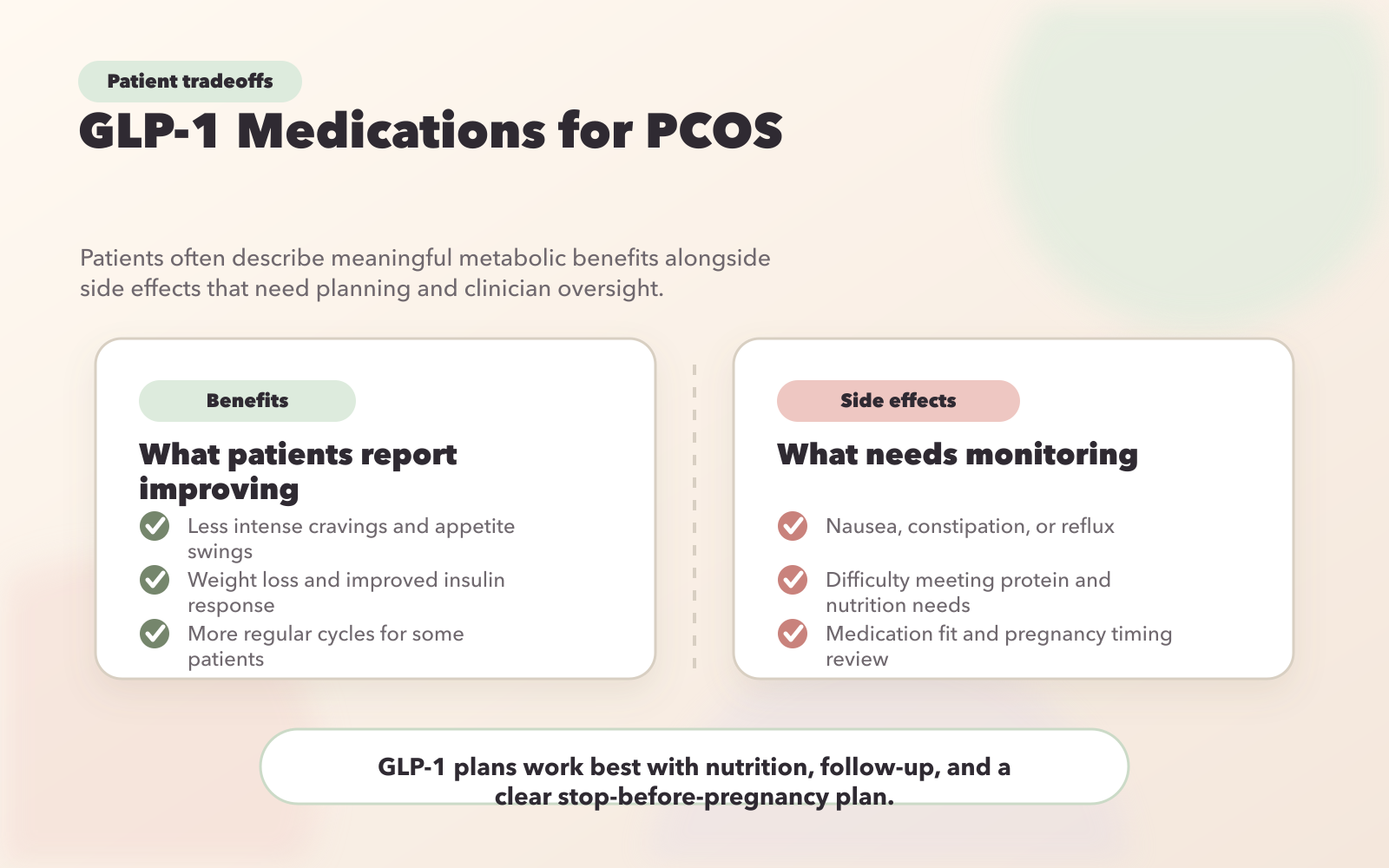
GLP-1 Medications for PCOS: Benefits vs Side Effects Comparison
Benefits: Weight Loss, Insulin Function, and Symptom Relief
Looking at Sarah and Emily's experiences, some clear patterns emerge when it comes to the benefits and challenges of GLP-1 treatments. Research shows that semaglutide users often lose about 15–20% of their body weight, while those taking tirzepatide may see even greater results, with weight loss reaching 20–25%.
These medications also bring noticeable metabolic improvements. For instance, in the Carmina study, 80% of PCOS patients with impaired fasting glucose returned to normal blood sugar levels after just three months of treatment. This is particularly significant since around 70% of individuals with PCOS struggle with insulin resistance.
"Many of my patients who take GLP-1s report feeling like a normal person does in regard to hunger and cravings. Food that was once so consuming became less often thought of."
– Angela Grassi, MS, RDN, LDN, Founder of PCOS Nutrition Center
Reproductive health also sees notable improvements. After six months of treatment, 80% of patients who responded to the medication experienced regular menstrual cycles again. Additionally, a meta-analysis found that patients with PCOS treated with exenatide achieved natural pregnancy rates of 43.6%, compared to just 18.7% for those on metformin.
While these benefits are encouraging, there are some side effects to consider.
Side Effects: Digestive Issues and Nutrition Risks
Digestive discomfort is the most commonly reported side effect. In the Carmina study, 33% of participants experienced morning nausea, and about 7% dealt with occasional vomiting. These symptoms are most common during the early stages of treatment or when doses are increased, but they often subside as the body adjusts.
Long-term nutritional concerns also deserve attention. Appetite suppression, while helpful for weight loss, can lead to challenges in consuming enough protein, vitamins, and minerals. This may result in muscle loss during rapid weight reduction or temporary hair shedding, a condition known as telogen effluvium. To address these risks, patients are encouraged to focus on high-protein foods, take a multivitamin (especially one containing vitamin B12), and start resistance training early in their treatment.
Another consideration is that tirzepatide can slow gastric emptying, which may reduce the effectiveness of oral contraceptives. Women who are not planning to become pregnant might want to use backup barrier methods or switch to non-oral contraceptive options, such as patches, rings, or IUDs, particularly during the first few weeks after a dose increase.
Benefits and Risks Comparison
| Aspect | Benefits | Side Effects/Risks |
|---|---|---|
| Weight Loss | Significant weight reduction (15–30 lbs); improved insulin sensitivity | Nausea, vomiting, diarrhea; potential weight regain if treatment is stopped |
| PCOS Symptoms | 80% experienced regular menstrual cycles within 6 months; lower androgen levels | Risk of nutrient deficiencies with suppressed appetite; temporary hair shedding |
| Daily Life | Reduced "food noise" and carb cravings; better hunger regulation | Muscle loss risk; reduced effectiveness of oral contraceptives (specific to tirzepatide) |
How Oana Health Supports PCOS Patients Using GLP-1 Medications
Oana Health provides an accessible and integrated approach to treating PCOS, combining effective medications with personalized care for better patient outcomes.
Affordable GLP-1 Treatment Options
Oana Health offers Oral Semaglutide GLP-1 or GLP-1 combined with Metformin for $199 per month, including free shipping. This pricing makes treatment more accessible for managing weight loss and insulin resistance associated with PCOS. The process is simple and convenient, thanks to a telehealth model that eliminates the need for in-person visits. You start with a quick 5-minute online medical intake, followed by a $20 consultation with a licensed provider who reviews your health history.
Patients have shared positive experiences with Oana Health's treatments. For example, Rachel S., a PCOS patient, shared, “Oana's telehealth service made it so much easier to access this medication. I feel so much more confident in my body!” Rachel lost 28 pounds using oral GLP-1. Similarly, Priya S. turned to semaglutide injections after years of struggling with PCOS-related weight management and successfully lost 22 pounds through the platform.
Complete PCOS Treatment Approach
Oana Health goes beyond weight management by combining GLP-1 medications with Metformin to address insulin resistance, hormonal imbalances, and other PCOS symptoms. Research supports this combination, showing improved insulin sensitivity, reduced BMI, and better menstrual regularity compared to using Metformin alone. These benefits align with the patient success stories highlighted here.
In addition to GLP-1 treatments, Oana Health offers solutions for other PCOS symptoms like acne, hair loss, and unwanted facial hair. Licensed medical professionals design personalized plans tailored to each patient’s unique needs, ensuring comprehensive care. The service also provides automatic medication refills and ongoing support to address potential side effects, such as digestive issues or nutritional concerns, making treatment more manageable.
Start Your Treatment with Oana Health
Getting started with Oana Health is quick and simple. Visit https://weightloss.oanahealth.com/ to schedule a telehealth consultation or take a 2-minute PCOS quiz for personalized recommendations. Once approved, your medication will be shipped with free 2-day delivery, and you'll have access to continuous clinical support throughout your treatment journey.
Conclusion
The personal experiences of individuals like Sarah, Emily, and others highlight how GLP-1 medications can play a role in managing PCOS. Take Ashley Dunham, for instance - she lost 70 pounds in just 5.5 months and saw her menstrual cycles return to normal. Similarly, Tiffany Groves experienced regular periods for the first time after shedding 43 pounds with Tirzepatide. Many patients have also reported improvements in insulin resistance, reduced inflammation, and fewer struggles with food-related preoccupations.
That said, using GLP-1 medications off-label requires careful medical oversight to address potential side effects, nutritional needs, and fertility considerations. Professor Adam Balen from the Royal College of Obstetricians and Gynaecologists emphasizes:
"A clinician may consider prescribing this medicine 'off-label' if they think it would benefit a patient with PCOS, but this would need a careful discussion with them about the benefits and potential risks."
Beyond the physical benefits, these treatments are reshaping how patients view their condition. Branneisha Cooper shared her perspective:
"Prior to being on this medication, I thought it was just a me problem... It wasn't until I [went] on Mounjaro and realized it's a chronic disease ... and you weren't the problem."
This shift in understanding opens the door to more comprehensive care. Oana Health, for example, offers a personalized approach that combines GLP-1 treatments with therapies like Metformin to tackle insulin resistance, weight management, and other PCOS symptoms. This integrated strategy highlights the importance of supervised and tailored treatments for long-term success.
For those with PCOS considering GLP-1 medications, the message is straightforward: these treatments hold promise, but they work best as part of a carefully managed, personalized care plan.
FAQs
How can GLP-1 medications help manage PCOS symptoms?
GLP-1 receptor agonists, such as semaglutide and tirzepatide, have shown promise in managing PCOS symptoms. These medications work by improving insulin sensitivity and curbing appetite, which often leads to noticeable weight loss - a critical factor in addressing many PCOS-related challenges. By lowering insulin levels, they can help reduce excess androgen production, which in turn may regulate menstrual cycles, decrease acne, and lessen unwanted hair growth.
For many women, GLP-1 therapy also enhances ovulation and increases the likelihood of pregnancy. The combination of improved insulin sensitivity and weight loss fosters a more balanced hormonal environment, benefiting both metabolic and reproductive health. This dual impact makes these medications a compelling option for managing PCOS.
If GLP-1 therapy sounds like the right fit for you, Oana Health provides personalized, evidence-based care through telehealth. Plus, they deliver medications straight to your doorstep for added convenience.
What side effects can occur when using GLP-1 medications for PCOS?
GLP-1 medications, like Semaglutide and Tirzepatide, are often prescribed to help manage symptoms of PCOS. However, as with any medication, they can come with potential side effects. Commonly reported issues include nausea, diarrhea, and constipation, especially during the initial stages of treatment or when adjusting the dosage. Some individuals may also experience loss of appetite, fatigue, or mild stomach discomfort.
Keep in mind, side effects can differ from person to person, and not everyone will encounter them. If you’re thinking about using GLP-1 medications for PCOS, it’s essential to speak with a licensed healthcare provider. They can help you weigh the potential benefits and risks based on your specific health needs.
Do I need to use GLP-1 medications long-term to manage PCOS?
GLP-1 medications, such as semaglutide and tirzepatide, are often recommended for long-term management of PCOS. These treatments can aid in weight loss, enhance insulin sensitivity, and help regulate menstrual cycles. However, their benefits are typically sustained only while the medication is actively used. Research highlights that individuals taking semaglutide have shown notable weight loss, improved BMI, and, for many, a return to regular menstrual cycles over time.
Since PCOS is a chronic condition, stopping GLP-1 medications can often result in weight regain and the reappearance of symptoms. Continued use, guided by a healthcare professional, is key to maintaining these positive effects. Oana Health simplifies this process by offering telehealth services and home delivery of GLP-1 medications, providing personalized and convenient support for managing PCOS symptoms effectively.