
Prescription vs. Natural Remedies for Hirsutism
Hirsutism, excessive coarse hair growth in women, often stems from hormonal imbalances like elevated androgens, commonly linked to PCOS or insulin resistance. It can significantly affect self-esteem and quality of life. Treatments fall into two main categories:
- Prescription Options: Hormonal therapies (e.g., oral contraceptives, spironolactone), insulin-sensitizing drugs (e.g., metformin), and topical solutions like eflornithine. These target the root causes, with results typically appearing in 2-6 months.
- Natural Approaches: Lifestyle changes (weight management, low-glycemic diets, exercise) and herbal remedies (e.g., spearmint tea, inositol). These focus on improving overall health but show slower and milder effects.
While prescriptions offer faster, more measurable results, natural methods can complement them for holistic care. Combining both approaches often yields the best outcomes. Telehealth platforms simplify access to these treatments, offering personalized plans and ongoing support.
PCOS Facial Hair and Hair Loss | Causes, Treatments, & Natural Ways to Reduce Hirsutism & Hair Loss
Prescription Treatments for Hirsutism
Prescription treatments go beyond cosmetic fixes by addressing the hormonal causes of hirsutism. Unlike hair removal methods that only deal with visible hair, these medications target the underlying hormonal imbalances, slowing down hair growth and making existing hair finer and less noticeable. This approach helps manage the condition from its source.
Hormonal Therapies
Combined oral contraceptives (COCs) are often the first choice for women dealing with hirsutism, especially when contraception is also a priority. Clinical guidelines suggest starting with anti-androgenic COCs for 6–9 months. If additional treatment is needed, spironolactone may be added. Spironolactone works by blocking androgen receptors and preventing the production and conversion of testosterone into dihydrotestosterone (DHT).
A study published in JAMA found that a daily dose of 200 mg spironolactone resulted in a noticeable reduction in facial hair for 19 out of 20 women. Results began to show within two months, with the most significant improvements occurring by six months.
Other anti-androgen options include finasteride, which inhibits the enzyme 5-alpha-reductase, and flutamide, which blocks androgen receptors. Both have been proven in clinical trials to reduce hirsutism scores and hair thickness. Finasteride is often preferred due to fewer side effects, but all anti-androgens are teratogenic, making effective contraception essential during their use.
Spironolactone requires regular monitoring of kidney function and potassium levels. Telehealth services streamline this process by enabling patients to complete lab work locally, review results online, and adjust dosages through virtual follow-ups.
Metformin and Insulin-Sensitizing Medications
For women with polycystic ovary syndrome (PCOS), insulin resistance frequently contributes to excess androgen production, which can worsen hirsutism. Metformin improves insulin sensitivity and reduces insulin levels, indirectly lowering androgen production. A meta-analysis found that metformin offers modest but statistically significant reductions in hirsutism compared to a placebo, although its effects are generally less pronounced than those of COCs or anti-androgens.
GLP-1 receptor agonists, such as semaglutide, are increasingly used for managing weight and improving insulin resistance in women with PCOS and obesity. These medications can indirectly reduce hyperandrogenic symptoms, though noticeable changes typically require several months of consistent use.
Treatment usually begins with COCs, with or without spironolactone, to address hair growth. Metformin or GLP-1 therapies may be introduced when PCOS, prediabetes, type 2 diabetes, or obesity is also present. Telehealth platforms like Oana Health offer these medications, including metformin starting at $22/month and GLP-1 tablets at $199/month, tailoring treatment plans to each patient’s needs.
Topical Solutions and Additional Options
For a more targeted approach, topical treatments are available, particularly for facial hair.
Eflornithine cream (FDA-approved as Vaniqa 13.9%) is designed specifically for facial hirsutism in women. It works by inhibiting ornithine decarboxylase, an enzyme crucial for hair follicle cell growth. This slows the development of new hair without removing the existing hair. Studies show that about 60% of users see improvement after six months of daily application. Combining eflornithine with laser hair removal has been shown to speed up results and extend the duration of hair reduction compared to laser treatment alone. Side effects are typically mild, such as skin irritation or redness.
Telehealth providers can evaluate facial hirsutism through patient-submitted photos and medical histories, prescribe suitable topical treatments, and coordinate referrals for laser hair removal. For instance, Oana Health offers eflornithine formulations starting at $69/month, alongside combination treatments like "Hairless Hype", which includes eflornithine, metformin lotion, and azelaic acid - all shipped directly to patients with free delivery.
"It's been a little over 5 weeks, and I've noticed a dramatic reduction in my facial hair growth. This has been such a relief for me. You really have to stick with it and be patient to notice results!" - Allison L., Hairless Hype user
While no prescription treatment can completely "cure" hirsutism, these options can make hair finer, lighter, and slower to grow. Results typically take at least six months to become noticeable, but they tackle the root causes rather than just treating the symptoms.
Natural Remedies and Lifestyle Approaches to Hirsutism
Prescription treatments often focus on addressing hormonal imbalances, but many women opt to complement these with natural remedies and lifestyle adjustments. These approaches can gradually improve overall metabolic health and help reduce androgen levels, working alongside medical treatments for better results. Here's a closer look at some of these strategies.
Lifestyle Changes and Weight Management
Losing just 5–10% of body weight can improve insulin sensitivity and lower androgen production, which may help restore menstrual regularity and slow the growth of new hair. However, coarse hair that's already present typically remains unchanged, and noticeable improvements often take about six months to appear [5, 11].
A low-glycemic index diet can be especially helpful in managing insulin levels. This type of diet focuses on non-starchy vegetables, lean proteins, whole grains, and healthy fats. Practical tips include filling half your plate with vegetables, swapping white rice for options like brown rice or quinoa, and cutting back on added sugars and refined carbs. Pairing these dietary changes with at least 150 minutes of moderate aerobic activity - like brisk walking - each week, along with two to three resistance-training sessions, can further boost insulin sensitivity and support weight management [5, 11].
These lifestyle adjustments not only promote hormonal balance but also enhance the effectiveness of medical treatments.
Herbal Remedies with Research Support
Some herbal remedies have been studied for their potential to manage hirsutism, though their effects are generally mild. For example, spearmint tea has shown modest anti-androgen effects. In one study, women who drank spearmint tea twice daily for 30 days experienced reduced free testosterone levels and slight improvements in hirsutism scores. However, consistent use over time may be needed to see visible changes.
Green tea, while primarily researched for its metabolic benefits like improved insulin sensitivity and minor weight loss, may indirectly influence hair growth through these broader health improvements.
Licorice (Glycyrrhiza glabra) has demonstrated weak anti-androgen properties in small studies, but it comes with potential risks, such as elevated blood pressure, low potassium levels, and fluid retention. This makes it a less suitable option for women with cardiovascular or kidney concerns. Other herbs, like saw palmetto and inositol, are sometimes suggested for their theoretical benefits, but there is limited clinical evidence supporting their use specifically for hirsutism [2, 5].
Since herbal supplements in the United States aren't tightly regulated, their quality and potency can vary widely. It's crucial to consult a healthcare provider before trying any herbal remedy, especially if you're taking prescription medications, to avoid interactions and ensure safety [5, 12].
Cosmetic and Non-Medical Methods
Cosmetic hair removal methods are a popular way to address visible hair while working on underlying causes through medical or natural treatments.
- Shaving: An affordable, daily option that doesn’t cause hair to grow back thicker or darker [5, 11].
- Waxing and Threading: These methods remove hair from the root, leaving smoother skin for two to four weeks. However, they can be painful and might cause irritation or ingrown hairs.
- Depilatory Creams: These dissolve the hair shaft chemically and typically last up to a week. A patch test is recommended to avoid chemical burns, especially on sensitive facial skin [5, 11].
- Bleaching: This lightens dark hair, making it less noticeable. While effective, it needs to be reapplied every one to three weeks and can irritate sensitive skin.
For more lasting results, laser hair removal and intense pulsed light (IPL) treatments target melanin in hair follicles to significantly reduce hair growth. These procedures usually require six to eight sessions spaced several weeks apart and provide long-term cosmetic benefits, though they don’t address hormonal imbalances [5, 7, 11].
Combining these methods with medical or natural treatments can help women manage both the appearance and underlying causes of hirsutism.
sbb-itb-6dba428
Prescription vs. Natural Remedies: Effectiveness and Safety Comparison
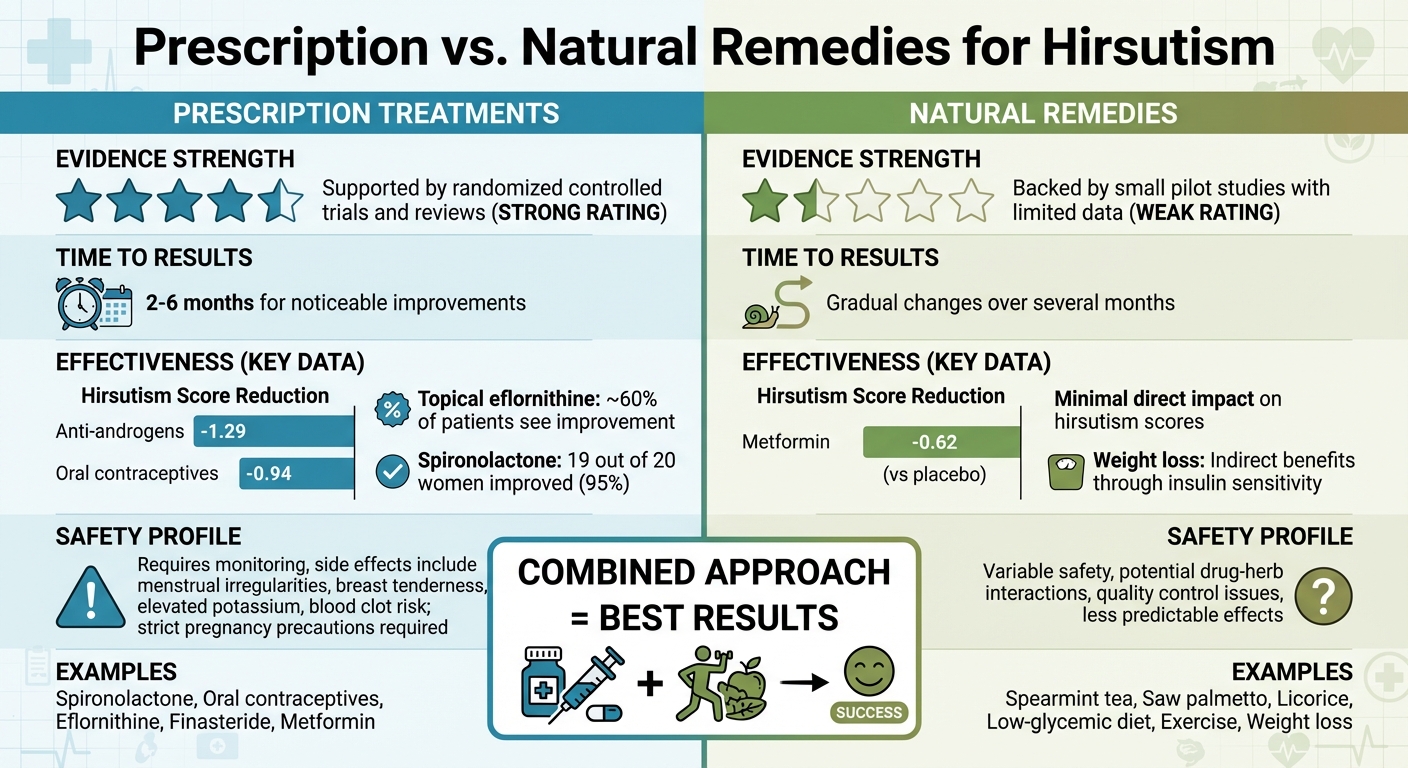
Prescription vs Natural Remedies for Hirsutism: Effectiveness, Safety and Timeline Comparison
Effectiveness and Time to Results
Prescription treatments are known for delivering quicker and more measurable results. For instance, a study published in JAMA found that 19 out of 20 women experienced improved facial hair within just two months of taking spironolactone (200 mg/day), with the best results appearing at six months. Similarly, a review of 43 randomized trials showed that oral contraceptives reduced hirsutism scores by an average of –0.94, while anti-androgens achieved a reduction of –1.29. In comparison, insulin sensitizers like metformin showed a more modest reduction of –0.62 when compared to a placebo. Topical treatments like eflornithine cream also show promise, improving facial hirsutism in about 60% of patients after six months. When combined with laser hair removal, the results are even better than laser treatment alone.
On the other hand, natural remedies tend to take longer and produce milder effects. For women with PCOS, weight loss and a low-glycemic diet can slightly improve androgen levels, but meta-analyses suggest that metformin offers limited or no direct improvement in hirsutism scores compared to more targeted anti-androgen therapies. Herbal options such as spearmint tea and saw palmetto have been studied in small-scale trials, often focusing on hormonal markers rather than visible results. Importantly, no major clinical guidelines in the U.S. currently recommend these remedies as standalone treatments for moderate to severe hirsutism. This highlights the need to weigh safety and side effects when deciding on a treatment approach.
Safety and Side Effects
Prescription treatments come with well-documented side effects, making regular clinical monitoring essential. For example, spironolactone can cause menstrual irregularities, breast tenderness, fatigue, dizziness, and elevated potassium levels, requiring periodic checks of blood pressure and electrolytes. Systemic anti-androgens like spironolactone, finasteride, and flutamide also carry risks, including the potential for feminizing a male fetus, which makes effective contraception a must during treatment. Flutamide, in particular, has been linked to serious liver toxicity and requires liver function monitoring. Combined oral contraceptives, while effective, slightly increase the risk of blood clots and are not suitable for women with a history of venous thrombosis. Topical eflornithine, in contrast, has minimal systemic effects but may cause localized skin irritation, burning, or acne.
Natural remedies are often seen as safer, but their safety profiles are less predictable. Many supplements marketed for hormonal balance - like licorice, saw palmetto, and spearmint - are not FDA-approved for hirsutism, and they lack standardized dosing and purity controls. This variability can result in drug–herb interactions, potential liver toxicity, and unpredictable hormonal effects, with adverse events often going unreported. It’s crucial to consult a clinician before using herbal or over-the-counter hormonal products, especially when combining them with prescription treatments or during attempts to conceive. These considerations underscore the importance of a tailored approach to treatment.
Combining Prescription and Natural Approaches
Blending prescription treatments with lifestyle and cosmetic measures can maximize results. For example, a common strategy is to pair systemic hormonal therapies - like oral contraceptives and spironolactone - with local treatments to manage visible hair while waiting for hormonal therapies to fully take effect. A typical regimen might include oral contraceptives and spironolactone for androgen suppression, eflornithine cream applied twice daily to the face, and laser hair removal. Studies show that eflornithine enhances the effectiveness of laser treatment compared to laser therapy alone.
Lifestyle changes, such as weight loss, a balanced diet, and regular exercise, are often recommended for women with PCOS. While these measures primarily help with insulin resistance, they may also improve the effectiveness of hormonal treatments, even if their direct impact on hirsutism is limited. Telehealth platforms like Oana Health offer an integrated approach by combining prescription treatments with weight-management and lifestyle coaching. These services provide consistent monitoring and adjustments through secure messaging and virtual consultations. Clinicians can oversee side effects, fine-tune medication doses, and guide patients on the safe use of home-based laser or IPL devices. Telehealth also offers a structured way to review ingredient lists and potential drug interactions for patients interested in combining herbal or over-the-counter products with their prescription regimen.
| Aspect | Prescription Treatments | Natural Remedies |
|---|---|---|
| Evidence Strength | Supported by randomized controlled trials and reviews | Backed by small pilot studies with limited data |
| Time to Results | Noticeable improvements within 2–6 months | Gradual changes over several months |
| Effectiveness | Anti-androgens reduce hirsutism scores by –1.29; topical eflornithine benefits ~60% of patients | Minimal direct impact on hirsutism scores |
| Safety Profile | Requires monitoring for side effects and strict pregnancy precautions | Variable safety with potential interactions and quality issues |
| Examples | Spironolactone, oral contraceptives, eflornithine, finasteride | Spearmint tea, saw palmetto, licorice, lifestyle changes |
How Telehealth Enables Personalized Hirsutism Treatment
Remote Diagnosis and Tailored Treatment Plans
Telehealth starts with an online intake process that gathers a patient’s medical history, lab results, and photos to evaluate the severity of hirsutism and identify its root causes. During virtual consultations, clinicians use tools like the Ferriman–Gallwey score to assess hair distribution and look for additional symptoms, such as acne, scalp hair thinning, or signs of insulin resistance. If needed, they order lab tests and imaging studies through local facilities. These may include androgen panels, 17-hydroxyprogesterone, prolactin, thyroid function tests, or pelvic ultrasounds. Follow-up video visits allow providers to review results, refine the diagnosis, and rule out serious conditions like androgen-secreting tumors. This streamlined process ensures a thorough evaluation and sets the stage for personalized treatment.
Treatment plans are tailored using both symptoms and lab data to address the specific causes of hirsutism. For women needing contraception and androgen suppression, combined oral contraceptives are often the first choice. If additional androgen blockers are required, options like spironolactone or finasteride may be added. Research shows that spironolactone significantly improves symptoms in most women with moderate to severe hirsutism, with one study reporting positive effects in 19 out of 20 participants. For patients dealing with insulin resistance or metabolic challenges linked to PCOS, metformin or other insulin-sensitizing strategies may be included. Providers can adjust doses based on effectiveness and side effects - spironolactone, for instance, can range from 50 mg to 200 mg per day. For facial hair, topical treatments like eflornithine cream may be recommended, especially when systemic therapy is not preferred or is just beginning.
Prescription Delivery and Continuous Monitoring
Prescriptions for treatments like oral contraceptives, spironolactone, finasteride, metformin, and topical eflornithine are sent electronically to partner pharmacies. These pharmacies deliver medications directly to patients, often with free shipping and features like automated refill management. To ensure safety, providers monitor baseline and periodic lab results tailored to each medication. For example, spironolactone requires checks on electrolytes and kidney function, while other medications may need liver and metabolic evaluations.
Virtual follow-ups every three to six months help assess progress through updated photos and patient self-reports. Many telehealth platforms also include symptom trackers and secure messaging, enabling patients to report side effects like breakthrough bleeding, breast tenderness, dizziness, or mood changes. These tools allow for quick adjustments to dosages or medications, ensuring that treatment stays effective and well-tolerated.
Platforms like Oana Health offer a seamless approach to care. They provide prescription treatments such as Hairless Hype - a compounded product combining eflornithine, metformin lotion, and azelaic acid - and spironolactone. Clinical studies have shown noticeable results in as little as eight weeks, with 81% of women experiencing significant improvement within a year [1]. Medications are prescribed by licensed professionals and shipped directly to patients, complete with free shipping, automatic refills, and ongoing support through online or phone consultations.
"Oana's telehealth service is fantastic! It's helped manage my insulin levels and reduce excess hair growth I was experiencing due to PCOS. I'm recommending this to all my friends with PCOS." – Victoria A.
Combining Medical and Lifestyle Strategies
Telehealth doesn’t stop at prescriptions - it also integrates medical treatments with lifestyle changes for a more comprehensive approach. Guidance on nutrition, exercise, and sleep helps patients achieve modest weight loss (5%–10%), which can lower insulin resistance and androgen levels. Providers often review food logs and activity trackers with patients, setting achievable goals that align with their individual needs.
Some telehealth programs go a step further by offering access to dietitians, health coaches, or structured digital weight-loss programs that complement medication-based therapies. For instance, treatment plans might combine oral contraceptives and spironolactone with targeted weight-loss interventions, such as weight-loss treatments, when appropriate. Platforms like Oana Health integrate these efforts, providing standardized diagnostic pathways for PCOS and hirsutism, direct links to labs, and support from nutrition or mental health professionals. Clinicians also advise on the safe use of home-based laser or IPL devices and discuss potential interactions with supplements. This holistic strategy helps patients achieve better outcomes by pairing hormonal therapies with lifestyle changes and cosmetic treatments, all supported by regular virtual follow-ups.
Conclusion: Choosing the Right Approach for Hirsutism
Prescription treatments like oral contraceptives, spironolactone, finasteride, and topical eflornithine have been shown to effectively reduce unwanted hair growth. Anti-androgens, for instance, can lower hirsutism scores by 30–60%, with noticeable improvements starting around two months and peaking between six and twelve months. These medications work by blocking androgen production or activity, making them particularly effective for women dealing with moderate to severe hirsutism or symptoms related to PCOS. However, they do require regular monitoring and are not safe during pregnancy.
Natural and lifestyle adjustments, such as weight loss, regular exercise, and dietary changes, can be especially helpful for women with insulin resistance or PCOS. On the other hand, cosmetic techniques like laser hair removal, electrolysis, or threading provide quicker hair removal but don’t address the root hormonal causes. While these methods can be effective, the results are generally slower and less pronounced compared to prescription options.
A combined approach often delivers the best results. Pairing prescription treatments with lifestyle changes can lead to greater reductions in hair growth and improved hormonal balance. For instance, using oral contraceptives alongside spironolactone or metformin can enhance outcomes, while incorporating weight management and physical activity supports long-term success. Many women also turn to cosmetic hair removal during the early stages of medical treatment to manage hair growth while waiting for medications to take full effect.
The best treatment plan depends on factors like symptom severity, medical history, pregnancy plans, and personal preferences. Women experiencing rapid-onset or severe hirsutism often benefit most from prescription therapies, while those with milder symptoms or who can’t use hormonal medications might lean toward lifestyle and cosmetic options. A consultation with a healthcare provider can help craft a treatment strategy tailored to your individual needs.
For added convenience, telehealth services provide a modern solution for managing hirsutism. Platforms like Oana Health offer personalized care through virtual consultations with licensed U.S. clinicians. These professionals can assess your symptoms, order lab tests, and prescribe treatments such as Hairless Hype (a compounded formula with eflornithine, metformin lotion, and azelaic acid) or spironolactone. With medications delivered directly to your door at no additional shipping cost, telehealth combines convenience, privacy, and ongoing support. Studies show that 81% of women see significant improvement within a year when following these treatments [1].
Managing hirsutism often requires a mix of prescription therapies, lifestyle adjustments, and cosmetic methods. Whether you work with a clinician in person or through telehealth, a personalized and thoughtful approach can help you effectively address your symptoms and achieve lasting results.
FAQs
How do prescription treatments compare to natural remedies for managing hirsutism?
When it comes to managing hirsutism, prescription treatments like hormone-based therapies or topical medications often stand out for their effectiveness. These options target the hormonal imbalances that trigger excess hair growth and are supported by solid scientific research. As a result, they tend to deliver quicker and more noticeable results compared to other methods.
In contrast, natural remedies such as herbal supplements or vitamins might promote overall hormonal well-being but usually lack robust evidence to back their effectiveness. Plus, they tend to work more slowly. For those looking for a reliable, science-driven solution, telehealth platforms like Oana Health offer a convenient way to access prescription treatments. With licensed medical professionals guiding the process, these treatments can be delivered straight to your doorstep.
How does telehealth make hirsutism treatment easier and more effective?
Telehealth makes managing hirsutism easier and more accessible by connecting you with licensed medical professionals who can prescribe personalized, evidence-based treatments - all without leaving your home. This approach brings expert care right to your fingertips.
On top of that, prescribed treatments are shipped straight to your door, ensuring a private and convenient experience. Options such as topical medications and hair growth inhibitors are customized to suit your specific needs, helping you manage hirsutism more effectively and confidently.
Is it safe to combine prescription treatments with natural remedies for hirsutism?
Combining prescription treatments with natural remedies for hirsutism can come with its own set of risks. These might include unexpected side effects, interactions between treatments, or even a reduction in how well your prescribed medications work. Some natural remedies can alter the way prescription treatments function, so it’s crucial to proceed with caution.
To stay safe and get the best results, it’s always a good idea to consult a licensed healthcare professional before trying to mix these approaches. They can offer advice tailored to your specific health needs and treatment plan.