
How to Reduce DHT Through Diet and Lifestyle
Reducing DHT (dihydrotestosterone) naturally can help manage hair loss, acne, and other hormone-related issues. DHT is a potent androgen that influences hair follicles and sebaceous glands. Excess levels can lead to scalp hair thinning, acne, and hirsutism in women with PCOS. Here's how you can lower DHT levels:
Key Steps to Lower DHT:
-
Dietary Changes:
- Zinc-Rich Foods: Pumpkin seeds, oysters, almonds, spinach, and chickpeas help inhibit DHT conversion.
- Lycopene Sources: Cooked tomatoes, watermelon, and carrots reduce androgen activity.
- Soy-Based Foods: Tofu, tempeh, and edamame contain compounds that block DHT production.
- Antioxidant-Rich Foods: Include berries, leafy greens, and colorful vegetables to reduce inflammation.
-
Lifestyle Adjustments:
- Exercise Regularly: Improves blood flow and balances hormones.
- Manage Stress: High cortisol can disrupt hormone levels; try yoga or meditation.
- Prioritize Sleep: Aim for 7–9 hours nightly to support natural hormone regulation.
-
Medical Options:
- If natural methods don’t work, medications like Spironolactone or Metformin can help. These target androgens directly and are often effective for PCOS-related symptoms.
Results Timeline: Natural methods may take 3–6 months to show noticeable improvements. For persistent symptoms, consult a healthcare provider for tailored solutions.
This approach combines simple dietary tweaks, healthier habits, and, if necessary, medical treatments to support hormonal balance and reduce DHT levels.
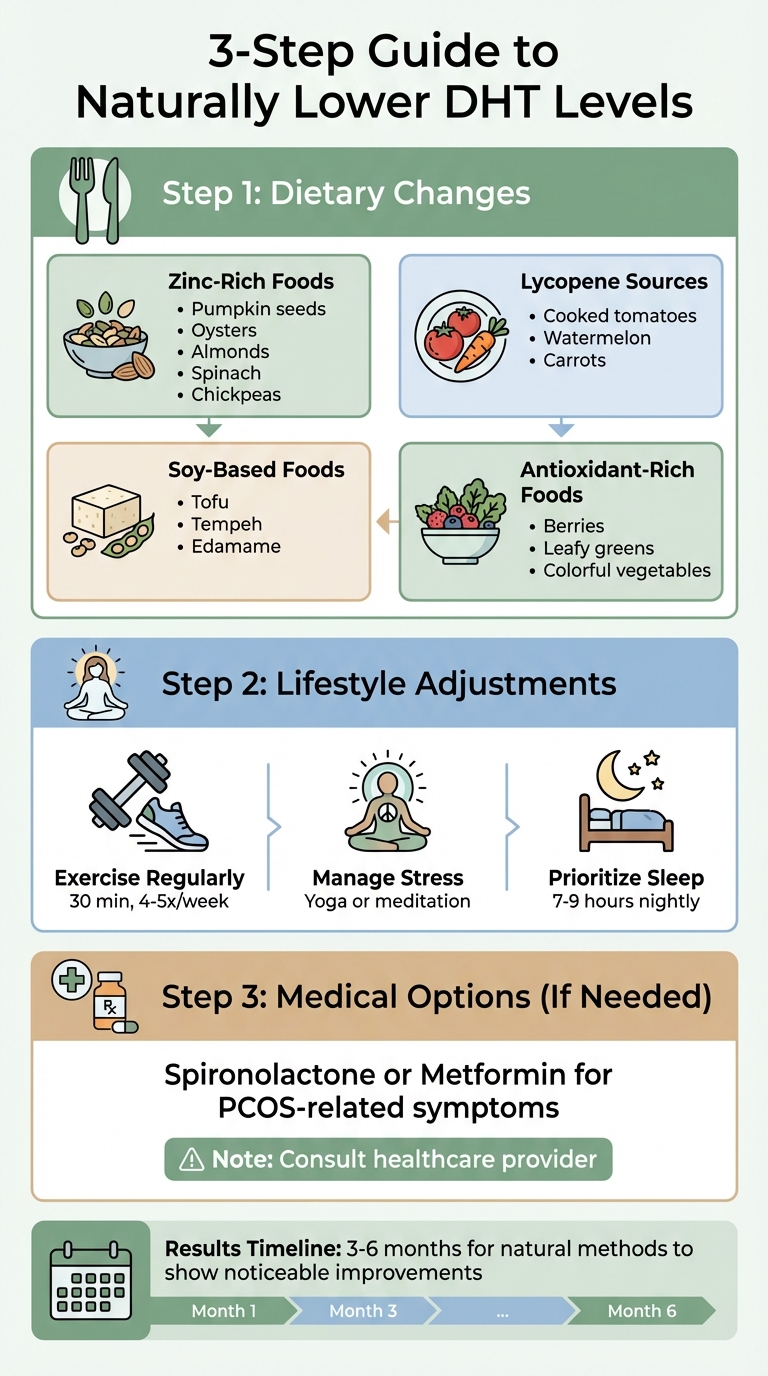
3-Step Guide to Naturally Lower DHT Levels Through Diet and Lifestyle
Hair Loss: Top 3 Natural Foods to Slow Balding- Thomas DeLauer

Foods That Help Lower DHT Levels
Some foods contain natural compounds that can help block 5-alpha reductase, the enzyme responsible for converting testosterone into DHT. By adding these items to your daily meals, you can support hormonal balance while making simple dietary changes. Below are key food groups known to help reduce DHT levels.
Eat More Zinc-Rich Foods
Zinc plays a vital role in inhibiting 5-alpha reductase and regulating androgen receptors, helping to maintain balanced hormone activity. Research has shown that pumpkin seed oil, which is packed with zinc and phytosterols, can improve hair count by 40% over 24 weeks when taken daily.
Try adding a tablespoon of raw or roasted pumpkin seeds to your salads, yogurt, or smoothies. Other excellent sources of zinc include oysters, cashews, almonds, spinach, kale, white button mushrooms, chickpeas, lentils, and quinoa. To boost zinc absorption, pair foods like spinach with a splash of lemon juice. While whole food sources are best, speak with a healthcare provider before using high-dose zinc supplements.
"For many patients, adding natural DHT blockers while also undergoing PRP or Bio-FUE hair transplant yields much better results than treatment alone." – Dr. Aman Dua, Co-Founder & Managing Director, AK Clinics
Add Lycopene-Rich Foods to Your Diet
Lycopene, a powerful antioxidant found in tomatoes, can inhibit 5-alpha reductase and reduce androgen activity. Interestingly, your body absorbs lycopene more effectively from cooked or processed tomatoes, so opt for tomato-based products like pasta sauce, tomato soup, or tomato paste. When combined with zinc and soy, lycopene becomes part of a well-rounded approach to lowering DHT.
For variety, you can also include lycopene-rich foods such as watermelon, mangoes, and carrots. Keep your preparations simple and avoid adding excessive sugars or artificial sweeteners to retain the anti-inflammatory benefits.
Include Soy-Based Foods with Isoflavones
Soy contains isoflavones, such as genistein and daidzein, which can inhibit 5-alpha reductase and help lower DHT levels. A 2007 study involving 58 men found that soy protein was more effective than milk protein at reducing DHT levels over a 3 to 6-month period.
Choose whole or fermented soy products like tofu, tempeh, and edamame instead of heavily processed options. Snack on steamed or roasted edamame, add tofu or tempeh to stir-fries or grain bowls, or use soy protein isolates as an alternative to milk-based protein powders.
"Soy contains isoflavones, which have mild estrogenic activity and can help counter androgen dominance when consumed in appropriate amounts." – Dr. Kalyani Deshmukh, MD (Dermatology, Venerology, and Leprosy), Traya
If you have thyroid concerns or digestive sensitivities, consult a healthcare provider before increasing your soy intake.
Eat Antioxidant-Rich Foods Daily
A diet rich in antioxidant-packed fruits and vegetables can help reduce inflammation, promoting better scalp health. Aim for a colorful mix of produce to maximize benefits. At the same time, avoid high-sugar or refined carbohydrate foods, as they can spike insulin levels, potentially increasing androgen activity.
Lifestyle Changes to Lower DHT
What you eat plays a big role in managing DHT levels, but your daily habits matter too. By combining smart dietary choices with healthy lifestyle changes, you can better balance your hormones. Physical activity, stress management, and quality sleep all contribute to how your body regulates hormones, working hand-in-hand with your diet to help lower DHT.
Exercise Regularly for Hormonal Health
Staying active can help reduce DHT levels by improving blood flow, reducing stress, and managing weight. Better circulation ensures that vital nutrients reach your hair follicles, supporting their health and function. Plus, carrying extra weight - especially around your midsection - can disrupt hormone balance and lead to higher androgen production.
"Regular physical activity is one of the best ways to maintain healthy testosterone levels." – Harvard Health
Try to get in 30 minutes of moderate exercise, 4–5 times a week. Activities like brisk walking, swimming, cycling, or jogging are great options. Resistance training, such as squats or bench presses, is also effective because it engages large muscle groups and supports hormone regulation. Studies even show that combining exercise with a healthy diet can improve hormone levels by up to 30%.
Manage Stress Wisely
Chronic stress can throw your hormones off balance. High levels of cortisol, the stress hormone, can interfere with testosterone production, which may lead to increased androgen levels and contribute to hair thinning.
"Chronic stress increases cortisol, a hormone that can interfere with testosterone production." – Jennifer Fisher, MMSc, PA-C, Harvard Health
To keep stress in check, consider adding yoga, meditation, or deep breathing exercises to your routine. Even something as simple as a scalp massage can promote blood flow to your scalp while helping you relax.
Prioritize Quality Sleep
Good sleep is essential for keeping your hormones in check. Most of your testosterone is released during REM sleep, so skimping on rest can disrupt your body's natural hormone balance.
Aim for seven to nine hours of uninterrupted sleep each night. Stick to a consistent sleep schedule by going to bed and waking up at the same time daily. Keep your bedroom cool, dark, and quiet, and avoid screens for at least an hour before bedtime to improve your sleep quality.
sbb-itb-6dba428
7-Day Meal Plan to Lower DHT
This 7-day meal plan, measured in US units, is designed to combine foods rich in zinc, lycopene, and hormone-balancing nutrients. The focus is on incorporating ingredients that naturally inhibit the 5-alpha reductase enzyme, which is responsible for converting testosterone into DHT. Each meal is crafted to include foods and nutrients known to help reduce DHT levels.
Kickstart your mornings with hormone-friendly choices. Begin with 1–2 cups of green tea. Its epigallocatechin gallate (EGCG) content helps protect hair follicles from DHT-related damage. For breakfast, pick between a 2-egg spinach and mushroom omelet paired with 1 cup of berries for a boost of quercetin, or enjoy 1 cup of Greek yogurt topped with 1 oz of pumpkin seeds and sliced banana.
Lunchtime is a great opportunity to include cooked tomatoes. A half-cup of tomato sauce provides a more absorbable form of lycopene compared to raw tomatoes. Try whole-grain pasta with marinara sauce, steamed kale, and a side of edamame (about 1 cup). Alternatively, build a Buddha bowl with quinoa, roasted carrots, avocado slices, and baked tofu cubes. Soy-based options like edamame and tofu are rich in isoflavones, which have been linked to lowering DHT levels.
Snack on 1 oz of almonds (about 23 nuts) that have been soaked overnight for better nutrient absorption. Another excellent option is 1 oz of pumpkin seeds, which are a great source of zinc. A 24-week study showed that men using pumpkin seed oil experienced a 40% increase in hair count, compared to just 10% in the placebo group.
End your day with a nutrient-packed dinner. Include foods that reinforce zinc intake and provide anti-inflammatory benefits. Options include oysters (3–4 medium-sized) served with sweet potato wedges, sautéed onions, and a green salad drizzled with olive oil. Another choice is grilled salmon paired with lentils and turmeric-roasted vegetables. Cooking with coconut oil adds lauric acid, which naturally inhibits DHT. Round out the meal with 1 cup of cooked spinach, providing 160 mg of magnesium to support hormone regulation.
This meal plan is a simple yet effective way to incorporate DHT-lowering foods into your daily routine.
When to Add Medical Treatment to Natural Approaches
Diet and lifestyle changes are often the first steps in managing high DHT levels, but sometimes they need extra support. If after 1–3 months of adjustments - like improving your diet or managing stress - you’re still dealing with persistent symptoms such as cystic acne, excessive facial or body hair (hirsutism), continued hair thinning, or irregular menstrual cycles, it might be time to look into medical treatments.
For example, if follow-up tests show no noticeable drop in free testosterone or DHT levels despite trying natural remedies like spearmint tea or flaxseed, medical intervention could be the next step. Additionally, about 20% to 30% of people with PCOS experience elevated adrenal DHEA-S, which is often triggered by stress rather than insulin. If stress-reduction strategies like yoga haven’t been effective, prescription treatments may provide the relief you need.
Prescription Treatments for High DHT Levels
Spironolactone is a widely used medication for managing high androgen levels. It works by blocking androgen receptors, helping to reduce acne, unwanted hair growth, and hair thinning. If natural options like red reishi mushrooms haven’t been effective in controlling hair loss, Spironolactone provides a more targeted solution.
For individuals facing both insulin resistance and symptoms tied to high DHT, combining Metformin with Spironolactone can be particularly effective. Metformin enhances insulin sensitivity, which in turn helps lower testosterone levels. Spironolactone, on the other hand, directly addresses androgen-related issues like acne and hirsutism. Together, these medications tackle multiple underlying causes of PCOS that dietary changes alone might not resolve.
When natural methods and standard prescriptions fall short, seeking professional medical treatment becomes a critical step.
Oana Health Treatment Costs and Options

Oana Health offers personalized prescription treatments that integrate seamlessly with your current dietary and lifestyle efforts. These treatments are delivered directly to your doorstep with free shipping, making it convenient to access professional care.
| Treatment Option | Monthly Cost | Primary Benefit |
|---|---|---|
| Spironolactone | $14 | Reduces acne, hirsutism, and hair thinning by targeting high androgen levels. |
| Metformin & Spironolactone | $32 | Combines insulin resistance management with androgen-blocking benefits. |
These treatment plans are tailored by licensed medical professionals who review your health history. If you’ve been tracking symptoms like acne flare-ups or changes in hair growth for at least 30 days and haven’t seen improvements with natural anti-androgens, it’s a good idea to consult a healthcare provider for additional options.
Conclusion
The best outcomes come from combining diet, lifestyle changes, and medical treatments. Natural strategies - like eating zinc-rich foods, sipping green or spearmint tea, managing stress, and getting quality sleep - help create a strong foundation for hormonal balance. That said, these methods often take a few months to show noticeable results.
If symptoms like stubborn acne, excessive hair growth, or thinning hair persist despite these efforts, prescription treatments such as Spironolactone or Metformin can offer more focused relief. Research indicates that combining natural and medical approaches can lead to three times better results compared to relying on just one method.
A good starting point? Swap out high-saturated fat snacks for healthier options like pumpkin seeds or walnuts, drink 1–2 cups of green or spearmint tea daily, and aim for 7–9 hours of restful sleep. Track your progress over several months, and if you’re not seeing the changes you hoped for, it might be time to consult a healthcare professional about prescription options. As mentioned earlier, platforms like Oana Health can provide expert support to complement these lifestyle adjustments. This combined approach promotes balanced hormones, paving the way for healthier skin and hair.
For personalized solutions, Oana Health offers treatments like Spironolactone starting at just $14 per month, with free shipping straight to your door. Take charge of your hormonal health today and set yourself up for lasting improvements.
FAQs
How long does it take to see results from natural methods to lower DHT levels?
Reducing DHT levels naturally is a gradual process, often requiring about 12 to 24 weeks of consistent effort to see visible changes. However, the timeline can differ from person to person, influenced by factors like overall health, dietary habits, and how well lifestyle changes are followed.
Consistency is key here - hormonal adjustments and their effects take time to unfold. If you're seeking extra guidance or tailored advice, reaching out to a healthcare provider can help you explore options that fit your specific needs.
Can stress and poor sleep increase DHT levels?
Yes, both stress and poor sleep can influence DHT levels, which can, in turn, impact hormonal balance and hair health. High stress prompts the body to release androgens, including DHT, a hormone associated with hair thinning and loss. Similarly, poor-quality or insufficient sleep can interfere with hormonal regulation, potentially leading to an increase in DHT levels.
Incorporating stress management techniques, such as meditation or deep breathing, and prioritizing consistent, restful sleep can help maintain balanced DHT levels. These adjustments are particularly important for conditions like PCOS, where elevated DHT often contributes to symptoms like hair thinning and oily skin.
Which foods should I avoid to help lower DHT levels?
To keep DHT levels in check, it's wise to steer clear of foods that may interfere with hormonal balance or lead to insulin resistance. This includes refined carbohydrates, sugary snacks and drinks, processed foods, and certain vegetable oils like soybean oil and corn oil. These foods can trigger inflammation, which might contribute to higher DHT production.
Instead, aim for a diet packed with whole, nutrient-rich foods. A balanced approach like this not only supports overall hormonal health but can also help regulate DHT levels more effectively.