
Spearmint Tea for PCOS Hair Loss
Spearmint tea may help manage PCOS-related hair loss by reducing androgen levels, which are often elevated in women with PCOS. Studies show that drinking two cups daily can significantly lower free and total testosterone levels, with improvements in hormonal balance observed after consistent use for several months. At just $9.60 per month, spearmint tea offers an affordable and natural option for addressing symptoms like hair thinning and hirsutism.
- How it works: Spearmint tea contains compounds like carvone and rosmarinic acid that act as natural anti-androgens, reducing testosterone while supporting hormone regulation.
- Research findings: A 30-day study showed a 28.9% decrease in free testosterone and a 23.5% drop in total testosterone. However, visible hair regrowth may take 3–6 months due to hair growth cycles.
- Usage: Drink 2 cups daily, ideally during the follicular phase of your cycle (days 1–14). Consistency is key for results.
- Safety: Generally well-tolerated, but consult a doctor if pregnant, breastfeeding, or managing other health conditions.
For faster results, spearmint tea can be paired with prescription treatments like topical spironolactone or oral minoxidil. While tea alone may not fully reverse hair loss, it can be part of a broader strategy to manage PCOS symptoms effectively.
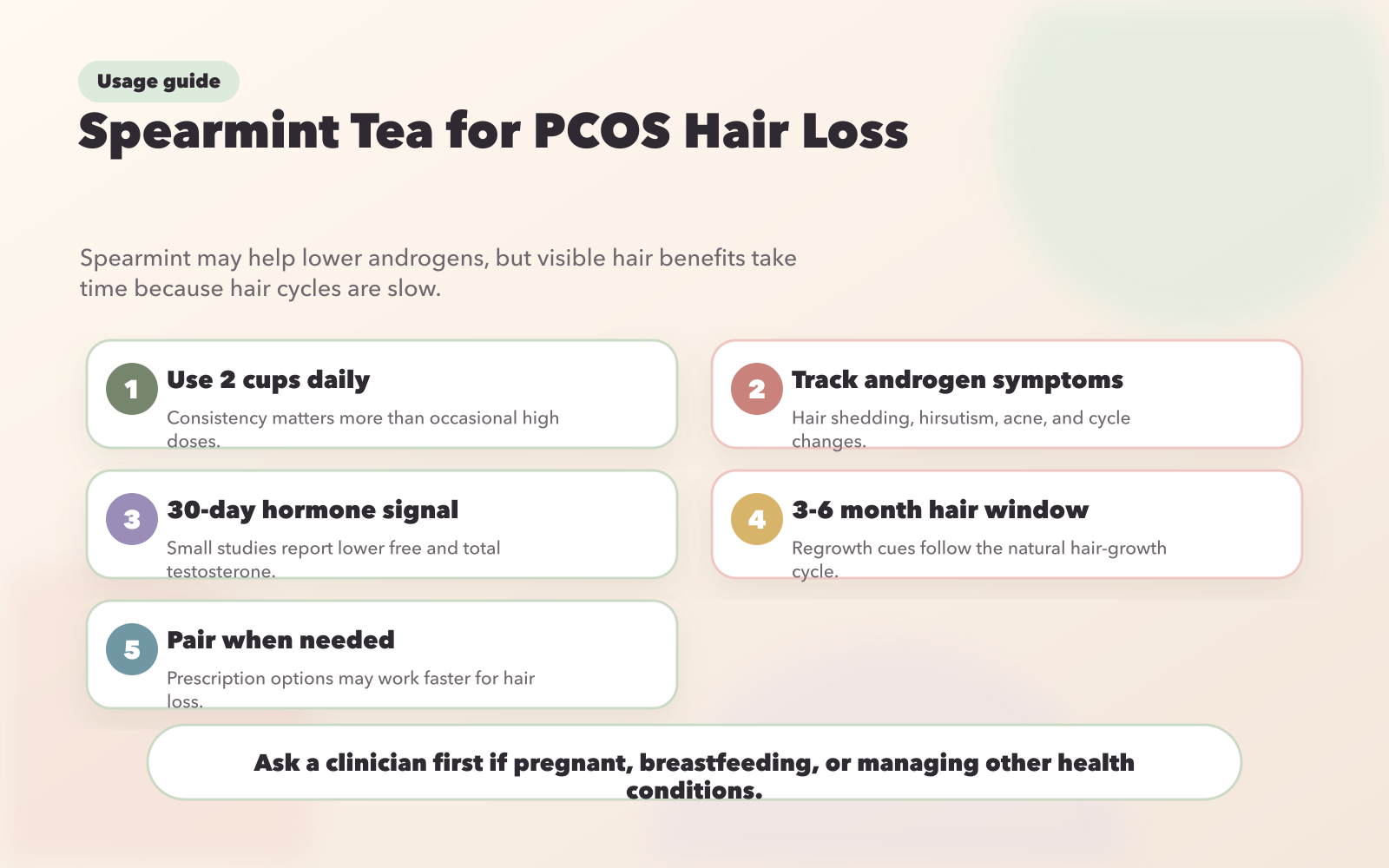
Spearmint Tea Benefits for PCOS Hair Loss: Research Results and Usage Guide
How Spearmint Tea Reduces Androgens
Androgens and Hair Loss in PCOS
In women with PCOS, elevated androgen levels - like testosterone - can bind to receptors in scalp hair follicles, leading to follicle miniaturization and a shorter hair growth phase. This process, known as androgenic alopecia, often causes thinning hair on the top and crown of the scalp. At the same time, it may trigger excessive hair growth in areas like the face, chest, and abdomen. Since free testosterone is the active form of the hormone, even small reductions can slow hair loss and reduce hirsutism. Addressing androgens directly tackles the underlying cause of these symptoms, making it easier to see how spearmint tea plays a role in managing them.
Anti-Androgen Compounds in Spearmint Tea
The anti-androgen effects of spearmint tea come from its bioactive compounds. Key players like carvone, rosmarinic acid, and flavonoids work together to lower androgen levels. Molecular docking studies have also identified additional active compounds in spearmint with strong binding capabilities to proteins linked to PCOS.
These compounds may reduce free testosterone by activating CYP3A4, an enzyme critical for hormone metabolism, and by minimizing oxidative stress.
"The main compound of spearmint, Carvone, is significant for treating PCOS." - Jinsol Lee, Yeong Woo Kim, et al.
Beyond its anti-androgen properties, spearmint tea has been found to increase levels of Luteinizing Hormone (LH) and Follicle-Stimulating Hormone (FSH), which helps restore hormonal balance overall.
Research on Spearmint Tea for PCOS Hair Loss
Studies on Spearmint Tea and PCOS
Research suggests that spearmint tea may help lower androgen levels in individuals with PCOS, although its direct impact on scalp hair regrowth remains unproven. The most detailed study to date was conducted at Eastbourne District General Hospital in the UK. This 30-day randomized controlled trial involved 42 women with PCOS, each consuming two cups of spearmint tea daily. Results showed a 28.9% decrease in free testosterone and a 23.5% reduction in total testosterone. Additionally, luteinizing hormone (LH) and follicle-stimulating hormone (FSH) levels increased, indicating a more balanced hormonal profile. These findings support the idea that spearmint tea works as an anti-androgenic agent, potentially addressing PCOS-related hair loss.
An earlier Turkish study, though smaller in scale, echoed these findings. Over just five days, 12 participants who drank spearmint tea twice daily experienced significant reductions in free testosterone levels, along with increases in LH, FSH, and estradiol.
However, the UK trial uncovered a gap between hormonal changes and visible clinical outcomes. While participants reported subjective improvements in hair-related issues (p < 0.05), objective assessments using the Ferriman-Galwey score - a tool for measuring hirsutism - did not show significant changes (p = 0.12). Dr. Paul Grant from the Department of Diabetes and Endocrinology explained this discrepancy:
"It was demonstrated and confirmed that spearmint has antiandrogen properties, the simple fact that this does not clearly translate into clinical practice is due to the relationship between androgen hormones and follicular hair growth and cell turnover time."
This highlights the time-sensitive nature of hair growth cycles, which typically span several months. Short treatment durations may not be enough to observe visible changes. Recent molecular docking studies have also identified spearmint compounds, such as bicyclogermacrene and cubebol, that show strong binding affinities (–8.1 to –8.5 kcal/mol) to proteins associated with PCOS. While these findings suggest spearmint tea positively influences hormonal balance, its role in promoting actual hair regrowth remains an area for further study.
Research Gaps and Limitations
The current body of research has several limitations. Most studies on spearmint tea have been relatively short, lasting between 5 and 30 days. Such brief durations are insufficient to capture changes in hair growth, which typically require 3 to 6 months to become noticeable. Additionally, the sample sizes in these studies have been small, with the largest trial involving only 42 participants.
Another issue is that much of the research has focused on hirsutism (excess body hair) rather than scalp hair loss. While both conditions are linked to elevated androgen levels, they may respond differently to hormonal treatments. Furthermore, the distinct taste of spearmint makes it difficult to design fully blinded studies, which can compromise the reliability of subjective self-reports.
How to Use Spearmint Tea for Hair Loss
Dosage and Preparation Guidelines
Drinking 2 cups of spearmint tea daily - one in the morning and another before bed - can help regulate hormones consistently. Some individuals suggest increasing this to 3 cups per day for added benefits.
To prepare, steep 1–2 teaspoons of dried spearmint leaves or a single tea bag in boiling water for 3–5 minutes. Be sure to cover the cup while steeping to preserve the beneficial compounds. Afterward, remove the leaves or tea bag to prevent any bitterness. It's important to use 100% pure spearmint (Mentha spicata), as it contains the specific anti-androgenic properties needed to address PCOS symptoms. Avoid using peppermint or generic mint blends, as they lack these effects.
For best results, drink spearmint tea during the follicular phase of your menstrual cycle (days 1–14), as this is when it can most effectively help reduce testosterone levels. Consistency is key - hormonal changes may begin within 5 to 30 days, but noticeable improvements in hair growth usually take 8 to 12 weeks, with the most significant results often appearing after 5 to 6 months of daily use.
Pairing proper tea preparation with a consistent routine and healthy lifestyle habits can further support hair health in individuals with PCOS.
Additional Strategies for Hair Health
To amplify the anti-androgenic benefits of spearmint tea, consider incorporating a few simple lifestyle and dietary changes. Focus on eating low-glycemic foods, getting 7–9 hours of sleep, engaging in both aerobic and resistance exercises, and managing stress through activities like meditation or walking. These steps can enhance insulin sensitivity and help lower androgen levels.
For added support, some women combine spearmint tea with supplements like inositol, which promotes better insulin sensitivity, or soluble fiber from foods like apples, oats, and legumes to help stabilize blood sugar and control appetite. These complementary strategies work together to create a well-rounded approach to managing PCOS-related hair loss effectively.
Combining Spearmint Tea with Oana Health Treatments
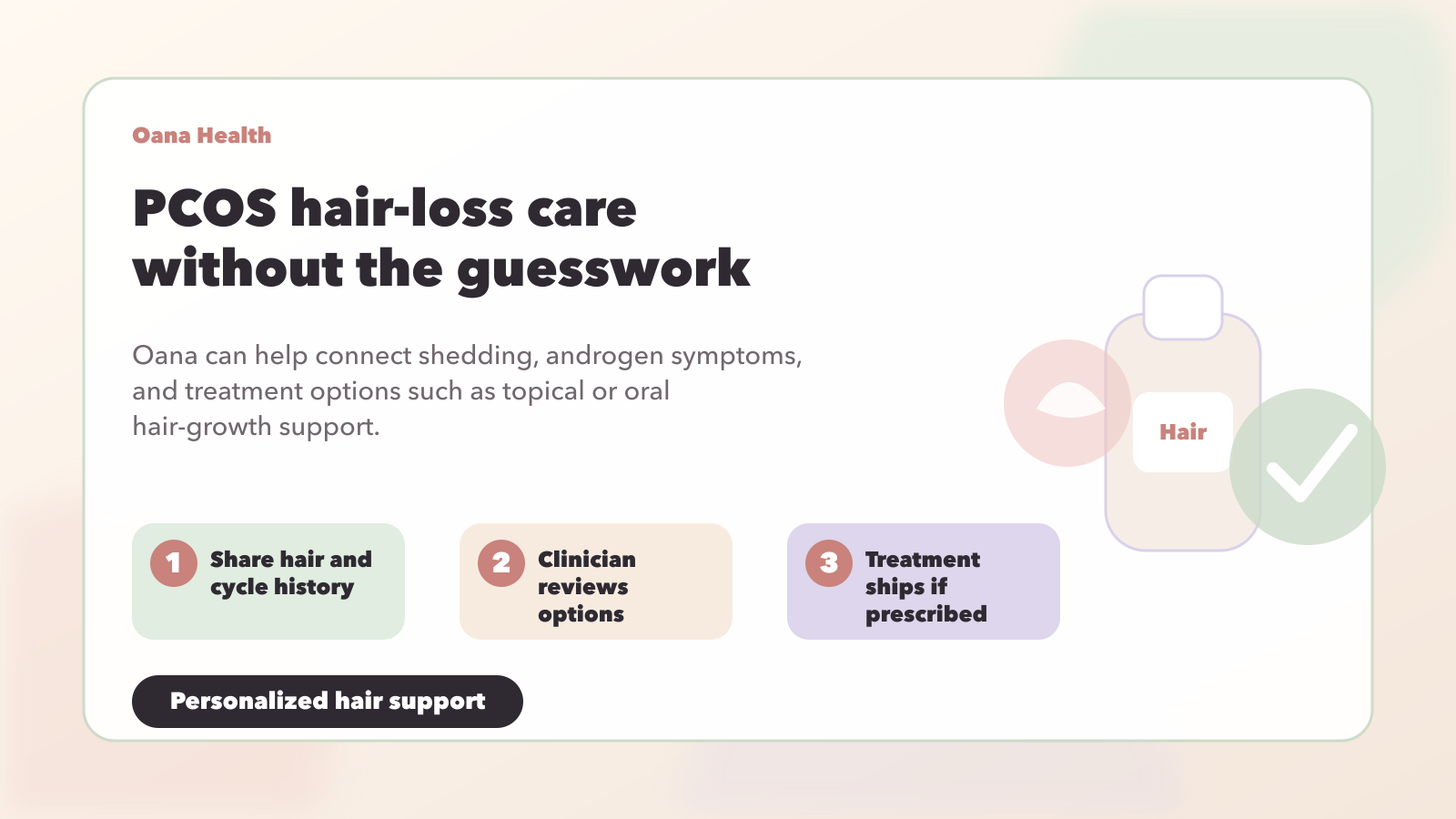
Oana Health's PCOS Treatment Services
Spearmint tea's hormone-lowering properties can be a great starting point for managing PCOS symptoms, but Oana Health takes it further with personalized prescription treatments. Through online consultations, licensed healthcare providers assess your health history and design tailored treatment plans that are delivered right to your door. Their services target a range of PCOS symptoms, including hair loss, unwanted facial hair, acne, insulin resistance, and weight management - all from the convenience of your home. By combining natural remedies like spearmint tea with proven medical solutions, Oana Health provides a well-rounded approach to treating hormonal imbalances and clinical hair loss.
Prescription Options for Hair Loss
Pairing spearmint tea with prescription treatments creates a powerful combination to tackle PCOS-related hair loss. Oana Health offers options like Topical Spironolactone ($43/month), which blocks androgens from binding to hair follicles, and Oral Minoxidil ($25/month), which promotes hair regrowth. When used alongside spearmint tea - an affordable natural option at about $10/month that helps reduce free testosterone - this dual approach attacks hair loss on multiple fronts.
"The consumption of Spearmint Tea produces the same hormonal modifications as Spironolactone, the pharmaceutical treatment of choice for PCOS related hair loss, with no known side effects." - Hairloss-research.org
While Spironolactone can cause side effects like dizziness or fatigue in at least 10% of users, spearmint tea is generally well-tolerated, caffeine-free, and easy to incorporate into daily life. For noticeable improvements in hair growth, consistent treatment over 3 to 6 months is typically required.
sbb-itb-6dba428
Side Effects and Safety Considerations
Common Side Effects of Spearmint Tea
Spearmint tea is widely regarded as safe and is even classified as "Generally Recognized as Safe" (GRAS) by the U.S. Food and Drug Administration. In a 30-day clinical trial, women who consumed spearmint tea reported no adverse effects.
"Spearmint tea has very few side effects and is generally well tolerated. The only known side effect is that it may cause heartburn or acid reflux, though this is rare." - Lisa Watson, ND
That said, some individuals might experience mild reactions like digestive discomfort, skin irritation, or more frequent urination due to its diuretic properties. Men should steer clear of spearmint tea, as its anti-androgenic effects could potentially lead to gynecomastia (breast tissue development) with long-term use.
Pregnant or breastfeeding individuals should exercise caution and consult their doctor before consuming spearmint tea, as high doses might impact the uterus. Additionally, the effects of drinking large amounts over extended periods remain unclear, so sticking to 2–3 cups per day is a safe guideline.
When to Seek Medical Advice
If you’re considering adding spearmint tea to your routine and are taking medications, pregnant, or managing pre-existing liver or kidney conditions, it’s wise to check with a healthcare provider first. Also, if you’ve been drinking spearmint tea consistently for several months (3–6 months) without seeing improvements in hair loss or other PCOS symptoms, it’s time to seek medical advice.
For those looking for expert guidance, Oana Health offers telehealth consultations with licensed providers. They can help determine whether spearmint tea is sufficient or if prescription options like Topical Spironolactone or Oral Minoxidil might be more effective. Their service is convenient, with treatments delivered straight to your door, complete with free shipping.
Stop Facial Hair Growth And Acne By Drinking Spearmint Tea
Conclusion
Spearmint tea offers a natural, affordable way to help manage PCOS-related hair loss by lowering androgen levels. Backed by science, clinical trials have shown that drinking spearmint tea twice daily can significantly reduce testosterone levels. At just about $9.60 a month, it’s an economical option for those looking for a simple addition to their routine.
That said, addressing PCOS hair loss involves more than just tackling androgen levels. It’s also about managing hormonal imbalances, insulin resistance, and other metabolic factors. While hormonal shifts can happen relatively quickly, noticeable hair regrowth typically takes 3 to 6 months due to the natural hair growth cycle. Staying consistent with your approach is key. Pairing natural solutions like spearmint tea with targeted medical treatments can help speed up results.
For more personalized care, consider consulting Oana Health for prescription treatments such as Topical Spironolactone or Oral Minoxidil.
Whether you decide to start with spearmint tea alone or combine it with medical treatments, the most important factor is consistency. Stick to a daily regimen, monitor your progress over several months, and seek professional advice if you’re not seeing the improvements you expect. A well-rounded approach that blends natural remedies with medical guidance can help restore both your hair and hormonal balance effectively.
FAQs
How long does it take to see hair regrowth from drinking spearmint tea for PCOS?
Many women dealing with PCOS have reported noticeable hair regrowth after consistently drinking spearmint tea for about 5 to 6 months, though some start seeing changes as early as 3 months. To maximize its benefits, it’s suggested to enjoy spearmint tea twice a day.
That said, results can vary from person to person, depending on factors like hormone levels and how consistently the tea is consumed. Spearmint tea is believed to help by reducing androgen levels, which are often linked to hair loss in women with PCOS.
Can men drink spearmint tea to treat hair loss?
Yes, men can drink spearmint tea, as it might help reduce testosterone levels. However, there’s no solid scientific proof that it can treat male-pattern hair loss. Its anti-androgenic effects could also lead to side effects like gynecomastia (enlarged breast tissue) if consumed over a long period. If you’re thinking about using spearmint tea for hair loss, it’s a good idea to consult a healthcare professional beforehand.
Can you drink spearmint tea while pregnant or breastfeeding?
While there’s not enough solid evidence to confirm whether spearmint tea is safe during pregnancy or breastfeeding, it’s always better to play it safe. To protect both your health and your baby’s, make sure to check with your healthcare provider before including spearmint tea in your diet.