
Spironolactone and Hormonal Therapy: Risks vs. Benefits
Spironolactone is a commonly prescribed medication for conditions like hormonal acne, hirsutism, and PCOS symptoms. It works by blocking androgen receptors, helping reduce acne, unwanted hair growth, and other hormone-related issues. While effective, it comes with potential side effects such as menstrual irregularities, breast tenderness, and, in rare cases, elevated potassium levels (hyperkalemia). It is unsuitable for pregnancy due to risks to male fetal development.
Key takeaways:
- Benefits: Reduces acne, hirsutism, and PCOS symptoms; improves self-esteem.
- Risks: Menstrual changes, breast tenderness, rare hyperkalemia; contraindicated during pregnancy.
- Usage: Regular monitoring of potassium and kidney function is essential. Combining with contraceptives or metformin can optimize outcomes.
For women not planning pregnancy and struggling with hormonal symptoms, spironolactone can be a helpful option when monitored carefully by a healthcare provider.
Benefits of Spironolactone in Hormonal Therapy
Reduction of Androgen-Related Symptoms
Spironolactone works by blocking androgen receptors, which helps lower sebum production and clear up hormonal acne. Dermatologists typically recommend daily doses ranging from 50–200 mg, and many patients start to notice improvements in their acne within a few weeks to a few months.
For those dealing with hirsutism - excessive hair growth on areas like the face, chest, or back - spironolactone reduces androgen activity directly at the hair follicle. This often leads to a noticeable reduction in hair growth after 6–12 months of consistent use. Additionally, it can help address scalp hair thinning, making it a versatile option for managing various symptoms tied to hormonal imbalances, including those associated with polycystic ovary syndrome (PCOS).
PCOS Symptom Management
Women with PCOS often experience a range of symptoms linked to elevated androgen levels, from acne and unwanted facial hair to hormone-driven weight changes. Spironolactone plays a key role in reducing these visible effects. When combined with oral contraceptives, the treatment can also help regulate menstrual cycles, although the results can vary depending on the dosage.
For a more comprehensive approach, the MetSpiro pack combines spironolactone with metformin for $32 per month. This duo addresses both androgen-related symptoms and insulin resistance, offering a targeted solution for women with PCOS.
Thanks to Oana, my menstrual cycles are more regular, and my skin has never looked better!
- Margaret K., MetSpiro user [1]
Improved Quality of Life
Beyond the physical changes, spironolactone's ability to clear acne and reduce unwanted hair often leads to a significant boost in self-esteem and emotional well-being. Studies have shown that with continued use, many women experience lasting improvements in confidence and daily life. Most report noticeable changes in their overall quality of life within 6–12 months.
It's been a little over 5 weeks, and I've noticed a dramatic reduction in my facial hair growth. This has been such a relief for me.
- Allison L. [1]
These positive outcomes pave the way for a closer look at spironolactone's safety considerations.
Spironolactone Q&A with Dermatologist Dr. Jenny Liu
Risks and Side Effects of Spironolactone
Knowing the potential risks of spironolactone is crucial for weighing its advantages in hormonal therapy.
Mild to Moderate Side Effects
About 30% of women report mild to moderate side effects early in their treatment. One common issue is increased urination, which usually subsides as the body adapts. Menstrual irregularities - such as heavy periods, spotting, or missed cycles - occur in 20% of women, but this number can jump to over 70% when taking doses of 200 mg or more.
Other side effects include breast tenderness or swelling, which affects 5–17% of women, while around 2% notice breast enlargement. Additional complaints often include fatigue, headaches, dizziness (particularly when standing up quickly), bloating, nausea, dry skin, and reduced libido. These symptoms are often linked to dosage and tend to diminish over time or with dose adjustments. This underscores the importance of careful dosing and regular monitoring during treatment.
Risk of Hyperkalemia
Because spironolactone spares potassium, it can sometimes lead to elevated potassium levels, a condition called hyperkalemia. For healthy women under 45 without kidney problems or conflicting medications, the risk is relatively low - approximately 0.75%. However, for women over 46, the risk can rise to as high as 16%.
Symptoms of hyperkalemia include muscle weakness, heart palpitations, fatigue, confusion, and reduced urine output. To manage this risk, healthcare providers check kidney function and potassium levels before starting treatment, again at 2–8 weeks, and periodically afterward. This is especially important for older patients, those with kidney or heart conditions, or anyone taking medications like ACE inhibitors, ARBs, NSAIDs, or potassium supplements. It’s also recommended to avoid potassium-rich supplements and salt substitutes unless explicitly advised by your doctor.
Pregnancy Contraindications
Spironolactone presents serious risks during pregnancy. Animal studies suggest it can disrupt the development of male sex organs, potentially causing feminization in male fetuses. Although human data is limited, most specialists in the U.S. recommend stopping spironolactone before conception.
If you’re of childbearing age, your doctor will likely recommend effective contraception, often a combined oral contraceptive, which can also help regulate menstrual cycles while on spironolactone. If you’re planning to become pregnant or discover you’re pregnant, stop taking spironolactone immediately.
Benefits vs. Risks: A Comparison
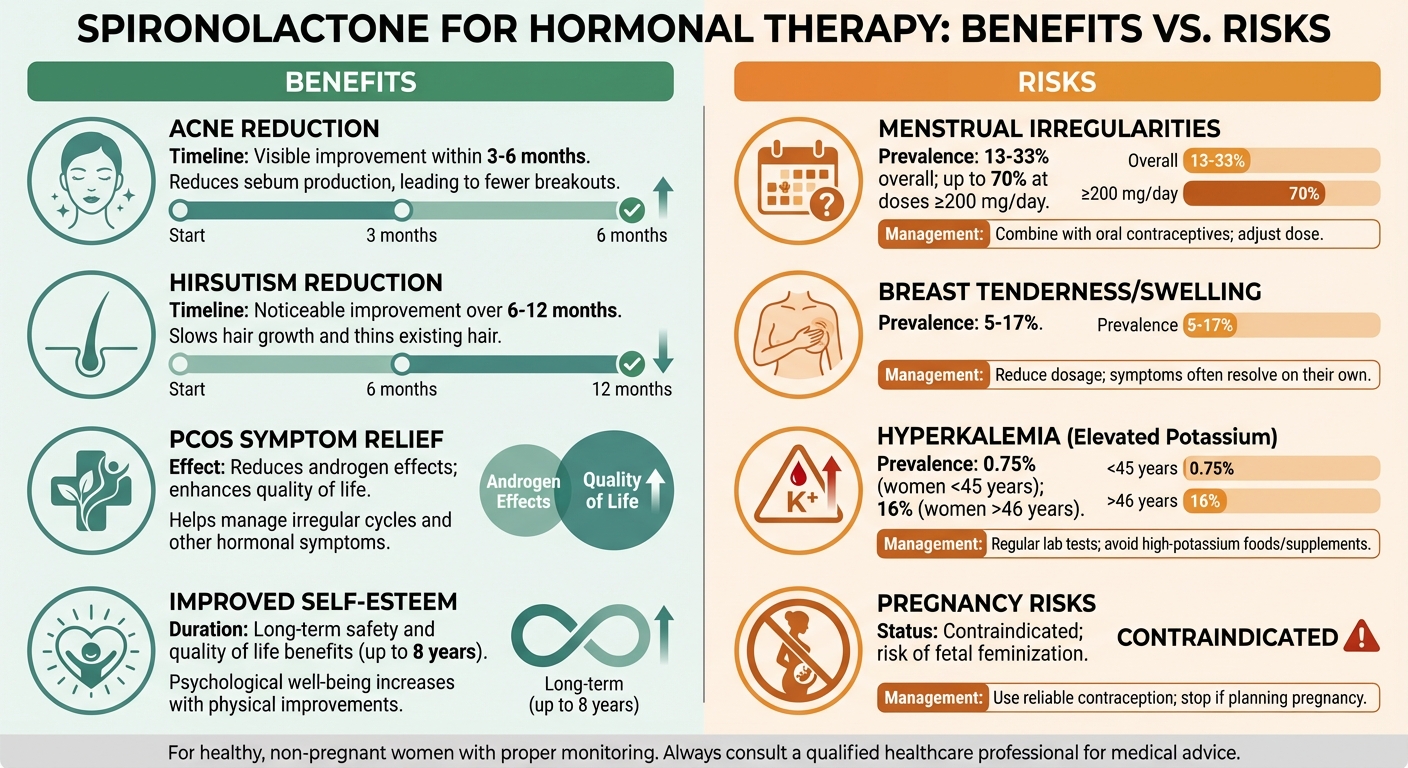
Spironolactone Benefits vs Risks: Complete Comparison Chart
Spironolactone offers a range of benefits for conditions like hormonal acne, hirsutism, and PCOS, but it’s important to weigh these against the potential risks. Long-term studies, some spanning up to 8 years, suggest that spironolactone is generally safe. While side effects are common, they’re rarely severe enough to require stopping the medication entirely.
Among the more frequent side effects are menstrual irregularities, which affect around 13–33% of users overall and can climb to over 70% at doses of 200 mg or more. Other issues include breast tenderness (reported in 5–17% of cases) and increased urination (around 30%). These effects are usually mild and can often be managed by adjusting the dosage or combining the medication with an oral contraceptive.
More serious concerns include hyperkalemia, or elevated potassium levels, which occurs in about 0.75% of women under 45 and up to 16% of women over 46, particularly if kidney function is impaired or other interacting medications are used. Additionally, spironolactone is not safe during pregnancy due to the risk of feminizing male fetuses. For otherwise healthy, nonpregnant women dealing with persistent hormonal acne or PCOS symptoms, the emotional and cosmetic benefits often outweigh these manageable risks, provided there’s proper monitoring and contraception in place.
Benefits and Risks Comparison Table
| Benefit | Prevalence/Effect | Risk | Prevalence | Risk Management |
|---|---|---|---|---|
| Acne reduction | Visible improvement within 3–6 months | Menstrual irregularities | 13–33%; up to 70% at doses ≥200 mg/day | Combine with oral contraceptives; adjust dose |
| Hirsutism reduction | Noticeable improvement over 6–12 months | Breast tenderness/swelling | 5–17% | Reduce dosage; symptoms often resolve on their own |
| PCOS symptom relief | Helps reduce androgen effects; enhances quality of life | Hyperkalemia | 0.75% (<45 yrs); 16% (>46 yrs) | Regular lab tests; avoid high-potassium foods/supplements |
| Improved self-esteem | Long-term safety and quality of life benefits (up to 8 years) | Pregnancy risks | Contraindicated; risk of fetal feminization | Use reliable contraception; stop if planning pregnancy |
This table underscores that while common side effects like menstrual changes and breast tenderness can be inconvenient, they’re typically manageable with simple interventions. More serious risks, such as hyperkalemia and pregnancy-related complications, require careful attention but are relatively rare when the medication is used appropriately.
sbb-itb-6dba428
Risk Mitigation and Safe Use Strategies
Monitoring and Dose Adjustments
To ensure safe use of spironolactone, it's essential to start with baseline tests for kidney function (creatinine/eGFR), potassium levels, and blood pressure. After starting the medication or adjusting the dose, these labs should be reassessed within 1–3 months and then monitored every 6–12 months for healthy women. For older individuals or those with underlying conditions, more frequent monitoring is recommended - every 1–2 weeks after a dose change, followed by checks every 3–6 months.
Starting with a low dose and increasing it gradually is key to minimizing side effects while achieving effective symptom control. Typically, treatment begins at 25–50 mg daily, with dose adjustments every 4–8 weeks based on lab results, symptom improvement, and side effects. Since higher doses (100–200 mg daily or more) are associated with side effects like menstrual irregularities and breast tenderness, many patients find 50–100 mg per day effective while keeping these issues manageable. If side effects such as dizziness or fatigue arise, adjusting the dose or timing can often resolve them without needing to stop the medication entirely. These precautions help create a solid foundation for combining spironolactone with other therapies to improve outcomes further.
Combination with Other Therapies
Combining spironolactone with combined oral contraceptives (COCs) can enhance treatment for acne and hirsutism while addressing menstrual irregularities. COCs work by reducing ovarian androgen production, while spironolactone blocks androgen receptors at the skin and hair follicle level. Additionally, COCs stabilize menstrual cycles and provide necessary contraception, as spironolactone is not safe during pregnancy.
For women with polycystic ovary syndrome (PCOS), adding metformin to spironolactone can provide broader symptom relief. Metformin addresses insulin resistance and metabolic concerns, while spironolactone targets androgen-related skin and hair issues. This complementary approach avoids increasing potassium levels, a potential risk with spironolactone. Many healthcare providers use a tailored combination approach: metformin for metabolic and ovulatory issues, spironolactone for acne and unwanted hair, and a COC for cycle regulation, depending on the patient’s reproductive goals. Regular monitoring of kidney function and other labs is critical, and spironolactone is typically paused if pregnancy is being planned. These strategies, combined with personalized care, ensure that treatments meet the unique needs of each patient.
Oana Health's Personalized Spironolactone Options
Oana Health offers a convenient telehealth solution for spironolactone treatment, focusing on safety and individualized care. Licensed clinicians evaluate your medical history, order baseline and follow-up labs for potassium and kidney function, and adjust doses based on symptoms and lab results - all through virtual visits, reducing the need for frequent in-person appointments.
Oana Health provides several affordable options:
- Oral spironolactone starting at $14 per month
- Metformin & Spironolactone combination pack at $32 per month
- Topical spironolactone at $43 per month
All treatments are prepared in FDA-regulated pharmacies and delivered directly to your home with free shipping. After completing a brief online intake, your treatment plan is customized to your needs, with ongoing support for dose adjustments and managing any side effects. This approach ensures that safety and convenience go hand in hand.
When Benefits Outweigh Risks
Patient Selection and Suitability
Carefully choosing the right patients is essential to maximizing the benefits of spironolactone while minimizing its risks. This medication is particularly effective for non-pregnant, reproductive-aged women dealing with androgen-driven conditions that haven't responded to other treatments like topical therapies or a round of oral antibiotics. Ideal candidates often have moderate to severe acne that follows a hormonal pattern - think breakouts along the jawline and lower face, especially worsening around their menstrual cycle. Women with PCOS experiencing excessive hair growth (hirsutism) that hasn’t improved with cosmetic treatments or oral contraceptives also often benefit.
However, it's crucial that candidates aren't pregnant or planning to conceive, as spironolactone can affect male fetal development. Reliable contraception is a must. Additionally, patients should have normal kidney function, avoid combining spironolactone with other potassium-sparing medications or high-dose potassium supplements, and not have severe heart failure or unstable blood pressure.
Commitment to regular follow-ups and lab monitoring is another key factor. It's important for patients to understand that visible improvements in acne or hirsutism can take anywhere from three to twelve months of consistent use. For younger women in good health without kidney issues, the risk of serious hyperkalemia is low. For instance, consider a 28-year-old woman with PCOS, normal kidney function, persistent jawline acne, and troublesome facial hair. If she's tried standard treatments without success, spironolactone could offer her a significant improvement in her skin and hair concerns, making the manageable side effects well worth it.
Consultation with Licensed Providers
Partnering with licensed healthcare professionals ensures that spironolactone therapy is tailored to your specific hormonal health needs and medical history. Providers carefully evaluate your symptoms - like acne patterns, hair growth, and menstrual irregularities - along with other PCOS-related concerns to confirm that they are androgen-driven and that spironolactone is an appropriate treatment. They also review your health history, medications, and lab results to rule out kidney issues, blood pressure problems, and potential drug interactions.
For added convenience, platforms like Oana Health offer telehealth consultations with clinicians who specialize in female hormones and PCOS. After completing a brief online intake, you can receive a personalized treatment plan that may include spironolactone, along with guidance on weight management, insulin resistance, or mental health. Through secure messaging and virtual follow-ups, these providers monitor your progress, adjust dosages, and modify contraceptive strategies as needed to ensure you’re balancing the benefits and risks effectively.
This collaborative approach involves open discussions about realistic expectations - such as how long it might take to see improvement in acne or hair growth - and a clear explanation of possible side effects, both common and rare. Providers emphasize the importance of avoiding pregnancy while on spironolactone, thoroughly reviewing contraception options to help you align the treatment with your personal goals and lifestyle.
Conclusion
Spironolactone has proven to be a helpful option for managing hormonal acne, unwanted hair, and symptoms related to PCOS, particularly when other treatments fall short. Clinical studies show that many women notice visible improvements in their skin and hair growth within three to twelve months of starting the medication. These changes often bring an added boost to confidence and overall quality of life. When appropriately monitored, spironolactone is considered safe for long-term use.
However, like any medication, it does come with potential side effects. Common issues include increased urination, irregular menstrual cycles, and breast tenderness. While the risk of hyperkalemia (elevated potassium levels) is rare in younger, healthy women, it can be more common in older individuals or those with kidney conditions. It’s also important to note that spironolactone is not safe during pregnancy due to the risk of feminizing a male fetus, making effective contraception a must for those taking it.
For healthy, non-pregnant women dealing with moderate to severe hormonal symptoms, the benefits of spironolactone often outweigh the risks - provided regular monitoring and lab tests are part of the treatment plan. Starting with a low dose and gradually increasing it, often alongside hormonal contraception or other proven therapies, can help minimize side effects and maximize results.
To simplify access to safe spironolactone treatment, Oana Health offers personalized care plans, remote monitoring, and convenient at-home medication delivery. These services make it easier for patients in the U.S. to manage their therapy and stay consistent with their care.
Ultimately, successful spironolactone treatment hinges on personalized care from licensed healthcare providers. They can evaluate your medical history, check for potential drug interactions, and adjust dosing to suit your specific needs. If you’re dealing with hormonal acne, unwanted hair, or PCOS symptoms, consider consulting with a qualified clinician - either in person or through a trusted telehealth platform - to see if spironolactone aligns with your health goals.
FAQs
How does spironolactone help with hormonal acne and excess hair growth?
Spironolactone is commonly used to address hormonal acne and hirsutism (excess hair growth) by blocking androgen receptors and decreasing androgen production. Androgens are hormones that can overstimulate the skin's oil glands, leading to acne, and contribute to unwanted hair growth. By reducing androgen activity, spironolactone helps lower oil production, clears up acne, and gradually minimizes excess hair growth.
This medication is often recommended for individuals with conditions like PCOS, where hormonal imbalances significantly impact the skin and hair. It's essential to consult a licensed healthcare provider to determine if spironolactone is the right option for your needs.
What are the potential risks of spironolactone, especially concerning potassium levels?
Spironolactone has the potential to raise potassium levels in your body, which could result in a condition known as hyperkalemia. Symptoms of hyperkalemia might include muscle weakness, irregular heartbeats, or, in more severe instances, serious heart-related issues.
Although hyperkalemia isn’t a frequent side effect, keeping an eye on potassium levels during treatment is crucial. Stick to your healthcare provider’s instructions to reduce any risks and use spironolactone safely.
Why isn’t spironolactone safe to use during pregnancy?
Spironolactone is not recommended during pregnancy because it can interfere with fetal development. One of the primary concerns is its potential to cause hormonal imbalances in the fetus, which could result in feminization of male fetuses. Due to these risks, it’s generally avoided for pregnant individuals.
If you’re trying to conceive or think you might be pregnant, talk to your healthcare provider about safer alternatives that can protect both your health and your baby’s well-being.