
Stem Cell Therapy Costs: What to Expect
Stem cell therapy for hair loss costs in the U.S. range from $3,000 to $30,000. Prices depend on factors like the type of treatment, number of sessions, the clinic’s location, and the provider’s expertise. Most people need 3–5 sessions, with each session costing $4,000–$15,000. Insurance typically doesn’t cover these procedures as they’re classified as cosmetic.
Key Points:
- Cost Range: $3,000–$30,000 depending on treatment type and location.
- Per Session: $4,000–$15,000.
- Sessions Required: Typically 3–5 for noticeable results.
- Insurance: Not covered; considered cosmetic or experimental.
- Types of Treatment:
- Autologous Fat-Derived: $5,000–$15,000.
- Follicle-Derived Micrografts: $3,000–$6,000 per session.
- Exosome Therapy: $2,500–$6,000 per session.
Additional Costs:
- Consultation fees: $0–$300.
- PRP boosters: $300–$2,000 per session.
- Maintenance kits: $5,000–$7,500 (if included in premium packages).
- Follow-up appointments: $150–$300.
- Maintenance sessions: Every 12–18 months.
Stem cell therapy is best for early to moderate hair thinning and requires a professional evaluation to determine eligibility. Clinics often offer financing plans starting at $199/month to make treatments more accessible. Always choose licensed professionals for safety and quality.
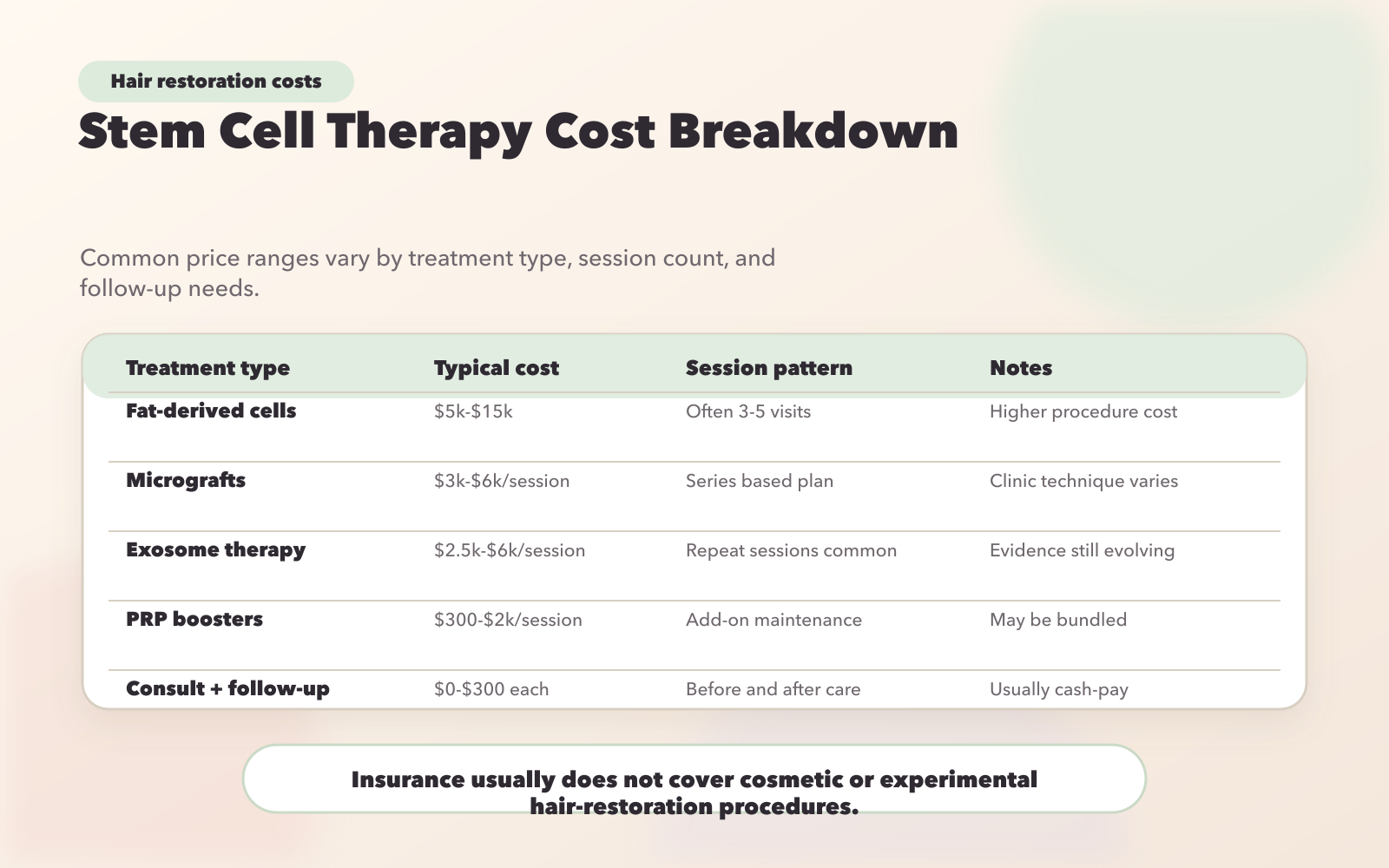
Stem Cell Therapy Cost Breakdown by Treatment Type and Sessions
Treatment Cost of PRP Injection & Stem Cell Therapy
What Is Stem Cell Therapy for Hair Loss?
Stem cell therapy is a cutting-edge approach to hair regrowth that uses your own cells to reactivate dormant hair follicles. These cells work as a foundation to regenerate specialized follicle cells, helping to repair damaged tissue and encourage new hair growth.
The treatment is mainly aimed at addressing androgenic alopecia, also known as pattern baldness, which affects approximately 60–70% of men and 40–50% of women. It’s also effective for hormone-related hair thinning, where hormonal imbalances weaken hair follicles. Understanding how this therapy works helps clarify why it’s suited for certain types of hair loss.
How Stem Cell Therapy Works for Hair Regrowth
Stem cell therapy begins by extracting stem cells from sources like fat tissue, bone marrow, or the hair follicle bulge. These cells are then injected into areas of the scalp experiencing thinning. Once injected, the cells release growth factors - such as Wnt, Noggin, and SCUBE3 - that shift hair follicles from their resting phase into active growth.
The treatment enhances scalp health by promoting the formation of new blood vessels (angiogenesis), which increases oxygen and nutrient delivery to the follicles while reducing inflammation. It also helps counteract the effects of dihydrotestosterone (DHT) and stress-related cortisol, both of which are known to shrink follicles and contribute to hair loss.
Clinical trials have shown promising results. For example, stem cell suspensions derived from hair follicles have been shown to boost hair density by about 29% (±5%) within 23 weeks. This is a significant improvement compared to the modest 0.4% to 2% increase achieved with 5% minoxidil. Another study reported that 86.6% of patients experienced noticeable hair growth three months after undergoing treatment with umbilical stem cells.
"Stem cell-based therapies have recently received lots of attention as potential novel treatments that focus on reactivating hair follicle stem cells and in this way enhance hair follicle growth, regeneration and development." – Andjela Egger, Marjana Tomic-Canic, and Antonella Tosti
This regenerative process highlights the importance of selecting the right candidates for optimal results.
Who Should Consider Stem Cell Therapy?
Stem cell therapy is ideal for individuals experiencing early to moderate hair thinning who still have dormant, but viable, hair follicles. It’s not suitable for cases where follicles have completely died or been replaced by scar tissue. As Dr. Ross Kopelman explains, "The treatment works best when follicles are active".
Good candidates include those with androgenic alopecia or hormone-related hair loss who are looking for a less invasive option compared to surgical transplants. Candidates should also have a healthy scalp, free from active infections, and be in overall good health without conditions like bleeding disorders or serious illnesses such as cancer.
Before starting treatment, it’s essential to undergo a professional evaluation, often using an electronic microscope, to confirm the presence of dormant follicles. Be sure to share your medical history, including any scalp conditions or allergies. Results from the therapy are gradual; noticeable thickening typically begins to appear within 6 to 12 months, with the full effects often visible around one year.
What Affects Stem Cell Therapy Costs
Stem cell therapy comes with a wide range of costs, and several factors play into determining the final price. Let’s break down the primary elements that influence these expenses.
Type of Stem Cell Treatment
The method of obtaining and processing stem cells is one of the biggest cost drivers. For instance, autologous fat-derived therapy - where stem cells are extracted from your own fat tissue - typically costs between $5,000 and $15,000. On the other hand, follicle-derived stem cell micrografts, which involve taking small tissue samples (1–2 mm) from the scalp, generally fall into a mid-range pricing category.
If you're considering exosome therapy, which uses lab-processed signaling molecules instead of live cells, expect costs between $2,500 and $6,000 per session. Higher-end options, like umbilical cord–derived exosomes, can drive prices even higher. Meanwhile, allogeneic treatments (using donor-derived cells) from regulated providers often surpass $20,000 due to the added expenses of compatibility testing and strict lab standards.
"The quality and source of the exosomes, the experience of your medical provider, and the standards of the facility all play a major role in cost." – Miami Stem Cell
Other key factors include where the treatment is performed and the expertise of the medical provider.
Clinic Location and Provider Experience
Where you receive treatment matters. In large metropolitan areas like New York City or Los Angeles, stem cell therapy often costs between $8,000 and $15,000 or more. In contrast, rural clinics might charge between $4,000 and $8,000 for similar procedures. These price differences reflect the higher operational costs in urban centers, such as rent, staffing, and compliance with local regulations.
The qualifications of your provider also have a significant impact on pricing. Treatments performed by board-certified dermatologists, plastic surgeons, or regenerative medicine specialists generally cost more than those done at general aesthetic centers. As Robert J. Hancock, Founder of Hope Stem Cell Network, notes:
"The cost of stem cell therapy depends on the specialist performing the treatment, so ensure that a specialized physician handles the procedure."
Finally, the severity of hair loss and the number of sessions required will also shape the overall expense.
Severity of Hair Loss and Number of Sessions
The extent of hair loss directly influences the cost of treatment. For more advanced thinning, a higher concentration of stem cells and additional injection points are often necessary. This typically means 3 to 5 initial sessions instead of just one for milder cases. A single session generally costs between $6,000 and $8,000, while three sessions can range from $15,000 to $20,000.
It’s important to note that stem cell therapy tends to deliver the best results when hair follicles are still active, even if they’re dormant. A professional microscopic evaluation is crucial to determine this. Additionally, you’ll need to budget for maintenance sessions every 12 to 18 months to sustain the results over time.
Stem Cell Therapy Costs in the US
Let’s dive into the pricing details for stem cell therapy in the U.S. and the additional expenses you might need to consider.
Cost Ranges by Treatment Type
In the U.S., stem cell therapy for hair loss typically costs between $3,000 and $15,000, though prices in major cities can climb as high as $30,000 due to factors like treatment type and clinic location.
- Autologous treatments (where stem cells are extracted from your own fat or bone marrow) are priced between $5,000 and $15,000. These procedures often cost more because they involve surgical steps, such as liposuction.
- Exosome-based therapy, which uses lab-processed signaling molecules, ranges from $2,500 to $6,000 per session, with some clinics in metro areas charging up to $10,000.
- Follicle-derived micrografts (small tissue samples taken from your scalp) cost about $3,000 to $6,000 per session.
Dr. Ross Kopelman, a hair restoration expert at Kopelman Hair, notes:
"A stem cell hair transplant cost typically ranges between $5,000 and $15,000 in the United States, depending on clinic location, the extent of hair loss, and the number of sessions required."
Here’s an estimate of total costs based on the number of sessions:
| Number of Sessions | Estimated Total Cost |
|---|---|
| 1 Session | $6,000 – $8,000 |
| 2 Sessions | $11,000 – $14,000 |
| 3 Sessions | $15,000 – $20,000 |
Keep in mind that these figures are for the treatment itself - there are other costs to consider that can add up quickly.
Other Costs to Plan For
On top of the procedure costs, there are additional expenses that can influence your overall budget.
- Consultation fees: Some clinics offer free consultations, while others charge a few hundred dollars.
- PRP (Platelet-Rich Plasma) boosters: Often recommended to enhance results, these cost between $300 and $2,000 per session.
- Low-level laser therapy (LLLT): Prices range from $200 to $1,500, depending on whether you opt for a home device or in-office sessions.
- Maintenance kits: These kits, which may include specialized shampoos, conditioners, and DHT blockers, are sometimes bundled into premium packages priced at $5,000 to $7,500, or sold separately.
- Follow-up appointments: Monitoring progress can cost $150 to $300 per visit, unless included in your treatment package.
- Maintenance sessions: To preserve results, you may need follow-up treatments every 12 to 18 months.
When budgeting for stem cell therapy, it’s important to account for these additional expenses to avoid surprises.
sbb-itb-6dba428
Does Insurance Cover Stem Cell Therapy?
Stem cell therapy can come with a hefty price tag, making it essential to understand whether insurance can help offset the costs. Unfortunately, the answer is usually no - most insurance plans do not cover stem cell therapy for hair loss. Knowing why this is the case and exploring alternative payment options can help you plan ahead.
Why Insurance Doesn't Typically Cover Stem Cell Therapy
For most insurance companies, stem cell therapy for hair loss falls under the category of cosmetic procedures, which are not considered medically necessary. Because of this, it’s excluded from standard health insurance policies. Additionally, these treatments are often labeled as experimental or investigational, largely due to limited long-term data and the absence of standardized treatment protocols. As Waters Edge Medical Clinic explains:
"Most insurance companies currently classify stem cell treatments as experimental or investigational. This means they don't consider it a standard of care, and therefore, won't cover the costs."
The lack of FDA approval for many stem cell treatments specifically designed for hair restoration further supports these coverage denials. To avoid surprises, it’s always a good idea to check directly with your insurance provider regarding your specific plan.
It’s also worth noting that Health Savings Accounts (HSAs) and Flexible Spending Accounts (FSAs) typically don’t cover cosmetic treatments, including stem cell therapy for hair restoration. If you’re unsure, consult your account administrator or a tax professional to clarify your options.
With insurance and HSA/FSA funds off the table, many turn to alternative payment methods.
Exploring Payment Plans and Financing Options
Since insurance isn’t an option, many clinics offer flexible payment plans to make stem cell therapy more accessible. Clinics often partner with third-party financing platforms like CareCredit or Cherry, which allow patients to pay in monthly installments. These plans can start as low as $199 per month and may include interest-free promotional periods, typically lasting 6 to 12 months. Be sure to ask about these options when discussing costs with your provider.
Some clinics also provide in-house payment plans, allowing you to spread the cost over several sessions. If you’re planning on multiple treatments, inquire about package deals - buying a bundle upfront is often more affordable than paying per session.
When considering your options, ask for a detailed quote that includes all potential expenses, such as consultation fees, the procedure itself, post-treatment care kits, and follow-up appointments. A clear breakdown of costs will help you choose the best financing plan and avoid any unexpected charges.
How to Budget for Stem Cell Hair Restoration
Planning your budget for stem cell hair restoration begins with understanding the total costs. In the U.S., most patients spend between $5,000 and $15,000 for a treatment course, though prices in major cities can climb to $30,000. Breaking down expenses and finding ways to reduce per-session costs can help you manage your finances effectively. Here’s how to approach it.
Choose Clinics With Transparent Pricing
When making a significant financial decision, transparency is key. Look for clinics that offer itemized quotes that clearly outline costs for steps like extraction, processing, injections, anesthesia, and follow-up appointments. Be aware of additional charges for consultations, lab work, or post-procedure care, as these can add up quickly.
Take advantage of free consultations and scalp evaluations to compare itemized quotes from several clinics. Greice Murphy, a healthcare executive, emphasizes:
"Choosing a clinic based only on price can be risky. Instead, prioritize licensed medical professionals and FDA-compliant processing methods".
Assess Your Hair Loss Before Committing
The extent of your hair loss significantly impacts the total cost and number of sessions you’ll need. A professional evaluation can determine whether a single session or a full course of three to five treatments is necessary. Dr. Ross Kopelman notes:
"Stem cell hair restoration cost is often lower for early thinning because the treatment stimulates existing follicles".
During your consultation, ask about long-term maintenance sessions, which are typically needed every 1–2 years to maintain results. Knowing this upfront will help you plan for ongoing expenses.
Once you have a clear understanding of your treatment needs, explore package deals to save money.
Consider Multi-Session Packages
Purchasing a treatment package upfront can often reduce costs compared to paying for individual sessions. Many clinics offer discounted rates for three- or five-session packages. For instance, while a single session might cost $6,000 to $8,000, a three-session package could be priced at $15,000 to $20,000, potentially saving you several thousand dollars.
If you live in a major city where prices tend to be higher, it may be worth exploring clinics in mid-size markets. Treatments in these areas can cost $2,000 to $7,000 less. However, don’t forget to factor in travel expenses, and ensure the quoted price includes all necessary components, such as post-procedure maintenance kits with specialized shampoos and DHT blockers.
Planning Your Stem Cell Therapy Budget
When preparing for stem cell hair restoration, it’s important to map out your budget and timeline in detail. A well-thought-out plan helps you make smart financial decisions and ensures you’re ready for every step of the process.
Start by booking a free consultation to get a detailed, itemized quote for your treatment. During this evaluation - often involving electronic microscopy to analyze your scalp - your provider will determine whether you’ll need just one session or a series of three to five sessions. Make sure the quote includes everything: cell extraction, processing, injections, local anesthesia, and any post-procedure care, like maintenance kits with specialized shampoos or DHT blockers.
If paying the full amount upfront isn’t an option, ask about financing plans. Many providers work with partners like CareCredit or Cherry, offering monthly payments starting at $199 to $208. Keep in mind that stem cell therapy is typically considered a cosmetic procedure, so insurance won’t cover it, and HSA or FSA funds generally don’t apply.
It’s also crucial to plan for long-term maintenance. Since the results aren’t permanent and hair follicles naturally age, many providers suggest touch-up treatments every 12 to 18 months to maintain volume. While it might be tempting to prioritize cost, always choose a licensed medical professional who uses FDA-compliant processing methods. This approach minimizes risks and ensures quality care, even if it means a higher upfront investment.
FAQs
Can stem cell therapy for hair loss be used alongside other treatments?
Yes, stem cell therapy for hair loss is frequently paired with other treatments to improve results. These can include oral or topical DHT-blocking medications, shampoos and conditioners formulated to promote hair health, or additional therapy sessions customized to your needs.
By combining treatments, it’s possible to tackle several causes of hair loss at once, which may enhance overall effectiveness. Consult with a licensed medical professional to identify the right combination for your situation.
What are the potential risks and side effects of stem cell therapy for hair loss?
Stem cell therapy for hair loss is a developing treatment that remains experimental and hasn’t received FDA approval. Because of this, there’s no standardized approach, minimal regulatory oversight, and limited data on long-term safety.
The risks? They include unpredictable side effects, as the procedure hasn’t been deeply researched. There’s also the possibility of serious health issues, such as infections or complications from poorly managed treatments. If you’re thinking about this option, make sure to discuss it thoroughly with a licensed medical professional to weigh the potential risks and benefits.
How long do the results of stem cell therapy for hair loss last?
The results of stem cell therapy for hair loss generally last between 12 to 18 months, though this can differ from person to person. Factors such as the severity of hair loss, your overall health, and adherence to the treatment plan all play a role in how long the effects last. Scheduling regular check-ins with your healthcare provider can help track your progress and support long-term maintenance of the results.