
How Adipose Tissue Affects Insulin Resistance in PCOS
- Adipose tissue dysfunction in PCOS leads to excess fatty acids, inflammation, and hormone imbalances, fueling insulin resistance.
- High insulin levels stimulate the ovaries to produce more androgens, worsening symptoms.
- Even lean women with PCOS (45%-50%) can experience insulin resistance due to fat cell issues, not just excess weight.
- Lifestyle changes, like reducing sugar, eating more protein, and exercising, can improve fat tissue health and insulin sensitivity.
- Medical treatments like Metformin or GLP-1 receptor agonists can help when lifestyle changes aren’t enough.
Addressing the root causes of PCOS-related insulin resistance can improve symptoms, hormone balance, and long-term health risks like diabetes and heart disease.
How Adipose Tissue Works and What Happens in PCOS
Normal Adipose Tissue Function
Adipose tissue isn't just a storage depot for excess energy - it plays a vital role as an endocrine organ, helping regulate glucose and lipid metabolism. When functioning as it should, adipose tissue stores surplus energy as triglycerides and releases free fatty acids to fuel organs like the muscles and liver.
In a healthy state, fat tissue supports insulin sensitivity by enabling insulin-mediated glucose uptake through the GLUT-4 transporter. It also acts as a safeguard, sequestering lipids to prevent fat from accumulating in critical organs like the liver, skeletal muscle, and pancreas. This process helps protect against lipotoxicity. Moreover, adipose tissue produces key hormones called adipokines, including adiponectin, which boosts insulin sensitivity, and leptin, which helps regulate appetite. Interestingly, about 10% of the body's glucose uptake occurs in fat tissue.
However, in individuals with PCOS, these processes become disrupted, leading to significant metabolic challenges.
Adipose Tissue Problems in PCOS
While healthy adipose tissue keeps metabolism balanced, PCOS throws these mechanisms off track. Elevated androgen levels in PCOS lead to fat cells enlarging - a condition called adipocyte hypertrophy - which makes them more prone to inflammation, cell death (apoptosis), and fibrosis.
"Hypertrophic adipocytes are more susceptible to inflammation, apoptosis, fibrosis, and release of free fatty acids." – PubMed, National Library of Medicine
Androgens also interfere with the formation of new, healthy fat cells (adipogenesis), causing fat to accumulate in places it shouldn’t, like the liver and muscles.
PCOS also disrupts how adipose tissue handles glucose. It reduces the expression of GLUT-4 transporters in fat cells, which impairs insulin-driven glucose uptake. To make matters worse, fat tissue becomes "leaky", releasing free fatty acids even when insulin levels are high. This excess of fatty acids can lead to lipotoxicity in other organs. Additionally, PCOS alters the production of adipokines, reducing levels of adiponectin while increasing pro-inflammatory cytokines like TNF-α and IL-6. This imbalance contributes to chronic, low-grade inflammation. In obese adipose tissue, this inflammation is even more pronounced, with macrophages - immune cells involved in inflammation - making up as much as 50% of the tissue, compared to just 5–10% in healthy fat.
Another complication in PCOS is that adipose tissue itself becomes a source of androgen production. The enzyme AKR1C3, which converts weaker androgens into testosterone, becomes more active in fat tissue. This creates a harmful feedback loop where dysfunctional fat worsens insulin resistance, which in turn drives more androgen production, further impairing the function of adipose tissue.
Understanding PCOS and obesity with Dr. Emilia Huvinen | Scale Up Your Practice podcast Ep.22
The Insulin Resistance Cycle in PCOS
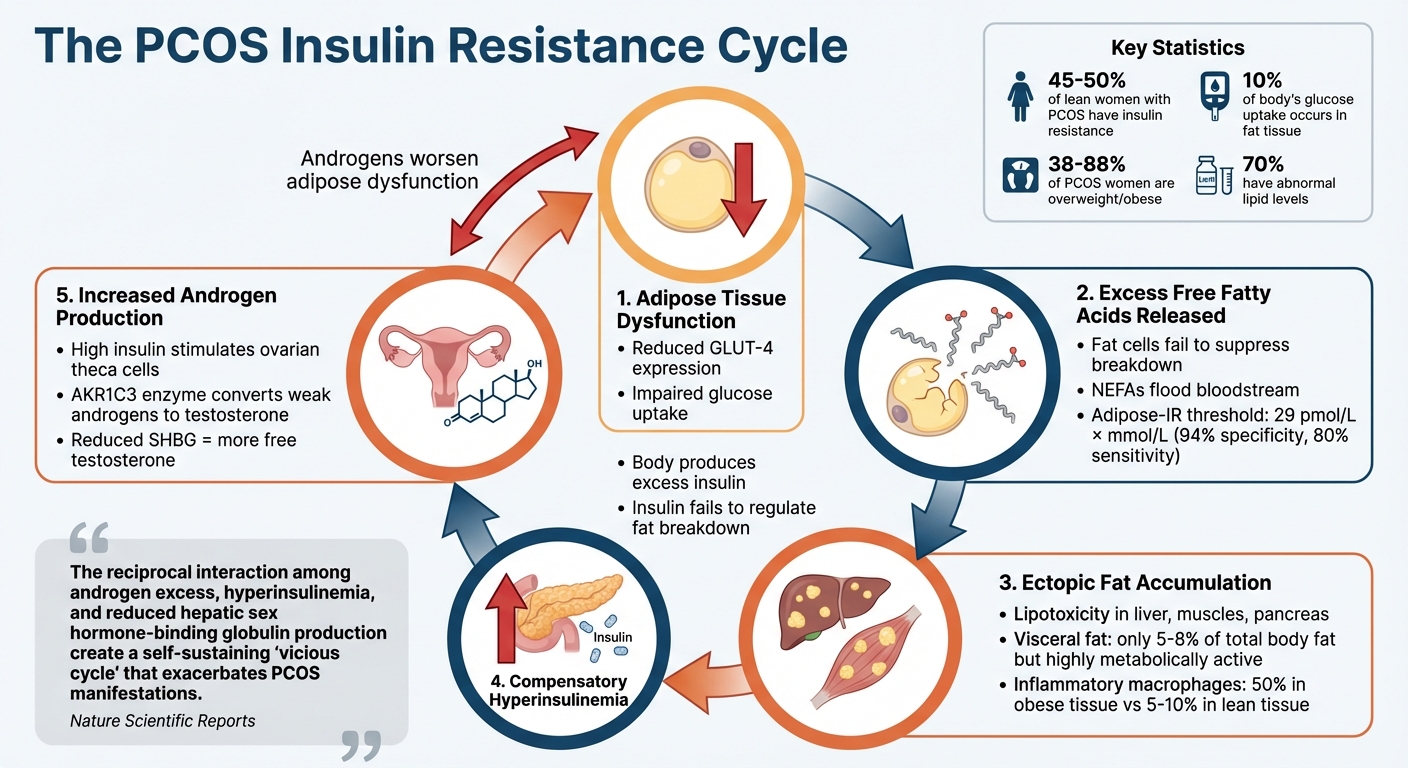
The PCOS Insulin Resistance Cycle: How Adipose Tissue Dysfunction Creates a Vicious Loop
Reduced Insulin Response in Fat Cells
In PCOS, fat cells struggle to respond to insulin properly, setting off a chain of metabolic issues. A key factor is the reduced expression of GLUT-4, a protein that helps glucose enter fat cells. Without enough GLUT-4, even when insulin is present, glucose uptake is limited, leaving fat cells unable to function as they should.
This inefficiency triggers compensatory hyperinsulinemia, where the body produces more insulin than expected based on weight alone. At the same time, malfunctioning fat cells fail to suppress the breakdown of stored fat, releasing excessive amounts of non-esterified free fatty acids (NEFAs) into the bloodstream. Normally, insulin would regulate this process, but here it falls short. Interestingly, a measure called "Adipose-IR", calculated by multiplying fasting insulin by total fatty acids, can help identify PCOS with 94% specificity and 80% sensitivity when it reaches a value of 29 pmol/L × mmol/L.
The result? These excess NEFAs spread throughout the body, causing further damage as they accumulate in other organs.
How Excess Fat Affects Other Organs
When NEFAs escape from dysfunctional fat tissue, they don’t just float harmlessly in the bloodstream. Instead, they settle in places they don’t belong, like the liver, skeletal muscles, and pancreas. This buildup causes lipotoxicity, a harmful process that leads to ectopic fat accumulation and worsens metabolic health.
Visceral fat - though it makes up only 5% to 8% of total body fat in women - plays a particularly destructive role. It’s not only more metabolically active than subcutaneous fat but also more insulin-resistant. Visceral fat breaks down at a higher rate, releasing fatty acids directly into the portal vein, which delivers these harmful compounds straight to the liver. This process amplifies inflammation significantly. For perspective, in obese individuals, up to 50% of adipose tissue cells can be inflammatory macrophages, compared to just 5% to 10% in lean individuals.
These mechanisms deepen the insulin resistance that lies at the heart of PCOS.
How Androgens Affect Fat Tissue
Adding another layer of complexity, androgens - hormones often elevated in PCOS - intensify the dysfunction in fat tissue. High levels of androgens enlarge fat cells (a process called adipocyte hypertrophy) and prevent the formation of new, healthy ones. This forces existing fat cells to grow larger and become less functional. Meanwhile, insulin resistance itself fuels the production of androgens by stimulating ovarian theca cells.
"The reciprocal interaction among androgen excess, hyperinsulinemia, and reduced hepatic sex hormone-binding globulin production create a self‑sustaining 'vicious cycle' that exacerbates PCOS manifestations." – Nature Scientific Reports
What makes this cycle even worse is that fat tissue in PCOS becomes a mini androgen factory. The enzyme AKR1C3, which converts weaker androgens into testosterone, becomes more active in these fat cells. At the same time, hyperinsulinemia reduces the liver’s production of sex hormone-binding globulin (SHBG), leaving more free testosterone circulating in the body. This creates a damaging feedback loop: insulin resistance increases androgen levels, which further harm fat tissue, driving insulin resistance even deeper.
Lifestyle Changes to Improve Adipose Tissue Function
Making meaningful lifestyle changes can help reverse adipose tissue damage in PCOS by addressing the root causes of dysfunction. These changes aim to improve how fat tissue functions, rather than just managing symptoms.
Diet Changes for PCOS
A good first step is to cut out refined sugars and high-fructose corn syrup. These ingredients can disrupt your body's balance by lowering hepatocyte nuclear factor 4-α (HNF-4α), which reduces SHBG (sex hormone-binding globulin) production. With less SHBG in circulation, more free testosterone remains active, fueling the problematic cycle of PCOS symptoms.
Focus on eating more protein-rich foods and incorporate ingredients that promote better metabolism and insulin sensitivity. For example:
- Chili peppers (rich in capsaicin)
- Green tea (high in catechins)
- Foods like buckwheat, asparagus, and unpeeled apples (sources of rutin)
You might also consider inositol supplements, which can support metabolic health and improve ovulation. Since 38% to 88% of women with PCOS are overweight or obese, and about 70% have abnormal lipid levels, these dietary changes can make a big difference in improving adipose tissue function.
Pairing these dietary habits with regular physical activity can amplify the benefits.
Exercise and Adipose Tissue Health
Exercise plays a key role in improving metabolic, reproductive, and mental health outcomes in PCOS. Physical activity activates brown adipose tissue, which helps your body burn glucose and triglycerides more efficiently. In fact, brown fat can produce 300 times more heat per unit mass than any other organ when fully activated, contributing to about 10% of your daily heat production.
"The new International Evidence-based Guideline for the Assessment and Management of PCOS highlighted the importance of lifestyle interventions, including diet, exercise and behavior, as the first-line management to improve the signs and symptoms of PCOS." – International Evidence-based Guideline for the Assessment and Management of PCOS
For the best results, aim for at least 30 minutes of vigorous aerobic exercise three times a week. Work at an intensity level of at least 60% VO2max to improve insulin sensitivity. Add strength training to your routine to restore fat cell function and enhance muscle metabolism. This is especially important because skeletal muscle is responsible for most insulin-mediated glucose uptake. Exercise also helps reduce chronic inflammation in fat tissue, breaking the cycle where high androgens and unhealthy fat reinforce each other.
When combined with gradual weight loss, exercise can significantly boost insulin sensitivity.
Weight Management Approaches
Building on diet and exercise, gradual weight loss is another effective way to restore adipose tissue function and improve insulin sensitivity. Losing just 5% of your body weight can lead to noticeable improvements in insulin sensitivity, lower androgen levels, and more regular menstrual cycles.
"Modest weight loss of just 5% body weight with improvement in insulin sensitivity, frequently results in clinically meaningful improvements in hyperandrogenic, reproductive and metabolic features." – Clinical Medicine Journal
Focus on sustainable weight loss rather than quick fixes or crash diets. Studies, including those on bariatric surgery and the Diabetes Prevention Program, show that reducing calorie intake can improve metabolic health even if you don’t lose a large amount of weight. Targeting visceral fat - the fat around your organs - is especially important because it’s more insulin-resistant and releases fatty acids directly to the liver. A practical way to monitor this is by checking your waist-to-height ratio. For women with PCOS, a waist circumference greater than 31 inches (80 cm) often signals insulin resistance.
The goal is to transform your fat tissue into smaller, healthier cells that store energy properly, instead of allowing fat to spill into your liver and muscles.
sbb-itb-6dba428
Medical Treatments for Insulin Resistance in PCOS
While lifestyle changes are a cornerstone of managing PCOS, sometimes they aren’t enough to fully address insulin resistance and related symptoms. In such cases, medical treatments can play a critical role in breaking the cycle of insulin resistance and reducing the risk of complications like type 2 diabetes and heart disease.
Insulin-Sensitizing Medications
One of the most commonly prescribed medications for PCOS is Metformin, which helps improve how the body responds to insulin. It works by activating AMPK and increasing GLUT4 levels, which enhances glucose uptake in muscle and fat cells while also reducing glucose production in the liver. By lowering insulin levels, Metformin indirectly reduces excessive androgen production from the ovaries, helping to interrupt the cycle of high insulin and hormone imbalance.
Another option is GLP-1 receptor agonists, such as semaglutide. These medications not only improve insulin secretion but also slow the emptying of the stomach, curb appetite, and improve how fat cells function. They are particularly effective in reducing fat mass, addressing one of the key metabolic challenges in PCOS.
"Lifestyle change is the treatment of choice for all women with PCOS, and insulin sensitization is a promising choice for the chronic treatment of women with PCOS." – Journal of Ovarian Research
When combined with a healthy lifestyle, these medications often yield the best outcomes over time.
Hormone Treatments for High Androgens
Managing androgen excess is another critical aspect of PCOS treatment. Spironolactone, for instance, blocks androgen receptors, which helps combat symptoms like acne and excessive hair growth (hirsutism). Additionally, it has been shown to improve fat distribution by reducing central fat accumulation, promoting healthier fat tissue development. This dual action supports better overall metabolic health.
Oana Health's Personalized Telehealth Services

For those seeking a more convenient and tailored approach, telehealth services like Oana Health provide access to these treatments from the comfort of your home. Their licensed medical professionals offer personalized care plans, including options like:
- Oral Metformin ER
- Combination packs of Metformin and Spironolactone
- Advanced packs featuring oral GLP-1 and Metformin
- Targeted Spironolactone treatments
All medications are delivered directly to your door with free shipping, eliminating the need for frequent in-person visits. This approach ensures consistent and customized care for managing insulin resistance, weight, and symptoms associated with high androgen levels.
Telehealth services like these provide an accessible way to stay on top of your treatment plan, making it easier to achieve long-term health goals.
Tracking Progress and Maintaining Results
Keeping track of your progress is crucial. Regular monitoring not only highlights what's working but also helps catch any setbacks early on.
Lab Tests to Monitor
Certain blood tests can give you a clearer picture of how your body is responding to treatment. For example, HOMA-IR measures fasting glucose and insulin levels to assess how well your liver responds to insulin. A score above 2.1 suggests insulin resistance. To evaluate overall insulin sensitivity, the Matsuda Index uses data from a 2-hour Oral Glucose Tolerance Test (OGTT), which experts recommend repeating every one to two years.
It's also worth testing adiponectin levels, as lower levels indicate reduced insulin sensitivity. Another valuable marker is Adipose-IR, which is calculated by multiplying fasting insulin by total fatty acids. A value of 29 pmol/L × mmol/L or higher can distinguish PCOS from healthy individuals with 94% accuracy. SHBG (Sex Hormone Binding Globulin) is another key marker - low levels point to high insulin, while rising levels suggest improvements in insulin sensitivity.
Beyond lab work, some simple physical measurements can be equally telling. For instance, monitor waist circumference - anything over 31.5 inches may indicate insulin resistance. For lean women, wrist circumference can also provide insight. Keep an eye on acanthosis nigricans, as changes in this condition often reflect improvements in insulin resistance.
These markers collectively offer a snapshot of how your insulin sensitivity and adipose tissue function are improving. Regular assessments help fine-tune your treatment and lifestyle strategies.
Maintaining Lifestyle Changes
Long-term success depends on sticking to consistent habits and periodically re-evaluating your approach. These lifestyle adjustments work hand-in-hand with medical treatments and dietary changes to sustain progress.
You don’t need to aim for drastic changes - losing just 5% of your body weight can make a big difference in improving insulin sensitivity, balancing hormones, and regulating your menstrual cycle.
"Modest weight loss of just 5% body weight with improvement in insulin sensitivity, frequently results in clinically meaningful improvements in hyperandrogenic, reproductive and metabolic features." – Royal College of Physicians
Check in with your healthcare provider every 8–12 weeks to review and tweak your plan. A team approach - working with gynecologists, nutritionists, and mental health professionals - can provide well-rounded support for long-term success. If stress or body image concerns arise, don’t hesitate to seek professional guidance. The key is consistency: keep tracking your progress, make adjustments based on the data, and stay committed to moving forward.
Conclusion
Adipose tissue dysfunction plays a central role in driving insulin resistance in PCOS, affecting a significant number of women - including nearly half of those with lean body types - even when excess weight isn't a factor. The issue lies in malfunctioning fat cells that release too many fatty acids, trigger inflammation, and create a vicious cycle with elevated androgen levels.
"AT dysfunction, more than AT distribution and excess adiposity, contributes to the metabolic and inflammation abnormalities of PCOS." – Fernando Bril et al.
Addressing this cycle requires a comprehensive strategy. A combination of focused lifestyle changes - such as engaging in at least 30 minutes of vigorous physical activity three times a week - and dietary modifications, alongside treatments like Metformin or GLP-1 receptor agonists, can help disrupt the pattern of insulin resistance and androgen imbalance.
Tracking progress through lab tests like HOMA-IR, adiponectin, and SHBG can help fine-tune these efforts. By confronting the root causes of PCOS-related insulin resistance, early intervention can reduce the risk of long-term complications, including Type 2 Diabetes and cardiovascular disease. This integrated approach ensures that lifestyle adjustments and medical treatments work together effectively.
For those seeking personalized care, Oana Health provides telehealth services tailored to PCOS and insulin resistance. Their licensed professionals offer evidence-based treatments, including Metformin (starting at $22/month) and GLP-1 receptor agonists (at $199/month), delivered directly to your home. Whether you're managing insulin resistance, addressing symptoms like unwanted hair, or working on weight management, these services make it easier to take control of PCOS with expert support.
FAQs
How does fat tissue dysfunction lead to insulin resistance in PCOS?
Fat tissue, also known as adipose tissue, plays a crucial role in how the body manages insulin, and its dysfunction is a key factor in insulin resistance for women with PCOS. When fat tissue isn't working as it should, it can expand in unhealthy ways, become inflamed, and disrupt normal metabolic functions. This leads to an overproduction of free fatty acids and pro-inflammatory molecules, which interfere with insulin's ability to regulate blood sugar. As a result, tissues like the liver and muscles struggle to absorb glucose effectively, causing blood sugar levels to climb.
Adding to this issue, the high androgen levels often seen in PCOS can make things worse. Elevated androgens contribute to inflammation and irregular fat storage, which further reduces the body's sensitivity to insulin. This creates a vicious cycle where hormonal imbalances and insulin resistance reinforce each other, intensifying PCOS symptoms over time.
Focusing on weight management, reducing inflammation, and improving overall metabolic health can help disrupt this cycle. For tailored solutions, platforms like Oana Health provide science-based treatments designed to tackle insulin resistance and other challenges associated with PCOS.
Can women with PCOS who are not overweight still have insulin resistance?
Women with PCOS who are not overweight can still deal with insulin resistance. While being overweight is often linked to this condition, studies reveal that insulin resistance in PCOS isn’t always tied to body weight. In fact, even lean women with PCOS can struggle with how their bodies process insulin.
This underscores an important point: PCOS-related insulin resistance stems from more than just weight. Factors like hormonal imbalances and genetics also play a significant role. Tackling these root causes is crucial for effectively managing PCOS.
How can lifestyle changes improve fat tissue function and insulin resistance in PCOS?
Improving how fat tissue functions plays a big role in tackling insulin resistance in PCOS, and making lifestyle changes can be a game-changer. Eating a balanced diet - think whole foods, lean proteins, healthy fats, and plenty of fiber - can help keep blood sugar levels steady and promote better metabolic health. Pair that with regular exercise, like cardio or strength training, and you can target visceral fat, a key factor in insulin resistance for those with PCOS.
Interestingly, there’s also growing evidence that activating brown adipose tissue (BAT) could boost metabolic function in PCOS. Simple things like staying active in cooler environments or adding specific foods to your meals might help stimulate BAT activity. When combined, these lifestyle tweaks can make a real difference by improving fat tissue function, lowering insulin resistance, and enhancing overall well-being for women with PCOS.
For tailored support, Oana Health offers science-based, prescription treatments for PCOS and related conditions, conveniently delivered to your doorstep.