
How to Adjust Macros for PCOS and Active Lifestyles
If you're managing PCOS and stay active, balancing your macronutrients - carbs, protein, and fats - is key for better energy, hormonal balance, and symptom relief. Women with PCOS often face insulin resistance, slower metabolism, and unique dietary needs. Here's how to adjust your macros effectively:
- Carbs: Stick to 30–45% of your daily calories, focusing on low-glycemic options like leafy greens, berries, and whole grains. These help stabilize blood sugar and improve insulin sensitivity.
- Protein: Increase to 25–35% of your calories (1.5–2.2g per kg of body weight) to support muscle repair, satiety, and blood sugar control.
- Fats: Keep 25–35% of your calories from healthy fats like olive oil, avocados, nuts, and omega-3-rich fish to reduce inflammation and support hormones.
Macro Adjustments for Exercise:
- Strength Training: Increase protein (30–35%) and carbs (40–45%) to fuel recovery and muscle growth.
- Cardio: Focus on carbs (40–45%) for sustained energy, with protein at 30–35%.
Weight Goals:
- For Weight Loss: Try a 40% carb, 30% protein, and 30% fat split while maintaining a slight calorie deficit (500 calories/day).
- For Maintenance: Balance carbs (35–45%), protein (25–30%), and fats (30%).
- For Muscle Building: Boost protein and carbs to meet higher energy and recovery needs.
Tracking tools like MyFitnessPal can help you stay consistent. Pair your macro plan with medical guidance to address PCOS symptoms effectively. Adjust as needed based on your energy levels, cravings, and progress.
Finding the Right Macro Ratios for PCOS
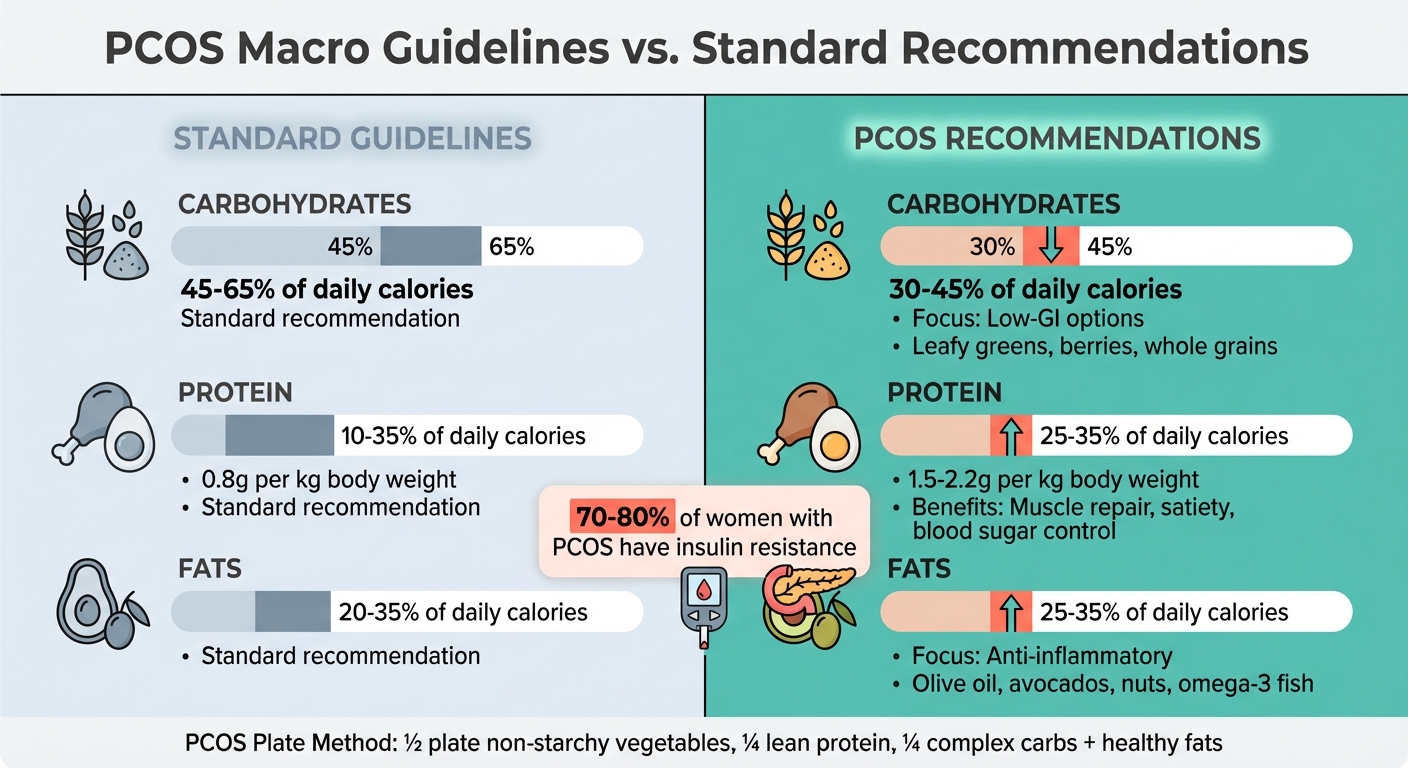
PCOS Macro Ratios vs Standard Guidelines: Carbs, Protein, and Fats
When managing PCOS, finding the right balance of macronutrients - carbohydrates, protein, and fats - is key to addressing insulin resistance and hormonal imbalances. Unlike general dietary guidelines that suggest 45–65% of calories come from carbohydrates, women with PCOS often need a tailored approach to better support their unique metabolic needs.
Standard Macro Guidelines for PCOS
For women with PCOS, the typical recommendations for macronutrients look quite different. Experts commonly advise keeping carbohydrates between 30–45% of total daily calories, far lower than the standard 45–65% range. This reduction helps manage insulin resistance, which affects 70–80% of women with PCOS.
Protein intake should be higher than the general guideline of 0.8 grams per kilogram of body weight. For PCOS, aim for 1.5 to 2.2 grams per kilogram, or about 25–35% of your daily calories. Increased protein not only helps stabilize blood sugar but also enhances satiety and supports muscle health.
Healthy fats should make up 25–35% of your diet. These fats play a crucial role in hormone production and reducing inflammation, both of which are essential for managing PCOS symptoms. Focus on sources like olive oil, avocados, nuts, and omega-3-rich fatty fish.
A helpful tool to visualize these guidelines is the PCOS Plate Method: fill half your plate with non-starchy vegetables, one-quarter with lean protein, and one-quarter with complex carbohydrates, then add healthy fats.
| Macro | Standard Guidelines | PCOS Recommendations |
|---|---|---|
| Carbohydrates | 45–65% | 30–45% (Low-GI focus) |
| Protein | 10–35% (0.8g/kg) | 25–35% (1.5–2.2g/kg) |
| Fats | 20–35% | 25–35% (Anti-inflammatory) |
These ratios provide a strong foundation, but they can and should be adjusted based on individual needs.
Personalizing Your Macro Ratios
While these guidelines offer a starting point, your ideal macro balance depends on factors like insulin sensitivity, activity level, body composition, and how severe your symptoms are.
For example, starting with 100–150 grams of carbohydrates per day (roughly 30–40% of your calories) is a good baseline. From there, monitor how your energy levels, hunger, and PCOS symptoms respond. If you experience severe insulin resistance or intense carb cravings, you might benefit from keeping carbs lower, between 20–35% of your total calories, while increasing fats to 35–50%. On the other hand, if you're physically active - especially with strength or endurance training - you may tolerate higher carbohydrate levels (40–45%) because exercise can improve insulin sensitivity by 20–25%.
Body composition also matters. Research shows that 95% of women with obesity and PCOS have insulin resistance, but even 75% of lean women with PCOS face this challenge. If you're lean, you may have more flexibility with carbs, though sticking to low-glycemic options is still wise.
"The key to PCOS weight loss isn't willpower - it's understanding that your body processes food differently. When we address insulin resistance first, weight loss becomes much more achievable and sustainable."
– Sarah Chen, MS, RD, Registered Dietitian
Pairing carbohydrates with protein and fat at every meal can also help slow digestion and prevent blood sugar spikes.
Adjusting Macros for Weight Goals
Your macro ratios may shift depending on whether you're aiming for weight loss, maintenance, or muscle building - all while managing PCOS symptoms effectively.
For weight loss, a 40% carbohydrate, 30% protein, and 30% fat split works well to create a calorie deficit while addressing insulin resistance. Aim for a daily deficit of about 500 calories, but avoid dipping below 1,200 calories, as overly restrictive diets can slow your metabolism by 400–500 calories per day. A sustainable daily intake typically ranges from 1,300 to 1,800 calories. If progress stalls, slightly reduce carbs and fats while increasing protein to about 25–30 grams per meal for better muscle maintenance. Even a 5–10% reduction in body weight can significantly improve PCOS symptoms.
| Goal | Carbohydrates | Protein | Fats | Key Focus |
|---|---|---|---|---|
| Weight Loss | 30–40% | 25–35% | 30% | Insulin sensitivity & satiety |
| Maintenance | 35–45% | 25–30% | 30% | Sustainable lifestyle & hormone balance |
| Muscle Building | 40–45% | 30–35% | 20–30% | Fueling workouts & tissue repair |
For maintenance, after achieving your weight goals, you can adopt a more flexible approach. Keep carbs within your tolerance range and focus on integrating these habits into your lifestyle. While strict tracking may not be necessary, balancing your macros wisely remains important.
For muscle building, boost both protein and carbs to support resistance training and recovery. Aim for around 1.8 grams of protein per kilogram of body weight and set carbs at 40–45% of your calories. The additional carbs will help fuel workouts, while the higher protein intake aids in tissue repair.
"Consistency beats perfection every time. I'd rather see a client follow a moderate PCOS plan 80% of the time than attempt a restrictive approach that leads to weekend binges and metabolic confusion."
– Dr. Amanda Rodriguez, MD, Board-Certified Endocrinologist
Matching Macros to Your Exercise Type
The type of exercise you do plays a big role in shaping your macro needs. Whether you’re into endurance or strength training, adjusting your intake of carbohydrates and protein is key.
Macros for Cardio and Endurance Training
If you’re focusing on endurance activities, bump up your carbs to the higher end of the PCOS range (40–45%) and keep protein intake steady at 30–35% of your daily calories. This means you’ll need around 1.5–2 grams of protein per kilogram of body weight to maintain muscle during frequent cardio sessions.
The quality of your carbs matters just as much as the quantity. Stick with low-glycemic options like steel-cut oats, quinoa, sweet potatoes, and berries. Studies show women with PCOS on a low-GI diet saw a threefold improvement in insulin sensitivity and menstrual regularity compared to those eating high-GI foods.
"Your physical activity levels change. (Increase carbs and protein.)"
– Tallene, PCOS Dietitian
Feeling extra tired or dealing with unexpected cravings after starting a cardio routine? That’s a sign you might need to increase your intake of complex carbs and protein. Using tools like MyFitnessPal can help you track and hit these higher targets on training days.
| Macro Category | General PCOS Range | Adjustment for Cardio/Endurance |
|---|---|---|
| Carbohydrates | 30–40% | 40–45% (Low-GI) |
| Protein | 25–30% | 30–35% (1.5–2g/kg) |
| Fats | 25–35% | 25–30% (Anti-inflammatory) |
Strength training, however, calls for a different approach to fuel muscle growth and recovery.
Macros for Strength Training
When strength training, aim for protein to make up 30–35% of your calories, or about 1 gram per pound of body weight, to repair muscle and help manage insulin resistance.
"I recommend you aim on the higher side [for protein]! ... Protein is essential for muscle tissue repair, hormone production, and immune health."
– Tallene, PCOS Dietitian
Carbs should also climb to 40–45% to power through intense lifting sessions. Opt for complex carbs like quinoa, sweet potatoes, and old-fashioned oats for steady energy. Keep fats at 25–30% to support hormone health and reduce inflammation.
Spread your protein intake throughout the day, aiming for 25–30 grams per meal. This helps maximize muscle protein synthesis, keeps you full, and prevents muscle loss, especially if you’re in a calorie deficit. Women with PCOS who are cutting calories while strength training should bump protein up to about 1.8 grams per kilogram of body weight daily.
Now let’s talk about timing your meals to get the most out of your workouts.
Timing Your Macros Around Workouts
When it comes to recovery and muscle building, timing your nutrients makes a big difference. Muscle repair happens every 3 to 5 hours, so spacing out protein-rich meals during this window helps keep your body in a muscle-building mode.
Before your workout, eat a balanced meal about an hour ahead. A combo like eggs, oatmeal, and fruit works well to stabilize blood sugar and provide energy. Look for "slow carbs" with a glycemic index of 55 or less, such as old-fashioned oats.
After your workout, get some protein within 60 minutes to kickstart recovery. A whey protein smoothie with 25–27 grams of protein is a great option because it’s rich in leucine, which supports muscle repair. Aim for 2–3 grams of leucine in each post-workout meal to rebuild muscle effectively.
"Protein timing is essentially timing out when you take in high quality proteins to stimulate your muscles to keep building/maintaining themselves, ensuring that you're nearly always in a state that you're not feeding off of your muscles for energy."
– Zack Knight, MS, RD, ACSM-CPT
Exercise can boost your metabolism for up to 24 hours after a session, making that post-workout meal even more important for women with PCOS. If you’re tracking your menstrual cycle, tweak your carb choices throughout the month. For example, during the follicular phase (when energy is higher), focus on complex carbs like whole wheat and quinoa. In the luteal phase, opt for high-fiber carbs to help manage increased hunger.
How to Calculate and Track Your Macros
Calculating Your Daily Macro Needs
Once you've identified the PCOS-specific macro ratios mentioned earlier, it's time to calculate, track, and adjust them to suit your needs.
Start by determining your Total Daily Energy Expenditure (TDEE) - the total calories you burn in a day. Keep in mind that women with PCOS often have a slower resting metabolic rate, sometimes burning 400–500 fewer calories per day than what standard calculators estimate. This means generic tools might overstate your calorie needs. Apply the recommended PCOS macro ratios: 25–35% protein, 30–45% carbohydrates, and 25–35% fats. To convert these percentages into grams, remember that protein and carbs each provide 4 calories per gram, while fat provides 9 calories per gram.
Here’s an example: If your TDEE is 1,800 calories and you aim for 30% protein, that’s 540 calories from protein. Divide 540 by 4 to get 135 grams of protein. For someone weighing 150 pounds (68 kg), a daily protein target might range from 82 to 136 grams, depending on your goals. Adjust your carbohydrate intake based on your activity level - more intense training calls for higher carbs.
Once your macro targets are set, using the right tools can make tracking them much easier.
"Macros aren't just numbers - they're tools. When used with intention, they can help you stop guessing and start truly nourishing your body."
– Tallene, PCOS Dietitian
Using Apps and Tools to Track Macros
Tracking apps can simplify the process of staying within your macro goals. MyFitnessPal, for instance, offers a vast food database with over 20 million items and includes a barcode scanner for quick logging. For PCOS-specific guidance, apps like The Cysterhood and Reverse Health provide meal planners and recipes specifically designed to support hormonal balance.
A digital food scale is another essential tool for precise tracking, allowing you to measure food in grams or ounces. Many apps also sync with devices like Apple Watch or Fitbit to automatically log your activity and calorie burn.
To stay on track, try planning your meals the night before or in the morning. This reduces the chances of impulsive eating. Aim to meet your macro goals within a 5–10 gram range, rather than stressing over perfection - this approach is more sustainable over time.
When and How to Adjust Your Macros
Tracking your progress is key to understanding how well your current macro ratios are working. Make adjustments only after at least 6 weeks of consistent tracking. For example, if weight loss stalls, consider increasing your protein intake while slightly reducing carbs or fats. On the other hand, if you’re feeling drained during workouts, adding more complex carbs might help.
It’s also important to look beyond just numbers. Keep a log of your energy levels, cravings, and menstrual cycle patterns alongside your macros. This can help you identify how different ratios influence your PCOS symptoms. For instance, if your blood sugar consistently spikes above 110 mg/dL after meals, you might need to lower your carbohydrate percentage.
As your activity level increases, adjust your macros accordingly - more exercise typically requires more carbs and protein to support performance and recovery. Similarly, as you lose weight, recalculate your TDEE since your calorie needs will shift with changes in body composition. Research shows that women with PCOS on high-protein diets lost an average of 9.5 pounds more fat over six months compared to those on low-protein plans, even without strict calorie counting.
| Sign to Adjust | Recommended Action |
|---|---|
| Weight loss plateau | Increase protein; slightly reduce carbs or fats |
| Increased exercise intensity | Add more carbs and protein |
| Persistent fatigue/low energy | Check carb timing and ensure you're getting enough healthy fats |
| New or worsening acne/hair growth | Lower carbohydrate intake to better manage insulin |
| Muscle-building focus | Increase protein to 1.5–2g/kg and add complex carbs |
sbb-itb-6dba428
Combining Oana Health Treatments with Macro Adjustments

Pairing tailored macronutrient plans with treatments can significantly improve PCOS management. By aligning your diet with your prescribed medications, you can tackle the metabolic and hormonal challenges of PCOS more effectively.
Pairing Treatments with High-Protein Diets
When using prescription treatments for PCOS, your diet plays a crucial role in enhancing their effectiveness. For example, combining GLP-1 agonists like Oral Semaglutide with a high-protein diet - where protein makes up 25–35% of your daily calories - can naturally stabilize blood sugar and reduce the insulin load on your body. This approach is particularly beneficial for active women, as protein supports muscle repair and helps maintain lean muscle mass during weight loss.
Research suggests that consuming 25–30% of total calories from protein (or about 1.5–2 grams per kilogram of body weight) can significantly lower fasting insulin levels and improve insulin sensitivity. Considering that up to 95% of women with obesity and PCOS experience insulin resistance, this combination of medication and strategic protein intake directly addresses a key metabolic issue.
"Protein takes longer than carbohydrates to digest and confers a sense of satiety. Also, generally protein by itself doesn't require much insulin to be processed." – Amy Plano, Registered Dietitian, The PCOS Dietitian
Matching Your Diet to Oana Health Prescriptions
Different medications call for specific dietary strategies. For instance, if you're taking Metformin or other insulin sensitizers, focus on low-glycemic carbohydrates like berries, sweet potatoes, and leafy greens. These foods, when making up 30–40% of your carbohydrate intake, help prevent blood sugar spikes that could counteract the medication's benefits. Studies show that women with PCOS who follow a low-GI diet experience a threefold improvement in insulin sensitivity and menstrual regularity compared to those on higher-GI diets.
For androgen-targeting treatments like Spironolactone or Topical Spironolactone, balanced macronutrient ratios are key to managing hormonal fluctuations that cause acne and unwanted hair growth. Similarly, if you're using Oral Minoxidil for hair regrowth, ensure you're consuming 25–30 grams of protein per meal to provide the essential nutrients needed for healthy hair follicles.
| Treatment Type | Oana Health Option | Recommended Macro Focus |
|---|---|---|
| GLP-1 Agonists | Oral Semaglutide | High protein (1.5–2g/kg body weight) to preserve muscle |
| Insulin Sensitizers | Metformin ER | Low-GI carbs (30–40%) with balanced protein and fats |
| Androgen Blockers | Spironolactone | Balanced macros to stabilize hormones |
| Hair Regrowth | Oral Minoxidil | 25–30g protein per meal to support hair follicles |
How Oana Health Supports Your PCOS Management
Successfully managing PCOS requires a personalized system that addresses your unique metabolic needs. Women with PCOS often burn 400–500 fewer calories per day than standard calculators predict, which is why generic diet plans often fall short.
Oana Health takes a personalized approach, offering telehealth consultations with licensed medical professionals who understand the challenges of PCOS metabolism. Through a combination of prescription medications - delivered directly to your door with free shipping - and tailored macronutrient adjustments based on your activity level, Oana Health helps you address both hormonal and metabolic imbalances.
Track changes in energy levels, skin clarity, and menstrual regularity to measure your progress. If you increase your physical activity, adjust your macronutrient intake accordingly and consult your Oana Health provider to keep your treatment plan aligned with your lifestyle. This comprehensive approach can reduce PCOS symptoms by up to 40% while improving insulin sensitivity by 20–25%.
Conclusion
Effectively managing PCOS while staying active means going beyond generic diet tips - it’s about recognizing that your metabolism operates differently. With up to 95% of women with obesity and PCOS dealing with insulin resistance, the usual "calories in, calories out" mantra just doesn’t cut it. Instead, focusing on your macronutrient balance can make a real difference. Adjust your intake to emphasize protein (25–35% of your calories), opt for low-glycemic carbohydrates (30–40%), and include anti-inflammatory fats (30–35%). This approach directly addresses insulin resistance and creates a solid foundation for managing both your dietary and medical needs.
The real progress comes when strategic nutrition is paired with professional medical guidance. Whether you’re working with tools like those from Oana Health or consulting a specialized dietitian, personalized care is key. These tailored strategies are far more effective than one-size-fits-all plans, which often overlook the unique metabolic challenges faced by women with PCOS.
Pay attention to how your body responds - watch for changes in energy levels, skin clarity, and menstrual regularity. These are important indicators that your hormones are stabilizing. If you notice shifts in your exercise routine or results, take the time to reassess your macros and consult your healthcare provider to ensure your plan stays in sync with your lifestyle. Long-term PCOS management depends on this kind of intentional, adaptable approach.
"The magic isn't in perfection. It's in finding the macro balance that works with your PCOS, not against it." – Anthony Collova, Founder, IIFYM
FAQs
How do I adjust my macros to manage PCOS and stay active?
To adjust your macronutrient intake for PCOS while staying active, start by pinpointing your key symptoms - whether it’s insulin resistance, fatigue, or challenges with weight management. These symptoms will help determine whether you should focus more on protein, fat, or carbs. A good baseline to begin with is 25% carbs, 35% protein, and 40% fat, which can help stabilize blood sugar and support hormonal balance.
From there, calculate your daily calorie needs by considering factors like age, weight, activity level, and even sleep quality. Once you have your calorie target, convert your macro percentages into grams. Here’s how: carbs and protein each provide 4 calories per gram, while fat provides 9 calories per gram. For example, if you’re following a 1,800-calorie plan, this would break down to about 112 grams of carbs, 158 grams of protein, and 80 grams of fat.
Track your food intake for a couple of weeks - 2 to 3 is a good timeframe - using a food tracking app. This will help you see what’s working and where adjustments might be needed. If you’re still dealing with insulin spikes, consider reducing carbs to 20% and increasing protein to 40%. On the other hand, if you’re very active and need more energy, bumping carbs up to 30% might make a difference.
For a plan tailored specifically to your needs, you can always consult with Oana Health’s PCOS specialists. They can provide expert guidance to help you fine-tune your approach and achieve better results.
How can I adjust my macros for PCOS while staying active?
To fine-tune your macronutrient intake for managing PCOS while maintaining an active lifestyle, start with a PCOS macro calculator to establish a baseline. A common starting point is 30% protein, 40-50% carbohydrates, and 20-30% fat, with protein intake set at about 0.8-1 gram per pound of body weight.
For days involving high-intensity workouts like running or HIIT, slightly increase your carb intake to fuel your activity. On lower-intensity days, such as yoga or walking, scale back on carbs and balance the difference by adjusting your fat intake. Keep protein levels steady to aid muscle recovery, improve insulin sensitivity, and keep you feeling full. Reassess your macronutrient distribution every 4-6 weeks or after significant changes in your activity level to ensure it supports your goals and PCOS management effectively.
How can I effectively track my macros to manage PCOS and stay active?
Tracking your macros can be a practical way to manage PCOS while keeping up with an active lifestyle. To get started, calculate your daily calorie needs by factoring in your age, weight (in pounds), height (in inches), activity level, and personal goals. A good starting point for many with PCOS is a macro breakdown of 40% carbs, 30% protein, and 30% fat. However, this can be adjusted depending on your insulin sensitivity and how your body reacts.
Using a food-tracking app can make this process much easier. Look for one that offers features like barcode scanning and real-time macro tracking. These tools help you log your meals and snacks consistently and allow you to check if you're hitting your daily macro targets. If you notice issues like energy crashes or cravings, you might need to tweak your ratios - perhaps lowering carbs slightly while increasing protein or healthy fats.
It’s a good idea to reassess your macro needs every 2–4 weeks, especially if your weight or activity level changes. For more tailored guidance, consider working with a dietitian who specializes in PCOS. Remember, staying consistent and making small adjustments as needed can support your hormones and help you stay on track with your goals.