
5 Anti-Androgen Foods Backed by Science
If you're struggling with acne, unwanted facial hair, or irregular periods, your diet might help. Certain foods can reduce androgen levels, hormones often elevated in conditions like PCOS. Here's a quick guide to five foods that research suggests may help regulate androgens:
- Soy Foods: Rich in isoflavones, soy can lower testosterone and improve insulin sensitivity. Examples include tofu, tempeh, and soy milk.
- Spearmint Tea: Drinking 2-3 cups daily may reduce free and total testosterone, with potential benefits for hirsutism and menstrual cycles.
- Licorice Root: Contains glycyrrhizin, which can lower testosterone but should be used cautiously due to potential side effects like high blood pressure.
- Reishi Mushrooms: Known for blocking 5-alpha-reductase, these mushrooms may reduce DHT, a potent androgen linked to hair loss.
- Turmeric: Its active compound, curcumin, helps lower inflammation and DHEA levels, supporting hormone balance.
While these foods may help, results often take months, and combining them with medical treatments like Spironolactone or Metformin can be more effective. Always consult a healthcare provider for personalized advice.
Best Foods for Polycystic Ovary Syndrome (PCOS)
How Food Can Lower Androgens
Certain foods can help lower androgens through four key mechanisms: improving insulin sensitivity, providing phytoestrogens to increase SHBG (sex hormone-binding globulin), inhibiting 5α-reductase, and reducing inflammation.
First, enhancing insulin sensitivity plays a crucial role in managing androgen levels. When insulin sensitivity improves, it reduces insulin-driven testosterone production and helps maintain SHBG levels. Foods like cinnamon and soy have shown potential in reducing this insulin stimulus, which might lower circulating testosterone.
Second, some foods are rich in phytoestrogens - plant-based compounds that mimic estrogen. Isoflavones in soy and lignans in flaxseed are examples. These compounds can bind to estrogen receptors and may increase SHBG levels, which helps trap free testosterone.
Third, certain phytochemicals can inhibit enzymes involved in androgen production. For instance, green tea and reishi mushrooms contain compounds that block 5α-reductase, an enzyme responsible for converting testosterone into the more potent dihydrotestosterone (DHT).
Lastly, anti-inflammatory foods like turmeric can combat chronic inflammation. Since inflammation can worsen insulin resistance, reducing it may indirectly help lower androgen levels.
While these mechanisms are promising, seeing noticeable symptom relief often takes time and requires consistent effort. Research on anti-androgen foods has some limitations. Many studies have small sample sizes and short durations, typically ranging from 5 to 30 days. For example, a 30-day trial of spearmint tea showed reduced testosterone levels in blood tests but didn’t lead to visible improvements in hair growth. This outcome is likely tied to the long growth cycle of hair follicles.
Paul Grant from the Department of Diabetes and Endocrinology offers insight into this challenge:
"The simple fact that [spearmint's anti-androgen properties] does not clearly translate into clinical practice is due to the relationship between androgen hormones and follicular hair growth and cell turnover time. Simply put, the study duration was not long enough."
While biochemical changes, such as reduced testosterone levels, can occur within weeks, clinical improvements in conditions like acne, hair loss, or unwanted facial hair often take several months of consistent dietary changes. Additionally, many natural compounds have low bioavailability, meaning they need to be consumed regularly or in enhanced formulations to have a meaningful impact.
1. Soy Foods (Tofu, Tempeh, Edamame, Soy Milk)
Primary Active Compounds
Soy foods are rich in isoflavones - specifically genistein, daidzein, and glycitein - which act as phytoestrogens. These compounds inhibit enzymes like 5α-reductase, which is responsible for converting testosterone into DHT. According to Puguh Riyanto from Diponegoro University:
"Soy isoflavones have proven antiandrogen activity by inhibiting enzymes such as 3ß-hydroxysteroid dehydrogenase, 17ß-hydroxysteroid dehydrogenase, and 5α-reductase."
This enzyme-blocking action underpins the anti-androgenic effects of soy, as demonstrated in clinical trials.
Evidence Type (Human Trials, Animal Studies, etc.)
Human trials, particularly randomized controlled trials (RCTs), have shown that soy can reduce androgen levels in women with PCOS and acne. For example, a 2015 double-blind study from Diponegoro University involved 40 women with acne vulgaris. Participants in the treatment group took 160 mg of soybean isoflavones daily for 12 weeks, leading to a significant reduction in total acne lesions - 76.8 fewer lesions - compared to just 0.2 fewer lesions in the placebo group. This improvement was directly linked to a decrease in serum DHT levels.
Similarly, in 2016, a study involving 70 women with PCOS found that supplementing with 50 mg of soy isoflavones daily for 12 weeks significantly lowered the free androgen index by 0.03, while the placebo group experienced an increase of 0.02.
Main Androgen-Related Effects
Soy consumption has been shown to reduce levels of testosterone, DHEAS, and DHT. A 2011 quasi-randomized trial conducted at Isfahan University of Medical Sciences studied 146 women with PCOS who received 36 mg of genistein daily (18 mg twice a day) for three months. The results showed significant reductions in luteinizing hormone, DHEAS, and testosterone levels compared to baseline measurements. Researchers concluded:
"Genistein consumption may prevent cardiovascular and metabolic disorders in PCOS patients by improving their reproductive hormonal and lipid profiles."
Safe Intake Notes or Cautions
Including soy in your diet several times a week is considered safe and beneficial. Clinical trials have used doses ranging from 36 mg to 160 mg of isoflavones daily. However, it's worth noting that only 30–50% of individuals have the gut bacteria required to convert daidzein into equol, a more potent anti-androgenic compound. If you're on thyroid medication like levothyroxine, consult your healthcare provider, as soy can interfere with absorption. Additionally, concentrated soy supplements may cause mild gastrointestinal discomfort. These findings suggest soy foods can play a valuable role in an anti-androgen diet for managing PCOS.
2. Spearmint Tea
Primary Active Compounds
Spearmint tea owes its anti-androgen properties to a compound called carvone. Unlike peppermint or other types of mint teas, spearmint specifically targets symptoms linked to androgen levels, particularly in women dealing with PCOS.
Evidence from Clinical Trials
Clinical trials have consistently shown that spearmint tea can help reduce androgen levels. For example, a 30-day study conducted at King's College Hospital involved 42 women with PCOS and hirsutism. These participants drank spearmint tea twice daily, and 41 of them experienced significant reductions in both free and total testosterone levels (p < 0.05). Another study in Turkey, though shorter at just five days, included 21 women and also noted significant drops in free testosterone, along with changes in hormones like LH, FSH, and estradiol.
Importantly, safety studies have confirmed that spearmint extract - when taken in doses up to 900 mg daily for 90 days - does not harm liver or kidney function. These findings reinforce spearmint tea's potential to balance hormones and alleviate symptoms.
Androgen-Related Benefits
Spearmint tea has been shown to lower both free and total testosterone levels while boosting LH and FSH levels, which could help regulate menstrual cycles. Many women in clinical trials reported improvements in hirsutism, although visible hair regrowth often takes longer due to the natural cycle of hair growth and cell turnover. As Paul Grant from King’s College Hospital explains:
"It was demonstrated and confirmed that spearmint has antiandrogen properties, the simple fact that this does not clearly translate into clinical practice is due to the relationship between androgen hormones and follicular hair growth and cell turnover time."
While hormonal changes may be noticeable within 5 to 30 days, visible improvements in hair growth might require 3 to 6 months of consistent use.
Usage and Safety Recommendations
For best results, studies suggest drinking 2 to 3 cups of spearmint tea daily - ideally one cup in the morning and another before bedtime. To prepare, steep the tea in boiling water for 3–5 minutes, keeping the cup covered to retain its beneficial compounds.
Spearmint tea is considered safe for most people and is classified as Generally Recognized As Safe (GRAS). However, women who are pregnant or breastfeeding should consult their healthcare provider due to possible uterine effects. Additionally, some individuals might experience mild sedative effects after drinking it. To see noticeable results, it’s recommended to follow this routine consistently for at least 8 to 12 weeks.
3. Licorice Root
Primary Active Compounds
Licorice root (Glycyrrhiza glabra) plays a role in reducing androgen levels by influencing specific enzymes, much like soy and spearmint tea. Its key bioactive component, glycyrrhizic acid (glycyrrhizin), is converted into glycyrrhetinic acid in the body. Additionally, flavonoids such as glabridin and iso-liquiritigenin amplify its effects. These compounds work by suppressing enzymes like 17‑hydroxysteroid dehydrogenase and 17–20 lyase, which are involved in testosterone production. Glabridin may also enhance aromatase activity, promoting the conversion of testosterone into estrogen.
Evidence from Clinical Trials
Research supports licorice root's ability to lower testosterone levels. One study involving healthy women found that consuming 3.5 grams of licorice daily reduced total serum testosterone from 27.8 ± 8.2 ng/dL to 17.5 ± 6.4 ng/dL in just two months. Another 2024 double-blind trial conducted in Yazd, Iran, examined 66 overweight women with PCOS. Participants who took 1.5 grams of licorice daily along with a low-calorie diet experienced improvements in body fat, insulin sensitivity, and lipid profiles compared to those following the diet alone. A 2007 study further highlighted that combining 3.5 grams of licorice with 100 mg of spironolactone reduced symptoms of volume depletion more effectively than spironolactone by itself. These findings underscore the importance of proper dosing and monitoring.
Safe Intake Notes and Cautions
While licorice root can help manage androgen levels, it should be used carefully. Clinical studies suggest doses between 1 and 5 grams per day for this purpose. However, glycyrrhizin can lead to side effects like sodium retention and potassium loss, which may cause high blood pressure, irregular heart rhythms, or, in extreme cases, cardiac arrest. People with hypertension, heart disease, or kidney issues should avoid licorice. Pregnant and breastfeeding women should also steer clear of medicinal amounts, as consuming approximately 250 grams per week during pregnancy has been linked to an increased risk of early delivery. Regularly monitoring blood pressure and consulting a healthcare provider is essential, especially for those taking corticosteroids or spironolactone.
4. Reishi Mushrooms
Primary Active Compounds
Reishi mushrooms (Ganoderma lucidum) are packed with triterpenoids, which are the key compounds responsible for their anti-androgenic effects. Among these, Ganoderol B, ganodermanontriol, and ganoderic acid G stand out for their ability to combat excess androgens. These compounds work in two ways: they inhibit the enzyme 5-alpha-reductase and bind to androgen receptors, providing a dual mechanism of action. Additionally, Reishi mushrooms contain beta-glucans, which contribute to overall well-being and immune support. Like other foods with anti-androgenic properties, Reishi adopts a two-pronged approach to regulate hormonal activity.
Evidence Type
The anti-androgenic potential of Reishi mushrooms is primarily supported by laboratory experiments and animal studies. For example, when 19 edible and medicinal mushroom species were tested, Reishi showed the strongest ability to inhibit 5-alpha-reductase. In one animal study, Reishi extract (administered at 28 mg/kg) reduced inflammatory breast cancer tumor growth by about 50%. However, large-scale human trials, particularly for conditions like PCOS, remain scarce.
Main Androgen-Related Effects
Reishi mushrooms target both Type 1 and Type 2 5-alpha-reductase, the enzyme that converts testosterone into dihydrotestosterone (DHT). Laboratory tests reveal that the methanol extract of Reishi inhibits 5-alpha-reductase with an IC50 of 93 ppm. Additionally, Ganoderol B directly competes for androgen receptor binding sites, effectively reducing androgen signaling in cells. Paul Grant from the Department of Endocrinology at Kings College Hospital highlights this by stating:
"In a research study exploring the anti-androgenic effects of 20 species of mushrooms, reishi mushrooms had the strongest action in inhibiting testosterone".
Safe Intake Notes and Cautions
Research indicates that doses between 1.5 and 9 grams per day are commonly used in studies, though many commercial supplements contain only about 100 milligrams of Reishi. While the mushroom has a long history of safe use, there are some precautions to consider. Reishi may increase the risk of bleeding, so it’s recommended to stop using it at least two weeks before any surgery. It can also lower blood sugar and blood pressure, so individuals on medications for diabetes or hypertension should monitor their levels closely. Those with autoimmune conditions should approach Reishi with caution, and it’s generally advised that pregnant or breastfeeding women avoid it due to limited safety data. These considerations align with broader dietary strategies aimed at promoting hormone balance.
sbb-itb-6dba428
5. Turmeric and Curcumin-Rich Foods
Primary Active Compounds
The standout compound in turmeric (Curcuma longa) is curcumin, a polyphenol that makes up about 60–70% of its curcuminoids. Curcumin has been shown to reduce androgen activity by encouraging the breakdown of androgen receptors and influencing growth factors like VEGF, TGF-ß1, and IGF1.
Evidence Type
Both human trials and animal studies back turmeric's anti-androgen properties. For instance, a triple-blind randomized controlled trial (RCT) involving 54 women with PCOS found that taking 1,000 mg of curcumin daily for 12 weeks improved menstrual regularity and lowered fasting blood sugar levels. Another double-blind trial, using 500 mg doses taken three times daily, reported a notable drop in DHEA levels (26.53 µg/dL) and a reduction in fasting plasma glucose by 4.11 mg/dL. These findings highlight curcumin's ability to create measurable hormonal shifts.
Main Androgen-Related Effects
Curcumin appears to target DHEA, a key androgen involved in PCOS, with high-dose supplementation (1,500 mg/day) leading to significant reductions. However, its effects on total testosterone and SHBG have been less consistent. In the triple-blind RCT, only 13% of women taking curcumin experienced amenorrhea or oligomenorrhea, compared to 22% in the placebo group. Beyond hormonal changes, curcumin helps improve insulin sensitivity and lowers inflammation markers like C-reactive protein (CRP) and interleukin-6 (IL-6), which can also help manage androgen levels.
Safe Intake Notes and Cautions
Curcumin is considered safe by the US FDA, classified as GRAS (Generally Recognized as Safe). Studies using doses of 1,000–1,500 mg/day over 12 weeks have reported no serious side effects. The Joint FAO/WHO Expert Committee suggests an acceptable daily intake of 0–3 mg per kilogram of body weight. However, due to curcumin's poor water solubility and rapid metabolism, pairing it with black pepper (piperine) or using nano-formulated versions can enhance its bioavailability by up to 2,000%. To see hormonal benefits, consistent supplementation for at least 12 weeks is typically required.
Comparison Table
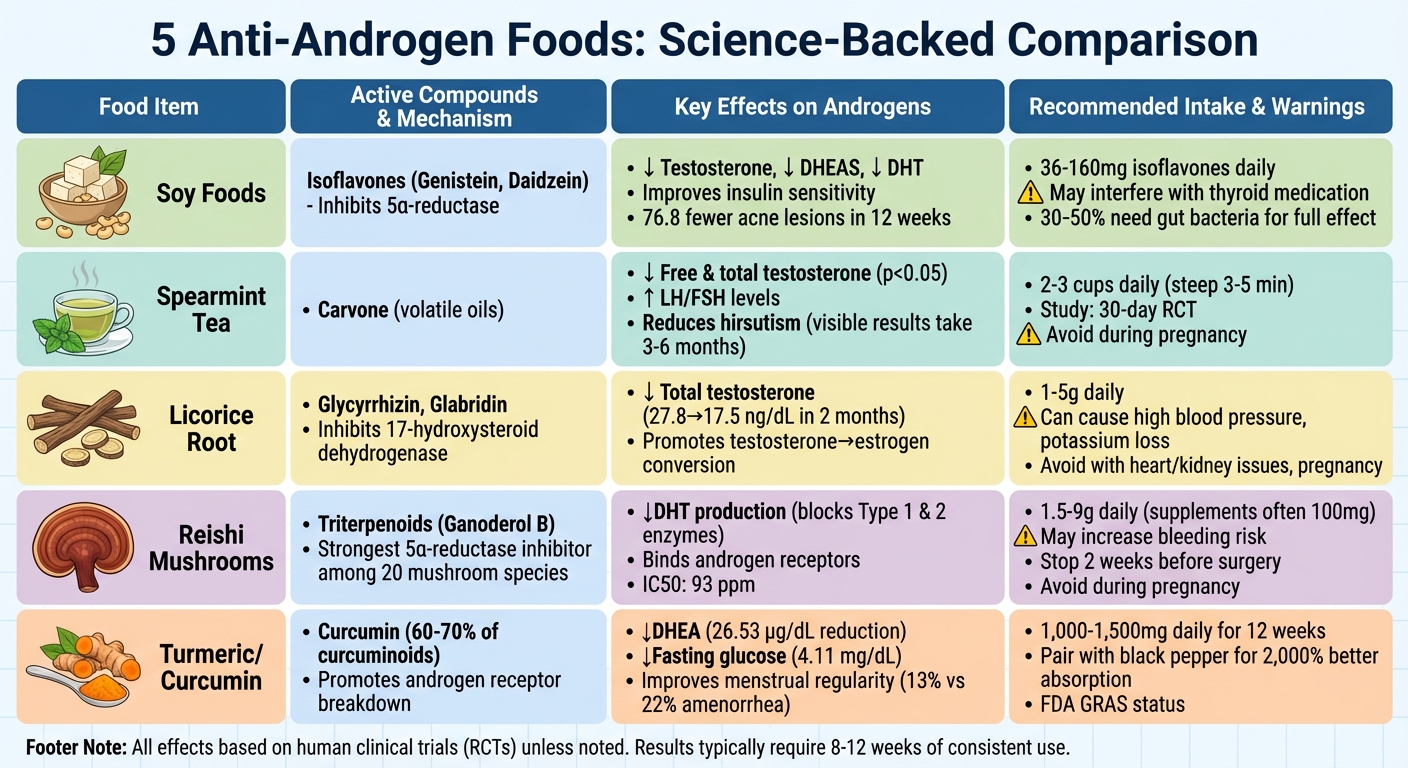
5 Anti-Androgen Foods: Compounds, Effects, and Dosage Guide for PCOS
Here’s a streamlined summary of how these five foods interact with androgens. Each offers unique active compounds, effects, and safety considerations.
| Food Item | Active Compounds | Research Evidence | Androgen Effects | Safe Intake Guidelines |
|---|---|---|---|---|
| Soy Foods | Isoflavones (Genistein) | Randomized Controlled Trials | Improves insulin sensitivity; lowers insulin | 12-week studies |
| Spearmint Tea | Volatile oils (Mentha spicata) | 30-day RCT | Reduces free and total testosterone; boosts LH/FSH | 2 cups daily |
| Licorice Root | Glycyrrhizin, Phytoestrogens | Small clinical trials | Lowers total testosterone; promotes aromatase | 1-month study |
| Reishi Mushrooms | Triterpenoids | Pre-clinical/Comparative studies | Inhibits 5-alpha reductase (reduces DHT) | Typical dietary/supplemental dose |
| Turmeric | Curcumin | Pre-clinical & Preliminary clinical | Lowers androgens & LH; increases estrogen | Typical dietary/supplemental dose |
Specific Warnings & Considerations
| Food Item | Warnings & Notes |
|---|---|
| Licorice Root | Contains glycyrrhizin with phytoestrogen effects; testosterone levels may quickly normalize after stopping. |
| Reishi Mushrooms | Strong 5-alpha reductase inhibitor; current data is mostly pre-clinical regarding testosterone reduction. |
Key Research Highlights
- Spearmint Tea: Backed by a 30-day randomized controlled trial, it showed significant reductions in free and total testosterone (p < 0.05).
- Soy Foods: Evidence from 12-week studies highlights its role in improving insulin sensitivity.
- Licorice Root: Demonstrated a noticeable drop in testosterone levels within a month in healthy female participants.
- Reishi Mushrooms: Identified as the most potent 5-alpha reductase inhibitor among 20 mushroom species studied.
This comparison underscores the diverse mechanisms and research supporting these anti-androgen foods, along with the importance of understanding their safety profiles.
How to Add Anti-Androgen Foods to Your PCOS Diet
Combining anti-androgen foods with meals that help stabilize blood sugar can be a game-changer for managing PCOS. Elevated insulin levels can prompt your ovaries to produce more testosterone, which only worsens symptoms like irregular cycles and acne. To get the most out of anti-androgen foods, pair them with a Mediterranean-style or low-glycemic diet. Here are some practical tips to seamlessly work these foods into your daily routine.
Start by swapping out high-glycemic staples for healthier alternatives. For example, replace white rice with quinoa or barley, and opt for pumpernickel bread instead of white bread. A great breakfast idea? Overnight oats made with unsweetened soy milk, topped with walnuts and a tablespoon of ground flaxseeds. This simple meal packs anti-androgen isoflavones, omega-3s, and low-GI carbs into one satisfying bowl. For lunch, try a Mediterranean Buddha bowl featuring edamame, quinoa, cucumbers, and a lemon-tahini dressing. At dinner, consider turmeric-rubbed salmon served with roasted broccoli and sautéed Reishi mushrooms - this meal combines multiple anti-androgen foods with healthy fats for a nutrient-packed plate.
A plant-based diet can also work wonders for PCOS. Foods high in fiber and hormone-regulating compounds, like soy, help balance hormones and alleviate symptoms. One simple trick to balance your meals is the "half-plate rule": fill half your plate with non-starchy vegetables like spinach, kale, or bell peppers. Then, add a palm-sized portion of protein (think tofu, tempeh, or salmon) and a fist-sized serving of low-GI carbs. Another effective adjustment is replacing 35% of your animal protein with soy protein, which has been shown to reduce testosterone levels and improve fasting blood sugar in women with PCOS. Don’t forget to sip on spearmint tea twice a day and aim for 40 grams of fiber daily - this can help with weight loss and insulin sensitivity.
The benefits of these changes are supported by research. In one study, 63% of women with PCOS who followed a Mediterranean anti-inflammatory diet for three months regained menstrual regularity. The combination of anti-androgen foods with an overall high-quality diet addresses not only PCOS symptoms but also the underlying causes.
If you’re looking for personalized guidance on managing PCOS through diet and lifestyle, check out Oana Health. Their telehealth services focus on science-backed solutions for female hormones and PCOS, offering tailored support to help you feel your best.
When Food Is Not Enough
While adjusting your diet can help manage PCOS symptoms, it might not be enough for everyone. In fact, over half of women with PCOS find that lifestyle changes alone don't fully address their symptoms. If you're still experiencing irregular periods (lasting more than 40 days), persistent acne, or excessive facial hair growth, it may be time to consider medical options. Other warning signs to look out for include difficulty losing weight despite a healthy lifestyle, dark velvety skin patches (known as acanthosis nigricans), or challenges with conception due to infrequent ovulation.
Medical treatments like Metformin and Spironolactone can directly address hormonal imbalances. Metformin improves how your body processes insulin, while Spironolactone helps reduce acne and unwanted hair growth. When paired with dietary adjustments, these medications often deliver better results than either approach on its own.
For tailored support, Oana Health offers specialized telehealth services for PCOS and hormonal health. Their licensed medical professionals assess your health history and recommend science-backed treatments designed just for you. Options include Spironolactone starting at $14/month, Oral Metformin ER at $22/month, or a combined Metformin & Spironolactone pack for $32/month - all delivered straight to your door with free shipping.
If your symptoms are affecting your daily life or increasing risks for complications like type 2 diabetes or endometrial cancer, consider combining medical treatments with an anti-androgen diet for a more comprehensive approach.
Conclusion
Incorporating anti-androgen foods into your diet can play a role in managing PCOS symptoms, but they’re most effective when combined with a broader treatment plan. These foods contribute to hormone balance in several ways - helping regulate insulin levels, blocking certain enzymes, and boosting SHBG levels. However, PCOS is a multifaceted endocrine condition that requires a comprehensive approach, blending dietary adjustments with medical care.
As Paul Grant from the Department of Endocrinology at Kings College Hospital explains:
"While there may be detectable and significant biochemical and in vitro changes in androgen related parameters, we are still not clear as to the benefits in endocrine practice... Further work is clearly needed before the use of such compounds becomes part of routine practice".
FAQs
How long does it take to notice improvements from eating anti-androgen foods?
It usually takes about three months of regularly including anti-androgen foods in your diet to begin seeing changes in symptoms like acne, excessive hair growth, or hair thinning. Incorporating soy-based products, which are high in phytoestrogens, can gradually help regulate hormone levels.
However, results can differ from person to person, depending on factors such as overall diet, lifestyle habits, and any underlying health issues. Staying consistent is essential for achieving noticeable results.
Can I eat anti-androgen foods while taking Spironolactone?
Yes, you can add anti-androgen foods like spearmint tea, flaxseeds, and fatty fish to your diet while taking Spironolactone. This medication is known for its generally safe profile and doesn’t have reported negative interactions with these foods. That said, it’s wise to check with your healthcare provider before making any major dietary changes, especially if you’re managing conditions like PCOS or are on other medications.
Including these foods in your diet might support your treatment by addressing symptoms like acne, excess hair growth, or hormonal imbalances. Focus on maintaining a well-rounded, nutrient-dense diet that aligns with your specific health needs.
Are there any risks or precautions to consider when eating anti-androgen foods?
Including anti-androgen foods in your diet can be a great way to support hormonal balance, but there are a few precautions to keep in mind. For instance, spearmint tea has been shown in studies to lower androgen levels without significant side effects. However, if you're pregnant, nursing, or taking hormone-related medications, it’s wise to check with your healthcare provider before adding it to your routine. Similarly, soy-based foods can help reduce testosterone levels, but if you have a soy allergy or thyroid condition, you should monitor your intake, as soy may interfere with thyroid medication absorption.
Foods rich in fiber, like flaxseeds, and healthy fats from sources such as fatty fish are also known for their anti-inflammatory properties and ability to regulate hormones. That said, consuming too much of these can lead to mild digestive issues like bloating or loose stools.
To ensure these foods work for you, start with small amounts, pay attention to any adverse reactions, and consult your doctor - especially if you’re managing conditions like PCOS, insulin resistance, or other hormonal imbalances with prescribed treatments. This approach helps align dietary choices with your specific health needs.