
Top 5 Adaptogens for PCOS Symptom Relief
Managing PCOS symptoms like irregular periods, weight changes, and hormonal imbalances can be challenging. Many women also experience insulin resistance (affecting up to 70%) and heightened stress, which worsens symptoms. Adaptogens - natural herbs and roots - may help regulate hormones, reduce stress, and improve insulin sensitivity. Here's a quick overview of the top five options:
- Ashwagandha: Lowers cortisol, supports hormonal balance, and improves insulin sensitivity.
- Rhodiola Rosea: Reduces stress, balances hormones, and boosts energy levels.
- Holy Basil: Helps lower cortisol, promotes better glucose control, and stabilizes hormone levels.
- Ginseng: Improves insulin response, regulates reproductive hormones, and reduces stress.
- Maca Root: Aids in balancing hormones, reducing cortisol, and enhancing energy and mood.
These adaptogens may provide relief for PCOS symptoms when paired with healthy lifestyle changes. Always consult a healthcare provider before starting any supplement.
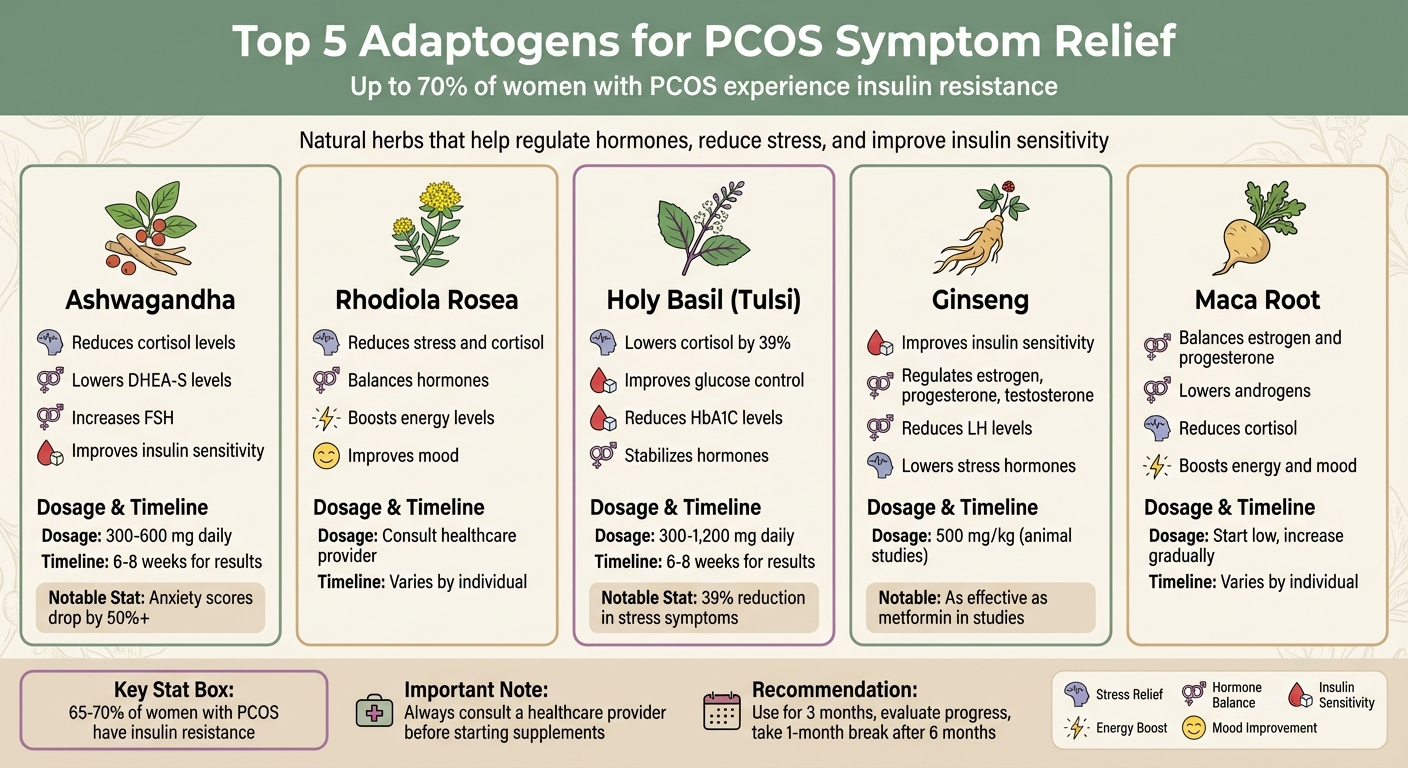
Top 5 Adaptogens for PCOS: Benefits and Dosage Comparison
Supplements & PCOS: What You Need to Know About Ashwagandha, Rhodiola, and Fertility (Episode 57)
1. Ashwagandha
Ashwagandha (Withania somnifera), often called Indian Ginseng, is a widely studied herb known for its potential benefits in managing PCOS symptoms. It works by influencing the hypothalamic-pituitary-adrenal (HPA) axis, which helps interrupt the cycle of stress-driven cortisol spikes that can worsen insulin resistance and hormone imbalances.
Reduces Stress and Cortisol Levels
Ashwagandha is well-regarded for its ability to lower cortisol levels. Studies reveal that a daily dose of 600 mg can significantly reduce both stress perception and serum cortisol levels in adults. Additionally, it may act like the calming neurotransmitter GABA, which can ease anxiety and enhance sleep quality. Some research even shows anxiety scores dropping by over 50% after using ashwagandha - offering results comparable to medications like lorazepam (Ativan), but without the usual side effects.
"By reducing cortisol, ashwagandha can help reduce the stress response. All which can keep your other hormones in check!" - Christa Brown, MS, RDN, LD
Supports Hormonal Balance
Ashwagandha's benefits extend beyond stress relief - it also helps address hormonal imbalances often associated with PCOS. It has been shown to lower elevated DHEA-S levels and may increase follicle-stimulating hormone (FSH), which can help regulate menstrual cycles. For example, in one case from 2012, a 57-year-old woman with PCOS-related hair loss took 400 mg of ashwagandha root twice daily. Within a month, her hair loss improved, and lab results showed reduced cortisol and stress hormones. This hormonal balance also supports metabolic health, potentially easing insulin resistance.
Improves Insulin Sensitivity
Insulin resistance affects about 65% to 70% of women with PCOS, and ashwagandha may help improve this condition. Elevated cortisol levels can interfere with how cells respond to insulin, but by lowering cortisol, ashwagandha supports better blood sugar regulation. This, in turn, can reduce excess insulin, which might otherwise trigger higher testosterone production by the ovaries. Clinical studies recommend daily doses between 300 mg and 600 mg, with noticeable improvements often occurring after 6 to 8 weeks of consistent use.
2. Rhodiola Rosea
Rhodiola Rosea (Rhodiola rosea) is an herb known for its ability to help the body adapt to both physical and emotional stress. For women managing PCOS, this herb offers support by regulating the hypothalamic-pituitary-adrenal (HPA) axis, which is central to the body’s stress response. By doing so, Rhodiola can help counteract the chronic stress and fatigue often associated with PCOS.
Reduces Stress and Cortisol Levels
One of Rhodiola’s key benefits is its ability to reduce stress by moderating the body's response and lowering cortisol levels.
"Adaptogens tend to decrease the stress hormone, cortisol, which has a cascading effect on almost every other hormone in your body, including insulin and testosterone (both massively involved in the manifestation and presentation of PCOS)." - Organic Olivia
This reduction in cortisol can have a ripple effect, positively influencing other hormones that play a role in PCOS symptoms.
Supports Hormonal Balance
Beyond stress relief, Rhodiola addresses symptoms like mood swings, persistent fatigue, and low energy. Its adaptogenic nature allows it to respond to the body’s specific needs, helping to bring hormones back into balance. This balance can provide a boost to both energy levels and overall vitality.
Enhances Overall Well-Being
By managing cortisol levels and improving energy, Rhodiola contributes to a greater sense of well-being. However, before incorporating it into your routine, it’s wise to consult with a healthcare provider to determine the right dosage for your needs.
"In the context of PCOS, rhodiola can help alleviate stress-related symptoms such as fatigue, mood swings, and hormonal imbalances. It may also support healthy cortisol levels and improve energy levels." - Dr. Sadi Jimenez, Naturopathic Doctor
3. Holy Basil
Holy Basil, also known as Tulsi or Ocimum sanctum, is a standout herb in Ayurvedic medicine, often referred to as "The Queen of Herbs." Renowned for its stress-relieving properties, this adaptogen plays a key role in supporting the Hypothalamic-Pituitary-Adrenal (HPA) axis, which regulates hormone production and the body’s stress response.
Reduces Stress and Cortisol Levels
One of Holy Basil’s most notable benefits is its ability to lower cortisol levels, making it especially helpful for women managing PCOS. Research indicates that taking 1,200 mg daily can alleviate stress-related symptoms by 39% while also reducing cortisol, salivary amylase, and blood pressure within six to eight weeks. Its unique adaptogenic compounds - Ocimumosides A and B, eugenol, and ursolic acid - work together to support adrenal function and stabilize hormone levels.
"Think of holy basil as a helping hand when you're feeling low or navigating rough terrain. It helps you become more resilient to the stresses and challenges of daily life to reduce the toll that stress can take on your health and hormone balance." - Dr. Jolene Brighten, Naturopathic Endocrinologist
Improves Insulin Sensitivity
With 65–70% of women with PCOS experiencing insulin resistance, Holy Basil offers a natural way to enhance glucose uptake by cells. This process helps lower blood sugar and testosterone levels. In a 12-week study, participants taking Holy Basil saw significant reductions in both fasting and post-meal glucose levels. The herb has also been shown to decrease HbA1C levels, aiding long-term blood sugar management.
Supports Hormonal Balance
Holy Basil’s adaptogenic properties extend to hormone regulation, supporting adrenal and thyroid health while influencing sex hormone pathways during periods of physical or emotional stress.
"Holy Basil has shown potential in supporting hormonal balance in conditions like Polycystic Ovarian Syndrome (PCOS). Many cases of PCOS also include insulin resistance, which makes this botanical a potentially favorable option." - Dr. JheriAnne Preston ND, CNS®
For general use, therapeutic doses typically range from 300 mg to 600 mg daily, though some studies have used up to 1,200 mg. Holy Basil is available in various forms, including capsules, tinctures (2–3 mL three times daily), or tea made by steeping ½ teaspoon of dried leaves in hot water. However, it’s best to avoid Holy Basil if you’re pregnant, breastfeeding, allergic to mint, or taking blood-thinning medications.
sbb-itb-6dba428
4. Ginseng
Ginseng is another herb that plays a role in managing PCOS by addressing hormonal and metabolic challenges. Known for its potential to regulate glucose metabolism and support hormone balance, ginseng offers several benefits that make it a useful addition to PCOS management strategies. Let’s break down how it helps with insulin sensitivity, hormonal regulation, and stress reduction.
Improves Insulin Sensitivity
One of ginseng's standout benefits is its ability to improve insulin sensitivity and regulate blood sugar levels. It helps lower both blood glucose and lipid levels, making it an effective tool for managing metabolic concerns in PCOS. Additionally, ginseng boosts the body’s antioxidant defenses by activating enzymes like glutathione and superoxide dismutase, which prevent lipid damage in cell membranes. Animal studies even suggest that ginseng metabolites may help restore normal reproductive cycles by influencing CXCL14 expression in brown adipose tissue.
Supports Hormonal Balance
Ginseng has shown promise in balancing key hormones in PCOS. Research involving a 500 mg/kg dose of ginseng extract found that it helped restore proper levels of estrogen, progesterone, and testosterone while reducing luteinizing hormone (LH) levels. This reduction in LH is particularly important for encouraging ovulation and maintaining regular menstrual cycles. In fact, a study on adult rats revealed that ginseng extract (500 mg/kg) was just as effective as metformin (500 mg/kg) in preventing hormonal disruptions and the formation of cystic follicles caused by letrozole.
Reduces Stress and Cortisol Levels
Stress management is another area where ginseng shines. Its antistress, anti-inflammatory, antioxidant, and immune-supporting properties help reduce the impact of stress on the body. Clinical findings suggest that ginseng supplementation can significantly lower serum levels of stress-related hormones, promoting a healthier cortisol response and helping the body better adapt to stressors.
5. Maca Root
Maca root, a plant native to the Andes Mountains of Peru, has long been recognized for its potential to help manage PCOS symptoms. Known as a natural adaptogen, it contains bioactive compounds that may address hormonal imbalances, stress, and metabolic challenges associated with PCOS.
Supports Hormonal Balance
Maca root is believed to influence key hormones like estrogen and progesterone while helping to lower elevated androgen levels. This can be particularly helpful for managing symptoms such as acne and excessive hair growth (hirsutism). A 2024 review of 32 plant-based extracts highlighted maca root as one of the more effective options for hormone regulation in PCOS. It's often paired with other botanicals like saw palmetto and vitex to provide more comprehensive hormonal support. Additionally, its ability to stabilize hormones may contribute to a more balanced stress response.
Reduces Stress and Cortisol Levels
One of maca root's standout benefits is its potential to reduce cortisol levels, which can help improve mood and alleviate stress. For individuals with PCOS, who may be more prone to depression, maca root might offer some relief. For those trying to conceive, it may also help regulate menstrual cycles and support reproductive health.
Improves Insulin Sensitivity
Emerging research suggests that maca root may enhance insulin sensitivity, making it a useful tool for managing blood sugar levels in PCOS.
Promotes Overall Well-Being
Traditionally, maca root has been used to boost energy and enhance mood, making it a valuable option for women with PCOS who often experience fatigue and low energy levels. However, as with any supplement, it’s important to consult a healthcare provider before adding maca root to your routine. Starting with a low dose is recommended to monitor how your body responds.
Conclusion
Adaptogens provide a natural way to address the hormonal imbalances associated with PCOS. By regulating the HPA axis and reducing cortisol levels, they help manage the cascade of hormonal disruptions - like increased androgens, elevated prolactin, and lower progesterone - that often accompany PCOS. Lower cortisol levels not only support hormone balance but also improve insulin sensitivity, a critical factor since 65–70% of women with PCOS experience insulin resistance.
These powerful herbs also tackle other challenges linked to PCOS. They help reduce inflammation, improve energy levels, clear brain fog, and support liver function, which aids in detoxifying excess hormones and promoting regular menstrual cycles. When paired with healthy lifestyle habits, adaptogens become even more effective. Incorporating an anti-inflammatory diet, quality sleep, balanced exercise, and self-care practices can significantly improve PCOS management, as emphasized by Magdalena Wszelaki:
"Adaptogens should not be used to offset poor health and lifestyle choices. They work best when combined with sound health practices, such as an anti-inflammatory diet, plenty of sleep, moderate/right exercise, self-love, resolved trauma, time for self-care, and healthy, nourishing relationships."
- Magdalena Wszelaki, Founder of HormonesBalance.com
Before starting any new supplement, it’s essential to consult with a healthcare provider, as adaptogens can interact with medications and need to be tailored to individual needs. Experts typically recommend using adaptogens for about three months, followed by an evaluation of progress, and taking a one-month break after six consecutive months of use.
For a personalized approach to PCOS treatment, visit Oana Health to connect with licensed professionals who can create science-backed, customized care plans.
FAQs
Can adaptogens help with insulin resistance in PCOS?
Adaptogens may help with insulin resistance in PCOS by aiding the body in managing stress more efficiently. Chronic stress often leads to elevated cortisol levels, which can aggravate insulin resistance and throw hormonal balance off track. Adaptogens support adrenal health and encourage a steadier stress response, which can, in turn, positively influence blood sugar regulation.
By targeting stress and cortisol levels, adaptogens might also ease other PCOS symptoms like fatigue and mood swings, promoting a greater sense of overall wellness.
Can adaptogens cause side effects when used for PCOS symptom relief?
Adaptogens can offer support for managing PCOS symptoms, but they’re not without potential side effects. Take ashwagandha, for instance - a popular adaptogen. While it’s often praised for its benefits, it can sometimes cause mild issues like nausea, stomach upset, or diarrhea. It may also affect hormone levels, which means extra care is needed for individuals with thyroid conditions or those on certain medications.
Other adaptogens, including various herbs and mushrooms, might also lead to side effects or interact with medications, depending on factors like your health status and dosage. While they’re generally considered safe when used correctly, it’s wise to check with a healthcare professional before incorporating them into your routine. This is particularly important since adaptogens can influence hormones and how your body handles stress.
When used thoughtfully and under professional guidance, adaptogens can play a helpful role in promoting hormonal balance and managing stress for many people dealing with PCOS.
How long does it take for adaptogens to help with PCOS symptoms?
Adaptogens typically require consistent use over several weeks or even months to make a noticeable difference in managing PCOS symptoms. Their benefits develop gradually, as they work to help your body handle stress more effectively, regulate cortisol levels, and promote hormonal balance.
To get the most out of adaptogens, it’s essential to incorporate them into your routine consistently and pair them with a broader plan for managing PCOS. This might include changes to your lifestyle, adjustments to your diet, and any necessary medical treatments. Always check with a healthcare professional before adding any new supplement to your regimen to ensure it’s safe and suitable for your needs.