
Best Essential Oils for PCOS Symptoms
Polycystic Ovary Syndrome (PCOS) affects 70–75% of women with specific hormonal and metabolic challenges. Managing symptoms like irregular periods, acne, hair loss, weight gain, and stress can feel overwhelming. While medical treatments remain key, some women explore natural options like essential oils to complement their care routines. Oils like lavender, clary sage, spearmint, geranium, and frankincense may help balance hormones, reduce inflammation, and alleviate stress when used consistently.
Here's what you need to know:
- Lavender: Promotes relaxation and stress relief.
- Clary Sage: Supports hormonal balance and reduces stress.
- Spearmint: May lower androgen levels, helping with acne and excess hair growth.
- Geranium: Helps balance hormones and improve skin health.
- Frankincense: Reduces inflammation and promotes relaxation.
Always dilute oils with a carrier oil like coconut or jojoba before use, and consult a healthcare provider, especially if you're pregnant or taking medications. While essential oils aren't a cure, they can be a helpful addition to medical treatments and lifestyle changes for managing PCOS symptoms effectively.
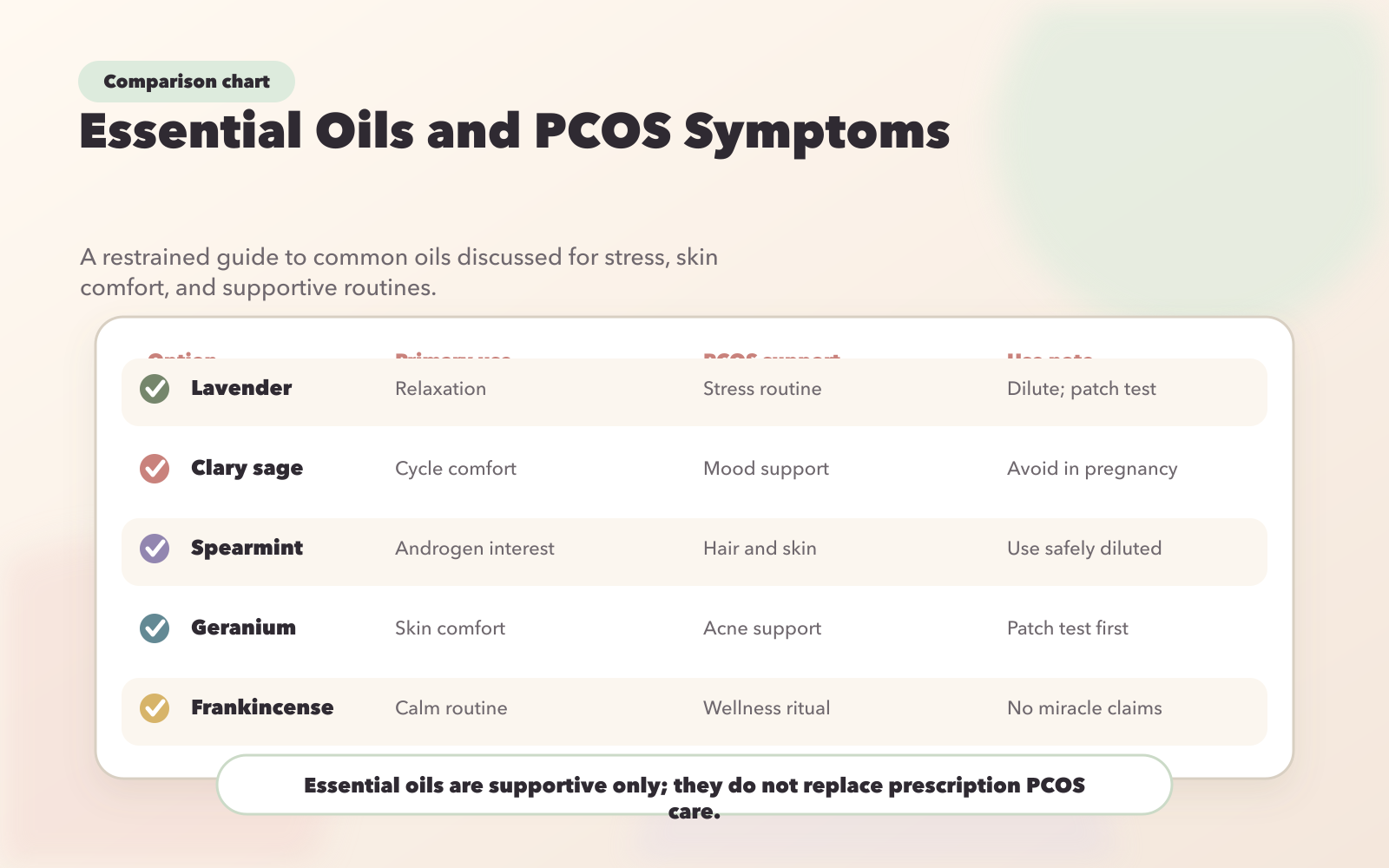
5 Best Essential Oils for PCOS: Benefits and Uses Comparison Chart
Essential Oils for PCOS
sbb-itb-6dba428
Best Essential Oils for PCOS Symptoms
Essential oils can be a natural way to help manage PCOS symptoms by supporting hormonal balance. Here’s a look at some of the most effective options and their specific benefits.
Lavender Essential Oil
Lavender essential oil is often praised for its calming properties, which can help ease stress and promote hormonal balance. You can use it in a diffuser to fill the room with its soothing scent or apply it topically after diluting it with a carrier oil.
Clary Sage Essential Oil
Clary sage is commonly associated with hormonal support, particularly in regulating estrogen and progesterone levels. Its gentle, earthy aroma can also help reduce stress. Try inhaling it directly or mixing it with a carrier oil for massage or topical use.
Spearmint Essential Oil
Spearmint essential oil is known for its ability to help lower androgen levels, which can reduce symptoms like excess hair growth and acne caused by elevated testosterone. Its refreshing scent makes it ideal for diffusion or direct inhalation.
Geranium Essential Oil
Geranium essential oil is a versatile option for balancing hormones and may also aid in regulating menstrual cycles. It’s especially helpful for addressing skin issues tied to PCOS. Use it in a diffuser or apply it topically after diluting.
Frankincense Essential Oil
Frankincense stands out for its anti-inflammatory properties, thanks to boswellic acids, and its ability to promote relaxation. Diffuse it or apply it topically with a carrier oil to enjoy its soothing effects.
These essential oils can be a helpful addition to medical treatments and lifestyle changes, offering extra support for managing PCOS symptoms effectively.
How to Use Essential Oils Safely
Essential oils are potent plant extracts that need to be handled with care to avoid issues like skin irritation or other unwanted reactions. Proper dilution, application methods, and safety measures are key to using these oils effectively, especially for managing PCOS symptoms.
Dilution and Carrier Oils
Never apply essential oils directly to your skin without diluting them first. Always mix them with a carrier oil, such as coconut, jojoba, or almond oil, to reduce the risk of irritation.
Here’s a quick guide to dilution ratios:
- For facial use: 0.2%–1.5% (1–9 drops per 1 oz of carrier oil)
- For body massage: 1.5%–3% (9–18 drops per 1 oz)
- For localized treatment: Up to 5%–10% (30–60 drops per 1 oz)
Coconut oil is a popular choice as a carrier because it’s stable, easy to find, and versatile. When selecting essential and carrier oils, opt for high-quality, pure products from trusted, pesticide-free sources.
Application Methods
There are several ways to safely use essential oils for PCOS symptoms, such as diffusion, topical application, or adding them to your bath. For topical use, apply diluted oils to areas like the lower abdomen and back to help with menstrual cramps or hormonal support. If you're dealing with hair thinning, massage diluted oils into your scalp, either with shampoo or a carrier oil like coconut oil.
When adding essential oils to a bath, mix 5 to 10 drops with a carrier oil before adding it to the water. This ensures the oils are evenly dispersed and prevents them from irritating your skin. If you’re using a diffuser, follow the manufacturer’s instructions to safely enjoy the aromatic benefits. Always review safety precautions before trying any new method.
Precautions and Side Effects
Never ingest essential oils. Even a small amount can cause serious poisoning. Only consider ingestion under the direct supervision of a qualified healthcare professional.
It’s essential to consult your healthcare provider before using essential oils, especially if you’re pregnant, nursing, or taking medications like hormonal birth control or insulin-sensitizing drugs. These oils can interact with medications or influence hormone levels in unexpected ways. Lastly, store your oils in a cool, dark place and keep track of expiration dates - most are effective for 1 to 3 years.
Using Essential Oils with Medical PCOS Treatments
Incorporating essential oils alongside prescription treatments can provide additional support for managing PCOS. While medications address core issues like insulin resistance, high androgen levels, and metabolic concerns, essential oils can help manage symptoms like inflammation, stress, and hormonal imbalances. Together, they create a more comprehensive approach to handling PCOS.
Telehealth Services for PCOS
Accessing professional care for PCOS has become incredibly convenient, thanks to telehealth platforms. Oana Health specializes in science-based, prescription treatments for PCOS symptoms, offering free shipping for added convenience. Licensed professionals evaluate your medical history and prescribe treatments tailored to your needs, targeting concerns like insulin resistance, hair loss, acne, unwanted facial hair, and mental health challenges.
Their selection includes FDA-approved options such as oral Metformin ER ($22/month) for insulin resistance, Spironolactone ($14/month) for unwanted hair, and oral Minoxidil ($25/month) for hair loss. These treatments are specifically designed for the 70–75% of women affected by this common endocrine disorder. Using prescription treatments under professional supervision pairs seamlessly with essential oils to enhance overall results.
Combining Essential Oils with Prescription Treatments
When used safely, essential oils can complement your prescription regimen. Here’s how they work alongside specific treatments:
- For insulin resistance: Diffusing cinnamon or frankincense oil can help support metabolic health and reduce inflammation when paired with Metformin or GLP-1 medications.
- For hair loss: Massaging diluted rosemary or clary sage oil into the scalp can enhance the effects of topical Spironolactone ($43/month) or oral Minoxidil by stimulating hair follicles.
- For acne: Applying diluted tea tree or geranium oil as a spot treatment can complement prescription Spironolactone by helping to balance skin oils.
Always consult your healthcare provider before incorporating essential oils into your treatment plan. This is especially important if you are pregnant, nursing, or taking medications for blood sugar or hormone regulation, as some oils may interact with medications or affect hormone levels.
Conclusion
Essential oils can be a helpful addition to managing PCOS symptoms like acne, hair loss, insulin resistance, and stress. For example, lavender may help reduce cortisol levels, while clary sage can support metabolic balance. As hormone expert and author Dr. Mariza Snyder puts it:
"Essential oils are a powerful tool in your healing toolbox. Used as an upgrade to diet, lifestyle, and mindset changes, essential oils can help to get you some relief."
These natural remedies work best when paired with evidence-based medical treatments. Combining aromatherapy with targeted prescriptions can provide both immediate relief and long-term management. For instance, diffusing frankincense for its anti-inflammatory benefits can complement Metformin ER ($22/month) to improve insulin sensitivity. Similarly, diluted geranium oil can work alongside Spironolactone ($14/month) to help manage acne.
For professional PCOS care, Oana Health offers telehealth consultations with licensed providers. Their personalized treatments address issues like insulin resistance, hair loss, and mental health, delivering prescriptions directly to your home with free shipping. This convenience allows you to focus on building a care routine that blends medical therapies with natural solutions.
If you’re pregnant, nursing, or taking hormone-regulating medications, consult your healthcare provider before using essential oils, as some may interact with prescriptions or affect hormone levels. With professional guidance, essential oils can be safely integrated into a broader approach to managing PCOS symptoms effectively.
FAQs
How long does it take to see results from essential oils for PCOS?
The effects of essential oils on PCOS symptoms can take time to manifest. Improvements in areas like stress relief and hormonal balance often require consistent use over several weeks or even months. To get the most out of essential oils, consider integrating them into a broader plan for managing PCOS symptoms.
Which essential oils are safest for sensitive skin or allergies?
Essential oils like lavender, clary sage, rose, ylang-ylang, and geranium are often gentle enough for sensitive skin or those prone to allergies. However, it's crucial to take precautions. Always dilute essential oils correctly, test a small amount on a patch of skin first, and consult a healthcare professional to minimize the risk of any adverse reactions.
Can essential oils interfere with PCOS medications like metformin or spironolactone?
Essential oils can interact with medications commonly prescribed for PCOS, like metformin or spironolactone, particularly when used in large amounts or taken internally. The active ingredients in essential oils might influence how these drugs are processed in your body. To stay safe and prevent any potential disruptions to your treatment, it's important to talk to your healthcare provider before incorporating essential oils into your routine.