
Top 5 FDA-Approved PCOS Medications Explained
Polycystic Ovary Syndrome (PCOS) affects millions of women, causing hormonal imbalances, irregular periods, and symptoms like acne, excess hair growth, and infertility. While there’s no cure, several FDA-approved medications can help manage symptoms effectively. Here’s a quick breakdown:
- Metformin: Improves insulin sensitivity, aids weight management, and restores menstrual cycles. Common side effects include nausea and diarrhea.
- Combined Oral Contraceptive Pills (COCPs): Regulate periods, reduce acne, and lower androgen levels. Risks include headaches, nausea, and rare blood clots.
- Spironolactone: Reduces excess hair growth and hormonal acne but requires monitoring for potassium-related side effects.
- Eflornithine (Vaniqa): A topical cream that slows facial hair growth. Results take weeks and aren’t permanent.
- Clomiphene Citrate (Clomid): Induces ovulation for women trying to conceive but may increase the chance of multiple pregnancies.
Each treatment targets specific symptoms, so choosing the right one depends on your goals - whether it’s cycle regulation, managing hair growth, or improving fertility. Consult your doctor to develop a tailored plan.
Quick Comparison
| Medication | Primary Use | Key Symptoms Addressed | Common Side Effects | Best For |
|---|---|---|---|---|
| Metformin | Insulin sensitivity | Irregular periods, weight gain | Nausea, diarrhea, B12 deficiency | Insulin resistance, pre-diabetes |
| COCPs | Hormone regulation | Irregular cycles, acne | Nausea, headaches, spotting | Women not planning pregnancy |
| Spironolactone | Androgen reduction | Excess hair, hormonal acne | High potassium, breast tenderness | Elevated androgen symptoms |
| Eflornithine (Vaniqa) | Slows facial hair growth | Unwanted facial hair | Skin irritation, redness, stinging | Localized facial hair concerns |
| Clomiphene Citrate | Ovulation induction | Infertility | Hot flashes, vision changes | Women trying to conceive |
Managing PCOS requires a personalized approach. Medications often take months to show results, and combining treatments with lifestyle changes can improve outcomes. Always consult with a healthcare provider for guidance.
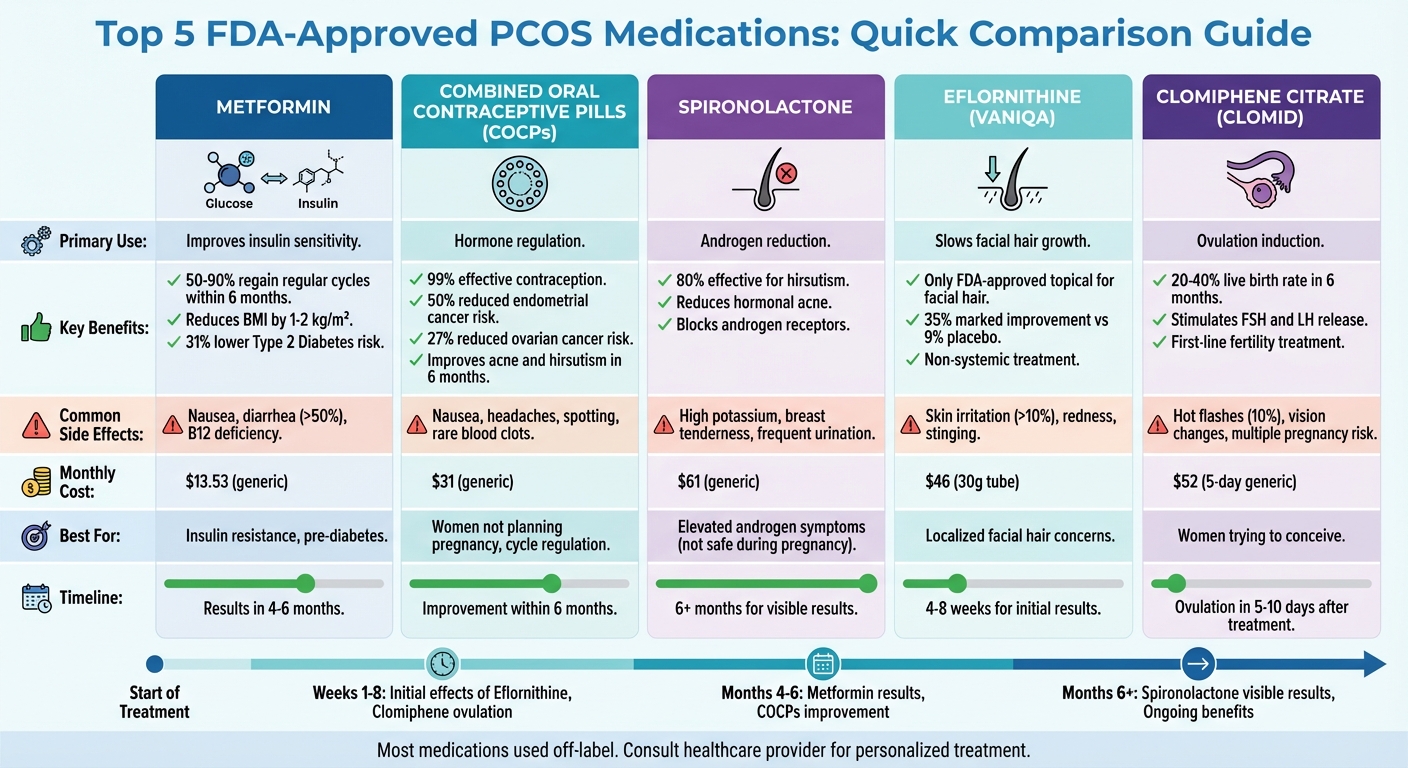
PCOS Medications Comparison: Uses, Side Effects, and Best Candidates
1. Metformin
Primary PCOS Use
While Metformin is officially approved by the FDA for managing Type 2 Diabetes, it’s often prescribed off-label to help manage PCOS. Its main function in this context is to improve how the body responds to insulin and to help maintain stable blood sugar levels .
Targeted Benefits
Metformin can help with several PCOS-related symptoms. For instance, it may assist in weight management, with studies showing a reduction in BMI by 1–2 kg/m². Additionally, it’s been reported that 50–90% of women regain regular menstrual cycles within six months of starting the medication. By lowering androgen levels, Metformin may also help reduce acne and excessive hair growth. For those trying to conceive, ovulation often resumes within 4–6 months . Another significant benefit is its ability to lower the risk of developing Type 2 Diabetes by 31%.
Common Side Effects
More than half of those taking Metformin experience diarrhea, and about 25% report other gastrointestinal issues like nausea, vomiting, or abdominal discomfort. Long-term use can affect Vitamin B12 absorption, so it’s a good idea to monitor B12 levels periodically . A rare but serious side effect is lactic acidosis, occurring in about 1 in 30,000 cases, particularly in individuals with kidney or liver conditions. To minimize side effects, careful dose adjustments are essential.
Optimizing Effectiveness
To ease potential stomach upset, it’s recommended to start with 500 mg taken with the largest meal of the day, gradually increasing the dose as tolerated . Metformin is most effective when paired with lifestyle changes, such as a calorie-conscious diet and consistent exercise .
The cost of Metformin varies widely. Generic versions can cost around $73 per month, while brand-name Glucophage is closer to $107 per month. However, some pharmacies offer generic options for as low as $4, depending on the dosage . Patience is key, as results - particularly regarding ovulation and weight loss - can take several months to become noticeable. When combined with healthy lifestyle choices, Metformin’s benefits are significantly amplified.
2. Combined Oral Contraceptive Pills (COCPs)
Primary PCOS Indication
For individuals with PCOS who are not trying to conceive, combined oral contraceptive pills (COCPs) are often the go-to long-term treatment. These pills combine estrogen, which helps regulate bleeding, and progestin, which suppresses ovulation. To minimize androgenic side effects like oily skin and excessive hair growth, doctors typically recommend COCPs containing low-androgenic progestins, such as norgestimate, desogestrel, or drospirenone.
Targeted Symptoms
COCPs play a key role in restoring regular menstrual cycles, addressing issues like oligomenorrhea or amenorrhea. They also help manage hyperandrogenism by increasing SHBG (sex hormone-binding globulin) and reducing LH/FSH levels, which lowers the amount of free testosterone in the body. Over time, consistent use - usually around six months - can improve symptoms like acne and hirsutism (excessive hair growth). Beyond symptom management, COCPs offer significant long-term benefits, including a 50% reduced risk of endometrial cancer and a 27% reduction in ovarian cancer risk that can last up to 20 years.
Common Side Effects
Breakthrough bleeding is one of the most commonly reported side effects of COCPs. Other issues like nausea, headaches, breast tenderness, mood changes, and decreased libido may also occur but tend to improve within a few months. Rare but serious risks include deep vein thrombosis (DVT), pulmonary embolism, stroke, and heart attack. Additionally, about 4% to 5% of healthy women may experience elevated blood pressure while on COCPs. Women over 35 who smoke more than 15 cigarettes a day are strongly advised against using COCPs due to heightened risks of cardiovascular problems and blood clots.
Effectiveness for Specific Patient Needs
"For management of irregular menstrual cycles and/or hirsutism, combined oral contraceptive pills are the first-line pharmacologic option." – 2023 International Evidence-based Guideline
When taken daily at the same time, COCPs are 99% effective at preventing pregnancy. For managing PCOS-related hirsutism, combining COCPs with spironolactone may yield better results. However, caution is advised when using drospirenone-containing pills due to potential potassium-related concerns.
In terms of cost, a generic option like desogestrel/ethinyl estradiol (Apri) is approximately $31 per month. Missing a dose by more than 24 hours can reduce its effectiveness, so backup contraception is recommended during the first seven days of starting the pill. With its broad range of benefits, COCPs remain a cornerstone treatment for PCOS as other options continue to be explored.
3. Spironolactone
Primary PCOS Indication
Spironolactone plays a key role in managing hyperandrogenism, an essential aspect of treating PCOS. While initially approved by the FDA in 1960 as a potassium-sparing diuretic for conditions like heart failure and hypertension, it has since been widely used off-label to address PCOS-related symptoms of excess male hormones. Its effectiveness lies in its ability to block androgen receptors on hair follicles and skin, preventing testosterone and dihydrotestosterone (DHT) from triggering their usual effects.
Targeted Symptoms
This medication is particularly effective in treating the visible signs of hyperandrogenism. For instance, approximately 80% of individuals with PCOS experience hirsutism - characterized by excessive, coarse, and dark hair on areas like the face, chest, and back. Beyond reducing unwanted hair growth, spironolactone also helps with hormonal acne and female-pattern hair loss, also known as androgenic alopecia. Studies have shown it outperforms metformin in improving hirsutism scores and is more effective than finasteride for managing excessive hair growth, according to a Cochrane review.
However, patience is key. It often takes at least six months of consistent use to see noticeable changes in hair growth. During this period, patients are encouraged to continue using other hair removal methods to manage symptoms. When used in combination with other therapies, spironolactone can significantly enhance treatment outcomes.
Common Side Effects
Spironolactone’s mechanism of action can lead to some side effects. Common issues include breast tenderness or swelling, irregular menstrual cycles (sometimes with spotting), dizziness, headaches, nausea, and frequent urination. Because it is a potassium-sparing diuretic, there’s also a risk of hyperkalemia, which, in severe cases, can cause heart rhythm problems. To avoid complications, patients should steer clear of potassium supplements and salt substitutes containing potassium. Taking the medication in the morning with food can help minimize stomach discomfort and prevent disruptions to sleep.
Effectiveness for Specific Patient Needs
Spironolactone is often used alongside other medications to tailor treatment plans to individual needs. For example, combining it with oral contraceptives can amplify its benefits. However, it’s crucial to use reliable contraception, as spironolactone is not safe during pregnancy due to its teratogenic risks. The typical dosage ranges from 50–100 mg taken twice daily, and regular blood tests are recommended to monitor potassium and sodium levels. This is especially important for individuals with kidney issues or diabetes.
In terms of cost, generic spironolactone is priced at about $61 per month, while the brand-name version, Aldactone, costs roughly $97 per month. Some providers, like Oana Health, offer competitive pricing along with free shipping under licensed medical supervision, making it a more accessible option for many patients.
4. Eflornithine (Vaniqa)

Primary PCOS Indication
Eflornithine, sold under the brand name Vaniqa, is the only FDA-approved topical treatment specifically designed to address unwanted facial hair in women. Its 13.9% formulation works by blocking the enzyme ornithine decarboxylase, which slows down hair growth, resulting in finer and lighter hair over time.
Targeted Symptoms
Vaniqa is applied to areas affected by coarse, dark facial hair. While it helps reduce the rate of hair growth, it doesn’t provide immediate results. You’ll still need to use your usual hair removal methods while waiting for the cream to take effect. Unlike systemic treatments that tackle a range of PCOS symptoms, eflornithine focuses solely on this cosmetic concern.
Common Side Effects
Some common side effects include acne (affecting over 10% of users), skin irritation like redness, burning, or stinging, razor bumps, and folliculitis [26,27,29]. Less frequent side effects can include headaches, dizziness, or an upset stomach. To reduce irritation, apply the cream to clean, dry skin and wait a few minutes before layering other products. Avoid washing the treated area for at least four hours after application to ensure proper absorption.
Effectiveness for Specific Patient Needs
Clinical studies show that 35% of users reported being "clear/almost clear" or seeing "marked improvement" compared to just 9% using a placebo. Most people start noticing results within 4–8 weeks. However, if no improvement is seen after 4–6 months, it’s recommended to stop using the product [26,27]. It’s important to note that the effects aren’t permanent - hair typically returns to its pre-treatment state within about 8 weeks after stopping the cream.
A 30-gram tube of brand-name Vaniqa is priced at around $46. Alternatively, Oana Health offers a 12% eflornithine cream for $69 per month, including free shipping and licensed medical supervision. This treatment is not recommended during pregnancy.
5. Clomiphene Citrate (Clomid)
Primary PCOS Indication
Clomiphene citrate, also known as Clomid, is an FDA-approved medication often used to address infertility in women with PCOS who struggle with anovulation (lack of ovulation) or oligo-ovulation (irregular ovulation). This selective estrogen receptor modulator (SERM) works by interacting with estrogen receptors in the hypothalamus. Essentially, it tricks the body into thinking estrogen levels are lower than they actually are, prompting the release of follicle-stimulating hormone (FSH) and luteinizing hormone (LH). These hormones encourage the development of eggs and stimulate ovulation.
Targeted Symptoms
Clomiphene is specifically aimed at improving fertility by inducing ovulation. Typically, it is prescribed as a 50 mg oral tablet, taken once daily for five days, starting on the fifth day of the menstrual cycle. Ovulation generally occurs 5 to 10 days after completing the medication course. These dosing guidelines provide a framework for understanding how it works and its safety considerations.
Common Side Effects
Some women may experience side effects while taking clomiphene. The most common include ovarian enlargement (14%), hot flashes (10%), abdominal discomfort, bloating, breast tenderness, headaches, nausea, and mood swings. Occasionally, visual disturbances - such as blurred vision, light sensitivity, or flashes - can occur. If these symptoms arise, it’s crucial to stop the treatment immediately. A rare but serious complication is ovarian hyperstimulation syndrome (OHSS), which can cause severe pelvic pain, rapid weight gain (over 10 pounds within 3 to 5 days), and difficulty breathing.
Effectiveness for Specific Patient Needs
When it comes to results, clomiphene has shown promising outcomes for women trying to conceive. Studies indicate a 6-month live birth rate of 20% to 40% when used to induce pregnancy. Most women who respond to the treatment will ovulate during the first cycle. However, if ovulation hasn’t occurred after three cycles - or if pregnancy isn’t achieved after three consecutive ovulatory cycles - other treatment options should be considered. Treatment is generally limited to six cycles.
Cost-wise, generic clomiphene is relatively affordable, priced at about $52 for a five-day course at a dosage of 100 mg per day. The brand-name version, Clomid, is more expensive, costing around $128. It’s worth noting that clomiphene increases the likelihood of multiple pregnancies, such as twins or triplets, as it can stimulate the release of more than one egg.
sbb-itb-6dba428
Understanding PCOS Symptoms and Treatment: How To Manage Your PCOS
Comparison Table
Understanding the differences between PCOS treatments can help in making informed choices. Below is a breakdown of five commonly used medications for managing PCOS symptoms. It highlights their main uses, the symptoms they target, potential side effects, and who might benefit the most.
| Medication | Primary Use | Symptoms Targeted | Common Side Effects | Best Suited For |
|---|---|---|---|---|
| Metformin | Improves insulin sensitivity (off-label) | Insulin resistance, weight gain, irregular periods | Nausea, diarrhea, vitamin B12 deficiency | Those with insulin resistance or pre-diabetes |
| Combined Oral Contraceptive Pills | Regulates hormones | Irregular cycles, acne, excessive hair growth | Nausea, headaches, spotting, risk of blood clots | Women not trying to conceive who need cycle regulation |
| Spironolactone | Reduces androgens (off-label) | Excessive hair growth, hormonal acne | High potassium levels, breast tenderness, frequent urination | Women with elevated androgen levels; not safe during pregnancy |
| Eflornithine (Vaniqa) | Slows facial hair growth | Unwanted facial hair | Mild skin irritation, redness, stinging | Women looking for localized facial hair treatment |
| Clomiphene Citrate (Clomid) | Induces ovulation | Infertility caused by lack of ovulation | Hot flashes, vision changes, higher chance of multiple pregnancies | Women with PCOS actively trying to conceive |
Most PCOS medications are prescribed off-label, meaning they are FDA-approved for other conditions but are supported by strong clinical evidence for PCOS management. However, clomiphene citrate and eflornithine are specifically FDA-approved for PCOS-related uses.
Cost Overview
Here’s a quick look at the approximate prices for these medications:
- Metformin: Around $13.53 (generic)
- Spironolactone: About $61/month (generic)
- Eflornithine cream: Roughly $46 for a 30-gram tube
- Clomiphene citrate: Around $52 for a five-day generic course
Key Insights from Research
Studies show that spironolactone is more effective than metformin for reducing excessive hair growth, while clomiphene citrate is the best option for achieving live births in women with PCOS. For regulating cycles and addressing acne, combined oral contraceptives are often the go-to choice.
For those dealing with multiple PCOS symptoms, combining spironolactone with oral contraceptives can provide added benefits. However, it’s crucial to monitor potassium levels when using this combination.
Personalized Treatment Options
If you're looking for a tailored approach to PCOS management, Oana Health offers personalized treatment plans. Their licensed medical professionals review your health history and develop a prescription-based plan tailored to your symptoms. Plus, they deliver your medications directly to your home with free shipping - making it convenient and hassle-free.
Choosing the Right Medication for Your PCOS Symptoms
When selecting a medication for PCOS, the first step is identifying your primary symptom. As Dr. Kathleen Hoeger, Professor of Obstetrics and Gynecology, puts it:
"There is no single treatment that works for all women with PCOS. Typically, treatment is used to relieve specific PCOS symptoms".
From there, it's important to align your treatment with your personal health goals and future plans.
If pregnancy is on your radar, medications like clomiphene citrate are often recommended. However, anti-androgens, such as spironolactone, should be avoided due to the risk of birth defects. For those not planning to conceive, a combination of oral contraceptives and spironolactone can help manage irregular periods, acne, and excess hair growth.
For metabolic concerns - like insulin resistance or weight management, which affect over 75% of individuals with PCOS - metformin is a common choice. It not only helps with insulin sensitivity but also reduces BMI by 1–2 kg/m² and restores regular cycles in 91% of amenorrheic women. If unwanted facial hair is your main concern, eflornithine cream offers a targeted solution.
Sometimes, combining treatments can yield even better results. For example, studies show that using metformin alongside spironolactone can effectively lower androgen levels and improve insulin sensitivity more than either drug on its own. This highlights the importance of tailoring treatment to individual needs.
To simplify the process, Oana Health offers personalized telehealth consultations. Their licensed physicians can review your medical history within 24 hours and craft a treatment plan suited to your symptoms and goals. With options like the Metformin & Spironolactone Pack starting at $32/month and free shipping on all prescriptions, managing PCOS has never been more accessible - all from the comfort of your home.
Conclusion
Managing PCOS effectively starts with understanding your primary symptoms and addressing them with targeted treatments. For example, metformin helps improve insulin sensitivity and supports weight management, while combined oral contraceptive pills (COCPs) regulate menstrual cycles and reduce androgen levels. If hirsutism or acne is a concern and pregnancy isn’t in your plans, spironolactone can be helpful, while eflornithine cream may slow facial hair growth. For those trying to conceive, clomiphene citrate can stimulate ovulation.
It’s important to remember that PCOS treatment is not one-size-fits-all. With the condition affecting around 5% to 10% of women of childbearing age, treatment plans need to be tailored to individual needs, carefully weighing benefits against potential risks. Some medications, like oral contraceptives, may increase the risk of blood clots, while others, such as spironolactone, could cause electrolyte imbalances. Many of these treatments are also used off-label, which underscores the importance of professional guidance.
A healthcare provider can help you create a personalized treatment plan that evolves with your symptoms. They’ll also screen for related health concerns like type 2 diabetes and cardiovascular risks, and may suggest combining medications for better results. Keep in mind, most treatments for PCOS require patience, as noticeable improvements often take six months or longer.
In addition to medication, lifestyle changes - like achieving just a 5% weight loss - can significantly improve menstrual regularity and reduce metabolic complications.
For expert care and science-backed, prescription-based treatments, consider reaching out to Oana Health. Their licensed professionals provide telehealth services designed to help you manage PCOS effectively and safely.
FAQs
What lifestyle changes can help PCOS medications work better?
Making some thoughtful lifestyle adjustments can significantly enhance the impact of PCOS medications and help with managing symptoms more effectively. One key step is focusing on a balanced diet - aim for meals rich in fiber and low in processed sugars. This approach helps keep insulin levels in check and supports hormonal stability.
Pairing a healthy diet with regular exercise can take things a step further. Activities like strength training or aerobic workouts not only improve insulin sensitivity but also aid in managing weight. Even a small weight loss - about 5% of your body weight - can bring noticeable relief from symptoms such as irregular menstrual cycles or acne.
Stress management is another important piece of the puzzle. Techniques like mindfulness, yoga, or meditation can help regulate hormones and work hand-in-hand with your treatment plan. When combined with prescribed medications, these lifestyle changes address core issues like insulin resistance, leading to better overall outcomes.
How can I find the best PCOS medication for my symptoms?
The best medication for managing PCOS varies depending on your symptoms and health priorities. For instance, combined oral contraceptives (COCs) are often prescribed to balance hormones, addressing issues like irregular periods, acne, and excess hair growth. If facial hair is a particular concern, topical treatments such as eflornithine can help slow its growth, while spironolactone may reduce hirsutism. To tackle insulin resistance, metformin is frequently recommended and may also support ovulation if you're trying to conceive.
Your treatment approach should take into account whether you're focusing on pregnancy or managing ongoing symptoms. It's vital to consult a healthcare provider to find the safest and most suitable option tailored to your needs. A personalized plan ensures your treatment aligns with your health goals and overall well-being.
What are the potential long-term risks of taking PCOS medications?
Some medications prescribed for PCOS, such as anti-androgens, can pose risks if not closely monitored over time. Potential concerns include liver complications, hormonal disruptions, and lower bone density. To minimize these risks, it's important to have regular consultations with your healthcare provider. These check-ins can help ensure your treatment stays safe and continues to meet your specific needs.