
Top 7 Nutrients for Hair Loss During Menopause
Menopause can lead to noticeable hair thinning due to hormonal shifts, particularly the drop in estrogen and the increased impact of DHT. Nutritional support plays a key role in combating these changes and promoting healthy hair growth. Here are the seven most important nutrients to focus on:
- Protein: Builds keratin, strengthens hair, and prevents brittleness. Found in eggs, fish, poultry, and legumes.
- Vitamin C: Boosts collagen production and improves iron absorption. Sources include citrus fruits, peppers, and broccoli.
- Iron: Ensures oxygen delivery to follicles and supports growth. Found in red meat, spinach, and lentils.
- Zinc: Repairs follicles and supports cell division. Sources include oysters, beef, and pumpkin seeds.
- Biotin (B7): Stimulates keratin production and strengthens hair. Found in eggs, liver, and sweet potatoes.
- Omega-3 Fatty Acids: Nourish the scalp and reduce DHT impact. Found in salmon, walnuts, and flaxseeds.
- Vitamin B12: Supports red blood cell production for oxygen delivery. Found in fish, dairy, and fortified cereals.
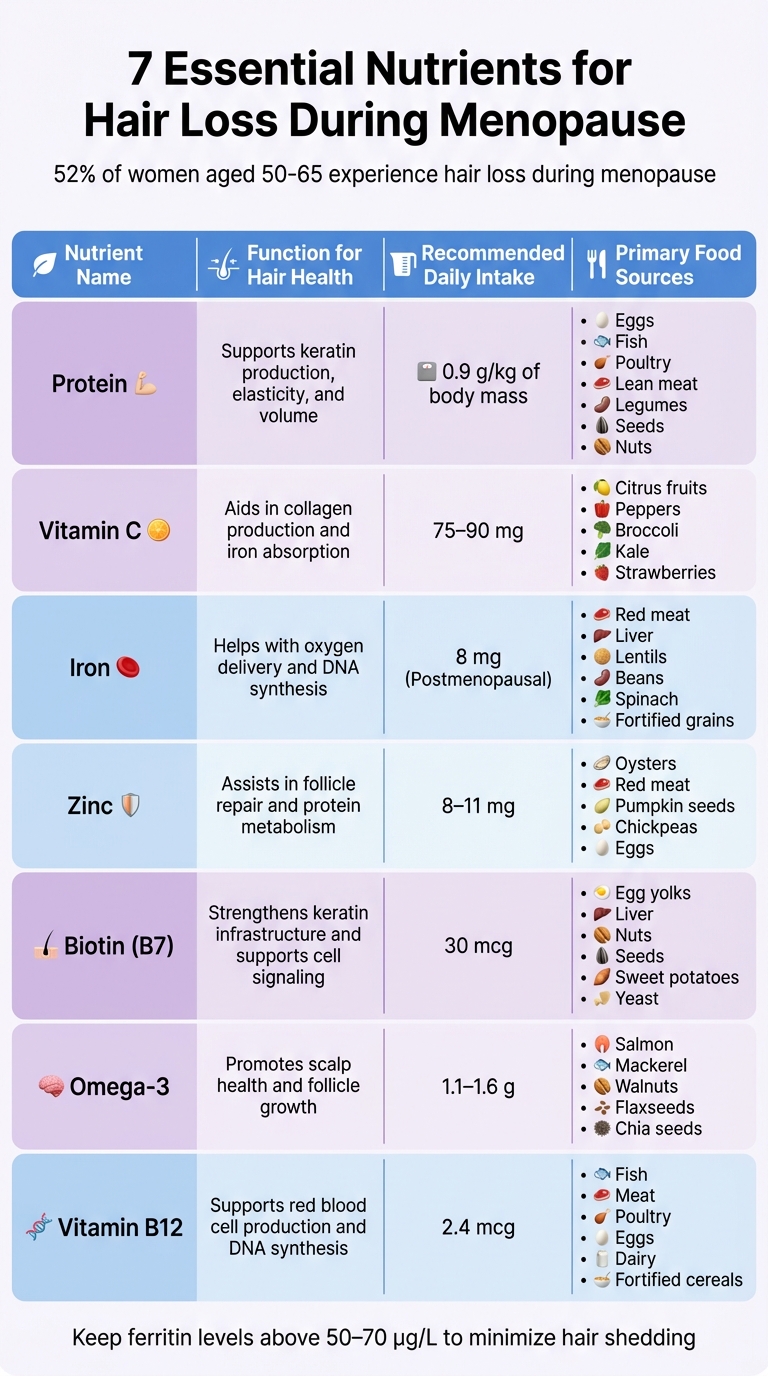
7 Essential Nutrients for Hair Loss During Menopause: Functions, Daily Intake, and Food Sources
1. Protein
Supports Hair Growth and Follicle Health
Hair is primarily made of keratin, a protein formed from sulfur-rich amino acids like cysteine and methionine. Interestingly, cysteine makes up about 10–17% of keratin’s structure. Without enough protein, your body struggles to produce the keratin essential for strong, healthy hair.
Hair follicle cells, which divide rapidly, need a steady supply of amino acids to function properly. One standout amino acid is L-lysine, found in the hair root. It helps maintain hair's shape, volume, and elasticity. A lack of lysine can leave hair brittle, thin, and limp. Dr. Alan J. Bauman highlights that sufficient protein intake is a cornerstone of healthy hair production.
Addresses Menopause-Related Deficiencies
During menopause, lower estrogen levels shorten the hair’s growth phase (anagen phase). This increases the need for protein to support follicle health. Without enough protein, hair can prematurely enter the shedding phase, known as telogen effluvium.
Zuzanna Sabina Goluch-Koniuszy from the Department of Human Nutrition Physiology explains:
"Protein or protein calorific malnutrition causes disturbed hair synthesis (hair fragility and brittleness), their weakness... and hair loss."
To combat this, women are advised to consume around 0.9 g of protein per kg of body weight daily, which typically represents 10–15% of their total daily energy intake. A varied diet with adequate protein is key to maintaining hair health.
Provides Specific Food Sources for Nutrient Intake
Animal-based foods are excellent sources of complete proteins, containing all the essential amino acids. For example, one cup of Greek yogurt delivers about 20.6 g of protein, while a single grass-fed strip steak offers approximately 49.4 g. Other options like eggs, poultry, and fatty fish not only provide protein but also include nutrients like biotin and omega-3 fatty acids, which further support hair health.
Plant-based options such as lentils, beans, tofu, pumpkin seeds, and sunflower seeds also contribute valuable protein along with minerals like zinc and iron. For best results, spread your protein intake throughout the day across meals and snacks. Combining protein with Vitamin B6 can enhance the integration of L-cysteine into keratin, improving hair structure.
2. Vitamin C
Supports Hair Growth and Follicle Health
Vitamin C plays a key role in building and maintaining strong hair by driving collagen production. Collagen helps reinforce the hair structure, making strands less prone to breakage. Dr. Shilpi Khetarpal, a dermatologist at Cleveland Clinic, explains it well:
"Vitamin C is vital in creating collagen. The protein is used to make keratin - the protein that hair is mostly made of."
In addition to supporting hair structure, Vitamin C acts as an antioxidant, protecting hair follicles from free radicals that can damage cells and slow down growth. A deficiency in this nutrient can interfere with proper hair shaft formation, sometimes leading to twisted or misshapen hairs due to disrupted follicle function.
Addresses Menopause-Related Deficiencies
Menopause often brings challenges like lower estrogen levels, which increase oxidative stress and hinder hair growth. Vitamin C helps counter these effects by improving the absorption of non-heme iron, a critical nutrient for healthy hair. Iron deficiency is a common cause of hair thinning and telogen effluvium during menopause.
Hind M. Almohanna from the Department of Dermatology and Dermatologic Surgery highlights this role:
"Vitamin C plays an essential role in the intestinal absorption of iron due to its chelating and reducing effect, assisting iron mobilization and intestinal absorption."
Because humans cannot produce Vitamin C naturally, it’s crucial to get it daily through diet. Pairing Vitamin C-rich foods with plant-based iron sources, like spinach or beans, can enhance nutrient absorption and promote healthier hair.
Provides Specific Food Sources for Nutrient Intake
You can find Vitamin C in a variety of colorful fruits and vegetables. Some of the best sources include red and orange bell peppers, kale, broccoli, and Brussels sprouts. For fruits, strawberries, kiwi, citrus fruits, and black currants are excellent choices. Sweet potatoes and cauliflower also provide notable amounts.
Michelle Dodd, a registered dietitian at Cleveland Clinic, underscores the importance of whole foods in hair health:
"Good nutrition plays a huge role in helping hair grow and minimizing hair loss. You need the proper balance of essential nutrients for hair to be healthy."
Since Vitamin C is water-soluble, any excess is excreted by the body, making it important to consume this nutrient regularly through a variety of whole foods rather than relying solely on supplements. Incorporating these foods throughout the day ensures your body gets what it needs to maintain strong, healthy hair.
3. Iron
Supports Hair Growth and Follicle Health
Iron plays a key role in supporting hair growth and maintaining healthy follicles. It helps in two important ways: by being a vital part of hemoglobin, which carries oxygen to rapidly dividing hair follicle cells, and by acting as a cofactor for ribonucleotide reductase, an enzyme necessary for DNA synthesis - essential for producing new hair strands.
Dr. Melissa Piliang, a dermatologist from Cleveland Clinic, highlights this connection:
"Iron is really important for hair growth and hair health. When we see patients who are experiencing hair loss, we often perform labs to screen for iron deficiency. It's not uncommon for us to find iron to be low in women."
When iron levels drop, the body prioritizes ferritin (a protein that stores iron) for critical blood functions, which can halt hair growth. Studies indicate that ferritin levels below 40 ng/mL are linked to increased hair shedding, and even levels between 40 ng/mL and 70 ng/mL may trigger excessive hair loss in the telogen phase. This issue becomes particularly relevant during menopause.
Addresses Menopause-Related Deficiencies
Postmenopausal women face a higher risk of iron deficiency, often due to factors like gastrointestinal blood loss, conditions like celiac disease that impair absorption, or diets low in animal proteins. These challenges are further exacerbated by menopause-related hormonal shifts. Additionally, medications like H2 blockers or antacids can interfere with the stomach acid needed for proper iron absorption.
Hair thinning during menopause can be a sign of low iron. If you're noticing hair loss, it’s worth asking your doctor for a ferritin test instead of just a standard hemoglobin test. Ferritin measures your stored iron, and a cutoff of 41 ng/mL provides 98% accuracy in diagnosing iron deficiency.
Provides Specific Food Sources for Nutrient Intake
To maintain healthy iron levels, focus on foods rich in this nutrient. Iron comes in two main forms: heme iron from animal products and non-heme iron from plants.
- Heme iron sources, including beef, lamb, pork, poultry, liver, and fish, are absorbed more efficiently by the body. Eating two 4-ounce servings of red meat per week can help sustain optimal iron levels.
- For vegetarians or vegans, non-heme iron can be found in foods like soya, white beans, lentils, spinach, tofu, dried apricots, and pistachios. However, plant-based diets require nearly 1.8 times more iron due to its lower bioavailability. Pairing these foods with Vitamin C-rich options - such as citrus fruits, strawberries, or broccoli - can significantly enhance absorption. Additionally, L-lysine, an amino acid found in protein-rich foods, helps the body better utilize iron, supporting hair health during menopause.
Important Note: Avoid taking high-dose iron supplements without consulting a doctor, as excess iron can lead to toxicity and tissue damage.
4. Zinc
Supports Hair Growth and Follicle Health
Zinc plays a key role in activating enzymes that transform sulfur-rich proteins into the building blocks your hair needs to grow. It’s also involved in the Hedgehog signaling pathway, which governs the formation and growth cycles of hair follicles. By blocking endonuclease activity, zinc prevents premature cell death in follicles, reduces shrinkage, and aids in the recovery of damaged follicles. Nutrition expert Jillian Kubala, MS, RD, explains:
"Zinc is necessary for hair follicle function and helps protect against hair follicle shrinkage and slowed growth. It also helps promote hair follicle recovery".
Zinc also impacts how your body processes Vitamin A, which is essential for keratinization - the process that strengthens and hardens hair. This becomes especially important during menopause, a time when nutrient absorption can decline.
Addresses Menopause-Related Deficiencies
During menopause, women are more likely to experience zinc deficiencies, especially if they take medications like diuretics or blood pressure drugs, which can deplete zinc levels. Poor absorption due to age and diets high in phytates (found in foods like legumes and whole grains) can further reduce zinc availability. A lack of zinc can lead to telogen effluvium, a condition where excessive shedding causes hair to become thin and brittle.
In a study involving 312 people with various types of hair loss, all participants had lower zinc levels compared to healthy individuals. On average, women had lower zinc levels (98.0 µg/dL) than men (102.0 µg/dL), with normal blood levels ranging between 70–250 µg/dL. If you’re using medications like thiazide diuretics or antihypertensives, it’s a good idea to check your zinc levels with your doctor.
Provides Specific Food Sources for Nutrient Intake
The Recommended Dietary Allowance (RDA) for adult women is 8 mg of zinc per day. Just one medium oyster provides about 8.3 mg, enough to meet your daily requirement. Other great sources include grass-fed beef (7.72 mg per steak), white beans (2.47 mg per cup), pumpkin seeds, blue crab, and fortified cereals.
Animal-based foods generally offer better zinc absorption than plant-based options, much like iron. If you follow a vegetarian diet, try combining zinc-rich foods like legumes with items that boost absorption, and avoid consuming supplements alongside whole grains, as their phytates can interfere with zinc uptake.
Be cautious not to exceed 40 mg of zinc daily, as too much can lead to issues like copper deficiency, nausea, and weakened immune function. If you’re taking both iron and zinc supplements, aim for a 3:1 ratio of iron to zinc to avoid absorption problems. Following these guidelines can help ensure your hair stays healthy during menopause.
5. Biotin (Vitamin B7)
Supports Hair Growth and Follicle Health
Biotin plays a key role as a coenzyme in metabolizing fatty acids, amino acids, and glucose, which are essential for the rapidly dividing cells in hair follicles. Thanks to its sulfur content, biotin helps stimulate hair growth by encouraging keratin production. The International Society of Hair Restoration Surgery explains it clearly:
"Biotin is a critical vitamin for healthy hair growth, and deficiency will lead to thinning hair".
Beyond strengthening hair structure, biotin also helps regulate sebaceous glands, which produce scalp oils. A deficiency in biotin can lead to greasy hair or seborrheic-like dermatitis - a condition that causes a scaly, red rash around the nose, eyes, and mouth, potentially worsening hair loss.
Addresses Menopause-Related Deficiencies
Though true biotin deficiency is rare, it’s more common in women dealing with hair loss. One study found that 38% of women with thinning hair had low biotin levels, and many of them also experienced seborrheic-like dermatitis. During menopause, factors like smoking, alcohol use, and certain medications (e.g., antibiotics) can make biotin deficiency more likely.
If you’re noticing hair thinning, checking your biotin levels might be a good idea, especially if you take medications like anticonvulsants or isotretinoin. However, dermatologist Ralph M. Trüeb, MD, advises against taking biotin supplements indiscriminately:
"The custom of treating women complaining of hair loss in an indiscriminate manner with oral biotin supplementation is to be rejected, unless biotin deficiency... has been demonstrated".
Instead of jumping to supplements, focus on biotin-rich foods to naturally maintain sufficient levels.
Provides Specific Food Sources for Nutrient Intake
To maintain healthy biotin levels, consider adding these foods to your diet:
- Beef liver: Just 3 ounces provide 30.8 µg of biotin, covering the daily recommended intake for adult women (30 µg).
- Eggs: One large cooked egg contains 10 µg, roughly 33% of your daily needs.
- Cooked salmon: A 3-ounce serving offers 5 µg.
- Plant-based options: Sunflower seeds (2.6 µg per ¼ cup), sweet potatoes (2.4 µg per ½ cup), and almonds (1.5 µg per ¼ cup) are great sources.
Quick tip: Always cook your eggs thoroughly. Raw egg whites contain avidin, a protein that blocks biotin absorption, but cooking neutralizes this effect. Also, high-dose biotin supplements (e.g., 5,000 µg or more) can interfere with blood tests for thyroid, vitamin D, and heart markers, so consult your doctor before taking them.
sbb-itb-6dba428
6. Omega-3 Fatty Acids
Supports Hair Growth and Follicle Health
Omega-3 fatty acids play an important role in promoting hair health by nourishing the scalp, strengthening the fat layer around hair follicles, reducing inflammation, and limiting the production of DHT - a hormone linked to hair thinning. Dr. Mary Wendel, an internist and hair loss expert, highlights the benefits of omega-3s, saying:
"Fatty fish - like salmon, herring, tuna, and sardines - offer protein, vitamin D, and omega-3 fatty acids. These nutrients nourish the skin and thicken the fat layer around the hair follicle, resulting in healthier hair growth."
Additionally, omega-3s help protect hair follicles from oxidative stress and inflammation. They may also help regulate hormonal activity by inhibiting 5α-reductase, the enzyme responsible for converting testosterone into DHT. This action mirrors the effects of some prescription treatments for hair loss.
Contributes to Overall Scalp and Hair Vitality
Omega-3s also work as natural moisturizers, helping to keep hair hydrated and glossy while preventing dryness and brittleness. Dr. Shilpi Khetarpal, a dermatologist at Cleveland Clinic, explains:
"Omega-3 naturally occurs in foods such as fish and flaxseed... It's critical to cell health and is thought to make your scalp and hair healthier."
These fatty acids are essential for maintaining the scalp's lipid layer, which includes compounds like ceramides and sterols that lock in moisture. Omega-3s are especially important during menopause, as they support hormone production when estrogen levels drop.
Provides Specific Food Sources for Nutrient Intake
To ensure you're getting enough omega-3s for healthy hair, include these foods in your diet:
- Fatty fish: Salmon, mackerel, herring, sardines, and tuna are excellent sources of EPA and DHA, the most effective forms of omega-3s.
- Plant-based options: Walnuts, chia seeds, flaxseeds, hemp seeds, and pumpkin seeds are rich in omega-3s.
- Grass-fed beef: If you eat red meat, opt for grass-fed beef, which contains more omega-3s than grain-fed varieties.
For best results, aim to eat fatty fish at least twice a week. Omega-3s should account for 25% to 35% of your daily caloric intake from healthy fats.
7. Vitamin B12
Supports Hair Growth and Follicle Health
Vitamin B12 plays a key role in hair health by supporting DNA, RNA, and protein synthesis - processes essential for new hair growth. Hind M. Almohanna from the Department of Dermatology and Dermatologic Surgery explains:
"The role of folate and vitamin B12 in nucleic acid production suggest that they might play a role in the highly proliferative hair follicle."
Hair follicles are some of the fastest-dividing cells in the body. On your scalp alone, about 90% of the 100,000 follicles are actively growing at any given time, which demands a steady supply of nutrients like B12. A deficiency can hinder your body's ability to produce red blood cells, which are responsible for delivering oxygen to these hair-producing cells. This is particularly important during menopause when nutrient needs may shift.
Addresses Menopause-Related Deficiencies
Menopause often brings absorption challenges, putting women at a higher risk of B12 deficiency. This deficiency has been associated with hair loss, especially in women experiencing anemia or depression. Zuzanna Sabina Goluch-Koniuszy from the Department of Human Nutrition Physiology notes:
"Cobalamin (B12 vitamin) may have connection to excess hair loss in woman with anemia depression."
If you're noticing hair thinning along with fatigue or low mood, it might be worth checking your levels of B12, iron, and vitamin D. In the U.S., the recommended daily intake of B12 for adults is 2.4 mcg. Supplements should only be used to address a confirmed deficiency and under medical guidance. Prioritizing dietary sources of B12 is a practical approach to maintaining adequate levels.
Provides Specific Food Sources for Nutrient Intake
Animal-based foods are the richest sources of B12, making them essential for maintaining healthy levels:
| Food Category | B12 Sources |
|---|---|
| Meat & Poultry | Beef, pork, lamb liver, chicken, turkey |
| Seafood | Salmon, sardines, tuna, cod, shellfish |
| Dairy | Milk, yogurt, cottage cheese |
| Other | Eggs (especially the yolk), fortified cereals |
For those following vegan or vegetarian diets, B12-fortified foods or supplements are essential, as plant-based options typically lack enough of this vitamin. Since B12 is water-soluble, excess amounts are excreted, reducing the risk of toxicity.
Nutrition for Thick Hair During Menopause: What to Eat + Supplements That Help
Nutrient Summary Table
Here's a quick overview of the 7 key nutrients that support hair health, along with their roles, recommended daily intakes, and primary food sources for postmenopausal women:
| Nutrient | Function for Hair Health | Recommended Daily Intake (Adults) | Primary Food Sources |
|---|---|---|---|
| Protein | Supports keratin production, elasticity, and volume | 0.9 g/kg of body mass | Eggs, fish, poultry, lean meat, legumes, seeds, nuts |
| Vitamin C | Aids in collagen production and iron absorption | 75–90 mg | Citrus fruits, peppers, broccoli, kale, strawberries |
| Iron | Helps with oxygen delivery and DNA synthesis | 8 mg (Postmenopausal) | Red meat, liver, lentils, beans, spinach, fortified grains |
| Zinc | Assists in follicle repair and protein metabolism | 8–11 mg | Oysters, red meat, pumpkin seeds, chickpeas, eggs |
| Biotin (B7) | Strengthens keratin infrastructure and supports cell signaling | 30 mcg (AI) | Egg yolks, liver, nuts, seeds, sweet potatoes, yeast |
| Omega-3 | Promotes scalp health and follicle growth | 1.1–1.6 g (General AI) | Salmon, mackerel, walnuts, flaxseeds, chia seeds |
| Vitamin B12 | Supports red blood cell production and DNA synthesis | 2.4 mcg | Fish, meat, poultry, eggs, dairy, fortified cereals |
To minimize hair shedding, aim to keep ferritin levels above 50–70 μg/L, as levels below 40 ng/ml can lead to increased hair loss. For better iron absorption, pair iron-rich foods with those high in vitamin C. Be cautious with excessive vitamin A (more than 10,000 IU/day) or selenium, and remember that high biotin intake can interfere with thyroid test results.
Conclusion
Hair loss during menopause impacts about 52% of women aged 50 to 65, but a well-planned nutritional strategy can make a noticeable difference. Key nutrients - protein, vitamin C, iron, zinc, biotin, omega-3 fatty acids, and vitamin B12 - work together to enhance hair structure, boost growth, and support scalp health in hair follicles, which are constantly regenerating. This combination of nutrients creates a strong foundation for addressing hair loss during menopause.
In addition to these nutrients, following a Mediterranean-style diet filled with whole grains, lean proteins, and healthy fats further supports hair health. However, the hormonal changes brought on by menopause, such as declining estrogen levels, may also require medical attention. It's important to consult a healthcare provider for blood tests before starting any supplements, as excessive intake of nutrients like vitamin A or selenium can actually worsen hair loss.
If dietary and lifestyle changes aren't enough, medical treatments may be necessary. Oana Health provides telehealth services tailored to hair loss during menopause. They offer prescriptions for Oral Minoxidil ($25/month) and Topical Spironolactone ($43/month), shipped directly to your door with free shipping. As Dr. Valerie D. Callender, Professor of Dermatology, advises:
"The earlier you treat it, the better. You can slow down hair loss and promote regrowth."
FAQs
What are some natural ways to boost key nutrients for healthier hair during menopause?
To support healthier hair during menopause, focus on a diet packed with key nutrients that promote hair health. Include leafy greens like spinach and kale, lean proteins such as fish, chicken, and eggs, nuts and seeds, whole grains, and fruits like citrus and berries. These foods are rich in iron, zinc, omega-3 fatty acids, and B vitamins - nutrients that play a big role in maintaining strong, healthy hair.
For instance, adding salmon to your meals provides omega-3s, eggs offer biotin, and beans supply protein and iron. If you're finding it hard to meet your nutrient needs through food alone, it might be worth speaking with a healthcare provider about supplements or tailored treatments to fill in the gaps and help you achieve your hair health goals.
What dietary tips can help improve nutrient absorption for hair health during menopause?
To boost nutrient absorption for better hair health during menopause, combining the right foods can make a noticeable difference. For instance, vitamin C enhances your body's ability to absorb iron, so pairing citrus fruits with iron-rich options like red meat, beans, or spinach is a smart choice. Similarly, nutrients such as zinc and selenium are absorbed more efficiently when eaten alongside healthy fats found in foods like avocados, nuts, or olive oil.
On the flip side, it's a good idea to limit alcohol and caffeine, as they can interfere with nutrient absorption. Alcohol, for example, may deplete zinc and biotin, while excessive caffeine can inhibit iron absorption. If you have digestive conditions like celiac disease or Crohn's, these may further affect how your body processes nutrients. In such cases, consulting a healthcare provider can provide tailored guidance.
The key is to aim for balanced meals, steer clear of overconsuming substances that block nutrient uptake, and address any health issues that could be affecting your overall well-being.
What are the signs that my nutrient levels might be affecting my hair health during menopause?
If you're dealing with thinning hair, excessive shedding, brittle strands, or frequent breakage, it might be your body's way of signaling that nutrient levels are affecting your hair health. Menopause, in particular, can lead to deficiencies in important nutrients like protein, iron, vitamin D, B vitamins, zinc, and more. These shortages can weaken hair follicles, potentially causing hair loss or slowing down growth.
If these issues continue, it’s a good idea to consult a healthcare provider. They can help assess your nutrient levels and recommend dietary adjustments or supplements that may support healthier hair growth.