
Checklist: Managing Hair Loss After Menopause
Hair loss after menopause is common, affecting over half of women aged 50–65. Here's how to manage it:
- Causes: Hormonal changes (decline in estrogen/progesterone, rise in androgens) and genetics.
- Early Signs: Thinner ponytail, widening part, increased shedding.
- Treatments:
- Topical Minoxidil: Promotes growth but requires consistent use.
- Oral/Topical Finasteride: Reduces DHT; often prescribed off-label.
- Hormone Replacement Therapy (HRT): Addresses hormonal imbalances.
- Newer Therapies: PRP injections and low-level laser devices.
- Nutrition: Eat protein-rich foods, iron, vitamin D, biotin, and omega-3s. Supplements like saw palmetto or Nutrafol Women's Balance can help.
- Hair Care: Use gentle shampoos, avoid heat styling, and protect the scalp.
- Stress Management: Practice relaxation techniques to reduce cortisol-related shedding.
- Track Progress: Monitor hair loss with photos, logs, and regular check-ins with a dermatologist.
Take action early to slow loss and encourage regrowth. Consult a specialist for personalized care.
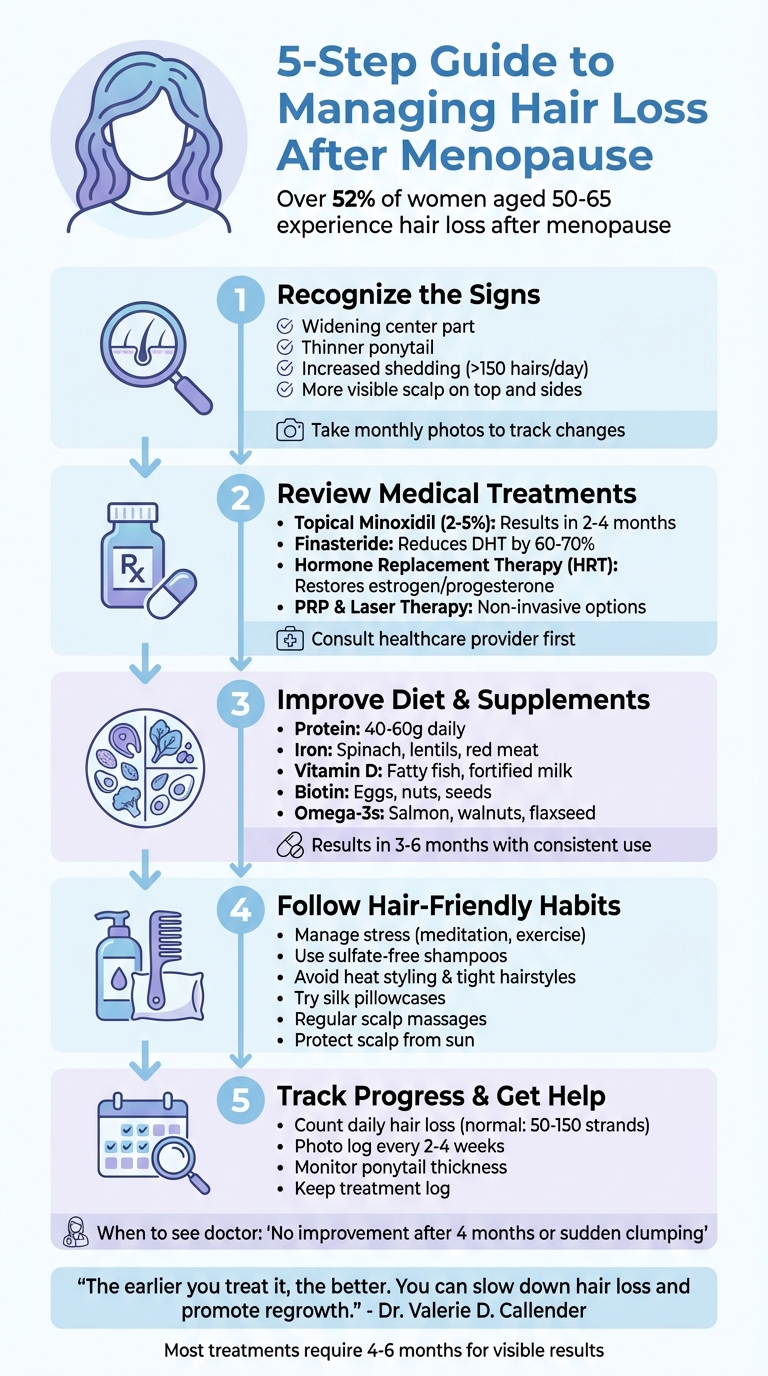
5-Step Guide to Managing Hair Loss After Menopause
Menopausal Hair Loss? Regrow Hair Before + After
Step 1: Recognize the Signs of Hair Loss After Menopause
The first step to managing hair loss after menopause is understanding what to watch for. Unlike male pattern baldness, which often results in specific bald spots, women generally notice diffuse thinning across the top and sides of the scalp, while the frontal hairline usually remains intact. These changes can be subtle and may go unnoticed at first.
How Hormones Influence Hair Loss
When estrogen levels drop, hair follicles lose their protective support. Dr. Mary Lupo, a dermatologist, explains that estrogen receptors on the scalp help prolong the anagen (growth) phase of hair. When estrogen decreases, this phase shortens, pushing more hairs into the telogen (shedding) phase. Dr. Doris Day, Clinical Professor of Dermatology at NYU Grossman School of Medicine, adds that while shedding rates might not increase, new hair growth slows, and the hair that does grow back tends to be thinner. Additionally, androgens like DHT can become more dominant as estrogen declines, leading to follicle miniaturization and producing hair that’s finer, shorter, and more fragile. Reduced estrogen also impacts oil production, often leaving the scalp drier and hair feeling coarse or brittle.
Keep an Eye on Your Hair’s Condition
Start tracking changes to your hair to establish a baseline. One common early sign is a widening center part, which can progress to more visible scalp exposure on the top and sides. A thinner ponytail may also indicate reduced hair density. Pay attention to shedding: noticing more hair in the shower, on your hairbrush, or on your pillow could be a red flag. While losing 50 to 150 hairs daily is normal, consistently exceeding this range might point to an issue.
To monitor progress, take monthly photos of your part under consistent lighting to track changes in scalp exposure. If you notice smooth, round bald patches or experience clumps of hair falling out, conditions like alopecia areata or telogen effluvium might be the cause. In such cases, consulting a board-certified dermatologist is essential. They can help identify underlying causes, such as thyroid imbalances or iron deficiencies, through blood tests. Once you’ve identified the signs, you’ll be better equipped to explore treatment options.
Step 2: Review Medical Treatment Options
Once you've identified the early signs of hair thinning, it's time to explore effective treatment options that address hormonal and physiological changes. These treatments aim to slow hair loss and encourage regrowth. Female pattern hair loss often affects postmenopausal women, so consulting a licensed healthcare provider is essential. They can rule out underlying issues like thyroid disorders or iron deficiency and help you choose the most suitable treatment.
Topical Minoxidil
Topical minoxidil, widely recognized by the brand name Rogaine, is the go-to treatment for female pattern hair loss. Available over-the-counter in 2% and 5% concentrations, it works by enlarging shrunken hair follicles, increasing blood flow to the scalp, and extending the hair growth phase. To apply, use it on a dry scalp, massage it in gently, and avoid washing your hair for at least four hours afterward. To avoid unwanted facial hair growth (hypertrichosis), wash your face after application.
Patience is key - most women start noticing improvements within two to four months, but a full trial of six to 12 months is often recommended for optimal results.
Dr. Elise A. Olsen, writing in the New England Journal of Medicine, advises, "one treatment strategy for female-pattern hair loss is to start with either 5% topical minoxidil twice a day or a low dose of oral minoxidil and escalate the latter if no unacceptable side effects occur”.
It's important to note that stopping minoxidil leads to the loss of regrown hair. Common side effects include scalp redness, itching, or unwanted hair growth on areas like the forehead or cheeks.
Oral and Topical Finasteride
Finasteride targets the hormone dihydrotestosterone (DHT), which contributes to shrinking hair follicles. By reducing scalp DHT levels by 60% to 70%, it can help combat hair loss. While FDA-approved for men, finasteride is often prescribed off-label for postmenopausal women, as they are not at risk of pregnancy. Research indicates that a 1 mg dose may not outperform a placebo in postmenopausal women, but higher doses could benefit those with elevated androgen levels.
Topical versions of finasteride are also being developed to minimize systemic side effects. Since finasteride isn't FDA-approved for women, it's crucial to work closely with your healthcare provider to monitor your progress and watch for potential side effects like depression or changes in liver enzyme levels. Telehealth services can also provide guidance on this treatment option.
Hormone Replacement Therapy (HRT)
Hormone replacement therapy can address the sharp decline in estrogen and progesterone that occurs during menopause. These hormones are essential for keeping hair in the growth phase, and their reduction often leads to increased shedding.
Dr. Yoram Harth explains, "During perimenopause and menopause, the change in hormone levels – specifically the decreased production of estrogen and progesterone – leads to thinning hair. That is because these hormones help keep hair in the growing phase”.
HRT works by restoring hormonal balance, which can improve hair density. However, it’s not a one-size-fits-all solution. Your provider will develop a tailored plan based on your medical history and hormonal needs, with regular check-ins to monitor for any side effects. Unlike topical treatments, HRT addresses systemic hormonal imbalances, which can have a broader impact on hair health.
Newer Options: PRP and Low-Level Laser Therapy
If you're looking for non-invasive alternatives, platelet-rich plasma (PRP) therapy and low-level laser therapy (LLLT) are promising options. PRP involves drawing blood, concentrating its platelets and growth factors, and injecting this mixture into the scalp to stimulate hair follicles. While PRP may cause mild scalp soreness or swelling, it is generally well-tolerated.
LLLT uses FDA-cleared devices - like caps, combs, or helmets - that emit medical-grade light to activate follicular stem cells, improve blood flow, and support cell metabolism. These devices are safe, with minimal side effects such as temporary shedding or mild scalp irritation. Both PRP and LLLT require consistent use for three to six months before noticeable results appear.
Step 3: Improve Your Diet and Add Supplements
Your diet plays a huge role in hair growth, especially during menopause. Dr. Wilma Bergfeld, a dermatologist at Cleveland Clinic, highlights the importance of protein intake:
"You need 40 to 60 grams [of protein] a day. You can drink your protein, you don't have to eat it in a food substance."
Since hair follicles require a steady flow of nutrients, addressing dietary gaps becomes even more important during this phase. Let’s break down the key nutrients that can help strengthen hair from within.
Key Vitamins and Minerals for Hair Health
Protein is a cornerstone of healthy hair. Include foods like eggs, Greek yogurt, beans, legumes, and lean meats in your meals to meet your daily needs.
Iron is another must-have nutrient, as it helps carry oxygen to hair follicles. Low iron levels are a common cause of hair thinning in women. Boost your iron intake with foods like spinach, lentils, red meat, and fortified cereals. If you suspect a deficiency, ask your doctor to check your ferritin levels.
Vitamin D plays a role in stimulating new hair growth and is often linked to conditions like thinning hair and alopecia. You can get vitamin D from fatty fish, fortified milk, or moderate sun exposure.
Biotin (vitamin B7) is crucial for keratin production, which forms the structure of your hair. Biotin is found in foods like eggs, nuts, and seeds. Zinc, another essential mineral, supports protein synthesis and cell regeneration and can be sourced from oysters, nuts, seeds, and whole grains. Omega-3 fatty acids, known for enhancing hair health and shine, are abundant in salmon, tuna, walnuts, almonds, and flaxseed oil.
Adopting a Mediterranean-style diet - rich in fruits, vegetables, lean proteins, and healthy fats like olive oil - can provide the nutrients your hair needs. Staying hydrated is equally important, so aim to drink at least eight 8-ounce glasses of water daily.
Plant-Based Supplements
If your diet falls short, supplements can help fill the gaps. Certain plant-based ingredients are particularly beneficial. For instance, saw palmetto and stinging nettle may help regulate DHT, a hormone linked to hair follicle shrinkage during menopause. MSM (methylsulfonylmethane) supports collagen and keratin production, while horsetail grass provides silica, which also promotes collagen formation. Other ingredients like ashwagandha and maca are known to help balance hormones and manage stress-related hair shedding.
When choosing a supplement, look for options tailored to women in perimenopause or menopause. Some examples include Wellbel Women+ (approximately $61.20 per month) and Nutrafol Women's Balance (around $88 for a one-time purchase or $79.20 with a subscription). According to an internal survey, 83% of users who took menopause-specific supplements for six months experienced fuller hair and new growth.
Keep in mind that supplements take time to show results - usually three to six months of consistent daily use. Taking them with meals can improve vitamin absorption and minimize stomach discomfort. As Dr. Valerie D. Callender, a dermatologist and professor, puts it:
"They [supplements] act like a fertilizer for the hair."
sbb-itb-6dba428
Step 4: Follow Hair-Friendly Daily Habits
Caring for postmenopausal hair requires special attention. Hormonal changes make hair more fragile, so adopting gentle daily habits can help protect it and encourage growth. Pair these habits with your chosen treatments for the best results.
Step 4.1: Manage Stress Levels
Stress plays a direct role in hair health. When cortisol levels rise, hair follicles may enter a resting phase, leading to shedding that becomes noticeable two to four months after a stressful event. Dr. Doris Day, Clinical Professor of Dermatology at NYU Grossman School of Medicine, highlights this connection:
"Perimenopause is such a roller-coaster for women, which can cause stress-related hair loss."
To counteract this, consider stress-reducing practices like exercise, meditation, or cognitive behavioral therapy (CBT). These can help balance cortisol levels and minimize hair shedding. Additionally, handle your hair gently to avoid unnecessary breakage.
Step 4.2: Use a Gentle Hair Care Routine
Aggressive hair care methods can worsen hair loss, so a softer approach is key. Opt for sulfate-free shampoos that maintain your hair’s natural oils. Dr. Manisha Purohit, Women's Health Specialist at HonorHealth, provides clarity on this:
"I often get asked if a certain shampoo will fix hair loss in menopause. The answer is no, but the right kind can help."
After washing, apply conditioner only to the ends of your hair to prevent breakage. When drying, use a microfiber towel to gently pat your hair rather than rubbing it. For detangling wet hair, a wide-tooth comb is your best friend. Try to avoid heat styling and tight hairstyles like ponytails or braids, as these can strain your hair. For an extra layer of protection, switch to a silk pillowcase at night to reduce friction and minimize breakage.
Step 4.3: Maintain Scalp Health
Healthy hair starts with a healthy scalp. Regular scalp massages during washing can improve blood flow to hair follicles, delivering essential nutrients for growth. Incorporate nourishing oils like rosemary, coconut, or argan to keep your scalp hydrated and strong. While keeping your scalp clean is important, avoid overusing dry shampoo, which can clog hair follicles. Look for products containing ingredients like biotin, keratin, caffeine, or niacinamide to support hair strength and elasticity. If thinning is more pronounced, take extra precautions to protect your scalp from sun damage by using sunscreen or wearing a hat when outdoors.
Step 5: Track Your Progress and Get Professional Help
Once you've made treatment and lifestyle changes, the next step is to keep tabs on your progress. Hair growth is a slow process, so combining your personal tracking efforts with professional guidance can make a big difference in achieving the best results.
Document Your Results
Start with a baseline. Begin by measuring your hair loss over a 24-hour period. Collect the strands you find on your pillow, brush, and shower drain, and count them carefully. Typically, losing between 50 and 150 hairs daily is considered normal. If your shedding consistently exceeds this range, you'll have solid data to share with your doctor.
Keep a visual record. Take photos of key areas - like your part line, hairline, and crown - every two to four weeks. Consistent photos provide clear evidence of changes, whether it's a widening part or more scalp visibility. Also, pay attention to the thickness of your ponytail and the amount of hair collected in your brush or drain. These details will help you track progress effectively.
Be patient with results. Most treatments take four to six months of consistent use to show noticeable improvement. Dr. Victoria Barbosa, a dermatologist at UChicago Medicine, emphasizes the importance of patience:
"It takes up to four months for any of these treatments to work. If after four months there is no improvement, then it's time to make an appointment with a doctor."
To stay organized, keep a log of your daily medications, supplements, and any changes in diet or stress levels.
| Documentation Method | What to Track | Frequency |
|---|---|---|
| Hair Count | Number of strands lost in 24 hours | Monthly |
| Visual Log | Part width, hairline, scalp visibility | Every 2–4 weeks |
| Shedding Log | Hair volume in brush or shower drain | Weekly |
| Physical Feel | Ponytail thickness and texture | Monthly |
| Treatment Log | Medication and supplement use | Daily |
Consult a Healthcare Provider
Recognize when to seek help. Your detailed logs will make it easier to have a focused conversation with your healthcare provider. If you don’t see any improvement after four months of consistent use of over-the-counter treatments, it’s time to consult a professional. Additionally, if your hair loss comes on suddenly, happens in clumps, or is accompanied by scalp pain or swelling, seek medical attention immediately. Dr. Valerie D. Callender, a dermatologist and professor at Howard University College of Medicine, underscores the value of acting early:
"The earlier you treat it, the better. You can slow down hair loss and promote regrowth."
Choose the right specialist. Dermatologists are the go-to experts for diagnosing and treating hair loss. They might perform tests like a pull test, scalp biopsy, or blood tests to check iron, vitamin D, and thyroid levels. If hormonal imbalances are suspected, an OB-GYN or menopause specialist can evaluate how fluctuating estrogen and progesterone levels may be affecting your hair. They might even suggest Hormone Replacement Therapy.
Explore telehealth options. Platforms like Oana Health connect you with licensed professionals specializing in hormonal health and hair loss treatments. They offer personalized plans, including medications like oral minoxidil and topical spironolactone, which can be delivered directly to your home. Regular check-ins allow for real-time adjustments based on your progress.
Prepare for your appointment. Bring along your photo log, hair count records, and a list of all current medications and supplements. Be ready to discuss your family history of hair loss and any recent stressors. Your doctor may use tools like a dermatoscope to examine your scalp or order blood tests to check for deficiencies in nutrients like zinc and B vitamins.
Conclusion
Addressing hair loss after menopause involves a thoughtful mix of medical treatments, dietary adjustments, and lifestyle changes. Hormonal shifts, genetics, stress, and nutritional deficiencies are common culprits behind postmenopausal hair thinning or loss. Tackling these factors requires a comprehensive approach that combines targeted treatments, nutrient-rich eating habits, and gentle hair care routines.
Medical options like minoxidil or hormone replacement therapy target the biological causes, while a balanced diet and supplements create a supportive environment for hair growth. Managing stress and avoiding harsh hair care practices are also key to preventing further damage. According to a 2022 study, over half (52%) of women aged 50 to 65 experience hair thinning or loss after menopause. Early action is crucial, as emphasized by Dr. Valerie D. Callender from Howard University College of Medicine:
"The earlier you treat it, the better. You can slow down hair loss and promote regrowth."
Don’t wait - schedule a dermatologist appointment to rule out any underlying conditions and create a personalized plan. For those who prefer telehealth options, Oana Health offers access to licensed professionals specializing in hormonal health and hair loss. Their treatment plans include options like oral minoxidil and topical spironolactone, conveniently delivered to your doorstep.
Consistency is key to maintaining progress. As Dr. Doris Day from NYU Grossman School of Medicine advises:
"If you stop doing it, you lose the benefits."
Incorporating sustainable habits - like eating a balanced diet, managing stress, and practicing gentle hair care - helps integrate treatment into your daily routine. By starting early and sticking to a structured plan, you can take meaningful steps to slow hair loss, promote regrowth, and rebuild your confidence. Every effort counts, whether it’s tweaking your diet, consulting an expert, or beginning a treatment regimen.
FAQs
What are the first signs of hair loss after menopause?
The earliest indicators of hair loss after menopause often show up as thinning hair or a widening part around the crown of the scalp. These changes are usually linked to hormonal shifts that interfere with the natural hair growth cycle, leading to weaker hair follicles.
If you’re noticing more shedding than usual or your hair seems less full, it might be worth looking into potential remedies. Adjusting your lifestyle, focusing on balanced nutrition, and seeking advice from a healthcare provider can play a key role in managing postmenopausal hair loss.
How can diet and supplements help with hair loss during menopause?
A balanced diet and the right supplements can make a big difference when it comes to managing hair loss during menopause. Deficiencies in iron, vitamin D, selenium, and iodine are commonly linked to thinning hair. Making sure your body gets enough of these nutrients is crucial for encouraging hair growth and keeping your follicles healthy.
Adding foods like leafy greens, fatty fish, eggs, nuts, and seeds to your meals can help improve both scalp health and hair quality. If meeting your nutritional needs through food alone is a challenge, supplements tailored to address these gaps might be a good option. However, it’s always a smart move to check with a healthcare provider before starting any supplements to ensure they’re suitable for you.
What are the best ways to treat hair loss after menopause?
The most effective ways to manage postmenopausal hair loss often include a combination of hormone therapy, prescription medications, and lifestyle adjustments tailored to individual needs. Additional options like red light therapy and modern styling techniques can also enhance the appearance of thinning hair.
Addressing the root causes - such as hormonal shifts or nutritional deficiencies - is crucial and should be done under the guidance of a licensed healthcare provider. Personalized treatment ensures the best results for your unique situation. For expert help, Oana Health provides science-based, prescription treatments conveniently delivered to your doorstep.