
Best Time for Cardio with PCOS
Struggling with PCOS symptoms? Cardio can help. The timing of your workouts - morning or evening - plays a role in managing insulin resistance, hormonal balance, and overall health. Here's a quick breakdown:
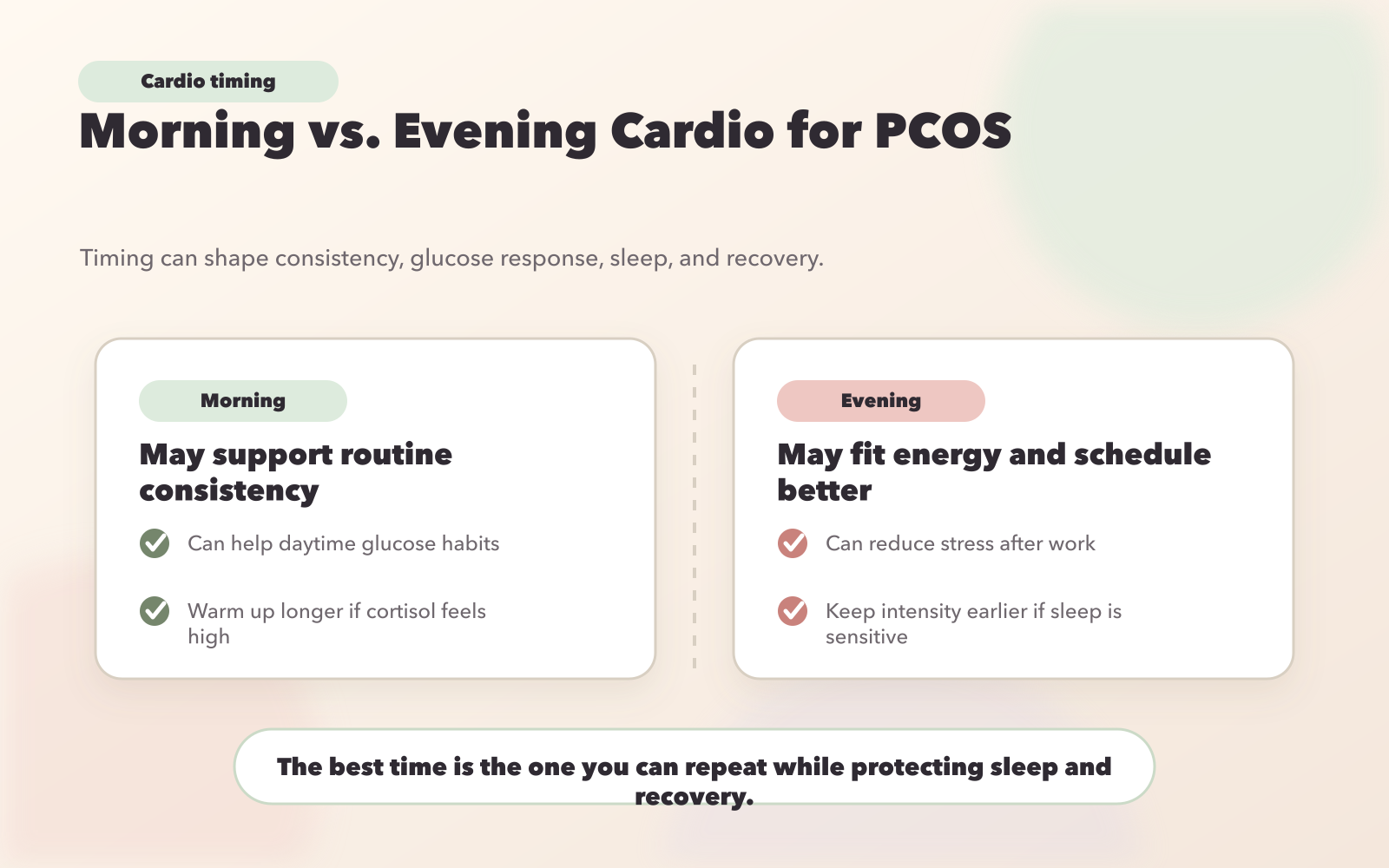
- Morning Cardio: Boosts insulin sensitivity, stabilizes blood sugar, and improves energy for the day. It also helps align your internal clock, enhancing mood and focus.
- Evening Cardio: Lowers blood pressure, supports muscle recovery, and may improve sleep when done 30–120 minutes before bedtime.
Key Takeaway: Both morning and evening cardio have unique benefits. The best choice depends on your schedule, how your body feels, and your health goals.
Pro Tip: Align your workouts with your menstrual cycle for even better results. For example, do light activity during your period and higher-intensity workouts during ovulation.
Consistency is critical. Aim for 150–300 minutes of moderate cardio weekly, and pair it with strength training twice a week to maximize benefits. Listen to your body and adjust intensity as needed. Regular exercise can improve PCOS symptoms even without weight loss.
Best Cardio Timing for PCOS: Morning vs Evening Benefits Comparison
Morning Cardio for PCOS
Starting your day with cardio can play a key role in managing PCOS. Morning exercise helps align your body's internal clock, particularly in organs like the pancreas and liver, which are responsible for insulin production and glucose processing. This synchronization can lead to better blood sugar control throughout the day.
Better Insulin Sensitivity and Energy
Morning workouts offer a lasting metabolic boost. During exercise, your muscles absorb glucose for energy without relying on insulin, which helps clear excess sugar from your blood. This effect can improve insulin sensitivity for up to 72 hours post-workout.
Research supports this: in a study involving lean women with PCOS, those who paired a high-calorie breakfast (980 calories) with morning activity saw a 54% reduction in insulin levels and a 50% decrease in free testosterone.
Beyond these metabolic perks, exercise stimulates the release of dopamine and endorphins, enhancing mood, focus, and energy levels. Regular morning cardio also helps your muscles store energy more efficiently, amplifying these benefits over time.
Improved Mood and Lower Stress
The mental health benefits of morning cardio are especially valuable for women with PCOS, who often experience higher rates of anxiety and depression. Exercising in the morning or early afternoon can help shift your circadian rhythms to an earlier schedule, improving your sleep-wake cycle and overall rest. This is critical because disrupted internal clocks are linked to increased risks of diabetes and heart disease - conditions already more common among women with PCOS.
"Every cell in our body has a circadian clock. That means so many aspects of our physiology are different - at different times of day." – Katja Lamia, Associate Professor of Molecular and Cell Biology, Scripps Research
By combining these metabolic and mental health benefits, morning cardio can set a positive tone for the rest of your day.
Best Morning Cardio Activities
When planning your morning workout, focus on moderate-intensity exercises that you can maintain for 30 to 60 minutes. Activities like brisk walking, jogging, or cycling at a conversational pace are excellent for improving insulin sensitivity without overtaxing your body. If you're just starting, low-impact options like swimming or walking can help you build a consistent routine.
For optimal results, aim for 150 minutes of moderate activity each week (roughly 30 minutes a day). If you're ready to push harder, incorporating at least 120 minutes of vigorous exercise weekly can further reduce insulin resistance and improve body composition.
Don’t forget to warm up! Spend about three minutes doing light movements like walking in place or high knees to prepare your muscles and lower the risk of injury.
Evening Cardio for PCOS
Evening cardio offers specific health benefits for women dealing with PCOS, particularly when it comes to improving cardiovascular health and managing blood pressure.
Lower Stress and Cortisol Levels
One key advantage of evening exercise is its ability to lower blood pressure after your workout. Studies highlight that post-exercise hypotension - the natural drop in blood pressure following physical activity - is more pronounced with evening workouts. For instance, evening cardio can reduce systolic blood pressure by around 10 mmHg and mean blood pressure by about 6 mmHg. For individuals classified as "non-dippers" (whose blood pressure doesn’t naturally decrease during sleep), evening cardio can help by lowering asleep systolic blood pressure by approximately 5 mmHg, promoting a healthier nighttime blood pressure pattern. The most effective recovery for systolic blood pressure occurs around 5:00 PM.
These benefits also aid in hormone regulation, which is crucial for managing PCOS. However, moderation is key. Dr. Tara Brandner, a Family Nurse Practitioner and Fertility Coach, advises:
"Limit HIIT workouts to 2 times per week, as excessive high-intensity exercise can increase cortisol levels, which may exacerbate PCOS symptoms".
In addition to these cardiovascular perks, evening workouts play a role in supporting muscle recovery and improving sleep quality.
Better Muscle Recovery and Sleep
While evening workouts might slightly delay melatonin production, they don’t negatively affect sleep efficiency or NREM sleep. In fact, engaging in physical activity during the evening can help reset the circadian rhythm, which is often disrupted in women with PCOS and related endocrine or metabolic disorders.
To maximize these benefits, aim to finish your workout 30 to 120 minutes before bedtime. This allows your body temperature to return to normal, giving you enough time to naturally wind down for restful sleep.
Best Evening Cardio Activities
To maintain the stress-reducing and recovery-enhancing benefits of evening cardio, stick with low-to-moderate intensity exercises. Activities like brisk walking, swimming, or light cycling for 30 to 45 minutes are excellent options. These exercises improve insulin sensitivity and cardiovascular health without overstimulating your system or spiking cortisol levels.
If you're just starting out, begin with shorter sessions of 10 to 15 minutes and gradually work your way up to at least 30 minutes of moderate aerobic exercise three times a week. This approach helps improve cardiometabolic health while ensuring the routine fits seamlessly into your lifestyle. The key is consistency - finding a rhythm that supports your hormonal balance and overall well-being.
Timing Cardio with Your Menstrual Cycle
Your menstrual cycle plays a significant role in your energy levels and how your body responds to exercise. Just like morning or evening workouts can tap into specific hormonal advantages, aligning your cardio routine with your cycle can fine-tune your approach to managing PCOS. By understanding these natural shifts, you can make the most of your workouts and support hormonal balance effectively.
Cardio During the Follicular Phase
The follicular phase begins on the first day of your period and lasts until ovulation. During this time, estrogen levels steadily rise and peak, enhancing muscle activation and overall exercise performance. You may notice a boost in strength and energy as you move through this phase.
In the early follicular phase (during menstruation), lower hormone levels can leave you feeling less energetic and possibly uncomfortable. Gentle activities like walking or light swimming for 20–30 minutes are ideal during this time. As you transition into the mid to late follicular phase, your energy levels typically increase. This is the perfect time to incorporate higher-intensity cardio such as cycling, running, or HIIT workouts. Interestingly, research suggests that cycling performance peaks in the afternoon during the mid-follicular phase, so scheduling your most challenging workouts between 4:00 PM and 8:00 PM could help you perform at your best.
Cardio During the Luteal Phase
The luteal phase spans from ovulation to the start of your next period and is marked by higher progesterone levels. While some people maintain consistent energy and performance, others may notice fluctuations, especially as menstruation approaches. During this phase, it’s a good idea to shift to moderate or low-intensity cardio like brisk walking, Pilates, or yoga for 30–60 minutes.
High-intensity workouts during the luteal phase can increase cortisol levels, which may exacerbate PCOS symptoms due to the hormonal changes already at play. However, isometric strength might peak in the mid-luteal phase, particularly in the afternoon. While you may feel capable of moderate effort, it’s important to avoid pushing yourself too hard during this time.
Cardio by Menstrual Cycle Phase
| Menstrual Phase | Best Cardio Types | Intensity Level | Recommended Duration |
|---|---|---|---|
| Menstrual | Walking, light swimming, yoga, stretching | Low | 20–30 minutes |
| Follicular | Jogging, cycling, dance, cardio classes | Moderate to High | 30–60 minutes |
| Ovulatory | HIIT, running, circuit training, uphill biking | High | 30–60 minutes |
| Luteal | Brisk walking, Pilates, yoga, light swimming | Moderate to Low | 30–60 minutes |
sbb-itb-6dba428
How to Schedule Your Cardio Routine
To maximize the benefits of morning and evening cardio, plan your workouts thoughtfully to help balance hormones and support PCOS management. Your goal should align with recommended guidelines: 150–300 minutes of moderate-intensity aerobic activity per week. If weight loss is your focus, aim for at least 250 minutes of moderate-intensity or 150 minutes of vigorous-intensity cardio weekly.
Listen to Your Body
Pay attention to how your body responds. Symptoms like chronic fatigue, poor sleep, mood swings, or digestive issues may signal that you're overdoing it. If this happens, adjust by lowering the intensity or frequency of your workouts. If a 30-minute session feels daunting, break it into smaller chunks - 10–15 minutes spread throughout the day. For instance, three 10-minute walks add up to the same 30 minutes, offering the same health benefits.
Combine Cardio with Strength Training
Incorporate strength training into your routine at least two non-consecutive days per week. While cardio improves insulin sensitivity and heart health, strength training directly helps reduce androgen levels. Together, they’re more effective at managing blood sugar levels and reducing abdominal fat than either activity alone.
Begin strength training sessions with a 5–10 minute brisk walk to warm up, then focus on compound exercises like squats, chest presses, and rows. These movements target large muscle groups, delivering maximum results without requiring hours in the gym.
Stay Consistent with Your Workouts
Consistency beats sporadic intense efforts. Breaking down 150 minutes of activity per week translates to just 20 minutes a day. If you're new to exercise, start small - try daily brisk walks before moving on to more challenging activities. This gradual approach prevents burnout and helps establish a sustainable habit.
Use tools to keep yourself accountable. Set phone reminders, schedule workouts like meetings, or track your progress with fitness apps. Keep things fresh by mixing activities like walking, cycling, and yoga. Even a modest weight loss of 5% to 10% can significantly improve PCOS symptoms, but regular exercise benefits your condition regardless of weight loss. This well-rounded strategy supports hormonal balance, which is key to managing PCOS effectively.
| Goal | Aerobic Activity (Moderate) | Aerobic Activity (Vigorous) | Strength Training |
|---|---|---|---|
| General Health | 150–300 min/week | 75–150 min/week | 2 days/week |
| Weight Loss | 250+ min/week | 150+ min/week | 2 days/week |
| Minimum for Insulin Benefit | 120 min/week |
Conclusion
Figuring out the best time for cardio when managing PCOS means tailoring your routine to fit your body's hormonal rhythms and your lifestyle. For instance, morning workouts can improve insulin sensitivity and set a positive tone for the day. On the other hand, evening sessions might deliver added cardiovascular perks, such as reducing systolic blood pressure by around 10 mmHg more than morning exercise. The secret lies in trying different times and observing how your body reacts. This trial-and-error approach helps you create a routine that's both effective and sustainable.
Consistency is another cornerstone of success. Experts recommend aiming for at least 150 minutes of exercise each week. Erin Fisher, Fitness Writer and Editor at Sweat, emphasizes this point:
"The most important thing is consistency and daily movement. Guidelines suggest at least 150 minutes of exercise each week."
Whether you enjoy morning walks, evening bike rides, or adjusting your workout intensity based on your menstrual cycle, the ultimate goal is to find a form of movement you can stick with long-term. Regular exercise benefits your hormonal health, even if weight loss isn't part of the equation.
It's also important to strike a balance. While intense cardio can improve insulin sensitivity, overdoing it may elevate cortisol levels, potentially worsening PCOS symptoms. Pay attention to your body's signals - if you're feeling chronically tired, struggling with poor sleep, or experiencing mood swings, it might be time to scale back. Pairing your cardio with strength training twice a week can further enhance hormonal balance and metabolic health.
Start small, and build gradually. Your cardio routine should support your overall well-being while addressing the challenges of insulin resistance and elevated androgen levels that come with PCOS. By focusing on timing, intensity, and consistency, you'll develop a strategy that works for you.
For more personalized, science-based tips on managing PCOS, check out the telehealth services offered by Oana Health at https://oanahealth.com.
FAQs
What is the best time to do cardio if I have PCOS?
The best time to fit cardio into your routine when managing PCOS depends largely on the symptoms you're focusing on. If you're addressing insulin resistance or aiming for weight management, morning workouts (before 10 a.m.) are often the best choice. This timing aligns with your body's natural cortisol peak, which can improve insulin sensitivity and encourage fat burning.
On the other hand, if low energy or fatigue are your main challenges, consider exercising in the afternoon, between 2 p.m. and 4 p.m. During this window, your energy levels and muscle strength tend to be at their peak, making workouts feel more manageable. For those dealing with hyperandrogenism (symptoms like acne or unwanted facial hair), regular moderate-to-high-intensity cardio - especially in the morning - can help reduce androgen levels.
To pinpoint the best workout time for you, try tracking your exercise habits, energy levels, and symptoms for a couple of weeks. Use this information to adjust your routine based on what feels most effective. For a more tailored approach, Oana Health offers personalized plans designed to help manage PCOS.
When is the best time to do cardio if I have PCOS?
Timing your cardio workouts to match your menstrual cycle can boost hormonal and metabolic benefits, particularly for women with PCOS. During the follicular phase (the first half of your cycle), when estrogen levels are on the rise, cardio can help improve insulin sensitivity and ease androgen-related symptoms such as acne and unwanted facial hair. In the luteal phase (the second half), moderate-intensity cardio can help manage the natural increase in insulin resistance while maintaining steady energy levels.
For many women, a 30-minute brisk walk, jog, or bike ride in the morning during the follicular phase can set a positive tone for the day. Meanwhile, in the luteal phase, lower-intensity activities like steady-state cycling or gentle HIIT can help manage stress without putting too much strain on the body.
By aligning your cardio routine with your cycle, you might notice better control over androgen levels, improved insulin sensitivity, more consistent periods, and a boost in mood and energy. For a tailored approach, Oana Health offers science-backed, prescription-based treatments conveniently delivered to your door.
How does combining cardio and strength training help manage PCOS?
Combining cardio with strength training is an effective approach to managing PCOS symptoms. Experts suggest aiming for at least 150 minutes of high-intensity cardio per week, or 250 minutes of moderate-intensity cardio, along with 2–3 days of strength training. Strength training can include activities like weightlifting, resistance band exercises, or bodyweight workouts. This mix not only helps with weight management but also supports hormone regulation and improves insulin sensitivity.
Cardio plays a key role in reducing visceral fat and lowering insulin-driven androgen production. On the other hand, strength training helps build lean muscle, speeds up metabolism, and enhances glucose uptake. Together, these exercises can stabilize blood sugar levels, encourage more regular menstrual cycles, and even improve skin health. For a more tailored approach, Oana Health provides telehealth consultations and science-backed treatments designed to support your PCOS journey - all conveniently delivered to your home.