
Biphasic Oral Contraceptives for PCOS Management
Polycystic ovary syndrome (PCOS) is a hormonal disorder affecting 5% to 15% of women of reproductive age, with symptoms like irregular periods, acne, excessive hair growth, and weight gain. It also increases risks for Type 2 diabetes, heart disease, and endometrial cancer. Biphasic oral contraceptives, a type of birth control pill, offer a potential treatment by regulating menstrual cycles and reducing androgen levels.
Key Takeaways:
- How Biphasic Pills Work: These pills provide two hormone doses during the cycle, mimicking natural fluctuations. They suppress ovulation, stabilize cycles, and lower free testosterone levels.
- Benefits for PCOS: They can improve menstrual regularity and reduce symptoms like acne and hirsutism after consistent use for six months.
- Limitations: Research suggests monophasic pills (single-dose formulations) may be more effective for managing androgen-related symptoms, like excessive hair growth, compared to biphasic options.
- Progestin Matters: The type of progestin in the pill (e.g., cyproterone acetate, desogestrel) plays a larger role in symptom management than the biphasic design itself.
While biphasic contraceptives can help manage PCOS, choosing the right formulation and regular monitoring are critical for effective treatment. Monophasic pills often outperform biphasic ones for addressing androgen-related symptoms, making them a preferred option for many women with PCOS.
How Biphasic Oral Contraceptives Work for PCOS Symptoms
Hormone Regulation and Menstrual Cycle Control
Biphasic oral contraceptives play a key role in stabilizing menstrual cycles by suppressing the hypothalamic-pituitary-ovarian (HPO) axis. The progestin component reduces gonadotropin-releasing hormone (GnRH) and luteinizing hormone (LH) surges that typically trigger ovulation. At the same time, ethinyl estradiol limits follicle-stimulating hormone (FSH), preventing the development of a dominant follicle.
"The estradiol component of the drug potentiates the effect of progestin by suppressing the FSH surge in order to inhibit the selection and development of the dominant follicle, and also improves menstrual cycle control since it prevents breakthrough bleeding by maintaining endometrial proliferation." - Seda Hanife Oguz and Bulent Okan Yildiz
This structured hormonal regimen creates a predictable withdrawal bleed that mimics a natural menstrual cycle. For women with PCOS, who often face irregular cycles due to chronic anovulation, this regularity can be incredibly helpful. Additionally, by protecting the endometrium from prolonged estrogen exposure, these contraceptives reduce the risk of endometrial hyperplasia, a condition that women with PCOS are more prone to.
Beyond regulating cycles, these contraceptives address the hormonal imbalances that lead to androgen-related symptoms.
Lowering Androgen Levels and Improving Acne
Biphasic oral contraceptives target elevated androgen levels - found in 60% to 80% of women with PCOS - through a combination of mechanisms. The progestin component suppresses LH secretion, which reduces ovarian androgen production. Meanwhile, the estrogen component boosts the liver’s production of sex hormone-binding globulin (SHBG). SHBG binds to free testosterone, lowering its bioavailability and, by extension, its effects.
"By suppressing LH secretion, the progestin component of COCs inhibits ovarian androgen production, whereas the estradiol component reduces serum free androgen concentrations by increasing SHBG levels." - Seda Hanife Oguz and Bulent Okan Yildiz, Hacettepe University School of Medicine
Progestogens also compete with androgens and inhibit the enzyme 5-alpha reductase, which is responsible for converting testosterone into the more potent dihydrotestosterone (DHT). This reduction in DHT can lead to noticeable improvements in symptoms such as acne and hirsutism. To see significant clinical benefits, including reduced excessive hair growth, a treatment period of at least six months is typically recommended. Notably, the FDA has approved certain combined oral contraceptives specifically for acne treatment.
Research Studies on Biphasic Oral Contraceptives for PCOS
Cagnacci 2006: Biphasic EE/DSG vs. Monophasic EE/CPA
The 2006 study by Cagnacci explored the effects of biphasic ethinyl estradiol/desogestrel (EE/DSG) compared to monophasic ethinyl estradiol/cyproterone acetate (EE/CPA) in women with PCOS. The aim was to assess their ability to manage hormonal imbalances and menstrual irregularities. Both contraceptive types successfully suppressed FSH and LH levels, which are critical for ovulation control and reducing ovarian androgen production. However, monophasic EE/CPA proved more effective in addressing hirsutism and biochemical hyperandrogenism compared to biphasic EE/DSG. While biphasic contraceptives can help regulate menstrual cycles, their effectiveness in managing androgenic symptoms appears limited.
Interestingly, the study also highlighted that the biphasic design - meant to mimic natural hormonal fluctuations - did not offer any clear advantage over monophasic pills in terms of cycle regulation or reducing side effects. This raises questions about the clinical benefits of biphasic contraceptives in managing PCOS symptoms.
How Biphasic EE/DSG Compares to Other Contraceptive Options
Additional research sheds light on how biphasic formulations stack up against other contraceptive options. Studies indicate that different hormone dose regimens - whether monophasic, biphasic, or triphasic - do not show significant differences in suppressing androgen levels in women with PCOS.
When it comes to cycle control, biphasic formulations tend to underperform compared to monophasic options. Although biphasic pills were originally designed to lower the total monthly steroid dosage while maintaining cycle regulation, there is little evidence to suggest they offer better symptom management for PCOS. For women looking to address acne or hirsutism, monophasic contraceptives - especially those containing cyproterone acetate - are often more effective at reducing androgen-related symptoms.
Biphasic vs Other Oral Contraceptives for PCOS
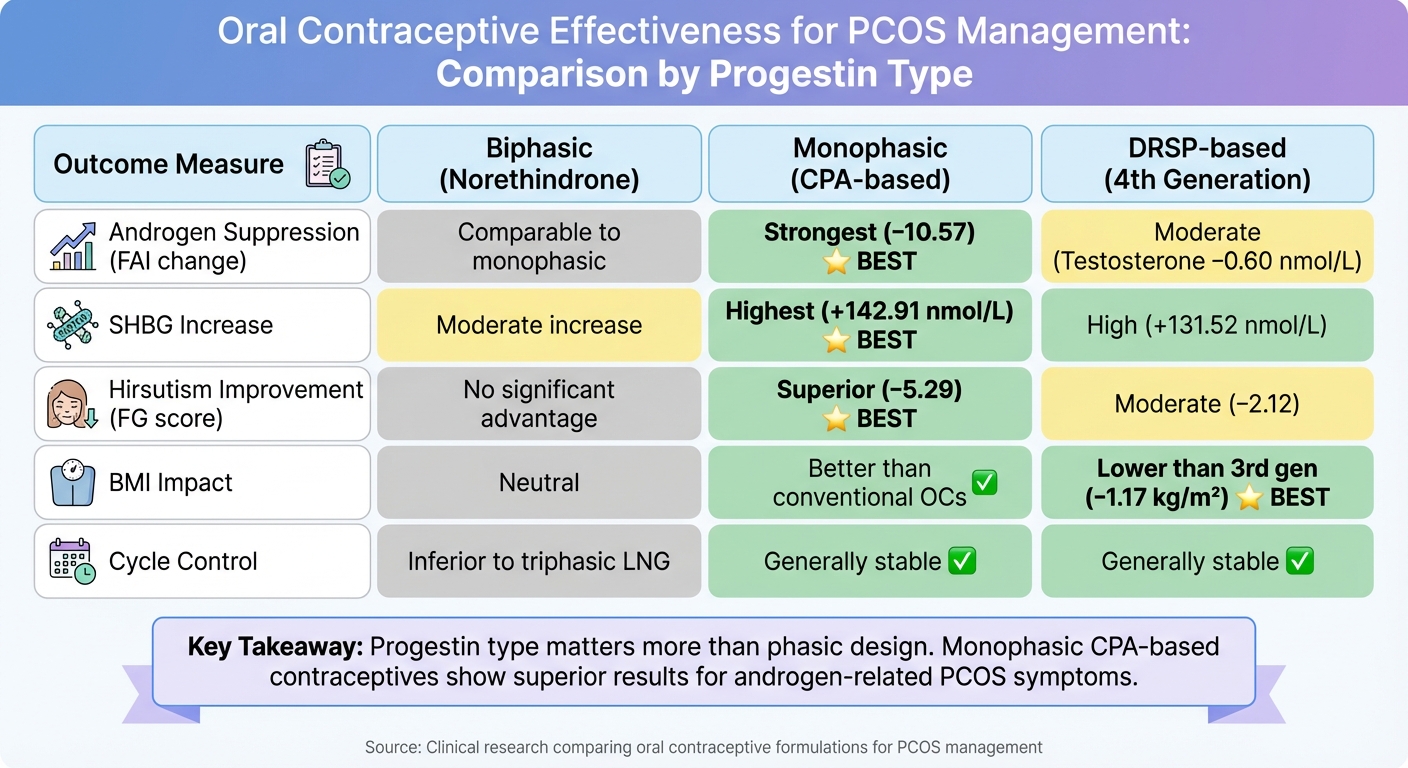
Oral Contraceptive Types for PCOS: Effectiveness Comparison by Progestin
Comparing Hormone and Symptom Outcomes
When managing PCOS with oral contraceptives, research consistently shows that the type of progestin plays a key role in determining outcomes. While the schedule of hormone delivery (biphasic, monophasic, or triphasic) seems to have a minor influence, the specific progestin used significantly impacts symptom management and hormone regulation.
For instance, a 12-month study demonstrated that pills containing cyproterone acetate (CPA) reduced the Free Androgen Index (FAI) by 10.57, compared to a reduction of 5.58 with desogestrel (DSG). Similarly, CPA-based contraceptives showed superior results in reducing hirsutism, with Ferriman–Gallwey (FG) scores dropping by 5.29 points, outperforming DSG (1.69) and drospirenone (DRSP, 2.12). Additionally, fourth-generation contraceptives containing DRSP were linked to lower BMI (mean difference of –1.17 kg/m²) and reduced testosterone levels (–0.60 nmol/L) compared to third-generation pills.
These findings emphasize the importance of selecting the right progestin for effective PCOS management.
"Since no clear rationale exists for biphasic pills and since extensive evidence is available for monophasic pills, the latter are preferred."
– Cochrane Fertility Regulation Group
For example, biphasic pills containing norethindrone were associated with a 6.48-fold higher likelihood of experiencing no withdrawal bleeding compared to triphasic pills containing levonorgestrel. However, when comparing biphasic and monophasic contraceptives with the same progestin, a study of 1,014 cycles found no significant differences in intermenstrual bleeding or discontinuation rates.
| Outcome | Biphasic (Norethindrone) | Monophasic (CPA-based) | DRSP-based (4th Gen) |
|---|---|---|---|
| Androgen Suppression (FAI change) | Comparable to monophasic | Strongest (–10.57) | Moderate (Testosterone –0.60 nmol/L) |
| SHBG Increase | Moderate increase | Highest (+142.91 nmol/L) | High (+131.52 nmol/L) |
| Hirsutism Improvement (FG score) | No significant advantage | Superior (–5.29) | Moderate (–2.12) |
| BMI Impact | Neutral | Better than conventional OCs | Lower than 3rd gen (–1.17 kg/m²) |
| Cycle Control | Inferior to triphasic LNG | Generally stable | Generally stable |
This comparison highlights that progestin choice is a critical factor in managing PCOS symptoms effectively. For addressing concerns like acne or hirsutism, monophasic pills are often the preferred option due to their strong evidence base.
sbb-itb-6dba428
Research Limitations and Future Studies
What's Missing in Current Research
The current body of research on biphasic oral contraceptives for PCOS leaves several important questions unanswered. For instance, there’s only one low-quality study comparing biphasic and monophasic pills, and just two trials have examined biphasic versus triphasic options. These limited comparisons make it difficult to draw strong conclusions.
Methodological flaws are a recurring issue. Many studies fail to clearly outline how participants were randomized or how treatment assignments were allocated, which increases the risk of selection bias [6, 13]. High dropout rates - ranging from 36% to 54% - further weaken the reliability of these findings . In one significant trial comparing biphasic and monophasic pills, 169 out of 469 participants (about 36%) dropped out after randomization, leading some experts to question whether the results can even be considered experimental.
"The available evidence is limited and the internal validity of these trials is questionable. Given the high losses to follow up, these reports may even be considered observational."
– David A. Grimes, FHI Clinical Sciences
Another major gap is the lack of comprehensive, long-term studies on key health outcomes, like glucose metabolism and cardiovascular health in PCOS patients. Many trials also fail to report critical clinical data, such as accidental pregnancy rates, or to evaluate the effects of newer-generation progestins specifically in women with PCOS. These shortcomings highlight the need for research that focuses on more individualized treatment approaches.
Opportunities for Personalized PCOS Treatments
The gaps in existing research point to the importance of developing more customized treatment strategies for PCOS. Future studies should focus on individual risk factors rather than relying on generalized treatment plans. Before prescribing contraceptives, it’s crucial to assess baseline cardiometabolic risks, including age, smoking habits, obesity, glucose tolerance, and a family history of venous thromboembolism (VTE). This is especially important given that PCOS alone increases the risk of VTE by 1.5 to 2 times, regardless of contraceptive use or obesity.
"Individual risk assessment is the key in order to avoid unfavorable outcomes related to COC use in women with PCOS."
– Seda Hanife Oguz and Bulent Okan Yildiz, Hacettepe University School of Medicine
Future research should also consider stratifying participants by BMI, as contraceptive effectiveness may vary significantly across weight categories. Additionally, studies need to go beyond biochemical markers and focus on clinical outcomes that directly impact patients, such as long-term management of hirsutism and acne .
These challenges also present an opportunity to integrate personalized care through telehealth platforms. For example, services like Oana Health can offer tailored care by continuously monitoring individual risk factors, adjusting treatments as needed, and delivering prescription-based medications directly to patients’ homes under the supervision of licensed medical professionals. This approach could bridge the gap between research limitations and practical, patient-centered care.
Conclusion
Biphasic oral contraceptives play a key role in managing PCOS symptoms such as irregular menstrual cycles, acne, and elevated androgen levels. They achieve this by suppressing the hypothalamic-pituitary-ovarian axis, increasing sex-hormone binding globulin to lower free androgen levels, and protecting the endometrium from prolonged estrogen exposure. Beyond addressing symptoms, combined oral contraceptives are linked to long-term health benefits, including a reduced risk of endometrial and ovarian cancers.
"Combined oral contraceptives (COCs), along with lifestyle modifications, represent the first-line medical treatment for the long-term management of PCOS."
- Seda Hanife Oguz and Bulent Okan Yildiz, Division of Endocrinology and Metabolism, Hacettepe University School of Medicine
However, there are still gaps in research, particularly regarding comparisons between biphasic and other contraceptive formulations. This highlights the importance of tailoring treatments to each patient’s unique needs, considering factors such as metabolic health, hyperandrogenic symptoms, and personal health goals. Individual risk assessments - factoring in age, BMI, smoking habits, glucose tolerance, and family history of venous thromboembolism - are crucial, especially since women with PCOS face a 1.5- to 2-fold higher risk of venous thromboembolism.
To address these complexities, telehealth platforms like Oana Health offer personalized, prescription-based treatments supervised by licensed professionals, with medications conveniently delivered to patients. This model blends evidence-based therapy with ongoing monitoring and tailored adjustments.
While biphasic oral contraceptives are an effective option for managing PCOS, their success depends on careful patient selection and regular monitoring. In many cases, the choice of progestin may have a greater impact than the phasic regimen itself. This underscores the need for healthcare providers to evaluate each patient’s comprehensive clinical profile. Ultimately, while biphasic contraceptives are a valuable tool, their optimal use requires a personalized and well-monitored approach.
FAQs
How do biphasic birth control pills help manage PCOS symptoms?
Biphasic birth control pills are often used to help manage PCOS symptoms by addressing hormonal imbalances that lead to issues like irregular periods and acne. These pills deliver different hormone doses at various points in the menstrual cycle, closely mimicking the body's natural hormone fluctuations. This approach can help regulate menstrual cycles and reduce symptoms such as acne and unwanted facial hair.
By lowering androgen levels and stabilizing hormone activity, biphasic pills can also tackle challenges like excessive hair growth and skin concerns. They’re an important tool in improving the day-to-day well-being of women with PCOS and are frequently combined with other strategies, such as managing insulin resistance and maintaining a healthy weight, as part of a comprehensive treatment plan.
Are biphasic or monophasic birth control pills better for managing PCOS symptoms?
There’s no clear-cut evidence showing that biphasic birth control pills work better or worse than monophasic pills for managing PCOS symptoms. Both are frequently prescribed, and the choice usually comes down to your individual needs and how your body reacts to the medication.
If you’re thinking about using birth control pills to manage PCOS, it’s a good idea to talk to a healthcare provider. They can help you figure out which option aligns best with your symptoms and medical history. Personalized care, like the kind offered by Oana Health, can make sure your treatment plan is specifically designed for you.
How does the type of progestin in contraceptives affect PCOS symptoms?
The type of progestin used in contraceptives plays a critical role in managing symptoms of PCOS. Progestins with anti-androgenic properties - such as drospirenone, dienogest, or norgestimate - are particularly effective in treating issues like acne and excessive hair growth, while also offering protection for the endometrium. In contrast, progestins with higher androgenic activity can potentially worsen these symptoms, making them less suitable for managing PCOS.
Selecting a contraceptive that includes an anti-androgenic progestin can help improve hormonal balance and alleviate hyperandrogenic symptoms for women with PCOS. It’s important to consult a healthcare provider to find the most suitable option for your individual needs.