
Birth Control Hair Loss vs. PCOS Hair Loss: Key Differences
When dealing with hair loss, figuring out whether it’s caused by birth control or PCOS (Polycystic Ovary Syndrome) is crucial for finding the right solution. Here’s a quick breakdown of the key differences:
- Cause: PCOS hair loss happens due to high androgen levels (like DHT), while birth control-related hair loss stems from hormonal shifts or androgenic progestins in certain pills.
- Timing: PCOS-related thinning develops gradually over years, while birth control shedding often starts within 2–3 months of starting/stopping the pill.
- Pattern: PCOS hair loss often shows as thinning along the hairline, while birth control-related shedding is usually diffuse across the scalp.
- Reversibility: Birth control hair loss is usually temporary, resolving within 6–12 months. PCOS hair loss requires long-term management of hormones and insulin resistance.
Quick Comparison Table
| Feature | PCOS Hair Loss | Birth Control Hair Loss |
|---|---|---|
| Primary Cause | High androgens (e.g., DHT) | Hormonal changes from the pill |
| Timing | Gradual over years | Sudden, within 2–3 months |
| Pattern | Thinning along hairline | Diffuse shedding |
| Reversibility | Requires consistent treatment | Temporary, resolves in months |
If your hair loss is paired with irregular periods or weight gain, consider testing for PCOS. For birth control-related shedding, switching to a low-androgen pill or waiting for your hormones to stabilize may help. Identifying the cause early can prevent further damage and guide effective treatment.
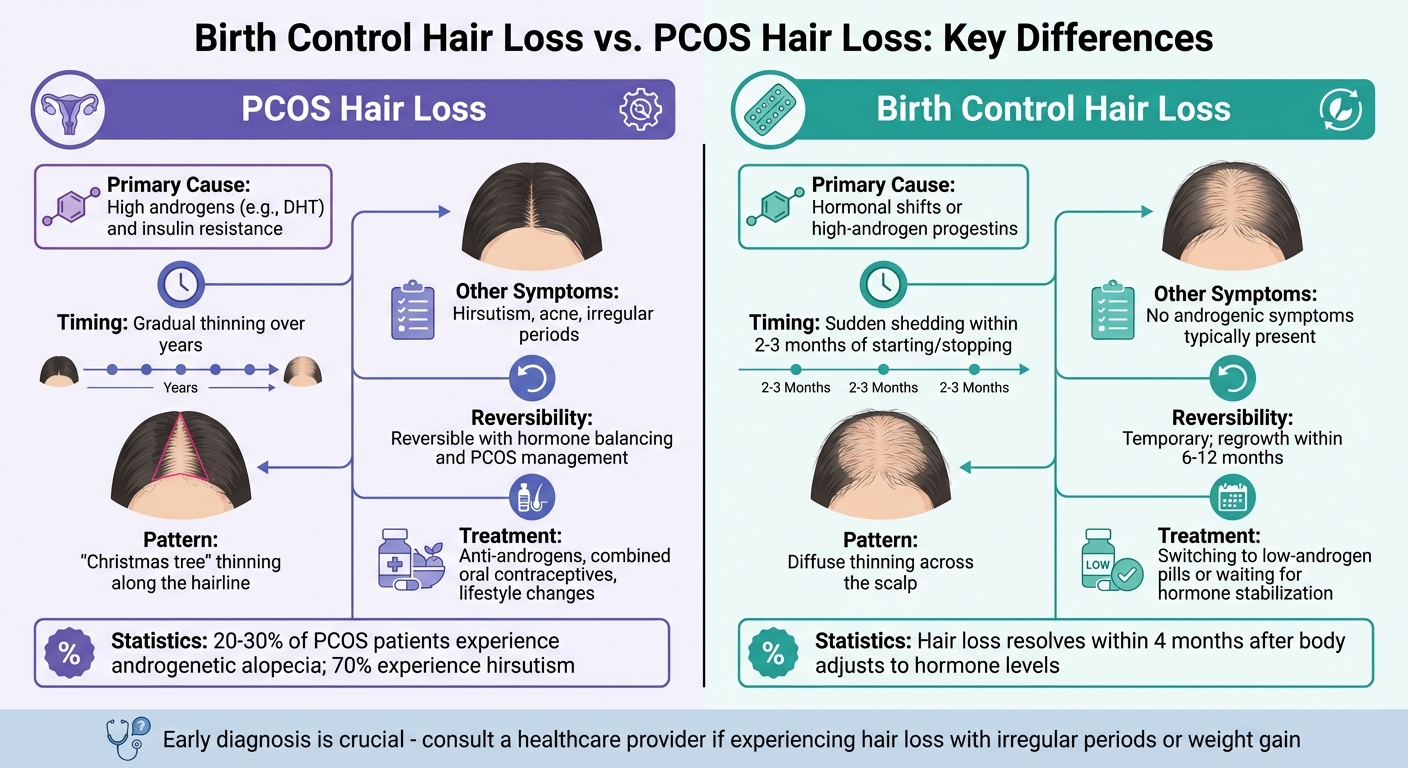
Birth Control vs PCOS Hair Loss Comparison Chart
Worried About PCOS Hair Loss? Dr. Shruthi Reveals Treatment Options
How Birth Control and PCOS Cause Hair Loss
Both birth control and PCOS disrupt hormonal balance, leading to hair thinning, but they do so in different ways. Let’s break down the biological processes behind each before diving into their timelines and potential for reversibility.
How Birth Control Affects Hair
Birth control pills typically combine estrogen and progestin. While estrogen can help maintain hair in the growth phase, certain types of progestins have androgenic properties that can negatively impact hair follicles.
Here’s how it works: androgenic progestins bind to androgen receptors in your body, amplifying androgen effects. Normally, we shed 25 to 100 hairs daily during the resting phase, but birth control can speed up this shedding process.
The type of progestin in your pill matters. High-androgen progestins like norethindrone may worsen thinning, while low-androgen options such as desogestrel and norgestimate are better choices. Pills containing drospirenone (found in brands like Yaz and Yasmin) actually have antiandrogenic effects that can reduce hair shedding.
If you’re genetically predisposed to androgen sensitivity or have a family history of hormone-related hair loss, you’re more likely to experience shedding while on birth control. The upside? Hair loss from birth control is usually temporary and often resolves within a few months as your body adjusts.
How PCOS Affects Hair
PCOS (Polycystic Ovary Syndrome) causes the ovaries to produce excessive androgens, including testosterone and DHT (dihydrotestosterone). As Cleveland Clinic explains:
"Polycystic ovary syndrome (PCOS) is a hormonal imbalance that occurs when your ovaries (the organ that produces and releases eggs) create excess hormones. If you have PCOS, your ovaries produce unusually high levels of hormones called androgens."
Roughly 20% to 30% of individuals with PCOS experience androgenetic alopecia.
The process involves follicle miniaturization. When DHT binds to hair follicles on the scalp, it causes them to shrink over time. This leads to shorter, finer hairs until the follicles stop producing hair entirely. Paradoxically, the same elevated androgen levels often cause excess hair growth (hirsutism) on the face and body, affecting up to 70% of people with PCOS.
Insulin resistance plays a major role in this. High insulin levels prompt the ovaries to release more androgens, which disrupts normal ovulation and contributes to hair loss. Additionally, low levels of SHBG (Sex Hormone-Binding Globulin) - often linked to high insulin - leave more "free" androgens circulating in the bloodstream, further damaging hair follicles. Unlike the temporary shedding caused by birth control, PCOS-related hair loss is progressive and typically requires medical treatment to reverse.
Next, we’ll explore how quickly hair loss develops in each condition and what can be done to address it.
When Hair Loss Starts
Understanding the timeline of hair loss can help distinguish whether it's caused by birth control or PCOS. The patterns vary significantly - hair loss from birth control tends to occur relatively quickly, while PCOS-related hair loss develops much more gradually over time.
Birth Control: Quick or Delayed Shedding
Hair loss linked to birth control usually begins within weeks or months. This happens because hormonal changes can trigger telogen effluvium, a condition where hair follicles enter the resting phase prematurely. Since the telogen phase lasts about three months, you may not notice the shedding right away.
Dr. Jillian Foglesong Stabile, MD, FAAFP, explains:
"The withdrawal of estrogen leads to an increased number of hairs going into the telogen stage of the hair cycle. This can lead to a condition called telogen effluvium."
The Pandia Health Editorial Team notes that "any hair loss triggered by stopping birth control should end after your body has adjusted to its new hormone levels, which can take up to four months". However, if the shedding continues beyond this period, it’s important to consult a healthcare provider to rule out other potential causes.
Next, let’s explore how PCOS-related hair loss differs in its progression.
PCOS: Slow and Progressive Hair Loss
Hair loss due to PCOS follows a much slower trajectory. While PCOS often begins during puberty, its associated hair thinning usually becomes noticeable later, often in a person’s 20s or 30s. The Cleveland Clinic highlights that "most people are diagnosed in their 20s or 30s when they're trying to get pregnant".
PCOS-related hair thinning occurs as androgenic hormones gradually cause follicle miniaturization over the years. Dr. Stabile elaborates:
"Androgenic hormones cause the hair follicles to shrink and cut off the supply of blood and nutrients. This leads to shortened anagen phases and increased hair loss."
Without treatment, the thinning can become more severe. Early intervention is essential, as addressing the issue promptly improves the likelihood of restoring hair health.
sbb-itb-6dba428
Can Hair Loss Be Reversed?
Hair loss caused by birth control is often temporary, while hair loss related to PCOS requires ongoing management of hormonal imbalances to address the issue effectively.
Treating Birth Control Hair Loss
When hair loss is triggered by birth control, it usually resolves once your hormone levels stabilize. The first step is often switching to a different contraceptive method. If you're noticing excessive shedding, consider talking to your doctor about birth control pills with a low androgen index, such as Desogen, Ortho-Cyclen, or Ortho Tri-Cyclen. Another option is non-hormonal contraception, like copper IUDs, which eliminate hormonal fluctuations altogether. It's best to steer clear of high-androgen pills like Loestrin or Ovral if you're concerned about hair thinning.
While changing birth control methods can address hormone-related shedding, managing PCOS-related hair loss requires a more comprehensive approach.
Treating PCOS Hair Loss
PCOS-related hair loss needs a combination of treatments to balance hormones and encourage hair regrowth. As Kelly Berry from Mira Care points out:
"PCOS hair loss can be reversed and it is not permanent. There are treatments available that can help to balance hormones, prevent further damage, and stimulate hair growth".
Medications like spironolactone, an anti-androgen, work by blocking androgens from affecting hair follicles. However, it takes about six months of consistent use to see noticeable results. Since spironolactone can cause birth defects, it’s often prescribed alongside oral contraceptives. Telehealth services like Oana Health offer access to spironolactone treatments, starting at $14 per month.
For direct stimulation of hair growth, topical solutions like minoxidil (Rogaine) are an option. While minoxidil promotes regrowth by stimulating hair follicles, it doesn’t address the underlying hormonal imbalance. For a more targeted approach, topical spironolactone is available for $43 per month, or oral minoxidil for $25 per month through Oana Health’s telehealth services.
Another crucial aspect of treatment is managing insulin resistance. Metformin can improve the body’s response to insulin, reducing androgen production and alleviating symptoms like hair thinning. Lifestyle changes, such as losing weight and engaging in at least 150 minutes of exercise per week, can also enhance insulin sensitivity and improve blood circulation, which supports healthier hair follicles.
Birth Control vs. PCOS Hair Loss: Key Differences
While both PCOS and birth control can lead to hair loss, the underlying causes and patterns differ. PCOS-related hair loss stems from an excess of androgens like testosterone and DHT, while birth control-induced shedding is triggered by sudden hormonal changes or the use of high-androgen progestins.
The timing also sets them apart. Hair loss from PCOS is gradual, often progressing over several years, while birth control-related shedding happens quickly - usually within 2 to 3 months after starting or switching medications. Importantly, birth control hair loss is often temporary, unlike the persistent thinning seen with PCOS.
These differences extend to how hair loss appears. PCOS frequently causes a "Christmas tree" thinning pattern along the center hairline. In contrast, birth control-related shedding tends to be more evenly distributed across the scalp.
Treatment approaches also vary significantly. Birth control itself plays a dual role - while some pills can cause hair loss, combined oral contraceptives are a common treatment for PCOS because they help reduce androgen levels. According to the National Institutes of Health:
"Some pills contain progestin, and some types of progestin have 'androgenic' side effects, such as oily skin, acne, and increased hair growth. For this reason, birth control pills that contain a low-androgenic progestin... are more effective at treating the symptoms of PCOS."
Comparison Table
Here's a quick breakdown of the differences between PCOS and birth control-related hair loss:
| Feature | PCOS Hair Loss | Birth Control Hair Loss |
|---|---|---|
| Primary Cause | Androgen excess (e.g., DHT) and insulin resistance | Hormonal shifts or high-androgen progestins |
| Timing | Gradual thinning over years | Sudden shedding within 2–3 months |
| Hair Loss Pattern | "Christmas tree" thinning along the hairline | Diffuse thinning across the scalp |
| Other Symptoms | Hirsutism, acne, irregular periods | No androgenic symptoms typically present |
| Reversibility | Reversible with hormone balancing and PCOS management | Temporary; regrowth within 6–12 months |
| Treatment Approach | Anti-androgens, combined oral contraceptives, lifestyle changes | Switching to low-androgen pills or waiting for stabilization |
Conclusion
Figuring out whether your hair loss stems from birth control or PCOS is essential for choosing the right treatment. PCOS-related hair loss usually develops gradually due to excess androgens and insulin resistance, often accompanied by other hormonal symptoms. On the other hand, hair loss caused by birth control tends to happen suddenly and is usually temporary.
Catching the issue early is crucial to avoid permanent follicle damage. This is especially important with PCOS, as it can lead to long-term health problems like type 2 diabetes, high blood pressure, and heart disease if left untreated.
If you're dealing with hair loss alongside irregular periods or unexplained weight gain, it’s a good idea to get blood tests for androgen levels and a pelvic ultrasound to check for PCOS. Knowing whether your hair loss is medication-related or tied to a hormonal imbalance ensures you get the right care. Once diagnosed, targeted treatments can help restore your hair’s health.
When it comes to PCOS-related hair loss, personalized care makes all the difference. Platforms like Oana Health provide telehealth solutions tailored to PCOS management. Their licensed physicians review your medical history and can prescribe treatments such as Spironolactone to block androgen activity or Oral Minoxidil to promote hair growth. These medications are conveniently delivered to your doorstep with free shipping, addressing the hormonal causes while supporting long-term hair health.
The good news? Hair loss from PCOS can be reversed. With the right medical treatment and lifestyle adjustments - like eating a balanced diet and staying active - you can reduce shedding, encourage regrowth, and feel more confident about your hair. Recognizing the differences and seeking tailored care puts you on the path to better hair health.
FAQs
How can I tell if my hair loss is from birth control or PCOS?
Determining the cause of your hair loss - whether it’s due to birth control or PCOS - comes down to timing, symptoms, and the underlying factors at play.
Hair loss from birth control often happens after starting, stopping, or switching contraceptives. This is typically a temporary response to hormonal shifts that disrupt your hair’s growth cycle. Alongside hair shedding, you might notice mood swings or changes in your skin. The good news? Shedding usually settles down within a few months.
Hair loss linked to PCOS, however, is driven by higher levels of androgens (male hormones). This type of thinning tends to develop slowly and may resemble male-pattern baldness. It’s also often paired with other PCOS symptoms, like irregular menstrual cycles, acne, or increased facial hair growth.
If you’re unsure what’s behind your hair loss, a healthcare provider can help. They’ll assess your symptoms, run hormone tests, and suggest treatments tailored to your specific situation to address the root cause.
What are the most effective treatments for hair loss caused by PCOS?
The best way to tackle PCOS-related hair loss is by addressing hormonal imbalances, which are often at the core of the issue. A common recommendation from healthcare providers is birth control pills, as they help regulate hormone levels and reduce androgens, which can lead to less hair loss. In some cases, medications like anti-androgens or treatments that improve insulin sensitivity may also be prescribed to manage other related symptoms.
Lifestyle adjustments can make a big difference too. Sticking to a balanced diet and incorporating regular exercise can help maintain a healthy weight, which in turn supports hormone regulation and hair growth. Even shedding a small amount of weight has been shown to improve symptoms for some individuals.
For a more tailored solution, it's important to consult a healthcare professional who specializes in PCOS and hormone health. Services like Oana Health offer personalized treatments that can be delivered right to your door, making it more convenient to manage PCOS-related concerns effectively.
Can switching birth control help with hair loss?
If your current birth control is causing hormonal imbalances, switching to a different option might help reduce hair loss. Hair loss related to birth control is usually temporary and often improves within a few months after stopping or transitioning to a low-androgen pill. If the problem continues, it’s a good idea to consult a healthcare provider to explore the best options for your situation.