
Checklist for Combining Eflornithine with Hair Removal
Combining Eflornithine (Vaniqa) with hair removal methods like laser or IPL can help manage unwanted facial hair more effectively. Eflornithine slows hair regrowth by targeting the enzyme responsible for hair production, while laser or IPL destroys hair follicles. Together, these treatments can reduce hair growth and improve skin smoothness over time. Here’s what you need to know:
- Eflornithine Basics: Apply twice daily (8 hours apart) to slow hair regrowth. Results may appear in 4–8 weeks, with significant improvement within 6–12 months.
- Who Benefits: Women with facial hair caused by hormonal changes (e.g., PCOS, menopause) or genetics. Works best on fine hair.
- Timing Matters: Avoid using Eflornithine on the day of laser or IPL treatments. Resume regular application the day after.
- Skin Preparation: Cleanse skin, avoid sun exposure, and use SPF 30+ sunscreen daily for 4–6 weeks before laser sessions.
- Side Effects: Mild irritation (redness, acne) is possible. Reduce application frequency or consult a provider if irritation persists.
- Consistency Is Key: Stopping the cream will likely result in hair growth returning to its original state within 8 weeks.
For best results, consult a healthcare provider to tailor your treatment plan and ensure safe usage.
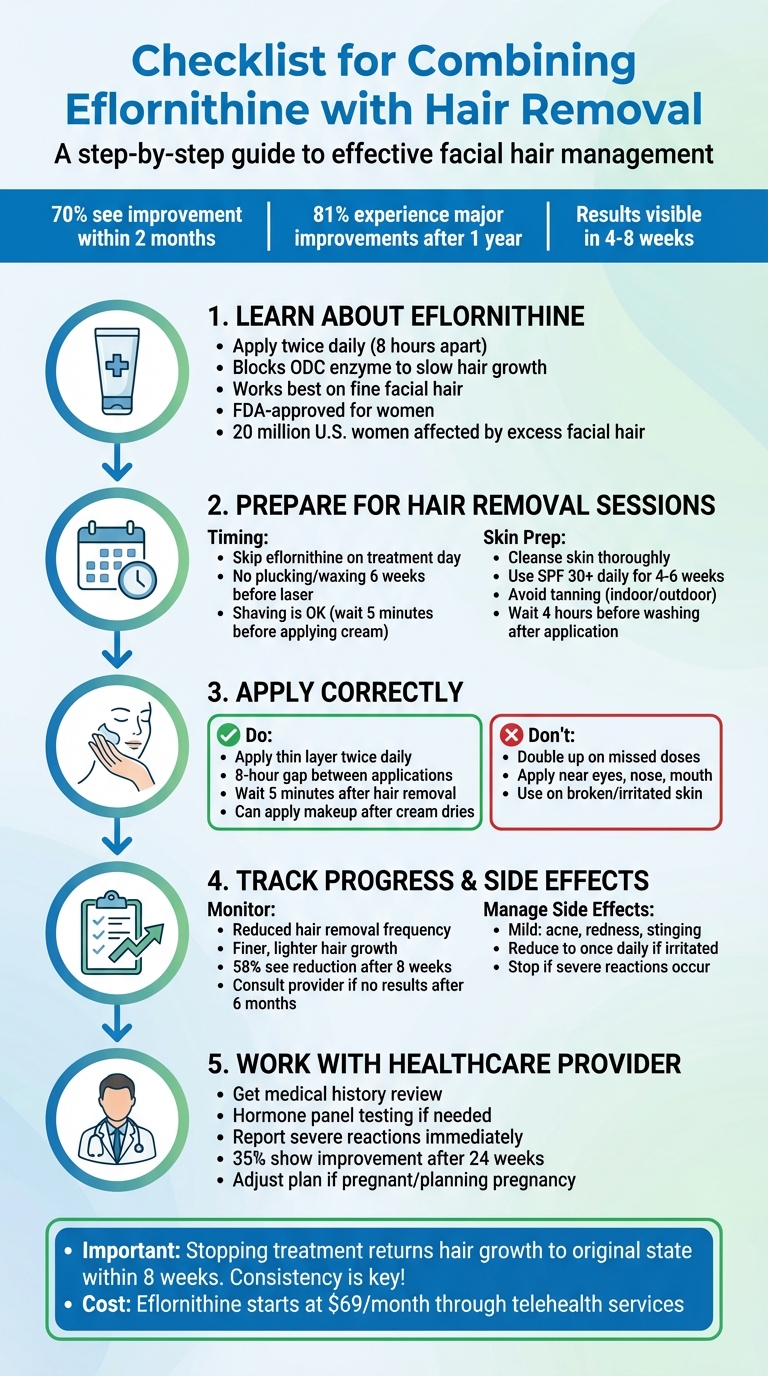
5-Step Guide to Combining Eflornithine with Hair Removal Treatments
Step 1: Learn About Eflornithine
How Eflornithine Works
Eflornithine, sold under the brand name Vaniqa, is a prescription cream designed to tackle facial hair growth in a unique way. Instead of removing hair, it slows down how quickly new hair grows by targeting an enzyme called ornithine decarboxylase (ODC) in hair follicles. This enzyme plays a crucial role in hair production. By blocking it, the cream not only delays regrowth but may also cause hair to become finer over time.
It’s important to note that eflornithine doesn’t get rid of existing hair. So, you’ll still need to stick to your usual hair removal routine - whether that’s shaving, plucking, or laser treatments - while the cream works to reduce regrowth. For best results, apply a thin layer twice a day, with at least eight hours between applications.
Patience is key. Some women may see changes in as little as four weeks, but most notice visible improvements within four to eight weeks of consistent use.
This makes eflornithine an excellent option for specific individuals looking for a solution to slow facial hair growth.
Who Should Use Eflornithine
Eflornithine is approved by the FDA to reduce unwanted facial hair in women, particularly on areas like the upper lip and under the chin. It’s especially helpful for women dealing with facial hair growth caused by hormonal shifts, such as those linked to Polycystic Ovarian Syndrome (PCOS), androgen excess, menopause, or aging. In fact, around 20 million women in the U.S. face excessive facial hair due to genetics, hormonal changes, or medical conditions.
The cream works best on fine facial hair and can be paired with other treatments like laser or IPL therapies. This combination can help maintain smoother skin between sessions, making it a versatile addition to your hair management routine.
Step 2: Prepare for Hair Removal Sessions
Schedule Your Treatments Carefully
Timing matters when you're combining eflornithine with laser or IPL treatments. Knowing when to apply the cream around your hair removal sessions ensures nothing disrupts the procedure.
On the day of your hair removal appointment, skip using eflornithine or any other topical products. If shaving is part of your routine, make sure to wait at least five minutes after shaving before applying the cream.
Once you've applied eflornithine, avoid washing the treated area for at least four hours. After the cream dries, which only takes a few minutes, you can go ahead and apply makeup, moisturizer, or sunscreen if needed.
For laser hair removal, it’s crucial to avoid plucking or waxing for at least six weeks before your session, as these methods remove the hair root that the laser targets. Shaving, however, is fine - actually, it’s recommended. Just be sure to shave early enough so there’s a slight stubble left, which helps the laser detect the hair better.
Prepare Your Skin
Clean, well-prepped skin is essential for effective treatment. Start by cleansing the area to remove any oils, makeup, or residue.
Protecting your skin from the sun is also critical. Use a broad-spectrum, water-resistant sunscreen with an SPF of 30 or higher every day for four to six weeks before your appointment. Both eflornithine and hair removal treatments can make your skin more sensitive, so it’s best to avoid sunless tanners and any form of tanning - whether indoors or outdoors - before your session.
If you’re using eflornithine regularly, stick to your twice-daily application schedule (morning and evening) with at least eight hours between doses. You can resume your normal routine the day after your appointment. Keep up with your regular hair removal practices, such as shaving or threading, since eflornithine only slows hair growth rather than removing it entirely.
Once your schedule and skin are ready, you’re all set to move on to the proper application of eflornithine in the next step.
Step 3: Apply Eflornithine Correctly
How to Apply the Cream
Getting the application right is essential for the best results. Start by cleaning and drying the area you’re treating. Then, apply a thin layer of the cream twice a day, making sure there’s at least an 8-hour gap between applications. Gently rub the cream into your skin until it’s fully absorbed. After a few minutes, once the cream has dried, you can apply makeup, moisturizer, or sunscreen if needed.
As mentioned earlier, wait at least 5 minutes after removing hair before applying the cream. Also, avoid washing the treated area for at least 4 hours after application. Clinical trials have shown that 58% of patients noticed a clear reduction in facial hair after using the cream consistently for 8 weeks.
To ensure the treatment works as intended, steer clear of these common mistakes.
Avoid These Common Errors
Skip doubling up on doses. If you miss a dose, only reapply if at least 8 hours have passed since your last application. Never apply extra cream to make up for a missed dose.
Keep the cream away from sensitive areas like your eyes, nose, mouth, and any broken or irritated skin. If your skin becomes irritated, try reducing the application frequency to once daily. If the irritation continues, stop using the cream and consult your healthcare provider. Don’t forget to wash your hands thoroughly after applying the cream.
"This medication is not a depilatory, but rather appears to retard hair growth to improve the condition and the patient's appearance." - VANIQA Prescribing Information
Consistency is non-negotiable. If you stop using the cream, hair growth will likely return to its original state within 8 weeks. To maintain progress, stick to your twice-daily application routine.
sbb-itb-6dba428
Step 4: Track Your Progress and Handle Side Effects
Measure Your Results
Keep an eye on how often you're removing hair. If you notice you're doing it less frequently and that your hair is becoming finer and lighter, it's a good sign the treatment is working. According to clinical studies, 70% of users see improvement within 2 months, with some noticing reduced hair growth and density as early as the first month.
"It's been a little over 5 weeks, and I've noticed a dramatic reduction in my facial hair growth. This has been such a relief for me. You really have to stick with it and be patient to notice results!" - Allison L., Patient, Oana Health
If you don’t see any changes after 6 months, it might be time to check in with your provider to discuss whether continuing the treatment is the best option. Long-term studies indicate that 81% of women experience major improvements after a year of consistent use.
While tracking your progress, also pay attention to any signs of skin irritation.
Deal with Side Effects
Some mild side effects like acne, stinging, or slight redness may pop up. If you experience these, try cutting back your application to just once a day. But if the irritation doesn’t go away or gets worse, stop using the product and contact your provider.
"It has helped reduce the amount of hairs that I grow on my chin area. Also because I am now plucking less, it has also helped cleared up my hyperpigmentation." - Shequanya K., Patient, Oana Health
To ease any irritation, keep the area clean and use gentle, soothing moisturizers. Stay away from harsh products that could aggravate your skin further. If you experience severe reactions - like hives, swelling in the face or throat, or intense burning and peeling - seek medical help immediately.
Step 5: Work with a Healthcare Provider
Partner with a licensed healthcare provider to ensure eflornithine is the right option for you. They’ll review your medical history, conduct a physical exam, and possibly order tests - like hormone panels - to rule out any underlying health issues.
Your provider will also check for any contraindications, such as pregnancy, breastfeeding, or severe acne, and carefully review all your current medications and skincare products. It’s a good idea to bring a written list of all medications and their dosages to your appointment. This detailed evaluation ensures your treatment plan is tailored to your needs and allows for timely adjustments if necessary.
When to Contact Your Provider
Monitoring your progress is key. If you experience any allergic reactions or severe skin irritation, contact your provider immediately.
If you don’t notice any improvement after six months of consistent use, let your provider know. Clinical studies reveal that 35% of patients using eflornithine saw noticeable improvement after 24 weeks. If results are lacking, your provider can help decide whether to adjust or discontinue the treatment. Additionally, notify your provider if you become pregnant or are planning to conceive while using the cream.
Get Treatment Through Oana Health

Once your treatment plan is set, accessing eflornithine is straightforward. Oana Health offers a quick, five-minute telehealth consultation with licensed providers who will review your medical history, prescribe eflornithine, and have it shipped directly to your doorstep - at no extra cost.
Eflornithine 12% starts at $69 per month, with options like the "Hairless Hype" subscription: $69 for 20g or $139 for 60g with membership.
"Oana's telehealth service is fantastic! I've always had excess facial hair due to my PCOS. The Eflornithine cream has significantly slowed down my hair growth, and I love how easy it is to include into my routine." – Victoria A.
Oana Health also provides ongoing support through online or phone consultations, making it simple to report side effects, ask questions, or adjust your treatment plan - all without the hassle of scheduling an in-person visit.
Conclusion
Incorporating eflornithine into your regular hair removal routine requires consistency and patience. Clinical studies reveal an 81% improvement within a year for many users. The secret? Stick to a twice-daily application schedule and allow enough time for the treatment to take effect. Most people start noticing changes between 4 to 8 weeks.
To make the most of your progress, consider consulting a healthcare provider. They can guide you on safely using eflornithine, help manage any side effects, and adjust your treatment plan if needed. If you don’t see noticeable results after 6 months of consistent use, your provider might suggest exploring other options.
Timing matters, too. Following the application guidelines outlined in Step 3 can help maximize absorption and reduce the chance of irritation.
FAQs
How does eflornithine enhance the results of laser or IPL treatments?
Eflornithine is often used as a follow-up to laser or IPL treatments to help slow down hair regrowth. It works by inhibiting the enzyme ornithine decarboxylase (ODC), which plays a key role in hair growth. By combining eflornithine with these procedures, you can potentially extend the results, as it helps reduce both the speed and density of hair regrowth over time.
This approach is particularly useful for those aiming to enhance the effectiveness of their hair removal treatments. Be sure to consult a healthcare provider to determine if this combination is the right fit for your needs.
What should I do if my skin becomes irritated from using eflornithine?
If you experience skin irritation while using eflornithine, avoid applying it to broken or already irritated areas. Mild redness or irritation can occur but often gets better with correct use. If the irritation continues or becomes worse, stop using the product temporarily and reach out to your healthcare provider for advice. Be sure to follow the application instructions from your doctor or pharmacist to help reduce the risk of side effects.
How soon can I expect to see results when using eflornithine with hair removal treatments?
When using eflornithine alongside hair removal methods, most individuals begin to see noticeable changes within 8 to 12 weeks of consistent application. However, achieving the best results often takes about 2 to 4 months, as this depends on factors like your hair growth cycle and how regularly you stick to the treatment.
Consistency is crucial, and patience will pay off as improvements become more evident over time. If you're unsure about your progress or have concerns, it's always a good idea to reach out to your healthcare provider for personalized advice.