
Checklist for Safe Minoxidil Use with Heart Medications
If you're using minoxidil and heart medications together, safety comes first. Minoxidil can lower blood pressure but may also increase heart rate and cause fluid retention, which can lead to serious complications without proper precautions. Here's what you need to know:
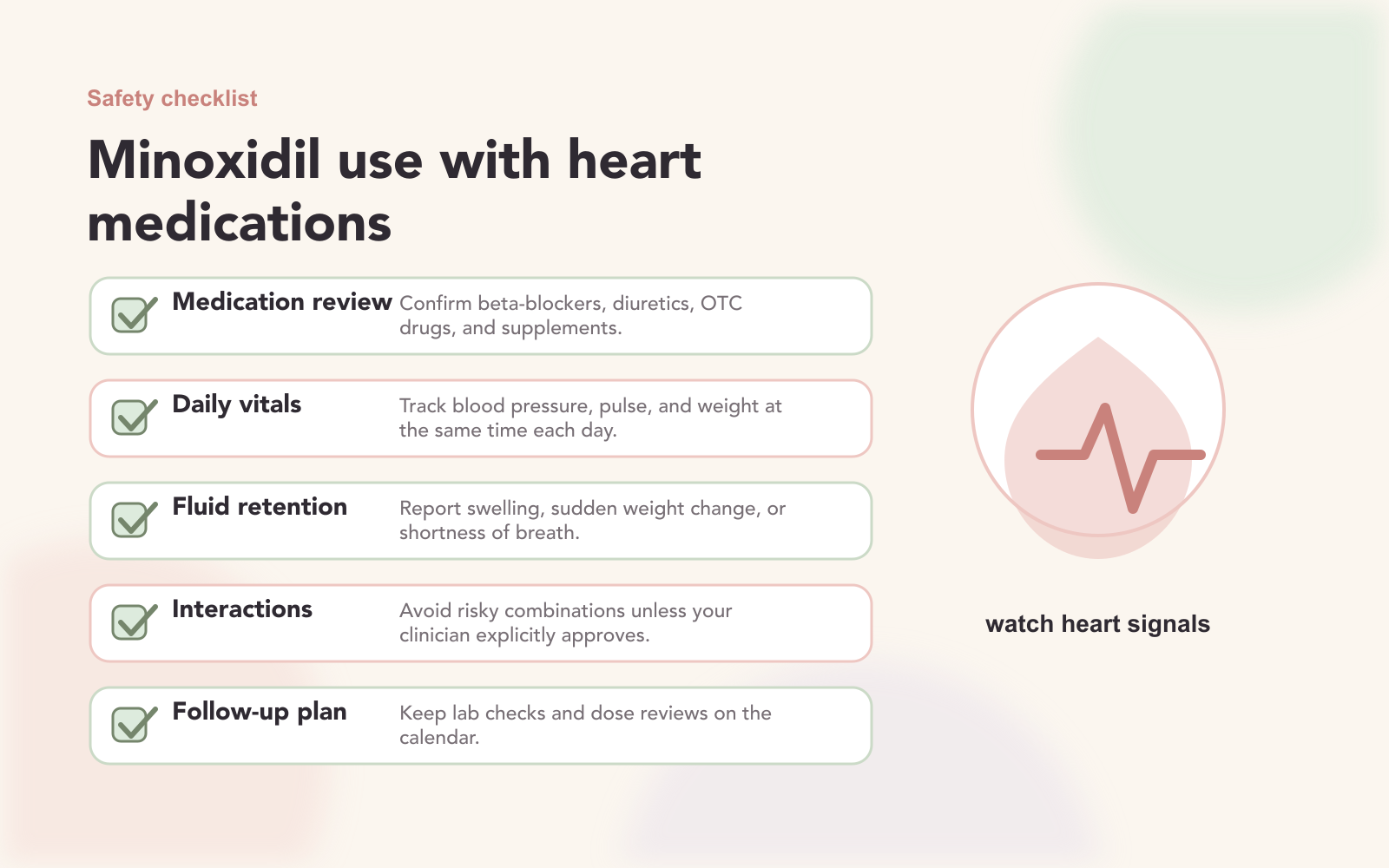
- Always combine minoxidil with a beta-blocker (e.g., propranolol) to manage heart rate and a diuretic (e.g., furosemide) to prevent fluid buildup.
- Medical consultation is critical before starting. Review all medications, including over-the-counter drugs and supplements, with your doctor.
- Daily monitoring is essential: Check your blood pressure, heart rate, and weight every day. Report any unusual symptoms like chest pain, swelling, or sudden weight changes.
- Avoid certain drug combinations, like guanethidine, which can dangerously lower blood pressure. Always inform your doctor about all medications you're taking.
- Regular follow-ups with your doctor are necessary for ongoing tests (e.g., kidney function, EKG) to catch potential issues early.
Key takeaway: Minoxidil requires careful oversight, daily health checks, and proper medication combinations to ensure safe use, especially if you have heart conditions.
Safe Minoxidil Use with Heart Medications: Complete Safety Checklist
Before Starting Minoxidil: Medical Consultation Steps
Review Your Current Medications
Before starting minoxidil, it’s crucial to go over all the medications you’re taking with your healthcare provider. This includes prescription drugs, over-the-counter medicines, vitamins, and herbal supplements. To make this process smoother, bring a complete, written list of everything you’re currently using to your appointment. This step ensures your provider has all the necessary details to guide your treatment safely.
One medication to flag is guanethidine. If you’re taking it, your doctor will likely recommend stopping it 1–3 weeks before starting minoxidil, as the combination can cause dangerous drops in blood pressure. Other medications like ACE inhibitors, ARBs, calcium-channel blockers, or thiazide diuretics also need to be discussed, as they can amplify minoxidil’s blood pressure-lowering effects. Additionally, over-the-counter remedies such as cold medicines, cough syrups, asthma treatments, or appetite suppressants should be mentioned since their stimulant ingredients can interfere with minoxidil’s effects.
"A beta-blocker (equivalent to 80–160 mg of propranolol daily) must be given before initiation of minoxidil therapy and continued for duration of therapy, to minimize minoxidil-induced tachycardia and increased myocardial workload." - Drugs.com
Once your medications are reviewed, it’s time to share your full medical history.
Disclose Your Complete Medical History
Minoxidil can impact existing heart conditions, so it’s essential to provide your doctor with a detailed medical history. Be upfront about any issues like angina, heart failure, recent heart attacks, strokes, heart valve diseases, or pheochromocytoma (a type of adrenal gland tumor).
"Withholding or providing inaccurate information about your health and medical history in order to obtain treatment may result in harm, including, in some cases, death." - Ro Safety Information
If you have kidney disease or are on dialysis, this is equally important to disclose. Since minoxidil clears more slowly in patients with kidney impairment, it can increase the risk of side effects. In such cases, your doctor might adjust the dosage, often reducing it by about one-third. Additionally, let your provider know if you’ve ever had an allergic reaction to propylene glycol, a common ingredient in topical minoxidil formulations.
After sharing your medical history, your doctor will likely recommend baseline tests to ensure you’re ready to begin treatment.
Get Baseline Health Tests
Baseline tests are a vital step before starting minoxidil. These tests help establish your current health status and allow your doctor to monitor for any early changes once treatment begins.
Some key tests include measuring blood pressure, pulse, and weight, as well as checking kidney function. If your pulse increases by 20 beats per minute or you experience a sudden weight gain of 5 pounds, these could be warning signs that require immediate medical attention. Since the kidneys are responsible for clearing at least 90% of an oral minoxidil dose, kidney function tests are particularly important. Your doctor may also order an EKG, chest X-ray, or echocardiogram to assess your heart’s condition and check for any signs of fluid buildup around the heart (pericardial effusion).
Finally, ask your provider to teach you how to check your pulse accurately at home. This skill will be crucial for daily monitoring and ensures you can catch any concerning changes early. These steps lay the groundwork for safe and effective minoxidil use, especially if you’re managing heart-related conditions alongside the treatment.
Minoxidil for hair loss | can we use in those with blood pressure?
Daily Safety Monitoring Steps
When starting minoxidil treatment, it’s crucial to establish a daily routine for monitoring your health. These quick, simple checks can help you spot potential issues early, especially when using minoxidil alongside heart medications. By staying consistent, you can better ensure your safety throughout the treatment.
Measure Blood Pressure and Heart Rate
Make it a habit to measure your blood pressure and heart rate at the same time every day, ideally in the morning and evening. For accuracy, use an automatic upper arm cuff-style monitor, as wrist and finger devices are generally less reliable. Before taking measurements, avoid caffeine, nicotine, or exercise for at least 30 minutes, and sit quietly for five minutes with your feet flat on the floor and your arm supported at heart level. Take two readings, spaced one minute apart, ensuring the cuff is placed directly on bare skin.
For those on minoxidil, it’s especially important to check your pulse before and after taking your dose. Keep an eye on your resting heart rate throughout the day. If you notice an increase of 20 beats per minute or more above your usual baseline, contact your healthcare provider immediately.
Watch for Warning Signs
Monitoring your vital signs also means staying alert to symptoms that could indicate serious side effects. Pay attention to any sharp pain in your chest, arm, or shoulder, as these could point to conditions like pericarditis or fluid buildup around the heart. Similarly, shortness of breath or trouble breathing - especially when lying down - might signal pulmonary edema or heart failure.
Other symptoms to watch for include dizziness, fainting, lightheadedness, or heart palpitations. Keep an eye out for fluid retention, which may appear as puffiness in your face, hands, or stomach, or swelling in your ankles or feet. If your blood pressure reads higher than 180/120 mm Hg on repeat measurements, seek immediate medical care. Keeping a detailed log of these symptoms can be invaluable during follow-up visits with your doctor.
Track Your Weight Daily
Weigh yourself every morning at the same time to catch signs of fluid retention early. Minoxidil can cause your body to hold onto sodium and water, which, if unchecked, could lead to serious complications like congestive heart failure or pulmonary edema.
"Daily monitoring of a patient's weight as therapy progresses can pinpoint those experiencing the most marked fluid retention. The earlier fluid retention is identified in a patient treated with minoxidil the easier it is to manage this side effect."
- Domenic A Sica, MD, Professor of Medicine and Pharmacology
If you notice a sudden weight gain of 5 pounds or more in adults, or 2 pounds or more in children, contact your doctor immediately. Even smaller gains - 2–3 pounds - should be evaluated, especially if they come with additional symptoms like swelling or breathing difficulty. Following a low-sodium diet, as recommended by your healthcare provider, can also help manage fluid retention. These daily weight checks are a key part of your overall monitoring plan.
sbb-itb-6dba428
Managing Medication Combinations
When prescribed minoxidil, it’s always paired with other heart medications to help manage its side effects. Proper consultation and ongoing monitoring are essential to ensure safety when combining medications.
Diuretics and Beta-Blockers
Loop diuretics, such as furosemide (Lasix), are almost always necessary alongside minoxidil. These medications help prevent the significant salt and water retention caused by minoxidil, which could otherwise lead to congestive heart failure. Your doctor will adjust the diuretic dosage based on your daily weight and any signs of swelling.
Beta-blockers are another key component and should be started before beginning minoxidil. They help counteract reflex tachycardia (a rapid heart rate) and reduce the strain on your heart. A standard dose is typically 80–160 mg of propranolol daily. If beta-blockers aren’t an option due to contraindications, alternatives like methyldopa or clonidine may be prescribed. These should be initiated at least 24 hours before the first dose of minoxidil. In patients with kidney failure or those on dialysis, the dosage of minoxidil may need to be reduced by about one-third.
Combinations to Avoid
One of the most dangerous interactions involves guanethidine, as combining it with minoxidil can lead to severe orthostatic hypotension - a dramatic drop in blood pressure when standing. If discontinuing guanethidine 1–3 weeks before starting minoxidil isn’t possible, minoxidil should only be initiated in a controlled hospital setting.
Additionally, avoid using over-the-counter cold, cough, or appetite medications without consulting your doctor first. In cases of severe low blood pressure caused by minoxidil, drugs like epinephrine and norepinephrine, which stimulate the heart excessively, should also be avoided.
Drug Interaction Reference Table
| Medication Class | Interaction Effect with Minoxidil | Management Approach |
|---|---|---|
| Loop Diuretics (e.g., Furosemide) | Prevents fluid retention and heart failure. | Almost always required; dosage adjusted based on weight gain and swelling. |
| Beta-Blockers (e.g., Propranolol) | Prevents reflex tachycardia and reduces heart strain. | Start before minoxidil; typical dose is 80–160 mg propranolol daily. |
| Guanethidine | Risk of severe orthostatic hypotension. | Discontinue 1–3 weeks prior if possible; otherwise, start minoxidil in hospital. |
| Methyldopa / Clonidine | Alternatives to beta-blockers for heart rate control. | Start methyldopa 24 hours before minoxidil; dose is 250–750 mg twice daily. |
| ACE Inhibitors / ARBs | Can amplify blood pressure-lowering effects. | Use cautiously; monitor for excessive blood pressure drops. |
Regular Follow-Up and Long-Term Monitoring
Schedule Regular Medical Appointments
When taking minoxidil, keeping an eye on your heart and kidney function is a must. In the beginning, plan to visit your doctor every 1–3 months for essential tests like renal function, ECG, echocardiogram, urinalysis, and chest X-rays. These tests help catch potential complications early on.
Once your condition stabilizes, you can space out these tests to every 6–12 months. At home, make it a habit to check your weight and pulse daily. These regular check-ins are key to staying on top of your health and ensuring your treatment stays on track.
Report New Symptoms Immediately
Daily self-checks are important, but acting quickly on any unusual changes is even more critical. If you notice your resting heart rate jumping by 20 bpm or more, sudden weight gain of 5 pounds (or 2 pounds for children), or symptoms like chest pain, trouble breathing, or fainting, contact your healthcare provider right away .
"Oral minoxidil can cause an accumulation of fluids in the sac surrounding the heart. Monitor for sharp pain in the chest, arm, or shoulder; signs of severe indigestion; or shortness of breath, dizziness, lightheadedness, and fainting." - Ro
Catching these issues early can make all the difference when it comes to managing minoxidil-related side effects.
Consider Telehealth with Oana Health
For added convenience, you might want to explore telehealth options alongside your in-person appointments. Oana Health offers online consultations specifically for prescription oral minoxidil. Their licensed professionals review your medical history, create personalized treatment plans, and even ship your medication directly to your door - for free. This service ensures you have easy access to care while keeping up with the necessary monitoring for minoxidil treatment.
Key Takeaways
Here’s what you need to know about safely combining minoxidil with heart medications:
Using minoxidil alongside heart medications requires careful oversight and active participation from the patient. Close monitoring is crucial to avoid complications like pericardial effusion. To reduce risks, minoxidil is typically prescribed with a beta-blocker and a diuretic.
Daily tracking of your health is vital. Watch for a heart rate increase of 20 bpm or more, or a weight gain of 5 pounds (2 pounds for children). If you notice these changes, contact your doctor immediately.
Be transparent with your healthcare provider about your full medical history and all current medications. Certain drug combinations, such as those involving guanethidine, may require hospital-level supervision. Also, steer clear of over-the-counter medications for colds, coughs, asthma, or appetite suppression without consulting your doctor, as these can dangerously increase blood pressure.
"Withholding or providing inaccurate information about your health and medical history in order to obtain treatment may result in harm, including, in some cases, death." – Ro
Providing incomplete or incorrect health information can have serious consequences. Regular check-ins with your doctor and promptly reporting any symptoms are key to ensuring your treatment remains safe. These practices are essential for protecting your long-term cardiovascular health.
FAQs
Why do you need to take a beta-blocker and a diuretic with minoxidil?
When using minoxidil, combining it with a beta-blocker can help manage rapid heart rate (tachycardia) and ease the strain on your heart that the medication might cause. Adding a diuretic is equally important, as it helps control fluid retention and reduces the risk of severe complications, such as fluid accumulation around the heart (pericardial effusion). Together, these medications create a balanced approach, ensuring minoxidil can be used effectively and safely, particularly for heart-related conditions.
What symptoms should I watch for when taking minoxidil with heart medications?
When combining minoxidil with heart medications, keeping an eye on your body's response is crucial. Watch out for signs like chest pain or discomfort, rapid heartbeat, shortness of breath, swelling in your hands, feet, or ankles, or unexpected weight gain. These symptoms could point to fluid retention or other potential side effects.
Also, stay alert for sharp chest pain or trouble breathing, as these could indicate a rare issue like pericardial effusion. If you experience any of these warning signs, reach out to your healthcare provider right away for advice.
How can I safely use minoxidil if I’m taking heart medications?
Using minoxidil while managing heart conditions calls for careful coordination and ongoing check-ins with your healthcare provider. Start by providing your doctor with a full list of everything you take - this includes prescriptions, over-the-counter medications, and supplements. This step helps identify any possible interactions. Minoxidil is often paired with a beta-blocker and a diuretic to help counteract side effects like fluid buildup or a racing heartbeat.
Regularly monitor your blood pressure and heart rate, especially in the early weeks of treatment. Be alert for warning signs like chest discomfort, difficulty breathing, swelling, or sudden weight gain. If any of these occur, reach out to your doctor right away. Routine lab tests and follow-up visits are also key to keeping tabs on your kidney function and overall heart health.
For those using Oana Health, their telehealth services make it easy to manage your treatment. You can adjust medications, discuss symptoms, and even get prescriptions delivered to your door - helping you stay on track while reducing potential risks.