
Clomiphene Citrate for PCOS: How It Works
Clomiphene citrate is a widely used treatment for women with PCOS who face challenges with ovulation. It works by stimulating hormonal changes that promote egg release, addressing one of the most common causes of infertility in PCOS patients. Here’s a quick breakdown:
- What it does: Clomiphene blocks estrogen receptors in the brain, tricking it into producing more FSH and LH - hormones essential for ovulation.
- Effectiveness: Around 70% of women with irregular ovulation begin ovulating after treatment, with 50% achieving pregnancy within three cycles.
- Side effects: Some women may experience hot flashes, mood swings, or a thinner uterine lining, which can impact implantation.
- When it doesn’t work: About 15–40% of women may not respond to clomiphene, requiring alternatives like letrozole, injectable hormones, or surgical options.
Clomiphene is often the first choice due to its affordability and proven track record, though newer treatments like letrozole vs. clomiphene are gaining attention for higher success rates in some cases. Monitoring by a healthcare provider ensures the best possible outcome.
Clomid: How Can It Help You Get Pregnant?
sbb-itb-6dba428
How Clomiphene Citrate Works
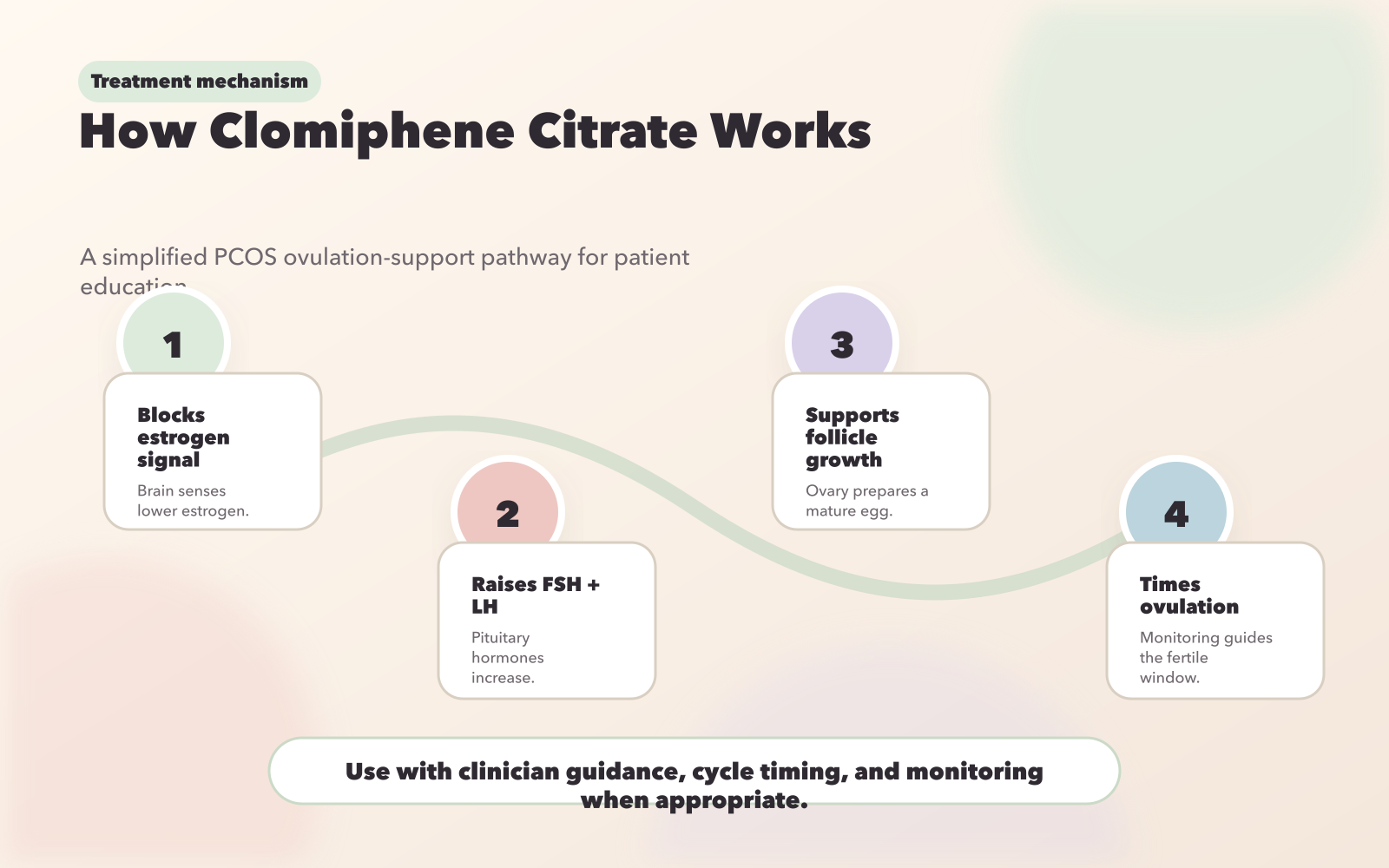
How Clomiphene Citrate Works for PCOS Treatment
Clomiphene helps the body kick-start ovulation, making it particularly helpful for women with PCOS who often struggle with irregular or absent ovulation.
Blocking Estrogen Receptors
Clomiphene belongs to a class of drugs called selective estrogen receptor modulators (SERMs). It works by binding to estrogen receptors and altering hormone signaling. Specifically, it blocks estrogen receptors in the hypothalamus, the brain's hormone-regulating center. This blockade tricks the brain into thinking estrogen levels are lower than they actually are. In response, the brain signals the pituitary gland to ramp up production of two key hormones: follicle-stimulating hormone (FSH) and luteinizing hormone (LH). These hormonal changes are essential for initiating ovulation.
"Clomiphene increases the production of hormones necessary for egg maturation and release." - Dr. Cristina Guix, Fertility Specialist, Barcelona IVF
Triggering Ovulation Through Hormone Changes
Once the estrogen receptors are blocked, the rise in FSH and LH stimulates the growth of ovarian follicles, which contain immature eggs. FSH encourages these follicles to develop, while the maturing follicles produce estrogen to prepare the uterine lining for potential implantation. When LH surges, it triggers ovulation - often releasing more than one egg. This effect slightly raises the chance of twin pregnancies, estimated at around 5%. Additionally, clomiphene supports progesterone production after ovulation, which strengthens the uterine lining and can help with luteal phase issues frequently seen in women with PCOS.
Standard Clomiphene Citrate Treatment Process
Once you understand how clomiphene works, the next step is following the treatment protocol. Doctors use a structured approach to boost your chances of ovulation while keeping a close eye on how your body responds.
Preparing Your Cycle
Before starting clomiphene, your doctor will determine the beginning of your menstrual cycle. For women with PCOS, irregular or absent periods can make this tricky, though a PCOS fertility window calculator can help estimate timing. Your doctor will carefully plan the timing of your treatment based on your cycle.
Dosing and Timing
The typical starting dose of clomiphene is 50 mg per day for five days. Your doctor will instruct you to begin taking the medication on Day 3, 4, or 5 of your cycle, with the first day of your period counted as Day 1. If ovulation doesn’t occur, the dose may be increased to 100 mg in the following cycle. To optimize results, take the medication at the same time each day to maintain consistent hormone levels.
Tracking Your Response
To evaluate how well clomiphene is working, your doctor may schedule an ultrasound around Day 11 or 12 of your cycle. This helps check for follicle development and assess your uterine lining. It’s worth noting that clomiphene can thin the uterine lining in about 20% of patients, which can affect implantation success. Starting on Day 9, you may use ovulation predictor kits (OPKs) to detect the LH surge. However, women with PCOS often have elevated baseline LH levels, making standard OPKs less reliable. In such cases, advanced fertility monitors like the Mira Monitor can provide more accurate hormone tracking.
If no natural LH surge is detected, your doctor might administer an hCG trigger shot (e.g., Ovidrel) to ensure the release of mature eggs. About two weeks after ovulation, you’ll take a home pregnancy test. If it’s positive, your doctor will confirm with a blood test.
Success Rates and Side Effects
After explaining the treatment process, it's time to dive into how effective clomiphene is and what side effects you might encounter.
How Often Clomiphene Works
Clomiphene has a solid track record. About 80% of women ovulate within three months of treatment. But here's the catch: ovulation doesn't necessarily mean pregnancy. Around 50% of those who ovulate with clomiphene will conceive within three treatment cycles.
For women with PCOS, a significant study found that clomiphene resulted in a 48.3% ovulation rate and a 19.1% live birth rate. While these numbers show promise, they also highlight that success isn't guaranteed. Additionally, clomiphene slightly increases the chances of twin pregnancies, with rates climbing to 7–10%.
Possible Side Effects
Most people tolerate clomiphene well, but side effects can happen. Common ones include hot flashes, mood swings, headaches, nausea, bloating, and breast tenderness. These symptoms often mimic early pregnancy signs and generally subside after the five-day treatment course.
Clomiphene can also thin the uterine lining or lower the quality of cervical mucus, which might make implantation harder. A rare but serious side effect is Ovarian Hyperstimulation Syndrome (OHSS). This condition causes painfully swollen ovaries, and you should seek immediate medical attention if you experience severe abdominal pain, rapid weight gain, or extreme bloating. Additionally, rare visual disturbances like blurred vision or blind spots require stopping the medication immediately and consulting your doctor.
When Clomiphene Doesn't Work
Sometimes, clomiphene isn't effective, especially for those with clomiphene resistance. This resistance affects 15% to 40% of women with PCOS, meaning they don't ovulate even with doses up to 150 mg/day. Factors like a BMI over 25, high androgen levels, or a diminished ovarian reserve can increase the likelihood of resistance.
If clomiphene doesn't work, your doctor may explore other treatments, such as comparing metformin vs. clomiphene to see which is more effective for your specific needs. One option is switching to letrozole, which has shown higher ovulation rates (61.7% vs. 48.3%) and live birth rates (27.5% vs. 19.1%) in PCOS patients. Another alternative is injectable gonadotropins, with studies reporting a 41% pregnancy rate over six months for clomiphene-resistant cases. In some cases, doctors may suggest laparoscopic ovarian drilling, a surgical approach that can help trigger ovulation by lowering androgen levels in the ovaries.
Getting PCOS Treatment Through Telehealth
Managing PCOS doesn’t always mean you have to visit a doctor’s office in person.
Advantages of Telehealth for PCOS
Telehealth breaks down many of the barriers that often make PCOS treatment challenging. Instead of waiting weeks for an appointment or rearranging your schedule, you can complete a simple 5-minute online intake from any device. A licensed medical professional reviews your information to recommend the right prescriptions. Once approved, your medications are shipped directly to your home with free delivery. Plus, you get 24/7 support for any treatment-related questions or help with tracking your cycle. For women undergoing fertility treatments like clomiphene citrate, telehealth providers can also coordinate critical monitoring, such as ultrasound tracking during medication cycles.
"I also love the 24/7 accessibility and customer service that always goes the extra mile." - Margaret K.
This level of convenience and personalized care is central to telehealth services like those provided by Oana Health.
How Oana Health Treats PCOS
Oana Health’s telehealth services offer a tailored approach for managing PCOS, especially for women using clomiphene citrate as part of their treatment. Their team of licensed medical professionals, many with over a decade of clinical experience, evaluates your condition and develops customized treatment plans. Currently, Oana Health operates in 28 states and jurisdictions, including California, Texas, Florida, and Ohio.
The platform addresses a wide range of PCOS symptoms, not just fertility concerns. For instance, oral metformin is available starting at $29 per month, while combination treatments like metformin with spironolactone cost $32 monthly. If oral medications aren’t a good fit, topical options like metformin cream are available starting at $69 per month. These creams can help manage insulin resistance while minimizing gastrointestinal side effects. All treatments are prepared in FDA-regulated pharmacies and include free shipping.
"Oana's telehealth service is fantastic! It's helped manage my insulin levels and reduce excess hair growth I was experiencing due to PCOS." - Victoria A.
The results speak for themselves: 81% of women using specific Oana Health PCOS treatments report noticeable improvements within a year. With ongoing support through online or phone consultations, adjusting your treatment plan is simple and convenient whenever needed.
Conclusion
Clomiphene citrate serves as an established option for addressing ovulatory dysfunction in PCOS. By modifying estrogen signaling, it increases FSH and LH levels, encouraging follicular growth and the release of eggs. This process helps restore regular ovulation and improves fertility prospects.
Although 70–80% of women experience ovulation with clomiphene, about 15–40% may not respond to the treatment, requiring a more customized approach. Additionally, in around 20% of cases, the medication might lead to a thinner uterine lining, which could affect embryo implantation. This is why individualized care is critical. Doctors typically use ultrasounds to monitor your progress, fine-tune dosages as needed, and decide if alternative treatments like letrozole or IVF should be considered.
"Success rates are highly individual and depend on a number of factors. The best thing to do is have a thorough discussion with one's RE physician to gain a better understanding of the likelihood of success." - Pacific Fertility Center
If pregnancy doesn’t occur after several cycles, it’s essential to explore other options with your specialist. Whether through in-person visits or telehealth consultations, connecting with a provider who understands your unique needs can help create a treatment plan aimed at achieving the best results.
FAQs
How many cycles of clomiphene should I try before switching treatments?
It’s usually suggested to use clomiphene for 3 to 6 cycles before exploring other treatment options. That said, the exact duration can differ based on how your body responds and the advice of your healthcare provider. Be sure to consult your doctor to figure out the most appropriate plan tailored to your situation.
What signs show clomiphene is working in my cycle?
Signs that clomiphene is working can often be observed through a few key indicators. For starters, ovulation can be confirmed using methods like tracking your basal body temperature, using ovulation predictor kits, or undergoing ultrasound monitoring. Additionally, some people might notice physical changes, such as mild discomfort in the ovarian area or noticeable changes in cervical mucus. These signs can suggest that the medication is doing its job.
When should I call my doctor about clomiphene side effects?
Contact your doctor immediately if you notice changes in your vision, intense abdominal pain, or symptoms of an allergic reaction. These could be signs of a serious side effect that needs prompt medical attention. Don’t overlook these warning signs.