
Customizing Spironolactone for PCOS Symptoms
Managing PCOS symptoms like acne, hair loss, and unwanted facial hair often involves spironolactone, a medication that reduces androgen effects. It works by blocking testosterone activity, which helps clear skin, slow hair growth, and reduce scalp hair thinning. Results typically take 2–4 months for acne and 6–12 months for hair-related improvements.
Key points:
- Dosing: Usually 50–200 mg daily, adjusted based on symptoms and lab results.
- Safety: Requires medical supervision to monitor potassium levels, kidney function, and blood pressure.
- Limitations: It doesn’t address ovulation, irregular periods, or insulin resistance.
- Pregnancy: Unsafe during pregnancy; reliable contraception is essential.
Telehealth services like Oana Health offer personalized spironolactone treatments starting at $43/month, with convenient delivery and ongoing monitoring. This simplifies care for individuals managing PCOS nationwide.
How Spironolactone Treats PCOS Symptoms
The Mechanism Behind Spironolactone
Spironolactone is a potassium-sparing diuretic with anti-androgen properties, making it a helpful option for managing PCOS symptoms. It works in two key ways: by blocking androgen receptors in the skin and hair follicles - preventing testosterone from causing excess oil production and unwanted hair growth - and by gradually reducing testosterone production, which lowers overall androgen levels in the body. For example, a study involving 31 women with high androgen levels showed that a low daily dose of spironolactone (50–75 mg) reduced testosterone, LH, and prolactin levels within five months. These hormonal changes are the foundation for the symptom relief discussed below.
PCOS Symptoms That Respond to Spironolactone
Spironolactone is particularly useful for addressing symptoms caused by excess androgens. Hormonal acne often begins to improve within 2–3 months when taking 50–150 mg daily, with noticeable skin clarity achieved in 3–6 months. For hirsutism, the medication helps reduce hair thickness and growth over a period of 6–12 months at doses of 100–200 mg daily. Similarly, spironolactone can slow androgen-related scalp hair loss, with modest improvements typically appearing within the same timeframe. These results are often enhanced when combined with topical treatments. Adjusting the dosage based on individual responses can help maximize these benefits.
However, spironolactone does not address other PCOS-related issues such as ovulation problems, irregular menstrual cycles, insulin resistance, weight gain, or mood disturbances. These symptoms usually require a more comprehensive treatment plan that includes additional therapies.
Who Should Not Use Spironolactone
Spironolactone is not safe for use during pregnancy due to its potential to interfere with normal male fetal development. Women who are pregnant, trying to conceive, or planning a pregnancy should avoid this medication. It is often recommended to stop spironolactone several months before attempting conception, and reliable contraception should be used throughout treatment. Breastfeeding is another situation where spironolactone is generally avoided, as there is limited data on its safety and potential effects on an infant’s electrolyte and hormone levels.
This medication is also unsuitable for individuals with significant kidney disease, hyperkalemia, or Addison's disease. If taken alongside other medications that increase potassium levels - such as certain ACE inhibitors, ARBs, or potassium supplements - close monitoring is necessary. Common side effects include increased urination, dizziness, and menstrual irregularities. For those who cannot use spironolactone, alternative treatments can be explored as part of a tailored care plan.
Getting Started With a Personalized Treatment Plan
Initial Medical Assessment
Starting spironolactone therapy begins with a thorough evaluation by a healthcare professional. This includes a review of your medical history - such as kidney conditions, adrenal disorders, and current medications - and an assessment of PCOS symptoms like acne, unwanted hair growth, or hair thinning.
Baseline lab tests are essential before beginning treatment. These typically include serum potassium, creatinine, and GFR (glomerular filtration rate) to ensure safe dosing. For instance, if your GFR is between 30-50, your starting dose would likely be adjusted to 25 mg every other day instead of the standard daily dose. Monitoring these levels is crucial to avoid complications like cardiac arrhythmias.
For convenience, platforms like Oana Health offer virtual assessments. Their licensed medical professionals, specializing in PCOS, can conduct evaluations remotely and arrange for lab work in your local area.
Once your baseline health is established, you can set clear treatment goals tailored to your needs.
Defining Your Treatment Goals
Collaborate with your clinician to set specific, measurable goals for your treatment. Examples might include reducing acne to fewer than five lesions per week within 2-4 months, slowing facial hair growth over 6-12 months, or improving hair density by 20% over six months. These targets help guide adjustments to your dosage and treatment plan.
Oral vs. Topical Spironolactone
Choosing between oral and topical spironolactone depends on your symptoms. Oral spironolactone (typically 50-150 mg daily for acne or 100-200 mg daily for hirsutism) is ideal for addressing widespread issues. On the other hand, topical formulations are better for localized concerns like scalp hair loss or facial hirsutism, as they offer lower systemic absorption.
For example, Oana Health provides topical spironolactone for $43 per month, including free home delivery. Your clinician will help determine the best option, considering factors like kidney function, potential side effects, and future pregnancy plans.
A Magic Pill for Acne, PCOS, Female Hair Loss, Hirsutism and HS
Adjusting Spironolactone for Specific Symptoms
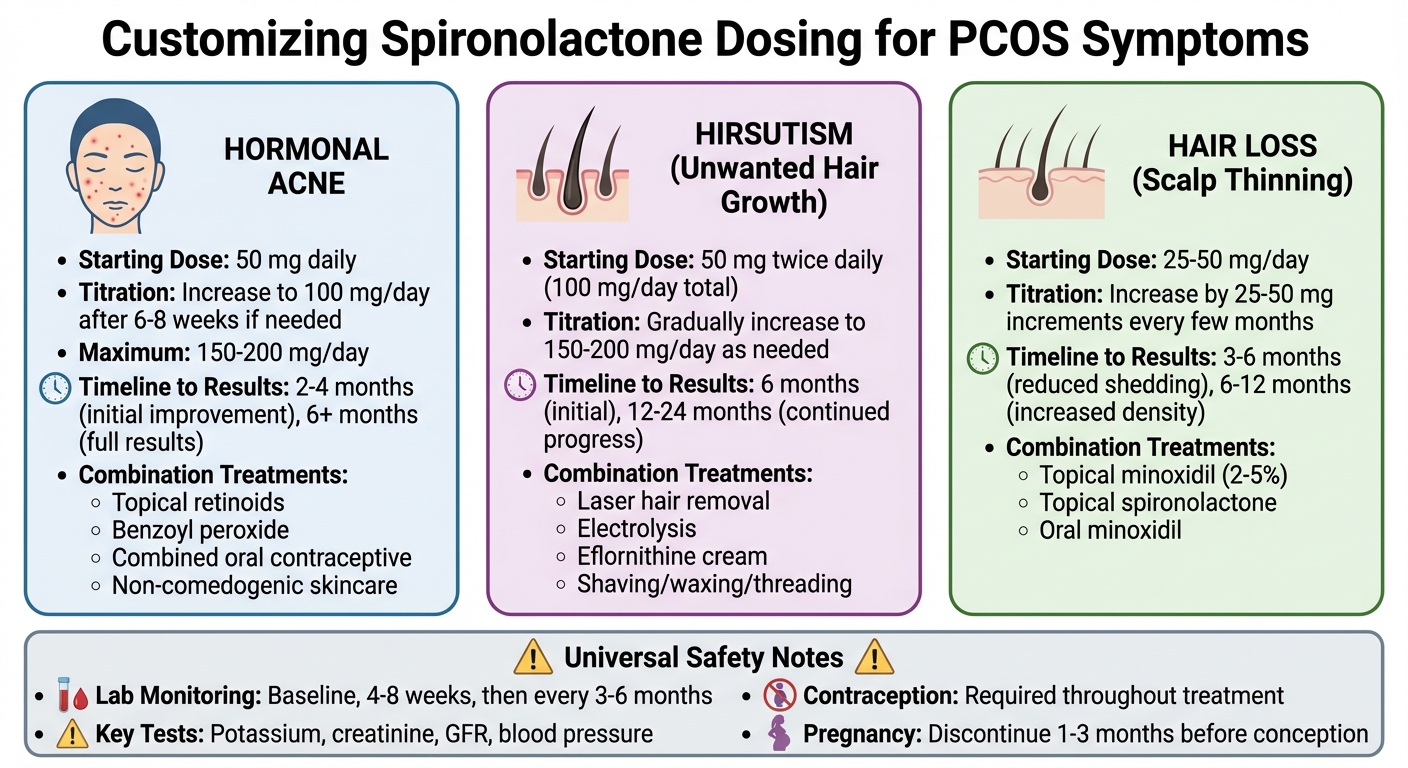
Spironolactone Dosing Guide for PCOS Symptoms: Acne, Hirsutism, and Hair Loss
Treatment Approach for Hormonal Acne
For hormonal acne, most healthcare providers typically start with a 50 mg daily dose, taken with food to minimize stomach discomfort. If breakouts persist, the dosage may be increased to 100 mg/day after 6–8 weeks, with further adjustments up to 150–200 mg/day, provided potassium levels and blood pressure stay within normal limits. Improvements are usually noticeable within 2–4 months, but achieving full results often requires 6 months or more.
Combining spironolactone with other treatments can amplify its benefits. Pairing it with topical retinoids and benzoyl peroxide helps address both comedones and inflammatory lesions. Incorporating a non-comedogenic skincare routine (like a gentle cleanser and oil-free sunscreen) also supports skin health. For added effectiveness, a combined oral contraceptive can enhance anti-androgen effects while offering necessary pregnancy protection. Regular follow-ups with your healthcare provider are essential to adjust and optimize the treatment plan.
Treatment Approach for Hirsutism
Spironolactone is also a reliable option for managing unwanted hair growth. The starting dose is typically 50 mg twice daily (totaling 100 mg/day) and can be gradually increased to 150–200 mg/day as needed. Results, such as slower and thinner hair growth, generally appear within 6 months, with continued progress over 12–24 months, due to the natural hair growth cycle.
For the best results, spironolactone should be combined with hair-removal methods like shaving, waxing, or threading for immediate effects. For a more lasting solution, laser hair removal or electrolysis can be added to the regimen. Using eflornithine cream alongside spironolactone can further slow facial hair growth. This cream is available from Oana Health for $69/month. While complete hair removal is rare, consistent use of these treatments leads to gradual and visible improvement. Regular evaluations with your healthcare provider will help fine-tune the approach.
Treatment Approach for Hair Loss
When addressing hair loss, especially in cases of female pattern hair loss related to PCOS, spironolactone dosing needs to be carefully tailored. Treatment often begins with 25–50 mg/day, increasing in 25–50 mg increments every few months, depending on tolerance. Starting with lower doses helps manage potential side effects while still targeting androgen-related hair thinning.
Combining spironolactone with topical minoxidil (2–5% solution) applied once or twice daily can enhance results by improving blood flow to hair follicles. Convenient options for at-home treatment include topical spironolactone ($43/month) and oral minoxidil ($25/month) from Oana Health. Reduced shedding may become noticeable in 3–6 months, with increased hair density typically appearing within 6–12 months. While full restoration is unlikely, consistent use can stabilize hair loss and promote modest thickening. Regular check-ins with your healthcare provider ensure the treatment plan stays on track and meets your needs.
sbb-itb-6dba428
Managing Dosing, Monitoring, and Safety
Daily Dosing Guidelines
Spironolactone can be taken either as a single daily dose or split into two doses throughout the day. For lower doses, such as 25–50 mg, taking it in the morning with food is recommended to reduce nausea and ensure steady absorption. For doses of 100 mg or higher, splitting the dose - like 50 mg in the morning and 50 mg in the early afternoon - may improve tolerability and help maintain consistent blood levels. Since spironolactone has mild diuretic effects, it’s best to avoid taking it late in the day to prevent nighttime bathroom interruptions. If you experience dizziness, consult your healthcare provider about adjusting your dose. Staying hydrated and monitoring your blood pressure at home can also help manage these symptoms. Regular lab monitoring is the next critical step to ensure safety.
Lab Tests and Side Effect Management
Before starting spironolactone, your clinician will typically order baseline lab tests to check serum potassium levels and kidney function (creatinine and GFR). They’ll also review your blood pressure and any medications you’re currently taking. After beginning treatment - especially at doses of 50–100 mg daily or if you have kidney concerns - it’s common to repeat labs within 4–8 weeks. Once your lab results stabilize and the medication is well-tolerated, follow-up testing can be spaced out to every 3–6 months and eventually to once a year. However, patients with higher risks, such as borderline kidney function, older age, or those on medications like ACE inhibitors or ARBs, may need more frequent monitoring. For those taking higher doses (150–200 mg daily), labs may also need to be rechecked after each increase.
Some common side effects include increased urination, breast tenderness, fatigue, and changes in menstrual cycles (such as irregular, heavier, or more frequent periods). A study involving 31 women on 50–75 mg daily for about five months reported frequent periods (polymenorrhea) as the most common side effect, while other adverse effects were minimal. Managing these side effects might involve lowering the dose, increasing the dose more gradually, splitting the dose, taking the medication with food, or combining spironolactone with a combined oral contraceptive to stabilize menstrual cycles and reduce breakthrough bleeding. While serious side effects like hyperkalemia or severe low blood pressure are rare, they require stopping the medication immediately and seeking medical attention. Careful monitoring ensures safe dose adjustments and sets the stage for future pregnancy planning.
Contraception and Pregnancy Planning
Spironolactone is not safe to use during pregnancy, so it’s essential to confirm you’re not pregnant and to use reliable contraception before beginning treatment. If pregnancy is a future goal, your treatment plan should include steps for safe conception. Typically, your healthcare provider will recommend stopping spironolactone at least 1–3 months before trying to conceive to allow the medication to clear from your system. During this transition, they can help you switch to PCOS management strategies that are safe for pregnancy. Oana Health clinicians can guide you through this process, including adjusting contraception and maintaining PCOS symptom management while preparing for pregnancy.
Long-Term Treatment Adjustments
Tracking Progress and Making Adjustments
After the initial dosing and safety checks, making long-term adjustments is crucial for managing PCOS symptoms effectively. You might notice early improvements within 2–4 months, but it can take 6–12 months to see the full benefits. To guide adjustments, keep track of your progress through a symptom diary, regular photos of affected areas, and numerical ratings.
If symptoms show little improvement after 3–6 months and your lab results remain stable, your healthcare provider may consider a cautious dose increase - often moving from 50–100 mg/day to 100–200 mg/day. On the other hand, if side effects like dizziness, breast tenderness, or irregular bleeding occur, or if lab tests reveal changes in potassium levels or kidney function, your provider might lower your dose or adjust your schedule. Sometimes, adding other treatments can help. Options include combined oral contraceptives for androgen suppression, metformin for insulin resistance, or topical/oral minoxidil for hair loss. These additions should be introduced gradually and monitored closely. Regular evaluations ensure your treatment plan stays aligned with your needs.
Maintenance Therapy and Tapering
Once your symptoms are under control for several months, your provider may recommend a maintenance dose - usually 50–100 mg/day - that can be continued long-term as long as potassium and kidney function remain normal and effective contraception is maintained. If symptoms return after tapering, you can resume the effective dose, with reassessments scheduled every 6–12 months.
If treatment goals change or side effects arise, tapering might be necessary. Typically, the dose is reduced gradually by 25–50 mg every 4–8 weeks, with monitoring for any recurrence of acne or increased hair growth. During this time, supportive treatments like topical acne products, laser or electrolysis for hair removal, and lifestyle changes such as weight management remain important. For scalp hair, topical spironolactone or minoxidil may also be used. Since spironolactone should be discontinued before pregnancy due to its potential effects on a male fetus, your provider will guide you toward pregnancy-safe PCOS management options. A follow-up 3–6 months after stopping spironolactone will help reassess your treatment plan.
Continued Care Through Telehealth
Ongoing adjustments can be conveniently managed through telehealth. Regular check-ins every 3–6 months allow your provider to review your symptom logs, photos, home blood pressure readings, and lab results. Based on this information, they can fine-tune your spironolactone dose, add other medications, and ensure there are no gaps in contraception or drug interactions.
Oana Health offers specialized telehealth support for PCOS, integrating treatments like spironolactone, topical spironolactone, insulin sensitizers, and GLP-1 medications for weight management into a single care plan. With regular reviews, automatic refills, and 24/7 provider access, telehealth ensures your treatment evolves with your needs while delivering consistent results.
Conclusion
Personalizing spironolactone treatment for PCOS symptoms starts with a well-structured plan. This includes a detailed health assessment, setting clear treatment goals, and keeping track of progress through regular lab tests and symptom monitoring.
It's crucial to work closely with a licensed healthcare provider. Since spironolactone requires a prescription, professional oversight is necessary to tailor the dosage, monitor for side effects like dizziness or electrolyte imbalances, and manage contraception due to the risks associated with pregnancy. Your provider will adjust doses based on your needs - whether that means increasing the dose for persistent symptoms, reducing it when side effects arise, or transitioning to a maintenance plan once your symptoms are under control. This level of care ensures a treatment approach that's both safe and effective.
For those seeking convenient access to personalized care, Oana Health offers a streamlined telehealth solution for PCOS management. By completing a quick online assessment, you can receive evidence-based treatments tailored to your needs, including topical and oral options delivered directly to your door. Their service simplifies PCOS care with features like automatic refills and 24/7 provider access for ongoing support and adjustments.
"Thanks to Oana, my menstrual cycles are more regular, and my skin has never looked better! I also love the 24/7 accessibility and customer service that always goes the extra mile." - Margaret K., MetSpiro user [1]
With a trusted clinical partnership and consistent monitoring, spironolactone can be tailored to fit your unique PCOS needs, offering a safe and effective way to manage your symptoms over time.
FAQs
How does spironolactone help with PCOS symptoms like acne, hair loss, and excess hair growth?
Spironolactone targets androgen receptors, effectively reducing the impact of excess male hormones often linked to PCOS. This action can help alleviate symptoms such as acne, hair thinning, and unwanted hair growth (hirsutism).
By addressing hormone imbalances, spironolactone offers a focused solution for managing these PCOS-related issues, providing relief and helping individuals feel more comfortable and confident in their appearance.
What should I know about using spironolactone safely for PCOS symptoms?
When taking spironolactone to manage PCOS symptoms, keeping an eye on your electrolyte levels, particularly potassium, is crucial. This medication can sometimes lead to imbalances, so regular blood tests are key to ensuring your potassium levels and kidney function stay within a healthy range.
Spironolactone should only be used under the guidance of a licensed healthcare provider. This helps minimize risks like dizziness, dehydration, or hormonal shifts. Make sure to share details about any other medications you're taking or any existing health conditions with your doctor to prevent possible interactions or complications.
Is it safe to take spironolactone during pregnancy or while breastfeeding?
Spironolactone should be avoided during pregnancy and breastfeeding. It carries potential risks to a developing fetus and can transfer into breast milk, which might impact the baby. If you're pregnant, considering pregnancy, or currently breastfeeding, talk to your healthcare provider about safer options that suit your specific situation.