
Top 5 Combination Therapies for Hormonal Acne in 2025
Hormonal acne is complex and often requires a multi-faceted treatment approach. By 2025, combination therapies have become the most effective way to manage it, especially for women with PCOS or insulin resistance. These treatments target hormonal imbalances, inflammation, and skin issues simultaneously. Here are the top five options:
- Adapalene-Benzoyl Peroxide + Spironolactone: Combines a topical gel to reduce lesions and inflammation with an oral anti-androgen that controls oil production and hormonal acne.
- Oral Contraceptives + Spironolactone: Reduces androgen activity by balancing hormones and blocking receptors, ideal for moderate-to-severe cases.
- Topical Triple Agents + Hormonal Modulators: Blends topical treatments for surface acne and pigmentation with internal hormonal solutions.
- Insulin Sensitizers + Anti-Androgens: Targets PCOS-related acne by addressing insulin resistance and androgen excess.
- Topical Retinoids + Azelaic Acid: Focuses on clearing breakouts and fading dark spots, suitable for those prone to pigmentation issues.
Each approach is tailored to individual needs, considering factors like age, hormonal levels, and specific symptoms. Many of these therapies are now accessible through telehealth services like Oana Health, offering personalized care and convenient delivery. Regular follow-ups and monitoring are essential for safety and effectiveness.
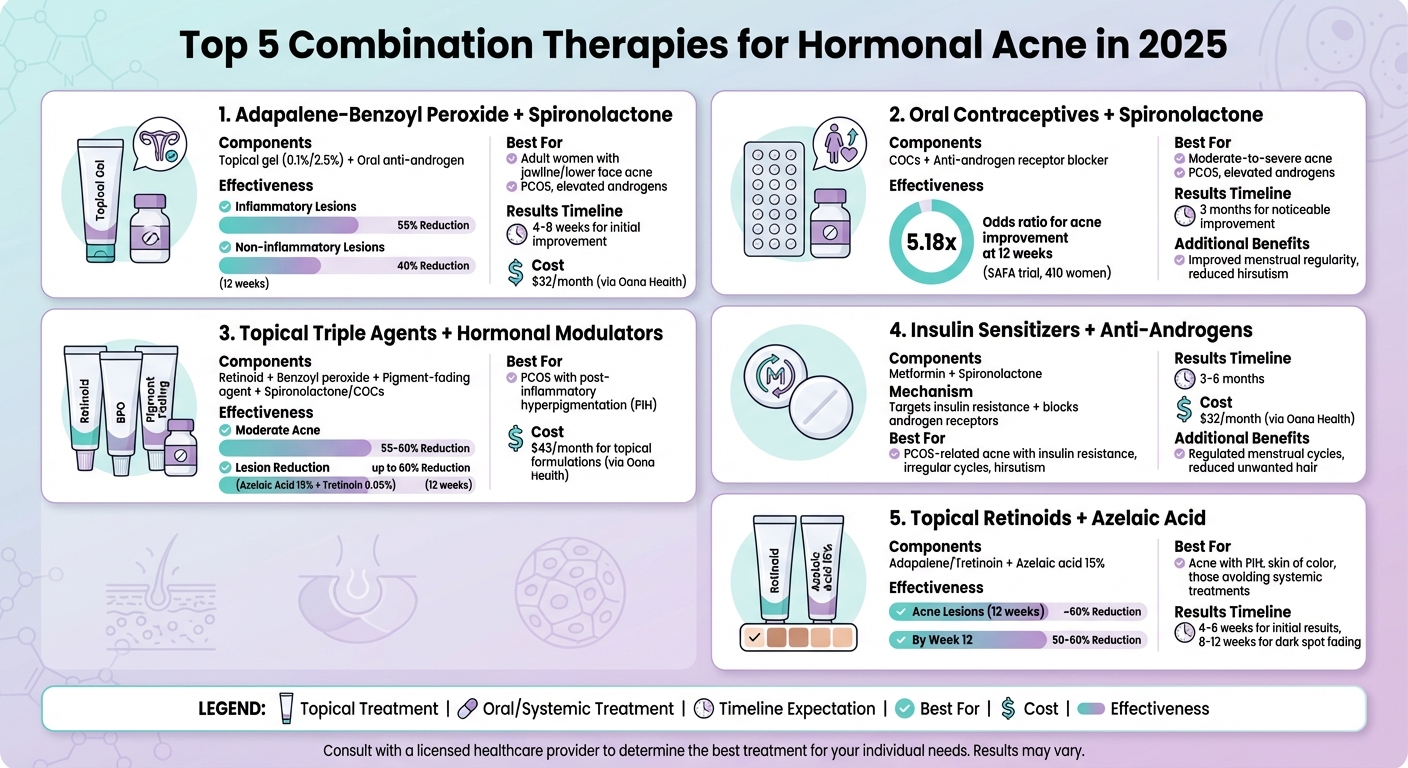
Top 5 Combination Therapies for Hormonal Acne: Treatment Options Compared
How to manage Hormonal Acne | Dr Davin Lim
1. Adapalene Benzoyl Peroxide Plus Oral Spironolactone
The combination of adapalene-benzoyl peroxide and oral spironolactone offers a powerful approach to tackling hormonal acne. Adapalene-benzoyl peroxide works by unclogging pores and calming inflammation, while spironolactone blocks androgen receptors, reducing testosterone's effects, lowering oil production, and preventing deep cystic breakouts. This dual-action method aligns well with the need to address multiple factors in treating hormonal acne.
For women aged 25–45 with moderate acne, studies show that using a 0.1%/2.5% adapalene-benzoyl peroxide gel can reduce inflammatory lesions by 55% and non-inflammatory lesions by 40% within 12 weeks. Another trial revealed that pairing spironolactone with benzoyl peroxide leads to better lesion reduction and quality-of-life improvements compared to doxycycline with benzoyl peroxide at the four- and six-month marks.
This treatment is particularly effective for adult women dealing with acne concentrated along the jawline and lower face, especially in cases linked to PCOS or elevated androgen levels. Beyond clearing acne, spironolactone often brings additional benefits like improved menstrual regularity and reduced hirsutism, while the topical gel helps fade post-inflammatory dark spots.
Side effects are usually mild and manageable. The topical gel may cause initial dryness or peeling, and spironolactone can occasionally lead to menstrual irregularities or increased potassium levels. Doctors typically monitor potassium and kidney function every few months, and women of childbearing age are advised to use reliable contraception.
Oana Health offers this personalized combination therapy for $32 per month, catering to women managing PCOS-related acne and insulin resistance. Most users begin to see improvements within four to eight weeks.
2. Oral Contraceptives Plus Spironolactone
Pairing oral contraceptives (COCs) with spironolactone creates a powerful approach to reducing androgen activity. COCs work by suppressing ovarian androgen production and boosting levels of sex hormone–binding globulin (SHBG), which helps lower free testosterone. Meanwhile, spironolactone blocks androgen receptors directly, cutting down on sebum production and preventing deep, stubborn breakouts. This combination is especially helpful for individuals who haven’t responded well to single-agent treatments.
This treatment strategy is particularly effective for women dealing with moderate-to-severe acne linked to PCOS or elevated androgen levels, especially when traditional therapies haven’t delivered results. For example, the SAFA trial, which included 410 women over 24 weeks, showed that spironolactone significantly reduced acne severity and improved quality of life, with an odds ratio of 5.18 at 12 weeks. Another study involving 133 women found that combining spironolactone with benzoyl peroxide led to greater lesion reduction at four and six months (p = 0.007). Notably, spironolactone nearly doubles the odds of treatment success compared to placebo or doxycycline. Over time, this combination also helps improve skin tone.
Side effects from this approach are usually mild and manageable. COCs may cause temporary breast tenderness or menstrual irregularities, while spironolactone can sometimes lead to headaches or lightheadedness. There’s a slight risk of elevated potassium levels, so routine blood tests are often recommended to monitor this. Both medications also require strict pregnancy precautions due to teratogenic risks. Patients typically begin to see noticeable improvements around the three-month mark.
Oana Health provides personalized options for treating hormonal acne, including therapies that combine oral contraceptives and spironolactone. Speak with a licensed medical professional to explore whether this treatment is a good fit for you.
3. Topical Triple Agents Plus Hormonal Modulators
Topical triple therapy - blending a retinoid, benzoyl peroxide, and a pigment-fading agent - targets surface inflammation, while hormonal modulators like spironolactone or oral contraceptives address internal androgen activity. Clinical research supports this dual strategy, particularly for women with PCOS and elevated androgen levels.
This approach has shown impressive results. For example, studies reveal that combinations such as 15% azelaic acid gel with 0.05% tretinoin can reduce acne lesions by up to 60% within 12 weeks. Similarly, triple-agent formulations have demonstrated a 55–60% reduction in moderate acne cases. Women with PCOS benefit significantly, as hormonal modulators help control sebum production and mitigate androgen-driven effects, while topical treatments tackle inflammation and post-inflammatory hyperpigmentation (PIH).
In addition to clearing breakouts, the retinoid and hydroquinone components work together to fade PIH more effectively than single agents. Many women with PCOS also report improvements in menstrual regularity and reduced hirsutism alongside clearer skin.
That said, this regimen can come with mild side effects. Topical treatments may initially cause dryness, redness, or peeling, but these effects often diminish with consistent use of moisturizers and daily sunscreen. Hormonal modulators like spironolactone may occasionally lead to menstrual changes or, in rare cases, elevated potassium levels, which may require monitoring. To minimize irritation, using lower concentrations and applying topicals at night can be helpful.
Oana Health offers personalized triple-agent topical formulations starting at $43 per month. These regimens are tailored by licensed professionals to fit your specific hormonal acne needs and are conveniently shipped to your home with free delivery.
sbb-itb-6dba428
4. Insulin Sensitizers Plus Anti-Androgens for PCOS Acne
This treatment approach targets the metabolic factors unique to PCOS, combining therapies to address both insulin resistance and androgen excess.
Hormonal acne linked to PCOS is driven by high insulin levels, which stimulate excess androgen production. This leads to increased oiliness, inflammation, and acne. Combining metformin and spironolactone tackles these issues from two angles: metformin lowers insulin levels, indirectly reducing ovarian androgen production, while spironolactone blocks androgen receptors in the skin and decreases sebum production. Together, they address both the hormonal and surface factors contributing to acne.
This combination works particularly well for adult women experiencing irregular menstrual cycles, jawline acne, premenstrual breakouts, or other signs of androgen excess like unwanted facial hair or thinning scalp hair. It’s especially effective for those with lab results indicating insulin resistance, such as elevated fasting insulin or prediabetes markers. While metformin alone provides modest acne improvement, studies show that pairing it with an anti-androgen like spironolactone often leads to greater reductions in inflammatory lesions and overall acne severity. Results typically become noticeable within 3–6 months.
Beyond acne relief, this regimen can regulate menstrual cycles, reduce unwanted hair growth, and minimize scalp thinning. As inflammation subsides, patients often see fewer new post-inflammatory dark spots, and existing marks may fade faster - especially when combined with topical treatments like retinoids or azelaic acid.
However, this treatment isn’t without potential side effects. Metformin can cause gastrointestinal discomfort, such as nausea, loose stools, or abdominal upset, though these symptoms can often be managed by gradually increasing the dose or using an extended-release version. Long-term use may rarely lead to vitamin B12 deficiency. Spironolactone may cause menstrual irregularities, breast tenderness, fatigue, or, less commonly, elevated potassium levels. It’s also contraindicated during pregnancy due to its effects on a male fetus. When using these medications together, it’s important to monitor electrolytes (especially potassium), kidney function, and any early side effects like dizziness. Reliable contraception is essential, and regular lab tests are recommended.
Oana Health offers specialized care for PCOS, insulin resistance, and hormonal acne, providing personalized regimens that combine metformin and spironolactone starting at $32 per month. Their licensed medical professionals tailor treatments to your hormonal profile, delivering medications directly to your door with free shipping.
5. Topical Retinoids Plus Azelaic Acid or Alternative Skin Tone Eveners
This treatment plan combines two powerhouse ingredients to tackle both acne and the marks it leaves behind. By pairing topical retinoids - like adapalene or tretinoin - with azelaic acid, the regimen targets active breakouts while also addressing post-inflammatory hyperpigmentation (PIH). Retinoids work by normalizing skin cell turnover and keeping pores clear, while azelaic acid not only fights bacteria and unclogs pores but also helps lighten dark spots through its tyrosinase-inhibiting properties. Together, these ingredients offer a dual-action solution for stubborn acne and uneven skin tone.
The effectiveness of this approach is backed by research. A 12-week clinical study showed that using tretinoin 0.05% and azelaic acid 15% gel together resulted in about a 60% reduction in acne lesions, along with noticeable improvements in PIH. The combined treatment outperformed either ingredient used alone, making it particularly useful for individuals prone to persistent dark spots, such as women with PCOS or those with elevated androgen levels. It's also a great option for people with skin of color who may experience more stubborn pigmentation issues.
While effective, this regimen can cause some mild side effects, including dryness, peeling, and occasional stinging. To reduce irritation, it's best to alternate applications and incorporate a gentle moisturizer into your routine. Daily use of a broad-spectrum SPF 30+ sunscreen is a must, as retinoids can make your skin more sensitive to the sun.
Results typically start to show within 4–6 weeks, with a noticeable reduction in inflammatory lesions. By 12 weeks, acne lesions often decrease by 50–60%, and dark spots begin to fade between 8–12 weeks. Consistent use over 3–6 months can lead to even greater improvements in skin tone and clarity. Unlike systemic treatments, this combination focuses on improving the skin’s appearance without impacting menstrual cycles or hormone levels.
For a more personalized approach, Oana Health offers tailored topical regimens designed to match your skin type and hormonal profile. Their service includes free home delivery and expert guidance to help you build a routine that targets both active acne and lingering dark marks.
Monitoring, Safety, and Personalization
Before starting hormonal acne treatments, it's essential to get a baseline evaluation. This includes checking your blood pressure, serum potassium levels, and kidney function. For those considering spironolactone, lab tests are particularly important if you're over 45, have kidney problems, or take ACE inhibitors. Screening for contraindications is equally crucial. Factors like smoking, a history of blood clots, migraines with aura, high blood pressure, or liver disease need to be assessed before starting estrogen-based pills. A pregnancy test is also a standard step before beginning medications like spironolactone or retinoids, which can pose risks during pregnancy.
Once treatment begins, regular follow-ups are key. For spironolactone and topical therapies, schedule a check-in after 6–12 weeks, followed by monitoring every 3–6 months. Topical combinations like adapalene with benzoyl peroxide often show noticeable improvements within 4–12 weeks, though it can take several months to see maximum results. Hormonal therapies, such as oral contraceptives combined with spironolactone, generally take 3–6 months to make a significant impact as they work to rebalance your system. These ongoing evaluations help fine-tune your treatment plan to suit your needs.
It’s important to recognize warning signs that require immediate attention. While on spironolactone, symptoms like severe dizziness, fainting, muscle weakness, or heart palpitations could indicate dangerously high potassium levels. Be alert to signs of blood clots or stroke, such as unilateral leg pain, swelling, shortness of breath, chest pain, severe headaches with vision changes, or slurred speech - these warrant emergency care. For topical treatments like retinoids and benzoyl peroxide, dryness and peeling are common early on, but severe swelling, blistering, or hives mean you should stop using the product and contact your healthcare provider. Additionally, a positive pregnancy test while on spironolactone or systemic retinoids requires urgent medical consultation due to serious risks to the fetus.
Treatment plans should be tailored to your individual needs, factoring in age, hormone levels, and any contraindications. Teens often respond well to topical therapies alone, while women in their 20s and 30s with persistent hormonal acne may benefit from adding spironolactone or oral contraceptives. For those with PCOS and insulin resistance, combining an insulin sensitizer like metformin with an anti-androgen can address multiple underlying issues at once [1]. Patients with conditions like high blood pressure, kidney disease, or migraines with aura require extra care in medication selection - certain oral contraceptives might be avoided, or spironolactone dosages adjusted.
If you’re planning to conceive, timing becomes a critical factor. Medications like spironolactone and systemic retinoids need to be stopped well before trying to get pregnant, and many healthcare providers will avoid starting these treatments if conception is planned within the next 6–12 months. Instead, safer options like azelaic acid and benzoyl peroxide are typically recommended. Platforms like Oana Health offer telehealth consultations to help customize your treatment plan, taking into account your age, health conditions, and family planning goals, while providing ongoing support to adjust your regimen as needed.
Conclusion
Hormonal acne is rarely the result of a single issue. Instead, it's typically influenced by a mix of factors like excess androgens, inflammation, bacterial overgrowth, and abnormal skin cell turnover. This is why combination therapies, which address multiple aspects of the condition, often deliver better results than single treatments. For instance, a randomized trial involving 500 participants demonstrated that pairing adapalene-benzoyl peroxide with hormonal agents like spironolactone or oral contraceptives significantly reduced both internal hormonal imbalances and surface acne lesions over a 12-week period.
The evidence strongly supports that personalized, multi-faceted treatment plans are more effective. These approaches work by tackling acne from different angles - minimizing oil production, soothing inflammation, eliminating acne-causing bacteria, and rebalancing hormones.
Choosing the right treatment plan, however, requires professional guidance tailored to your unique needs. Factors like your age, hormone levels, medical history, and pregnancy plans all play a role. For example, someone dealing with PCOS-related insulin resistance may need a different approach than someone experiencing acne driven purely by androgen levels. Fortunately, telehealth platforms such as Oana Health make it easier than ever to access personalized care. With a simple online intake process, licensed providers can recommend evidence-based combination therapies customized for you. Treatments are delivered straight to your door, and support is available 24/7.
Whether your treatment involves topical retinoids combined with hormonal modulators or insulin sensitizers paired with anti-androgens, the key lies in finding a strategy rooted in clinical research and tailored to your circumstances. With the right combination therapy and consistent follow-up, achieving clearer skin is entirely possible. This multi-pronged approach remains the cornerstone of effectively managing hormonal acne.
FAQs
Why are combination therapies more effective for treating hormonal acne than single treatments?
Combination therapies work better for hormonal acne because they address several underlying causes all at once. Hormonal acne is typically influenced by factors like hormonal shifts, inflammation, and overactive oil glands. Tackling these issues simultaneously can lead to quicker and more visible improvements.
For instance, a treatment plan might combine hormone-regulating medications, anti-inflammatory topical solutions, and skincare products designed to control oil production. This all-in-one strategy offers a more thorough approach, paving the way for lasting results.
What side effects can spironolactone cause when used for hormonal acne?
Spironolactone, often used to treat hormonal acne, can sometimes lead to side effects. These might include dizziness, breast tenderness, irregular menstrual cycles, fatigue, or elevated potassium levels. While most individuals handle it without issues, it’s essential to talk with your healthcare provider about any concerns to determine if it’s the best option for your needs.
Are these combination therapies safe to use during pregnancy?
When it comes to treating hormonal acne during pregnancy, most combination therapies are generally off the table unless explicitly approved by a healthcare provider. Certain ingredients in these treatments may pose risks to you or your baby, making it crucial to seek professional medical advice before beginning any regimen.
If you're pregnant or planning to be, consulting a licensed medical professional should always be your first step to ensure the well-being of both you and your child.